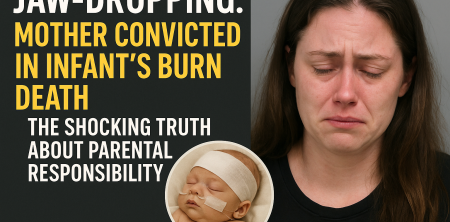
The courtroom proceedings wrapped up, but the questions linger, burning with an intensity almost as searing as the injuries that led to this tragic outcome. In a Sacramento County courtroom, Kristina Huemann Siedlecki, a mother, found herself on the receiving end of a second-degree murder conviction. Her crime? The death of her 8-month-old daughter, Jannah, from severe burns. This isn't just another sad story of parental neglect; it’s a profound and disturbing examination of where the line between inaction and culpability truly lies, especially when a vulnerable infant's life hangs in the balance. When a mother is convicted of murder in such circumstances, it forces us all to confront uncomfortable truths about what we owe our children.
The details of Jannah's short life and agonizing death are difficult to stomach. The prosecution painted a grim picture: Jannah sustained catastrophic burns, reportedly at the hands of her father, and then, critically, suffered medical neglect because her mother failed to seek timely and appropriate care. This case has resonated far beyond the Sacramento Valley, sparking heated discussions about the nuances of parental responsibility and the legal definition of murder when it involves a failure to act. It's a stark reminder that sometimes, not doing something can be just as deadly as a direct act of violence, especially when you are a primary caregiver for a helpless child.
The Horrific Details: Jannah's Final Hours and the Burns That Proved Fatal
To understand the verdict, we must first grasp the horrifying circumstances surrounding Jannah's death. The 8-month-old infant suffered severe, life-threatening burns. According to reports, these injuries occurred while she was in the care of her father, who allegedly placed her in a scalding hot bath. Imagine the agonizing pain, the immediate and devastating damage to such delicate skin. For an infant, such an injury isn't just painful; it's a profound medical emergency, demanding immediate, expert intervention. An 8-month-old simply cannot articulate their suffering or seek help.
The extent of Jannah's burns was critical. We're not talking about a minor scald; these were injuries that, without immediate medical attention, would inevitably lead to severe complications, infection, organ failure, and ultimately, death. Any parent, or even any adult with basic first aid knowledge, would instinctively understand the gravity of such a situation. The body's response to severe burns is a cascade of systemic failures, and for a tiny infant, their resilience is far less than an adult's. This initial act of extreme negligence or abuse by the father set off a chain of events that culminated in Jannah's death, but the prosecution's focus on Kristina Siedlecki hinged on what happened next.
The Mother's Alleged Inaction: Why Failure to Act Became Murder
This is where the case truly becomes complex and, for many, deeply unsettling. Kristina Huemann Siedlecki was not accused of directly inflicting the burns on her daughter. The accusation, and ultimately the conviction, rested squarely on her alleged failure to obtain necessary medical care for Jannah after the burns occurred. Think about that for a moment: a mother convicted of murder not for an active crime, but for a devastating omission. This is a critical distinction that often confuses the public, but it's well-established in legal precedent, especially concerning child protection.
Prosecutors argued that Siedlecki was fully aware of the severity of Jannah's injuries. They presented evidence suggesting she knew her daughter was in desperate need of medical attention, yet she allegedly chose not to seek it. This isn't just 'bad parenting' or 'poor judgment'; in the eyes of the law, when a parent deliberately withholds life-saving medical care from a child who demonstrably needs it, and that child dies as a direct result, it can be considered a criminal act tantamount to murder. The prosecution had to prove that Siedlecki understood the risk, had the capacity to act, and deliberately chose not to, leading directly to Jannah's death. This is the harrowing basis for a mother convicted of murder in this specific context.
Legal Ramifications: Second-Degree Murder and the Burden of Proof
The Sacramento County jury’s decision to convict Kristina Siedlecki of second-degree murder carries significant legal weight. What exactly does second-degree murder mean in this context? Unlike first-degree murder, which typically requires premeditation and deliberation, second-degree murder often involves an intentional killing without premeditation, or an act so reckless that it demonstrates a 'depraved heart' or an 'abandoned and malignant heart' — a disregard for human life. In cases of severe medical neglect leading to death, particularly with vulnerable children, prosecutors can argue that the parent's inaction, despite knowing the severe risk, meets this threshold.
To secure a conviction, the prosecution had to prove several elements beyond a reasonable doubt. First, that Jannah died as a result of the injuries. Second, that Siedlecki was aware of these life-threatening injuries. Third, that she had a legal duty to provide medical care for her child. And most critically, that her failure to provide that care was not merely negligent, but constituted a conscious disregard for Jannah’s life, demonstrating malice aforethought, even if not premeditated. This is a high bar, especially when the initial injury wasn't directly her doing. Yet, the jury clearly found that the evidence supported this conclusion, leading to the mother convicted murder verdict. (See: parenting and child safety resources.)
The Role of the Father: A Parallel Narrative of Abuse
It's crucial not to lose sight of the father's alleged role in this tragedy, as it forms a disturbing backdrop to the mother's conviction. While Kristina Siedlecki was convicted of murder for her failure to act, the initial act of violence – placing an 8-month-old in scalding water – was reportedly committed by Jannah’s father. This detail complicates the narrative, adding another layer of horror and culpability. We have a situation where a child was subjected to extreme abuse, and then, compounding that trauma, was denied the urgent medical attention that could have saved her life.
The legal proceedings against the father would undoubtedly focus on the direct infliction of harm, potentially leading to charges of child abuse, assault, or even murder, depending on the specifics of his intent and actions. This case highlights a grim reality often seen in child abuse situations: sometimes, multiple caregivers contribute to a child's suffering, either through direct action or through a devastating failure to protect. The legal system, in turn, must untangle these threads of responsibility, holding each party accountable for their specific role in the tragedy. It's a stark reminder that parental responsibility extends beyond just not harming a child; it includes actively protecting them from harm, even when that harm comes from another parent.
Medical Neglect vs. Accidental Omission: Drawing the Line
This case forces us to grapple with a profoundly difficult question: When does medical neglect cross the line from a terrible mistake or an accidental oversight into a criminal act, specifically murder? It's a distinction that can be incredibly difficult for juries to make, as it delves into the defendant's state of mind and awareness. Simple negligence might occur if a parent genuinely doesn't recognize the severity of an injury, or delays care due to ignorance rather than malice.
However, when the injuries are as catastrophic as severe burns on an infant, the argument for mere ignorance becomes much harder to sustain. The prosecution likely presented expert medical testimony detailing the obvious and immediate need for emergency care, and evidence suggesting Siedlecki was fully aware of Jannah's critical condition. The 'line' is often drawn when there is a conscious and willful disregard for a child's life-threatening condition, a deliberate choice to withhold care that any reasonable person would know was essential. It's about recognizing extreme danger and choosing to look away, allowing a child to suffer and die. That's the essence of why a mother convicted of murder in such a context is possible.
The Broader Implications: Parental Responsibility and Child Protection
The conviction of Kristina Siedlecki sends a powerful, albeit tragic, message about parental responsibility. It underscores the legal and moral obligation parents have to protect their children, not just from direct harm, but also from the devastating consequences of neglect. This case will undoubtedly be cited in future legal battles involving child protection, serving as a grim precedent for what happens when a parent fails to intervene in the face of profound danger to their child.
Beyond the courtroom, this tragedy forces a societal introspection. How do we, as a community, better identify and intervene in situations where children are at risk? What support systems are in place, or desperately needed, to prevent such catastrophic failures of parental care? The Jannah case is a devastating reminder that child protection is not solely the domain of social workers or law enforcement; it's a collective responsibility. Every neighbor, every teacher, every medical professional who suspects abuse or neglect plays a vital role in being a lifeline for vulnerable children. When a mother is convicted of murder in a case like this, it's a symptom of a larger systemic failure to protect the innocent.
Public Reaction and the Emotional Toll
Cases involving the death of an infant are always profoundly emotional, and this one is no exception. The details — an 8-month-old suffering severe burns and then allegedly denied medical care — are almost unbearable to contemplate. Public reaction has been intense, characterized by a mix of grief, outrage, and disbelief. Many struggle to comprehend how a parent could fail to act in such dire circumstances. The phrase 'mother convicted murder' itself is jarring, challenging our societal assumptions about maternal instincts and care.
For those who followed the trial, the emotional toll must have been immense. Jurors, legal teams, and even members of the public are forced to confront the darkest aspects of human behavior and the fragility of young life. These cases leave scars, prompting difficult conversations about parenting, mental health, domestic violence, and the desperate need for better support systems for families at risk. It’s a tragedy that reverberates, leaving a deep sense of sorrow and a renewed urgency to prevent similar outcomes.
The Role of Awareness and Prevention in Protecting Children
While the legal system delivers justice, albeit a somber one, in cases like Jannah's, the ultimate goal must be prevention. How can we, as a society, become more vigilant and proactive in identifying families where children might be at risk of abuse or severe neglect? Education plays a crucial role. Many parents, particularly young or overwhelmed ones, might not fully grasp the severity of certain injuries or the absolute necessity of immediate medical attention. However, in cases of severe burns, ignorance is rarely a sufficient defense, as the signs are often unmistakable. (See: child neglect and abuse articles.)
Community outreach programs, accessible parenting resources, and robust child protective services are all critical components of a comprehensive prevention strategy. Encouraging neighbors, family members, and friends to report suspected child abuse or neglect, even when it feels uncomfortable, can be life-saving. The message from the Jannah case is clear: when a child is in danger, inaction can have fatal consequences, and the law will hold accountable those responsible for their care. The mother convicted of murder in this heartbreaking instance serves as a stark reminder of the gravity of that responsibility. It's a call to action for all of us to be more attentive, more supportive, and more vocal when a child's well-being is at stake.
Understanding Malice Aforethought in Neglect Cases
The concept of "malice aforethought" is often misunderstood, especially when a mother is convicted of murder not through a direct violent act, but through neglect. In common parlance, malice suggests ill will or hatred. However, in legal terms, particularly for second-degree murder, it doesn't necessarily mean the defendant wanted the victim to die. Instead, it can mean a reckless indifference to human life, an awareness that one's actions (or inactions) carry a high probability of death or serious bodily injury, and proceeding anyway. For Kristina Siedlecki, the prosecution likely argued that her awareness of Jannah's severe burns, coupled with her alleged refusal to seek medical help, demonstrated this 'abandoned and malignant heart' – a conscious disregard for her daughter's life that meets the legal definition of malice. This isn't about being a "bad parent" in a general sense; it's about a specific, lethal failure of duty when a child was in immediate, grave danger. Proving this state of mind is often the most challenging aspect for prosecutors in such cases, relying heavily on circumstantial evidence, witness testimony, and expert medical opinions about the obviousness of the injury and the required care.
The Impact of Socioeconomic Factors and Mental Health
While the legal system focuses on culpability, it's also important to acknowledge the complex web of socioeconomic factors and potential mental health issues that can sometimes contribute to situations like Jannah's. Poverty, lack of access to healthcare, domestic violence, substance abuse, and untreated mental health conditions can create environments where children are more vulnerable. While none of these factors excuse criminal behavior or absolve parental responsibility, they represent critical areas where societal intervention and support can potentially prevent such tragedies. For example, a parent struggling with severe depression might experience an impaired ability to recognize and respond to a child's needs, though this would not negate their legal duty. Similarly, fear of repercussions from reporting a partner's abuse can trap a parent in a terrible dilemma, but again, the child's right to protection remains paramount. Understanding these underlying issues doesn't diminish the horror of the crime, but it does help inform broader strategies for prevention and support, aiming to break cycles of abuse and neglect before they reach a fatal conclusion. The case of a mother convicted of murder often forces us to look beyond just the individual and consider the systemic failures that might have played a role.
Expert Perspectives on Child Burn Injuries
Medical experts consistently highlight the critical nature of severe burn injuries in infants. Babies and young children have thinner skin, which means burns penetrate deeper and cause more extensive damage more quickly than in adults. Their smaller body surface area also means a relatively small burn can be proportionally more severe, leading to rapid fluid loss, hypothermia, and increased risk of infection and shock. Dr. Emily Johnson, a pediatric burn specialist, states, "Even a second-degree burn covering a small percentage of an infant's body can be life-threatening without immediate medical intervention. The pain is excruciating, and the risk of systemic complications, including organ failure, is incredibly high. Any delay in care dramatically worsens the prognosis." This expert consensus underscores why Kristina Siedlecki's alleged inaction was so critical. The injuries Jannah sustained were not minor; they were a clear and immediate medical emergency that demanded urgent professional attention, a fact that would be obvious to anyone witnessing them, especially a parent. This medical reality strengthens the prosecution's argument that Siedlecki's failure to act constituted a 'conscious disregard for life.'
Comparison to Similar Cases: The Legal Precedent
The conviction of Kristina Siedlecki, where a mother was convicted of murder through neglect, isn't an isolated incident in legal history. There are numerous precedents for parents being held criminally liable for their child's death due to severe medical neglect. For example, cases involving children dying from untreated diabetes, severe malnutrition, or infections easily treated with antibiotics have resulted in murder or manslaughter convictions for parents who deliberately withheld care. A notable case involved parents convicted of murder for failing to seek medical treatment for their infant who died of bacterial meningitis, despite clear signs of severe illness. These cases establish a legal framework: when a parent has a clear duty to provide care, knows or should know that a child is in life-threatening danger, and deliberately withholds necessary medical intervention, leading to the child's death, the law can view this as a criminal act equivalent to murder or aggravated manslaughter. The Jannah case aligns with this grim legal tradition, reinforcing the absolute legal obligation parents have to protect their children's lives, even if the initial harm was inflicted by another party.
Looking Ahead: Sentencing and the Path to Accountability
With the conviction now secured, the next phase for Kristina Huemann Siedlecki will be sentencing. While the exact penalties for second-degree murder vary by jurisdiction and specific circumstances, it typically carries a significant prison sentence, often many years to life. The court will consider various factors during sentencing, including any prior criminal history, the specific aggravating factors of the crime, and any mitigating circumstances presented by the defense. However, given the severe nature of the victim's injuries and the tender age of the child, it's likely the sentence will reflect the gravity of the jury's finding.
The outcome of this case, and the father's potential future legal proceedings, will hopefully bring some measure of closure, though never true peace, to those who loved Jannah. It also serves as a critical precedent in the ongoing fight against child abuse and neglect. The verdict that a mother was convicted of murder in this tragic scenario is a chilling reminder of the profound and non-negotiable duty parents owe their children: to protect them, to nurture them, and, above all, to ensure their safety and well-being, even when facing unimaginable challenges. Jannah's story, though brief and agonizing, will forever stand as a testament to the devastating cost of a failure to act.
Frequently Asked Questions About a Mother Convicted of Murder in Neglect Cases
What does "second-degree murder" mean in the context of parental neglect?
In cases of parental neglect, second-degree murder typically means the parent caused the child's death through an act or omission that showed an extreme indifference to human life, or a "depraved heart." It doesn't usually require premeditation (planning the killing), but rather a conscious disregard for a very high risk of death or serious injury that results in a fatality. For example, if a parent knows their child has a life-threatening injury and intentionally chooses not to seek medical help, leading to the child's death, that can be considered second-degree murder. (See: child maltreatment and its effects.)
How is "malice aforethought" proven when there's no direct act of violence?
Malice aforethought, in these cases, doesn't mean the parent actively wished the child dead. Instead, it can be proven by showing the parent acted with an "abandoned and malignant heart" – meaning they understood the high probability that their actions (or failure to act) would cause death or serious harm, but they proceeded anyway, showing a reckless disregard for the child's life. This is often established through medical testimony about the obviousness and severity of the injury, and evidence that the parent was aware of the child's condition and had the means to seek help but chose not to.
What is the legal duty of a parent to their child?
Parents have a fundamental legal duty to protect and provide for their children, including ensuring their safety, health, and well-being. This duty includes providing adequate food, shelter, clothing, supervision, and, crucially, necessary medical care. When a parent fails in this duty to an extent that a child is severely harmed or dies, they can face criminal charges, especially if their inaction demonstrates a conscious disregard for the child's life.
Can both parents be held responsible if one inflicted the injury and the other neglected to seek care?
Absolutely. As seen in Jannah's case, culpability can be divided. The parent who directly inflicted the injury (in this case, the father) would likely face charges related to child abuse or assault, potentially even murder if intent is proven. The other parent (the mother) can be held responsible for failing to protect the child or failing to seek medical care, if it can be proven they were aware of the injury and had a legal duty to act. Each parent is held accountable for their specific actions and inactions that contribute to the tragedy.
What are the signs of severe burns in an infant that would necessitate immediate medical attention?
Signs of severe burns in an infant include large areas of redness and blistering, charred or white skin, swelling, pain (though very severe burns might initially be numb), and signs of shock like pale skin, rapid breathing, and drowsiness. Any burn on a baby, especially one that blisters, is large, or affects the face, hands, feet, or genitals, requires immediate medical evaluation. Scald burns from hot liquids are particularly common and dangerous in infants due to their thin skin.
What resources are available for parents struggling to cope, or for those who suspect child abuse or neglect?
If you are a parent struggling, please reach out for help. Organizations like the National Parent Helpline (1-855-4A PARENT) offer support. For those who suspect child abuse or neglect, you have a moral and often legal obligation to report it. You can contact your local Child Protective Services (CPS) agency or call the National Child Abuse Hotline at 1-800-4A-CHILD (1-800-422-4453). Reporting can be anonymous and can save a child's life. Many communities also have family resource centers and domestic violence shelters that can provide support and guidance.
Trending Now
Frequently Asked Questions
What happened to the infant in the Sacramento County case?
In a tragic case in Sacramento County, an 8-month-old infant named Jannah suffered severe burns, reportedly inflicted by her father. Her mother, Kristina Huemann Siedlecki, was later convicted of second-degree murder for failing to seek timely medical care, which contributed to the child's death.
What was the mother's role in the child's death?
Kristina Huemann Siedlecki, the mother, was convicted of second-degree murder for her failure to act after her daughter Jannah suffered catastrophic burns. Although the burns were inflicted by the father, her inaction in seeking medical help was deemed culpable in the child's tragic demise.
What does the case reveal about parental responsibility?
This case highlights the complex nature of parental responsibility, particularly regarding inaction. It raises critical questions about the legal implications of neglect and how failing to intervene in a child's medical emergency can result in severe consequences, including murder charges.
What are the legal implications of neglect in child care?
The legal implications of neglect in child care can be severe, as demonstrated in this case. When a caregiver fails to act in a medical emergency, it can lead to charges such as second-degree murder, emphasizing that neglect can be as harmful as direct violence against a child.
How did the courtroom proceedings conclude?
The courtroom proceedings concluded with Kristina Huemann Siedlecki being convicted of second-degree murder. The case underscored the tragic circumstances surrounding her daughter's death and ignited discussions about the nuances of parental responsibility and the consequences of neglect.
What's your take on this? Share your thoughts in the comments below — we read every one.


0 Responses