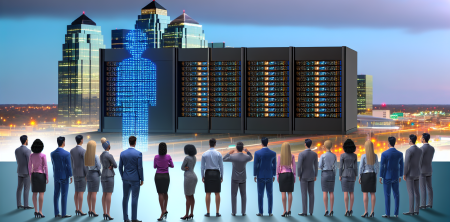
Kansas City’s AI Data Center Boom
Kansas City is currently witnessing a significant surge in the construction of artificial intelligence (AI) data centers, a trend exemplified by Nebius's recent announcement of a staggering $27 billion deal on March 16. This agreement will facilitate the hosting of Meta's AI cloud capacity and training. However, this ambitious expansion raises critical questions about the long-term implications for the regional job market, particularly in light of Meta’s plans to lay off 20% or more of its workforce.
The Economic Landscape Shifting
The rise of AI technology is reshaping industries across the globe, and Kansas City is at the forefront of this transformation. With the promise of enhanced efficiency in numerous tasks, AI has the potential to accelerate computer and mathematical operations by up to 94%, alongside streamlining up to 90% of office-related work. Despite these capabilities, current utilization rates of AI technology remain significantly lower at just 33%. This discrepancy suggests that while the theoretical benefits of AI are vast, practical application and integration into the workforce are still evolving.
Job Dynamics in the Age of AI
As Kansas City embraces this technological revolution, the ramifications on employment dynamics are becoming increasingly apparent. Research indicates that jobs with high exposure to AI technologies tend to offer salaries that are 47% higher than their counterparts. Interestingly, these positions are predominantly occupied by older, female, and highly educated workers. This demographic shift raises concerns about the sustainability of these roles as AI systems become more proficient and capable of performing tasks traditionally handled by human workers.
Potential Risks for White-Collar Employment
The rapid integration of AI into various sectors could potentially lead to a significant erosion of white-collar jobs. As companies like Meta streamline operations to enhance efficiency and cut costs, there is a palpable risk of job displacement among skilled workers. The automation wave that many industries have previously encountered might now be making a return, but this time with a focus on white-collar positions.
Contrasting Trends: The Rise of Trades
Interestingly, while the white-collar job market may face challenges, there is a concurrent rise in demand for skilled trades. The ongoing expansion of AI data centers necessitates a robust workforce to support their infrastructure. As a result, there is an increasing need for electricians, technicians, and other skilled tradespeople to ensure that these facilities operate efficiently. This shift may lead to a reversal of earlier trends, where manufacturing and trades were heavily impacted by automation.
Long-Term Implications for Kansas City's Economy
The current AI data center boom presents a complex landscape for Kansas City’s economy. On one hand, the investment influx can spur local economic growth and innovation; on the other hand, the potential for job displacement among skilled workers raises concerns about the long-term viability of the job market.
Community Response and Adaptation
As the city navigates these changes, community leaders and policymakers must be proactive in addressing the potential fallout. Initiatives aimed at retraining displaced workers and fostering new job opportunities in emerging sectors will be crucial. Collaboration between educational institutions, industry leaders, and government agencies can facilitate the development of programs that equip workers with the skills needed to thrive in an AI-driven economy.
Conclusion: Balancing Innovation and Employment
Kansas City stands at a pivotal moment as it embraces the AI revolution while grappling with the potential consequences for its workforce. The juxtaposition of booming AI data centers and the specter of job displacement underscores the need for a balanced approach that prioritizes both innovation and employment stability. As the city forges ahead in this new era of technology, the strategies adopted now will determine the resilience of its job market for years to come.

