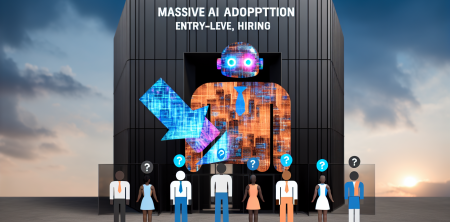
The world of work is undergoing a seismic shift, with the rise of artificial intelligence (AI) redefining what it means to enter the job market. A recent survey conducted among 1,000 U.S. business leaders revealed a striking statistic: 36% of companies have already ceased hiring entry-level workers, and this trend is expected to escalate significantly by the end of 2026. This alarming data point is not just a number; it encapsulates the growing AI adoption crisis that is reshaping the landscape of employment and economic opportunity, particularly for Gen-Z and early-career professionals.
The Impact of AI on Entry-Level Employment
Entry-level positions have traditionally been the stepping stones for young workers, providing them with the necessary experience and skills to advance in their careers. However, the rapid integration of AI technologies into various sectors is increasingly displacing these roles. As companies turn to automation to enhance efficiency and reduce costs, the opportunities for fresh graduates and those entering the workforce are dwindling.
The survey highlights a troubling reality: over one-third of U.S. companies have pulled back on hiring entry-level positions as AI systems become more prevalent. This trend poses a significant threat to millions of young job seekers who typically rely on these roles to launch their careers.
Generational Consequences
The implications of the AI adoption crisis are particularly pronounced for the Gen-Z workforce. Coming of age during a time of rapid technological advancement, this generation had already faced unprecedented challenges, including a global pandemic and economic instability. Now, they are grappling with the added stress of a labor market that increasingly favors automation over human labor.
- Job Displacement: With AI systems capable of performing tasks that entry-level employees once handled, the risk of job displacement looms large.
- Skills Gap: As companies adopt AI, the demand for specific skills has shifted, leading to a growing skills gap that many young workers are unprepared to bridge.
- Career Advancement: The traditional pathway to career growth—starting in entry-level roles and climbing the corporate ladder—is becoming less accessible.
As a result, young professionals may find themselves stuck in a cycle of underemployment or forced to seek alternative paths, such as entrepreneurship or gig economy work, which often lack the stability and benefits of traditional employment.
Understanding the Shift: Why Companies Are Halting Entry-Level Hiring
So, what is driving this decisive shift among companies? The answer lies in the myriad benefits that AI technology offers.
Efficiency and Cost-Effectiveness
One of the primary motivations for adopting AI is the potential for increased efficiency. Companies are eager to streamline their operations, and AI systems can significantly reduce the time and effort needed to complete various tasks. By automating routine processes, businesses can:
- Decrease operational costs
- Improve accuracy and reduce human error
- Scale services without proportional increases in workforce
This shift towards automation is not merely a trend; it is a fundamental change in how businesses operate, leading to a reevaluation of workforce needs.
Changing Nature of Work
The tasks that used to be the backbone of entry-level jobs are increasingly being redefined as AI takes over. Jobs that once required human input—such as data entry, customer service, and basic analysis—are now being automated, leaving fewer roles available for entry-level workers. This transition is indicative of a broader transformation in the workplace, where soft skills and complex problem-solving abilities become more valuable than ever.
The Economic Anxiety Surrounding AI Adoption
The AI adoption crisis has far-reaching implications, not just for job seekers but for the economy as a whole. The reduction in entry-level positions can lead to:
- Increased Unemployment: With fewer positions available, the unemployment rate among young workers is likely to rise, exacerbating economic anxiety.
- Stagnant Wages: The competition for fewer jobs may drive wages down, making it difficult for young professionals to achieve financial stability.
- Shifts in Consumer Behavior: With a larger portion of the population facing economic challenges, consumer spending may decrease, further impacting businesses and the economy.
As young workers struggle to find employment, the ripple effects could hinder economic growth, leading to a cycle of instability that is hard to break.
What Can Be Done? Adapting to the New Employment Landscape
As the AI adoption crisis unfolds, both job seekers and educators must seek new strategies to adapt to this rapidly changing environment.
Upskilling and Reskilling Initiatives
To remain competitive in the job market, young professionals must invest in upskilling and reskilling. This involves gaining new competencies that align with the demands of an evolving workforce. Educational institutions, employers, and workforce development organizations can play a crucial role in facilitating access to these opportunities.
- Online Learning Platforms: Platforms like Coursera and Udemy offer courses that can help individuals learn in-demand skills.
- Industry Partnerships: Collaborations between educational institutions and industry leaders can create tailored training programs.
- Internships and Apprenticeships: Real-world experience remains invaluable, and programs that provide hands-on training can bridge the skills gap.
Promoting Soft Skills
As AI takes over technical tasks, soft skills such as communication, teamwork, and critical thinking become more paramount. Employers will increasingly seek candidates who demonstrate these abilities, making it essential for job seekers to cultivate and showcase them.
A Call to Action for Policymakers
Addressing the challenges posed by the AI adoption crisis requires proactive measures from policymakers. Initiatives that promote equitable access to education and training opportunities are vital to ensuring that the future workforce is prepared to navigate a landscape dominated by automation.
- Subsidizing Training Programs: Government investment in workforce training programs can help bridge the skills gap.
- Creating Job Transition Programs: Supporting displaced workers through job transition initiatives can help ease the burden of job loss.
- Encouraging Innovation: Policymakers should foster innovation in sectors that create new job opportunities, balancing the impact of AI adoption.
Conclusion: Facing the AI Adoption Crisis Head-On
The AI adoption crisis presents both challenges and opportunities. As businesses embrace automation, the ripple effects on entry-level employment are becoming increasingly evident. While the road ahead may seem daunting for young job seekers, proactive measures—ranging from upskilling to policy interventions—can help navigate this uncharted territory.
Ultimately, the goal is to create a workforce that is resilient, adaptable, and equipped with the skills necessary to thrive in a world where AI plays an ever-growing role. As we confront the implications of AI adoption together, it is imperative to foster an inclusive and equitable job market that offers opportunities for all.

