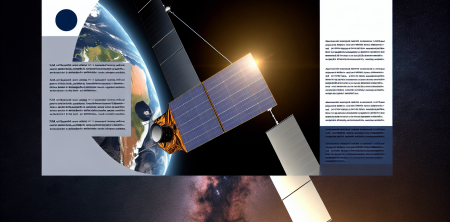
In a significant leap forward for space weather monitoring, Momentus Inc. has recently completed a pivotal NASA contract study aimed at advancing the Space Storms Solar Sail Sentinel mission. This innovative project leverages the company's Vigoride spacecraft bus and features a remarkable 1652 m² solar sail developed in collaboration with the National Oceanic and Atmospheric Administration (NOAA). The mission's primary goal is to position advanced space weather monitors closer to the Sun, thereby enabling earlier and more accurate detection of solar wind, magnetic fields, and plasma. This timely detection is crucial for providing advanced warnings of potentially disruptive geomagnetic storms affecting Earth.
The Importance of Space Weather Monitoring
Space weather refers to the environmental conditions in space, particularly those influenced by solar activity. These conditions can have profound effects on satellite operations, communications, power grids, and even human health. Geomagnetic storms, which are caused by solar wind and solar flares, can lead to disruptions in these systems, making reliable monitoring essential.
The Space Storms Solar Sail Sentinel mission aims to enhance monitoring capabilities by deploying sensors in a strategic location within cislunar space—the area between the Earth and the Moon. By positioning these monitors closer to the Sun, scientists believe they can gain critical insights into solar phenomena, allowing for quicker responses to potentially hazardous space weather events.
Solar Sails: A Propellant-Free Propulsion System
At the heart of this mission is the innovative use of solar sails, which harness the pressure of sunlight for propulsion. Unlike traditional propulsion systems that rely on fuel, solar sails use the momentum of photons emitted by the Sun to maneuver. This technology allows spacecraft to travel in cislunar space without the need for propellant, making it a more sustainable and cost-effective solution for long-duration missions.
The 1652 m² solar sail developed for the mission represents a significant advancement in this technology. Its large surface area can capture more sunlight, enhancing the spacecraft's ability to maneuver and adjust its position as needed. This capability is particularly valuable for the Space Storms Solar Sail Sentinel mission, as the monitors need to be able to position themselves optimally to gather data effectively.
Collaboration with NOAA
The partnership with NOAA underscores the mission's commitment to scientific rigor and operational excellence. NOAA has long been a leader in space weather research, and its involvement ensures that the data collected by the Space Storms Solar Sail Sentinel will be of high quality and relevant to ongoing monitoring efforts.
The collaboration not only enhances the mission's credibility but also fosters a multidisciplinary approach to tackling the challenges posed by space weather. By combining Momentus's technological expertise with NOAA's scientific knowledge, the project aims to create a robust framework for monitoring solar activity.
Future Implications of the Mission
The implications of the Space Storms Solar Sail Sentinel mission extend beyond scientific inquiry. As humanity increasingly relies on satellites and space-based technologies, the need for reliable space weather monitoring becomes paramount. This mission could pave the way for future advancements in space weather forecasting and contribute to the development of more resilient systems capable of withstanding solar storms.
- Improved Forecasting: Enhanced monitoring capabilities could lead to more accurate forecasting of geomagnetic storms.
- Protection of Infrastructure: Early warnings could help mitigate the impacts of space weather on critical infrastructure, such as power grids and communication systems.
- Scientific Advancement: The data collected could inform future studies of solar activity and its effects on Earth.
Conclusion
The completion of the NASA contract study marks a significant milestone for Momentus Inc. and the Space Storms Solar Sail Sentinel mission. By harnessing cutting-edge solar sail technology and collaborating with NOAA, this mission aims to enhance our understanding of space weather and improve our ability to respond to its impacts. As we move forward into an increasingly technology-driven future, initiatives like this will be crucial in ensuring the safety and reliability of our space infrastructure.
As we continue to explore the cosmos, the lessons learned from the Space Storms Solar Sail Sentinel mission may well shape the future of space weather monitoring and its role in protecting life on Earth.

