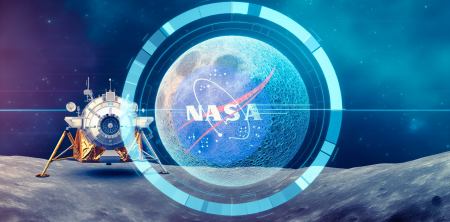
On March 30, 2026, NASA announced significant revisions to its lunar exploration agenda, reflecting a shift in priorities and timelines that may reshape the future of human spaceflight. The agency is delaying its first crewed lunar landing, originally anticipated under the Artemis III mission, to now take place during Artemis IV in early 2028. This decision comes alongside a pause on the development of the Gateway lunar space station, with an increased focus on establishing a sustainable base on the Moon’s surface.
Revised Lunar Landing Timeline
The Artemis program, which aims to return humans to the Moon and establish a long-term presence, has faced various challenges since its inception. The delay of the first crewed lunar landing to 2028 under Artemis IV signifies a notable shift in NASA's operational timelines. This revised schedule allows for further development and testing of the necessary technologies and systems to ensure a safe and effective mission.
Gateway Station Put on Hold
In a significant strategic pivot, NASA has decided to pause the development of the Gateway lunar station. The Gateway was initially envisioned as a critical component of lunar exploration, serving as a staging point for missions to both the Moon and Mars. However, NASA is now prioritizing the establishment of a lunar surface base, which is deemed essential for ongoing human exploration and scientific research.
The lunar surface base aims to facilitate extended missions, allowing astronauts to conduct experiments, gather data, and explore the Moon's resources more effectively than would be possible from orbit. This shift underscores a growing recognition of the importance of a sustained human presence on the lunar surface as a foundation for future deep space exploration.
International Space Station Extended
As part of the revised strategy, NASA also announced plans to extend the life of the International Space Station (ISS) into the mid-2030s. This extension is accompanied by the introduction of detachable modules, which will enhance the ISS's capabilities and adaptability. By upgrading the ISS, NASA aims to continue fostering international collaboration in space research and maintain a continuous human presence in low Earth orbit.
The decision to prolong the ISS's operational life reflects the agency's commitment to sustaining valuable scientific research and technological development in microgravity environments. This extended timeline will also provide NASA with additional time to prepare for the transition to lunar and Martian exploration.
Nuclear Engine Demonstration for Mars
In addition to the changes in lunar exploration, NASA is moving forward with its plans for a nuclear engine demonstration, dubbed Space Reactor-1 Freedom, scheduled for December 2028. This initiative aims to test advanced propulsion technologies that could significantly reduce travel times to Mars and other deep space destinations.
However, the announcement of the nuclear engine demonstration has raised concerns among private space firms, which argue that the focus on government-led projects may hinder commercial opportunities in the burgeoning space industry. As the public and private sectors navigate the evolving landscape of space exploration, balancing governmental priorities with private sector innovations will be crucial for the growth of the space economy.
Context of Policy Changes
These revisions come in the context of broader science policy updates, which include proposed budget changes from the Trump administration that could impact NASA's funding and mission priorities. The shifting political landscape and budgetary considerations play a significant role in determining the direction of space exploration initiatives.
In light of these developments, NASA's leadership is tasked with adapting its strategies to align with both national priorities and the evolving landscape of international space exploration. This necessitates a careful evaluation of existing programs and the potential for new partnerships that leverage the strengths of both governmental and commercial entities.
The Future of Lunar Exploration
As NASA embarks on this revised course, the agency faces the dual challenge of meeting ambitious exploration goals while addressing the practical realities of technological development and budget constraints. The success of the Artemis program and the establishment of a lunar base will depend on effective collaboration among government agencies, private industries, and international partners.
Looking ahead, the future of lunar exploration remains bright, with the potential for groundbreaking discoveries and advancements that could change our understanding of the Moon and its role in the solar system. By prioritizing a sustainable lunar presence, NASA is laying the groundwork for future missions to Mars and beyond, ultimately paving the way for humanity’s continued exploration of the cosmos.
In conclusion, NASA's recent announcements signal a strategic realignment in its approach to lunar exploration and beyond. As the agency navigates these changes, the commitment to human spaceflight and scientific discovery remains steadfast, with an eye toward the exciting challenges that lie ahead.

