The political landscape of the United States is shifting dramatically as news broke on May 9, 2026, regarding a leaked draft opinion from the Supreme Court, indicating a 6-3 majority decision to overturn Roe v. Wade. This decision, if finalized, would return the authority to regulate abortion back to individual states, provoking fierce reactions across the nation.
The Spark of Controversy
The leaked document, which has been attributed to an anonymous clerk within the Supreme Court, showcases a majority opinion led by Justices Samuel Alito, Clarence Thomas, and Neil Gorsuch. Chief Justice John Roberts is noted for his sharp dissent against the ruling. This situation has not only raised questions about the future of reproductive rights in America but also ignited a firestorm of protests across the country.
Massive Protests Erupt Nationwide
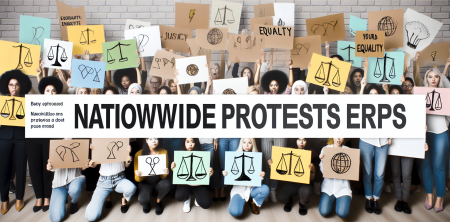
Following the leak, over 500,000 individuals flocked to the streets in more than 50 cities, demanding the protection of reproductive rights. Major cities, including Washington D.C., saw clashes with police as demonstrators expressed their outrage over the potential loss of rights that have been in place for nearly five decades. The movement is not just limited to the United States; Google Trends reported an astonishing 1,200% spike in global searches for "Roe overturned," indicative of the widespread concern that this decision may elicit.
Protests and Public Sentiment
The protests serve as a reflection of deep-seated emotions on both sides of the abortion debate. Women's rights advocates view this potential ruling as a direct threat to autonomy over their own bodies, while pro-life groups see it as a monumental victory in their fight against abortion. The social media landscape has been rife with viral content, as platforms like TikTok and Instagram become battlegrounds for the exchange of ideas, memes, and emotionally charged posts about the implications of overturning Roe v. Wade.
The Originalist Interpretation
The draft opinion argues for an originalist interpretation of the Constitution, suggesting that the Founders did not envision a constitutional right to abortion. This perspective is a cornerstone of the majority’s argument and reflects a broader trend within the Supreme Court that favors interpreting the Constitution based on its original meaning rather than its application in contemporary society.
Implications of the Overturning
If the Supreme Court proceeds with this ruling, it could lead to a patchwork of abortion laws across the United States. Many states have already lined up to enact strict bans, potentially affecting the reproductive rights of an estimated 40 million women.
- States poised to ban abortion entirely: Several states have prepared legislation to ban abortion immediately if Roe is overturned.
- Impact on women's health: Health experts warn of potential repercussions for women’s health, particularly in areas with limited access to reproductive healthcare.
- Legal battles: An overturning would likely ignite numerous legal challenges as states grapple with implementing new laws.
Societal Reactions and Political Ramifications
The anticipated ruling has drawn attention from various sectors of society, including healthcare professionals, educators, and political leaders. Many experts are voicing concerns over the potential implications for women's health, reproductive rights, and the overall legal landscape in the U.S.
Political Leaders Respond
Political leaders from both parties have taken to social media and news outlets to express their views. Democrats are rallying for protections at the federal level, while Republicans are celebrating what they view as a return to constitutional principles.
Future of Reproductive Rights
The leak has certainly set the stage for a sustained debate on reproductive rights in America. Advocacy groups are mobilizing to push for legislative protections, aiming to counteract the potential consequences of the Supreme Court's decision to overturn Roe v. Wade.
The Role of Advocacy Groups
Organizations such as the ACLU, Planned Parenthood, and NARAL Pro-Choice America are ramping up efforts to educate the public about the implications of this draft ruling and to galvanize support for reproductive rights.
- Educational campaigns: These groups are disseminating information about what the overturning could mean for individuals in various states.
- Mobilization efforts: Plans for further protests and advocacy events are already underway.
- Legal preparations: Many organizations are preparing legal strategies to challenge state-level restrictions post-overturn.
The Broader Context
It’s essential to place the current developments in context. The overturning of Roe v. Wade would not only reshape reproductive rights but could also influence a range of other social issues, such as healthcare access, privacy rights, and gender equality.
Historical Significance
Roe v. Wade, decided in 1973, established a woman's legal right to choose an abortion, setting a precedent that has been challenged repeatedly. The potential overturning marks a significant moment in the history of the Supreme Court and American jurisprudence, with reverberations that could last for generations.
Conclusion: A Nation at a Crossroads
The leaked draft and the anticipated decision to overturn Roe v. Wade reveal a nation at a crossroads, where deeply held beliefs about personal freedom, morality, and the role of government are being fervently debated. As protests continue and public sentiment grows, the outcome of this decision will undoubtedly shape the fabric of American society for years to come.
In the coming weeks and months, it will be critical to observe how states respond, how advocacy groups mobilize, and how the broader conversation about reproductive rights evolves in the wake of this monumental judicial shift.

