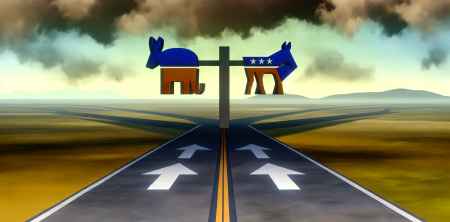
The political landscape in the United States is increasingly fraught with challenges for both major parties, as highlighted by political analyst Michael Barone. As we approach the 2024 elections, the Republicans and Democrats find themselves on perilous ground, grappling with internal issues and public dissatisfaction.
Republican Dilemmas Under Trump
The Republican Party, particularly under the influence of former President Donald Trump, is facing significant internal strife. Barone points out that while the GOP has made some gains among non-college graduates, Hispanics, and Black voters, these achievements are overshadowed by several contentious issues. The prolonged military engagement in Iran, which has yet to yield clear benefits, is a major sticking point for many voters who are weary of ongoing conflicts abroad.
Additionally, the Trump administration's tariffs have been criticized for contributing to inflation, further straining family budgets across the nation. The economic ramifications of these tariffs have not gone unnoticed, with many Republicans fearing that they may alienate key voter demographics just as the party is starting to make inroads in various communities.
Internal Enforcement Challenges
Another notable challenge comes from within the party itself. The recent firing of Kristi Noem, a prominent Republican figure, has raised eyebrows and sparked discussions about internal enforcement measures that may be overly aggressive. While the closure of borders has been a notable success for Republicans, the party risks losing support if it appears to prioritize enforcement over broader, more inclusive messaging.
Democratic Struggles with Public Perception
On the Democratic side, the party is grappling with its own set of challenges that have led to declining popularity. Key phrases such as 'defund the police' and 'abolish ICE' have alienated many voters, who see these stances as out of touch with mainstream concerns. Barone argues that by prioritizing the needs of specific outgroups, the Democrats risk losing sight of a broader electoral strategy that appeals to the average voter.
Moreover, the party's approach to healthcare has left many voters feeling dissatisfied. The lack of a cohesive strategy that resonates with the general public is becoming increasingly problematic as healthcare remains a top issue for many citizens. The Democrats must navigate these waters carefully to avoid further alienation.
Self-Inflicted Wounds
Both parties are also dealing with self-inflicted wounds that could impact their electoral prospects. Trump's ongoing relitigation of the 2020 election results continues to dominate headlines, diverting attention from pressing issues that could unite voters. This fixation on past events may hamper the GOP's ability to present a forward-looking agenda that resonates with the electorate.
On the Democratic front, the decision to hold up funding for the Department of Homeland Security has proven to be a contentious issue. This strategy has been criticized for potentially undermining national security and public safety, leaving the party vulnerable to accusations of neglecting critical responsibilities.
Finding Common Ground
As the 2024 elections approach, both parties face the daunting task of recalibrating their platforms to regain the trust of the American electorate. For Republicans, this may mean reevaluating their positions on foreign engagements and economic policies while ensuring that they maintain a strong stance on border security without alienating potential supporters.
Democrats, on the other hand, must work to distance themselves from polarizing rhetoric while developing a healthcare strategy that resonates broadly with voters. They need to emphasize unity and common ground, rather than focusing solely on niche issues that may not have widespread appeal.
The Road Ahead
In summary, both the Republican and Democratic parties are navigating treacherous political waters. As they prepare for the upcoming elections, they must confront the realities of their current platforms and the impact of their decisions on voter sentiment. The ability to adapt to the changing political climate while addressing the needs of a diverse electorate will be crucial for both parties as they seek to emerge victorious in 2024.
The stakes are high, and the path forward is fraught with challenges, but with strategic adjustments, both parties have the potential to reshape their destinies in the ever-evolving American political landscape.

