```html
1. What is Proprioception?
Proprioception, often referred to as the "sixth sense," is an integral part of how we understand our body’s position in space. It is the awareness of where our limbs and body parts are located without relying on visual cues. This sense is facilitated by specialized receptors called proprioceptors, located in the muscles, tendons, and joints. These receptors send signals to the brain about body position and movement, allowing for smooth coordination of actions.
Understanding proprioception is vital for various activities, from simple tasks like walking to complex athletic performances. For example, when you close your eyes and touch your nose with your finger, it's your proprioceptive sense that guides your hand to the correct location. It plays a pivotal role in balance, posture, and motor skills, making it a crucial element in both physical health and sports performance.
2. The Vestibular Sense Explained
The vestibular sense, on the other hand, is concerned with balance and spatial orientation. It’s primarily governed by the inner ear's structures, including the semicircular canals and otolith organs. These components detect head movements and changes in gravitational forces, helping the body maintain equilibrium. When you turn your head or change your position, the vestibular system sends signals to your brain about the motion and orientation of your head, allowing you to respond appropriately.
This sense is essential for various daily activities, such as walking, running, and even sitting still. It aids in preventing dizziness and ensuring that we maintain our balance, especially when engaging in more dynamic movements. For instance, when you spin around and then stop, it’s your vestibular system that helps you regain balance and stabilize your vision.
3. How Proprioception and Vestibular Sense Work Together
Proprioception and the vestibular sense are not standalone systems; they work in conjunction to provide a comprehensive understanding of our body’s position and movement. For instance, during a physical activity like dancing or playing sports, proprioception informs the brain about the position of body parts, while the vestibular system helps maintain balance and orientation. Together, they facilitate smooth, coordinated movements.
When one system is impaired, the other can often compensate to some extent. For example, if someone has a vestibular disorder, they might rely more heavily on proprioceptive feedback to maintain balance. Conversely, if proprioception is compromised, such as in certain neurological conditions, the vestibular system can sometimes step in to help. However, effective functioning ideally requires both systems to work in harmony.
4. The Importance of Proprioception and Vestibular Sense in Daily Life
Both proprioception and vestibular sense are integral to our daily activities, significantly influencing how we interact with our environment. For example, proprioception allows you to type on a keyboard without looking at your hands, while the vestibular sense helps you walk on uneven surfaces without stumbling. These senses play a substantial role in ensuring safety in everything from sports to simply navigating stairs.
Moreover, they are crucial for injury prevention. A well-developed proprioceptive system enhances joint stability and control, lowering the risk of sprains or dislocations. Similarly, a functioning vestibular system can help prevent falls by maintaining balance. This is particularly important for the elderly, who are more susceptible to falls and related injuries.
5. Proprioception vs Vestibular Sense: Key Differences
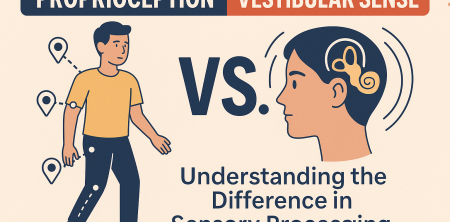
While both senses contribute to body awareness and balance, they operate through different mechanisms and serve unique functions. Proprioception primarily focuses on body position and movement, relying on muscle and joint sensors. In contrast, the vestibular system is dedicated to balance and spatial orientation, using inner ear structures to detect motion and gravitational changes.
Another significant difference lies in how they process information. Proprioception provides continuous feedback about the body’s position and movement in space, while the vestibular system responds to changes in motion and position, contributing to balance and equilibrium. Understanding these differences can help in various fields, from sports training to rehabilitation practices. (See: Understanding proprioception and its importance.)
6. Clinical Implications of Proprioception and Vestibular Dysfunction
Dysfunction in either proprioception or the vestibular system can lead to significant challenges and impairments. For instance, individuals with proprioceptive deficits may struggle with balance, coordination, and may be more prone to injuries. They might have difficulty performing tasks that require precise movements, such as writing or playing musical instruments.
On the other hand, vestibular dysfunction can lead to symptoms such as dizziness, vertigo, and balance problems. These issues can be particularly troublesome for older adults, increasing their risk of falls and subsequent injuries. Understanding these dysfunctions is crucial for healthcare professionals as they develop rehabilitation strategies that address both proprioceptive and vestibular impairments.
7. Rehabilitation Strategies to Improve Proprioception and Vestibular Sense
Rehabilitation strategies often focus on enhancing both proprioceptive and vestibular functions, especially for individuals recovering from injuries or surgeries. Techniques may include balance training exercises, proprioceptive activities such as standing on one leg, and vestibular rehabilitation therapy. These exercises can help improve coordination, balance, and overall body awareness.
Incorporating dynamic movements, such as agility drills and sports-specific tasks, can also enhance these senses. Virtual reality is increasingly being utilized as a tool for vestibular rehabilitation, creating immersive environments that challenge balance and spatial orientation. Such innovative approaches are proving to be effective in rehabilitation settings.
8. Current Research and Trends in Sensory Processing
Research on proprioception and vestibular functions is continuously evolving, with new studies exploring their roles in various conditions and populations. For example, recent studies are examining the connection between proprioception and mental health, investigating how body awareness can influence mood and anxiety levels. Understanding proprioception may offer insights into treating conditions such as body dysmorphia and anxiety disorders.
Moreover, advancements in technology are paving the way for better assessment tools and therapeutic interventions. For instance, wearable devices that track movement can provide valuable data regarding proprioception and vestibular performance, allowing for tailored rehabilitation programs. This ongoing research highlights the importance of both senses in overall health and well-being.
9. Practical Insights: Enhancing Your Proprioceptive and Vestibular Skills
Enhancing your proprioceptive and vestibular skills can be beneficial, whether you’re an athlete or simply looking to improve balance and coordination. Simple exercises like yoga, tai chi, or balance boards can be effective in developing these senses. Engaging in activities that challenge balance, such as standing on one foot or walking heel-to-toe, can also help.
Additionally, incorporating balance-focused workouts into your fitness routine can strengthen your vestibular system. Activities that require head movements, like dancing or martial arts, can stimulate the vestibular apparatus, enhancing your balance and coordination over time. The key is to consistently challenge yourself, gradually increasing the complexity of movements as your skills improve.
10. Proprioception vs Vestibular Sense: A Deeper Dive
To better understand the distinctions and interactions between proprioception and vestibular sense, it’s valuable to dive deeper into their underlying mechanisms and implications for specific activities and conditions. For instance, proprioception is often engaged in activities that require fine motor skills, such as playing a musical instrument or performing surgical procedures. In these scenarios, a well-tuned proprioceptive system can lead to greater precision and efficiency. Studies have shown that musicians, for example, exhibit enhanced proprioceptive awareness, which can be linked to their extensive practice and training.
On the other hand, the vestibular system becomes particularly important in activities that involve rapid changes in direction or elevation, such as gymnastics, skateboarding, or rock climbing. Athletes in these fields often undergo vestibular training to enhance their ability to react quickly to changes in their environment, which can improve their overall performance and reduce injury risks. (See: The vestibular system and balance.)
11. The Role of Proprioception and Vestibular Sense in Sports
In the realm of sports, both proprioception and vestibular sense are critical components for success. Athletes rely on these senses for optimal performance, as they enable quick adjustments to body position and balance. For instance, a basketball player must have a well-developed sense of proprioception to make split-second decisions about their body’s position while dribbling or shooting.
Statistics indicate that athletes with superior proprioception tend to have better overall performance metrics. A study published in the Journal of Sports Medicine found that athletes who engaged in proprioceptive training showed a 30% improvement in balance and agility compared to those who did not. Similarly, in sports like soccer, players utilize their vestibular sense to maintain balance while navigating through opponents and uneven playing surfaces, minimizing the risk of falls and injuries.
12. The Interconnection Between Proprioception and Vestibular Sense in Rehabilitation
For rehabilitation practitioners, understanding the interplay between proprioception and the vestibular sense is vital. When designing recovery programs for patients with injuries, it’s essential to address both senses to promote effective healing. For instance, a patient recovering from an ankle sprain may benefit from exercises that enhance proprioception, such as balance training on unstable surfaces. At the same time, vestibular exercises can help reduce dizziness and improve spatial awareness, enabling the patient to engage more fully in their rehabilitation.
Research supports the idea that integrated approaches that consider both proprioceptive and vestibular rehabilitation yield better outcomes. A study from the American Physical Therapy Association demonstrated that patients who received combined proprioceptive and vestibular therapy had a 40% faster recovery time than those who only received traditional rehabilitation methods.
13. FAQs About Proprioception and Vestibular Sense
What are the main functions of proprioception?
Proprioception primarily helps with body awareness, including the ability to sense limb positioning, movement, and force. It's essential for activities that require coordination and precise movements.
How does the vestibular system help with balance?
The vestibular system detects changes in head movement and position, providing the brain with information to help maintain balance and spatial orientation. It works closely with proprioception to ensure stability.
Can proprioception and vestibular dysfunction lead to injuries?
Yes, impairments in either system can increase the risk of falls, sprains, and other injuries. A compromised proprioceptive system may lead to poor body positioning, while vestibular issues can cause dizziness and loss of balance.
What exercises can improve proprioception?
Exercises that challenge balance, like single-leg stands, balance boards, and agility drills, can enhance proprioceptive abilities. Activities like yoga and tai chi also focus on body awareness and stability.
How do I know if I have vestibular dysfunction?
Common symptoms of vestibular dysfunction include dizziness, vertigo, imbalance, and difficulty with spatial orientation. If you experience these symptoms regularly, consider consulting a healthcare professional for evaluation. (See: Proprioception and motor skills development.)
Is vestibular rehabilitation effective?
Yes, vestibular rehabilitation is an effective treatment for many individuals experiencing balance issues or dizziness. It often involves specific exercises designed to help improve the brain's ability to process balance-related information.
14. How to Assess Proprioceptive and Vestibular Function
Assessing proprioceptive and vestibular function is crucial for understanding an individual's balance and coordination capabilities. Several clinical tests can be performed to gauge these sensory functions. For proprioception, tests may include the "joint position sense" test, where a person’s ability to identify the position of a joint is evaluated. Another method is the "balance error scoring system" (BESS), which measures stability while standing on different surfaces in various positions.
For vestibular assessment, clinicians might use tests such as the "Dix-Hallpike maneuver" to evaluate benign paroxysmal positional vertigo (BPPV), or the "Head Impulse Test" to assess the vestibular ocular reflex. These evaluations provide insight into how well these systems are functioning and can guide targeted rehabilitation strategies.
15. Future Directions in Proprioception and Vestibular Research
The future of proprioception and vestibular research looks promising, with ongoing investigations into how these systems interact not only in healthy individuals but also in various clinical populations. Studies are exploring the neurological basis of proprioception and vestibular pathways to identify potential biomarkers for disorders involving balance or coordination.
Additionally, researchers are examining how aging affects proprioceptive and vestibular functions, as declines in these senses can significantly impact mobility and quality of life in older adults. Understanding these changes could lead to preventative strategies and interventions that can help maintain balance and reduce fall risk among the elderly.
Another exciting direction is the integration of technology in assessing and training proprioceptive and vestibular functions. Virtual reality and augmented reality systems are being investigated for their potential to create engaging environments for rehabilitation. These platforms can simulate real-world challenges, making training more effective and enjoyable.
16. Conclusion: The Interplay Between Proprioception and Vestibular Sense
The interplay between proprioception and vestibular sense is fundamental to our ability to navigate the world. Both senses contribute uniquely to body awareness, balance, and coordination, playing vital roles in our daily lives. By understanding the differences and interconnections between these systems, we can appreciate their importance not just in sports and rehabilitation but also in maintaining overall health and well-being. Whether you’re an athlete, a healthcare professional, or simply someone interested in improving your body awareness, recognizing the significance of proprioception versus vestibular sense can lead to a more balanced and coordinated life.
```
Trending Now
Frequently Asked Questions
What is the difference between proprioception and vestibular sense?
Proprioception is the body's ability to sense its position and movement in space, relying on receptors in muscles and joints. In contrast, the vestibular sense relates to balance and spatial orientation, governed by structures in the inner ear that detect head movements and gravitational changes.
How does proprioception work?
Proprioception works through specialized receptors called proprioceptors located in muscles, tendons, and joints. These receptors send signals to the brain about the position and movement of body parts, enabling coordination and precise control during activities like walking or sports.
What role does the vestibular system play in balance?
The vestibular system, located in the inner ear, plays a crucial role in maintaining balance and spatial orientation. It detects head movements and changes in gravity, sending information to the brain to help the body respond and maintain equilibrium, especially during dynamic movements.
Why is proprioception important for athletes?
Proprioception is vital for athletes as it enhances coordination, balance, and motor skills. It allows athletes to perform complex movements accurately without visual cues, which is essential for optimizing performance and preventing injuries during sports activities.
Can you improve proprioception and vestibular sense?
Yes, both proprioception and vestibular sense can be improved through specific exercises and activities. Balance training, coordination drills, and vestibular rehabilitation techniques can enhance these sensory systems, leading to better stability and movement control.
Agree or disagree? Drop a comment and tell us what you think.

