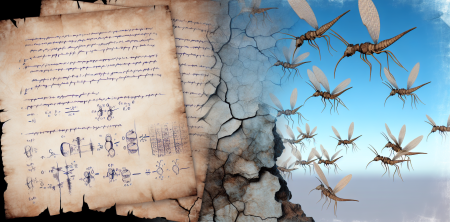
The realm of paleontology is often filled with assumptions that shape our understanding of ancient life. One of the most longstanding beliefs has been that the colossal insects of the prehistoric era thrived in environments rich in oxygen. However, a groundbreaking study published on April 25, 2026, challenges this notion, suggesting that these giants did not necessarily depend on elevated oxygen levels for their remarkable sizes. This comprehensive research, which analyzed over 2,000 insect species, not only reshapes our understanding of insect evolution but also raises concerns about the resilience of modern insects in the face of climate change.
The Significance of Oxygen in Insect Evolution
For decades, scientists have debated the relationship between atmospheric oxygen levels and the size of insects. During the Carboniferous period, approximately 359 to 299 million years ago, the Earth experienced a notable increase in oxygen levels, leading to the emergence of massive insects, including dragonflies with wingspans of over two feet. The prevailing theory suggested that this high oxygen concentration was crucial for supporting the metabolic demands of large-bodied insects.
However, the new study reveals that this hypothesis may not hold as much water as previously thought. By examining the physiological adaptations of a wide range of insect species, the researchers found that many modern insects are far less equipped to handle fluctuations in oxygen levels than had been assumed. This discovery not only contradicts the earlier theories surrounding prehistoric insects but also highlights the vulnerabilities of current insect populations in an era of rapid environmental change.
Research Methodology
The study was spearheaded by a team of entomologists and evolutionary biologists who meticulously scrutinized over 2,000 species of insects, spanning various ecological niches and evolutionary lineages. The research employed a combination of field studies, laboratory experiments, and historical data analysis. By integrating these methods, the team sought to understand the physiological responses of insects to varying oxygen concentrations and how these responses relate to body size.
- Field Studies: Researchers collected specimens from diverse habitats, focusing on both modern and prehistoric insects.
- Laboratory Experiments: In controlled environments, the team manipulated oxygen levels to observe the physiological reactions of different insect species.
- Historical Data Analysis: The study reviewed fossil records and geological data to correlate past atmospheric conditions with insect sizes.
Key Findings: Challenging the Old Paradigm
The results of the study were striking and revealed several key insights that challenge the traditional view of insect evolution:
1. Size does not Equal Oxygen Dependence
One of the most significant findings was that giant prehistoric insects did not necessarily require high oxygen levels to evolve. Many of the analyzed species demonstrated that large body sizes could be achieved through various physiological and ecological adaptations, rather than solely relying on atmospheric oxygen concentrations. This suggests that insect evolution is more complex and multifaceted than previously understood.
2. Vulnerability of Modern Insects
Contrary to the expectation that insects are resilient to environmental changes, the study found that many modern insects exhibit heightened sensitivity to rising oxygen levels. This is particularly concerning given the ongoing impacts of climate change, which could lead to shifts in atmospheric conditions that may not be favorable for current insect populations.
3. Evolutionary Implications
The research also sheds light on the evolutionary pathways taken by insects over millions of years. It suggests that insects have developed a variety of adaptations that allow them to thrive in different environments, making them less dependent on a single factor like oxygen levels. This adaptive versatility may have played a crucial role in their survival through various ecological upheavals in Earth’s history.
Broader Implications for Biodiversity and Ecosystems
The implications of this research extend beyond the realm of entomology and delve into the broader concerns regarding biodiversity and ecosystem health. As climate change continues to alter atmospheric conditions, the vulnerabilities highlighted in the study could pose significant risks to insect populations, which play vital roles in ecosystems worldwide.
Insect Roles in Ecosystems
Insects are integral to numerous ecological processes, including:
- Pollination: Many plants rely on insects for pollination, which is essential for the production of fruits and seeds.
- Decomposition: Insects aid in breaking down organic matter, contributing to nutrient cycling in ecosystems.
- Food Source: Many animals depend on insects as a primary food source, making them a critical component of food webs.
Given these essential roles, the decline of insect populations due to climate change and their inability to cope with fluctuations in oxygen levels could have cascading effects on ecosystems worldwide. This underscores the urgent need for conservation efforts aimed at protecting insect diversity and addressing the threats posed by climate change.
Future Research Directions
The findings from this study open up several avenues for future research. Scientists may focus on:
- Longitudinal Studies: Continued monitoring of insect populations in changing environments to understand their adaptive capacities over time.
- Physiological Mechanisms: Investigating the specific physiological mechanisms that enable insects to cope with varying oxygen levels.
- Climate Change Models: Integrating insect resilience data into climate change models to better predict future biodiversity outcomes.
Conclusion
The recent study challenging the belief that giant prehistoric insects needed high oxygen levels to thrive represents a significant shift in our understanding of insect evolution and physiology. By revealing the vulnerabilities of modern insects and their limited resilience to environmental changes, this research serves as a clarion call for increased conservation efforts. As we continue to grapple with the implications of climate change, it is crucial to recognize the complex relationships between insects, their environments, and their roles in sustaining the biodiversity that underpins life on Earth.
As scientists delve deeper into the mysteries of insect evolution, one thing remains clear: understanding the past is essential for safeguarding the future of these vital organisms and, by extension, the ecosystems they support.

