Introduction
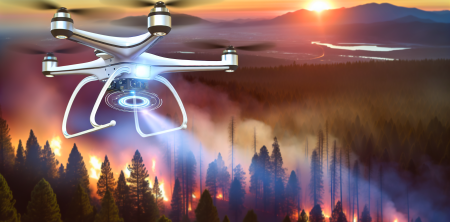
As the frequency and intensity of wildfires escalate globally, the dire need for effective wildfire prevention strategies has never been more pressing. A groundbreaking study published in the journal Science on May 7, 2026, unveils a novel approach to combat this growing threat. Researchers from Stanford University and Australia’s Commonwealth Scientific and Industrial Research Organisation (CSIRO) have developed a revolutionary method that utilizes aerial drones to inject fire-retardant nanoparticles into vegetation.
This innovative technique has shown impressive results in preliminary field tests, significantly reducing the rates at which wildfires spread—by as much as 70%—in regions hard-hit by wildfires, including parts of California and Australia. The implications of such a technological advancement could not only reshape the landscape of wildfire prevention but also have profound economic and social impacts, potentially saving billions in damages and preventing evacuations.
The Science Behind the Technology
The researchers behind this pioneering study have taken a multifaceted approach to tackle the challenges posed by wildfires. The primary focus is on the dry underbrush, which often serves as fuel for wildfires. By targeting this fuel source preemptively, their strategy aims to significantly reduce the likelihood of megafires—those catastrophic blazes that have ravaged millions of acres in recent years.
Utilizing drones equipped with advanced technology, the team injects specially formulated nanoparticles into the vegetation. These nanoparticles are designed to be both effective in retardation and environmentally friendly. The technology essentially transforms the vegetation’s ability to ignite, reducing its flammability without leaving harmful residues.
Field Testing and Results
The field tests conducted in California and Australia provided compelling data supporting the efficacy of this wildfire prevention method. In controlled environments, the drone deployment resulted in a drastic reduction in fire spread rates. Some of the most notable findings include:
- Rate of Spread Reduction: The drones were able to cut down the rate of fire spread by up to 70% in certain test scenarios.
- Cost Efficiency: If implemented widely, the technology could save an estimated $10 billion annually in wildfire damages.
- Community Safety: By mitigating the potential for large-scale evacuations, this strategy could protect thousands of lives and livelihoods.
The Impact on Climate Anxiety and Public Perception
In an era where climate anxiety looms large, especially during fire-prone seasons, the introduction of this innovative drone technology taps into a growing sense of urgency and hope among communities. As devastating wildfires become more common, the public is increasingly interested in effective solutions.
The viral potential of real-time drone footage showcasing the effectiveness of this wildfire prevention strategy has fueled social media discussions. Videos of drones in action dropping fire-retardant materials have captured the attention of users worldwide, raising awareness about the need for proactive measures against wildfires.
Controversies and Challenges Ahead
While the study presents a compelling case for the use of drones in wildfire prevention, it has not been without its controversies. Critics have raised questions regarding the scalability of the technology and whether it can be implemented effectively across diverse terrains and climates. Some key challenges include:
- Accessibility: Not all regions may have the infrastructure or resources to deploy drone technology on a large scale.
- Regulatory Hurdles: The use of drones for such purposes could face legal and regulatory challenges, including airspace restrictions.
- Environmental Impact: While the nanoparticles used are designed to be eco-friendly, concerns about unintended consequences on local ecosystems could arise.
Future Directions for Wildfire Prevention
The potential of drone technology in wildfire prevention is vast, but further research and development are necessary to refine the approach. Future studies will likely focus on:
- Long-Term Efficacy: Understanding the long-term impacts of fire-retardant nanoparticles on vegetation and ecosystems.
- Integration with Existing Fire Management Strategies: Finding ways to complement traditional firefighting methods with this innovative technology.
- Public Education: Raising awareness of the benefits and limitations of drone technology for wildfire management among communities.
Conclusion
As wildfires continue to pose a significant threat to lives, property, and ecosystems, the development of advanced solutions like drone technology represents a critical advancement in wildfire prevention. The promising results from the recent study highlight not only the fight against wildfires but also the potential for a new era of proactive disaster management.
As communities grapple with climate change and its impacts, embracing innovative technologies will be essential in safeguarding our future. The journey from research to real-world application may be complex, but the potential benefits speak volumes about the importance of embracing science in our battle against wildfires.

