```html
The air in Raleigh this past October was thick with more than just the crisp autumn chill; it was charged with the potent mix of history, policy, and raw emotion. The occasion? The Color of Education Summit 2026, an annual gathering that usually spotlights critical issues in public schooling. But this year, the spotlight felt less like an illumination and more like an interrogation, particularly when it came to the escalating debate over private school voucher programs in North Carolina. What started as a policy discussion quickly morphed into something far more profound, drawing uncomfortable parallels that have ignited public discourse and sent ripples through social media.
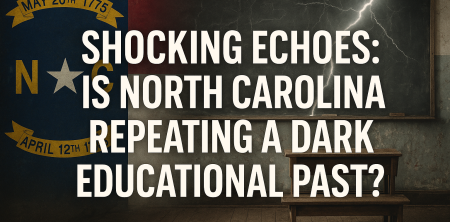
At the heart of this intense conversation was Bishop William Barber II, a figure synonymous with moral clarity and social justice. As a keynote speaker, his words didn't just resonate; they reverberated, hitting a nerve with a controversial comparison that has since dominated headlines. Bishop Barber fearlessly drew a direct line between the current push for private school vouchers and North Carolina's mid-1950s Pearsall Plan. For those unfamiliar with this piece of history, the Pearsall Plan wasn't just a dusty old policy; it was a legislative maneuver designed, quite explicitly, to facilitate segregated private schools during the tumultuous era of desegregation. It's a heavy comparison, one that immediately frames the contemporary voucher debate not just as a matter of educational choice, but as a potential threat to the very fabric of educational justice.
The Ghost of the Pearsall Plan: A Historical Haunting
To understand the weight of Bishop Barber's comparison, we need to briefly step back in time. The Pearsall Plan emerged in North Carolina in 1956, a direct response to the Supreme Court's landmark Brown v. Board of Education decision, which declared state-sponsored segregation in public schools unconstitutional. Rather than embracing desegregation, North Carolina, like many Southern states, sought ways to circumvent it. The Pearsall Plan provided state funds, or 'tuition grants,' to white families who wished to withdraw their children from newly integrated public schools and enroll them in private, often newly established, segregation academies. It was a thinly veiled attempt to maintain racial separation in education, using public money to subsidize private discrimination.
The historical context is crucial here. The plan wasn't about empowering parental choice in a diverse educational landscape; it was about preserving a racial hierarchy under the guise of choice. Families who applied for these grants often did so with the explicit intent of avoiding integrated schools. This history makes Bishop Barber's analogy particularly potent and, for many, deeply unsettling. When he suggests that today's voucher programs risk echoing this past, he's not just making an academic point; he's invoking the specter of institutionalized inequality and the potential erosion of hard-won battles for educational justice.
Vouchers Today: Choice or Channeling Funds Away from Public Schools?
Fast forward to 2026, and the landscape of educational policy in North Carolina is undeniably different, yet the underlying tension around public versus private funding remains striking. The state has seen a significant expansion of its private school voucher programs, offering public funds to families to cover tuition costs at private institutions. Proponents argue these programs provide essential choice, particularly for low-income families trapped in underperforming public school districts. They contend that every child deserves access to quality education, and if public schools aren't delivering, parents should have the option to seek alternatives.
However, critics, like Bishop Barber, voice serious concerns. They argue that these expanded voucher programs don't just offer choice; they actively siphon much-needed resources away from an already struggling public school system. Public schools, by their very nature, are mandated to serve all students, regardless of background, ability, or socioeconomic status. They are cornerstones of communities, fostering civic engagement and preparing a diverse citizenry. When public funds are diverted to private schools, which often have less accountability, can select their students, and may not offer the same comprehensive services, the integrity and capacity of the public system are diminished. This, for many, is a direct assault on the principle of educational justice, where equitable access to high-quality public education should be a right, not a privilege contingent on a voucher.
It's worth noting the statistics here. In North Carolina, the Opportunity Scholarship Program, the state's largest voucher program, has seen a dramatic increase in allocated funds. In 2023, the state legislature expanded eligibility to all K-12 students, regardless of family income, and removed the previous income cap for scholarships. The budget for this program is projected to reach over $500 million annually by 2032. This isn't small change; it represents a significant chunk of educational funding that could otherwise go to public schools. Critics point out that many of these new recipients are families who were already sending their children to private schools, meaning public funds are now subsidizing existing private choices rather than creating new options for those truly in need. This makes the argument that vouchers are primarily for low-income families harder to defend, and it reinforces the perception that public money is being redirected from its intended purpose of supporting the universal public system.
The Leandro Decision's Long Shadow: A New Chapter, Same Fight for Educational Justice
Adding another layer of complexity to this already volatile debate is the North Carolina Supreme Court's April 2026 decision. This ruling brought a conclusion to the three-decade-long Leandro school funding litigation. For thirty years, this case has been the legal battleground for educational justice in North Carolina, with plaintiffs arguing that the state was failing its constitutional duty to provide every child with access to a sound basic education. The court's decision, while marking an end to the litigation, doesn't necessarily mean an end to the underlying issues it sought to address.
The Leandro case was never just about money; it was about equity. It highlighted systemic underfunding, particularly in rural and low-wealth districts, leading to disparities in resources, teacher quality, and educational outcomes. The conclusion of this litigation, without a definitive resolution that fully addresses these deep-seated inequities, leaves many questions unanswered. In this context, the expansion of voucher programs can be seen by some as a sidestep rather than a solution, diverting attention and resources from the fundamental challenge of adequately funding and improving the public schools that serve the vast majority of North Carolina's children. It raises the critical question: if the state isn't fully meeting its constitutional obligations to public education, should it be simultaneously funding private alternatives? (See: Pearsall Plan history.)
The implications of the Leandro decision, even with its conclusion, are profound. Many educational justice advocates feel the state has still not fully committed to the comprehensive plan for improvement that was outlined by the lower courts. This plan included recommendations for competitive teacher salaries, high-quality principal training, and universal access to pre-kindergarten, among other things. The ongoing struggle to fully fund these initiatives while expanding private school choice creates a tension that directly impacts educational justice. It suggests a potential prioritization of private options over a robust public system that is constitutionally mandated to serve all children. For communities that have historically been underserved, this can feel like a betrayal of the promise of equitable education, shifting the burden of access onto individual families rather than ensuring systemic support.
Arizona's Experiment: ESAs, DEI, and Transgender Rights
While North Carolina grapples with its own educational dilemmas, the spotlight also swings west to Arizona, a state that often serves as a bellwether for conservative policy trends. Arizona's educational landscape is currently a hotbed of emotionally charged debates, showcasing a different but equally intense front in the national conversation about education and identity. The state's Education Savings Account (ESA) program has expanded significantly, now serving over 100,000 students. ESAs, while similar in principle to vouchers, often offer greater flexibility, allowing families to use public funds for a broader range of approved educational expenses, including tuition, homeschooling supplies, and therapies.
The sheer scale of Arizona's ESA program means a substantial redirection of public funds to private and alternative educational settings. Proponents celebrate it as a triumph of parental choice, empowering families to tailor education to their children's unique needs. However, critics echo concerns raised in North Carolina, arguing that this expansion depletes public school resources and lacks sufficient accountability for how taxpayer money is spent. The debate here isn't just about funding models; it's about the very purpose and future of public education in a state increasingly embracing private options.
Beyond Funding: The Culture Wars in Education
Arizona's educational controversies aren't confined to funding mechanisms; they extend deeply into the ongoing culture wars that are reshaping American schools. The state is currently facing ballot measures aimed at restricting Diversity, Equity, and Inclusion (DEI) activities in educational institutions. These initiatives often argue that DEI programs are divisive, promote specific ideologies, or are simply unnecessary. On the other hand, advocates for DEI emphasize its importance in fostering inclusive environments, addressing historical injustices, and preparing students for a diverse world.
Simultaneously, there are efforts to limit transgender students' participation in sports, a highly contentious issue across the nation. These proposals often cite concerns about fairness in women's sports, while opponents argue they are discriminatory and harmful to transgender youth, denying them opportunities for social engagement and physical activity. These debates, whether about DEI or sports, aren't just policy discussions; they are deeply personal, touching on identity, belonging, and the role of schools in shaping societal values. They highlight how the fight for educational justice isn't solely about academic achievement or funding, but also about creating safe, affirming, and equitable spaces for all students.
The culture war aspect is particularly insidious because it often distracts from core educational issues like literacy rates or teacher shortages. Instead, political energy gets channeled into highly emotional debates that polarize communities. For example, the arguments against DEI often suggest that these programs are "woke" or divisive, rather than focusing on their stated goals of ensuring all students feel valued and have opportunities to succeed. Similarly, the debate around transgender athletes often frames the issue as a zero-sum game, pitting different groups of students against each other, instead of exploring inclusive solutions. This shift in focus means that conversations about systemic inequities and how to genuinely improve educational outcomes for all students often get lost in the noise of ideological battles. It turns schools into battlegrounds, which isn't conducive to learning or to fostering a sense of community.
The Digital Echo Chamber: Social Media's Amplifying Role
One cannot discuss these emotionally charged educational debates without acknowledging the massive role of social media. Platforms like X (formerly Twitter), Facebook, and Instagram are no longer just passive forums; they are active battlegrounds where policy discussions quickly turn into viral sensations. Bishop Barber's comments in Raleigh, for instance, immediately sparked a torrent of reactions, with hashtags trending and videos of his speech being shared thousands of times. The sheer volume of engagement underscores the public's deep concern and passion for these issues.
Social media amplifies voices, both informed and misinformed, allowing narratives to spread rapidly. It creates echo chambers where like-minded individuals reinforce each other's views, making nuanced discussion challenging. Yet, it also democratizes access to information, allowing grassroots movements to mobilize and bringing previously marginalized perspectives to the forefront. For advocates of educational justice, social media offers a powerful tool to raise awareness, organize, and counter narratives they perceive as harmful. However, it also means that misinformation can proliferate, and emotional appeals often overshadow factual analysis, making it harder to find common ground or forge consensus.
Think about how quickly a soundbite can go viral, often stripped of its original context. Bishop Barber's analogy, while powerful, was reduced to a few seconds of video for many people, leading to immediate reactions without the full historical background he provided. This brevity can be both a strength and a weakness. It allows for rapid dissemination of key messages, but it also opens the door for misinterpretation and deliberate distortion. Activists for educational justice often use social media to highlight disparities, share personal stories, and call for action. This direct line to the public can bypass traditional media filters and reach a broader audience, energizing movements. However, it also necessitates constant vigilance against bad-faith actors who exploit these platforms to spread divisive content, making the pursuit of factual, evidence-based dialogue increasingly difficult in the digital age.
Connecting the Dots: A National Tapestry of Educational Conflict
What we're seeing in North Carolina and Arizona isn't isolated; it's part of a broader national trend. Across the United States, states are wrestling with similar questions about public education funding, parental rights, curriculum content, and the inclusion of diverse student populations. The rise of school choice movements, often fueled by conservative political agendas, challenges the traditional dominance of public schools. Debates over what can be taught in classrooms, from critical race theory to LGBTQ+ issues, reflect a deeper cultural divide about values and history. (See: disparities in education.)
The common thread weaving through these disparate conflicts is the underlying struggle for educational justice. For some, justice means empowering parents with choice, believing that competition will improve all schools. For others, it means robustly funding and supporting a universal public education system that serves as the great equalizer, ensuring every child, regardless of zip code or background, has access to the resources needed to succeed. These are not easily reconcilable viewpoints, and the tension between them is likely to define educational policy for years to come.
Expert Perspectives on Educational Justice
To truly grasp the complexities of educational justice, it helps to hear from different fields. Legal scholars often emphasize the constitutional right to a sound basic education, referencing landmark cases like Brown v. Board of Education and state-level litigation like Leandro. They'll tell you that educational justice isn't just about providing schools, but providing schools that actually equip students for success. Economists, on the other hand, might focus on the long-term societal costs of educational inequality. They'll point to studies showing how disparities in education correlate with lower economic mobility, higher crime rates, and reduced overall productivity for a state. The argument here isn't just moral; it's a pragmatic one about investing in human capital.
Sociologists often highlight the structural barriers that prevent equitable access to quality education. They analyze how factors like housing segregation, generational poverty, and systemic racism intersect to create persistent achievement gaps. They'd argue that simply offering "choice" without addressing these underlying societal inequalities doesn't create justice; it often just shifts students from one under-resourced environment to another, or, in some cases, subsidizes access for those already privileged. Finally, educators themselves bring a ground-level perspective. They often express frustration with policies that divert resources from public schools, arguing that teachers and administrators are best positioned to understand the needs of their diverse student populations. They advocate for systemic support, professional development, and smaller class sizes, seeing these as essential components of true educational justice, not just isolated policy decisions.
The Role of Accountability in Educational Justice
One of the recurring tensions in the educational justice debate, particularly concerning private school vouchers and ESAs, is the question of accountability. Public schools are subject to a myriad of state and federal regulations. They must administer standardized tests, report student performance data, comply with special education laws, and often adhere to specific curriculum standards. This level of oversight is designed to ensure that taxpayer money is being used effectively and that all students, regardless of their needs, are being served.
Private schools, by contrast, often operate with far less public accountability. While they typically have to meet some basic health and safety standards to receive state funds, they often aren't required to administer the same standardized tests, report the same data, or offer the same comprehensive services for students with disabilities. This disparity raises significant concerns for advocates of educational justice. If public funds are diverted to private institutions, what guarantees do taxpayers have that those funds are actually leading to better outcomes for students, particularly those from disadvantaged backgrounds? What happens if a private school fails to deliver on its promises, or worse, discriminates against certain students? Without robust accountability mechanisms, the promise of "choice" can sometimes mask a lack of oversight, potentially leaving vulnerable students without the protections and educational quality they deserve.
Beyond Funding: The Impact on Civic Education and Community
The debate around educational justice isn't solely about individual student outcomes or funding models; it also touches on the broader societal role of public education. Public schools have historically been seen as key institutions for fostering civic engagement and building community. They bring together students from diverse backgrounds, expose them to different viewpoints, and provide a common foundation of knowledge and shared experiences. This interaction is crucial for developing the civic skills necessary for a functioning democracy.
When public funds are significantly diverted to private schools, it can weaken this civic function. Private schools, while offering valuable education, often cater to more homogenous populations, whether by socio-economic status, religion, or specific educational philosophies. This can reduce the opportunities for diverse interaction that public schools naturally provide. For advocates of educational justice, a strong public education system is essential for creating an informed citizenry and promoting social cohesion. When public schools are under-resourced or marginalized, it's not just individual students who suffer; it's the very fabric of democratic society that can unravel. The collective good, in this view, is inextricably linked to the health and vitality of our public education system.
The Future of Public Education and the Pursuit of Educational Justice
So, where do we go from here? The Color of Education Summit 2026, by bringing these issues to the forefront, forced a crucial conversation. Bishop Barber's historical analogy, while provocative, serves as a stark reminder that educational policies have profound, long-lasting consequences, sometimes echoing dark chapters of our past. The debates in North Carolina and Arizona illustrate that the fight for educational justice is multifaceted, encompassing funding, equity, inclusion, and the very definition of what a public education should entail.
The path forward requires a renewed commitment to open dialogue, critical thinking, and a willingness to confront uncomfortable truths. It means examining whether current policies genuinely promote equity and access for all students, or if they inadvertently create new forms of segregation or disadvantage. It calls for robust investment in public schools, ensuring they have the resources to meet the diverse needs of their students and remain viable, high-quality options for every family. Ultimately, ensuring educational justice means recognizing that a strong, equitable public education system is not just an academic ideal, but a cornerstone of a healthy, democratic society. It's a continuous pursuit, demanding vigilance, advocacy, and a deep understanding of both history and the present moment. (See: latest news on education policies.)
Frequently Asked Questions About Educational Justice
What exactly is "educational justice"?
Educational justice is the principle that every child, regardless of their background, zip code, race, gender, ability, or socioeconomic status, deserves access to a high-quality education that prepares them for success in life, college, and career. It's about fairness and equity in educational opportunities and outcomes, addressing systemic barriers that prevent certain groups of students from reaching their full potential.
How do private school vouchers impact educational justice?
The impact is highly debated. Proponents argue vouchers promote educational justice by giving low-income families choices they wouldn't otherwise have, allowing them to escape failing public schools. Critics argue vouchers harm educational justice by diverting much-needed funds from public schools, which serve all students, and by subsidizing private schools that may not be accountable to the public, may not serve all students (like those with severe disabilities), or may exacerbate segregation.
What was the Pearsall Plan, and why is it relevant today?
The Pearsall Plan was a set of laws passed in North Carolina in 1956, designed to circumvent the Brown v. Board of Education ruling. It provided tuition grants (vouchers) to white families to attend private, segregated academies, effectively maintaining racial separation in schools. Bishop Barber's comparison highlights concerns that modern voucher programs, even if not explicitly for segregation, could inadvertently lead to similar outcomes by further stratifying the educational landscape and weakening public schools that serve diverse populations.
What is the Leandro case, and what does it mean for North Carolina?
The Leandro case was a three-decade-long lawsuit in North Carolina that argued the state was not meeting its constitutional obligation to provide every child with a "sound basic education." While the litigation recently concluded, it underscored systemic underfunding in public schools, particularly in rural and low-wealth districts. Its relevance today is that even as the state grapples with addressing these historical inequities, it's simultaneously expanding private school voucher programs, leading to questions about resource allocation and commitment to public education.
How do "culture wars" issues like DEI and transgender rights relate to educational justice?
These issues relate to educational justice by impacting whether all students feel safe, valued, and included in school environments. Debates over DEI often center on whether schools are adequately addressing historical injustices and fostering inclusive learning spaces for students of all backgrounds. Arguments around transgender rights, particularly in sports, affect the sense of belonging and opportunities for participation for transgender youth. For many, educational justice isn't just about academics; it's about creating equitable and affirming environments where every student can thrive emotionally and socially.
What role does social media play in the fight for educational justice?
Social media is a double-edged sword. It amplifies voices, allowing advocates to quickly raise awareness, share information, and mobilize support for educational justice causes. It democratizes access to information and can highlight disparities that might otherwise go unnoticed. However, it also creates echo chambers, allows misinformation to spread rapidly, and often reduces complex policy debates to emotional soundbites, making nuanced discussion and consensus-building more challenging.
```
Trending Now
Frequently Asked Questions
What is the Pearsall Plan in North Carolina?
The Pearsall Plan was a legislative response implemented in 1956 to the Supreme Court's Brown v. Board of Education decision. It aimed to maintain segregated private schools in North Carolina, effectively circumventing the mandate for desegregation in public schools. This plan has drawn significant historical scrutiny for its role in perpetuating educational inequities.
How do private school vouchers relate to educational equity?
The current debate over private school vouchers in North Carolina has raised concerns about educational equity. Critics, including Bishop William Barber II, argue that these vouchers echo past policies like the Pearsall Plan, potentially undermining public education and exacerbating segregation, rather than promoting genuine educational choice for all students.
What was the Color of Education Summit 2026 about?
The Color of Education Summit 2026 focused on critical issues in public schooling, particularly the implications of private school voucher programs in North Carolina. This year's discussions were intensified by Bishop Barber's keynote address, which highlighted historical parallels to the Pearsall Plan, sparking significant public discourse on educational justice.
Who is Bishop William Barber II?
Bishop William Barber II is a prominent civil rights leader and social justice advocate known for his work on educational equity and moral clarity. As a keynote speaker at the Color of Education Summit 2026, he drew attention to the historical impact of policies like the Pearsall Plan in relation to contemporary educational debates in North Carolina.
What are the implications of the current voucher debate in North Carolina?
The ongoing debate over private school vouchers in North Carolina raises significant implications for educational equity and justice. Critics warn that these vouchers could replicate historical injustices akin to the Pearsall Plan, threatening the progress made in desegregation and potentially widening the gap between public and private educational opportunities.
Agree or disagree? Drop a comment and tell us what you think.

