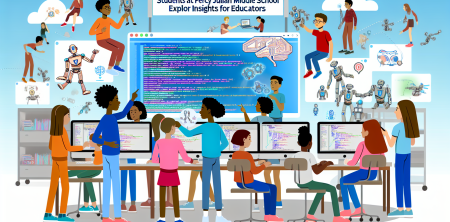
In an age where technology is rapidly evolving, students at Percy Julian Middle School in Oak Park, Illinois, have taken the initiative to delve into the world of artificial intelligence (AI). Throughout the school year, a group of students volunteered their time during recess and lunch periods to explore various AI tools. Their journey not only equipped them with new technical skills but also led them to confront significant ethical dilemmas regarding the use of AI in education. The insights they gathered are proving invaluable for teachers looking to integrate AI responsibly in classrooms.
The Student Initiative
The project began as an extracurricular exploration, with students eager to understand the implications of AI technologies. Over the course of the year, these students engaged with numerous AI tools, learning how they function and how they could be applied in educational settings. The initiative was primarily student-led, emphasizing the importance of student voice in discussions about technology that affects their learning environments.
Skills Development
As part of their exploration, students developed various technical skills. They learned about machine learning, data analysis, and programming basics. This hands-on experience was not just about coding but also about understanding how AI systems work and the data they require.
- Machine Learning: Students explored how machines can learn from data, understanding algorithms and their applications.
- Data Analysis: Students became adept at interpreting data sets, a crucial skill in the AI field.
- Programming Basics: They learned fundamental programming concepts, which are essential for developing AI applications.
Ethical Considerations in AI
Alongside technical skills, students also engaged in critical discussions about the ethical implications of AI. They recognized that while AI has the potential to enhance education, it also raises concerns about privacy, bias, and the potential for misuse. These discussions were vital in shaping their understanding of how AI should be integrated into the classroom.
Key Ethical Dilemmas Identified
Through their discussions, students identified several key ethical dilemmas:
- Privacy Issues: Students expressed concerns about how AI systems collect and use personal data. They questioned who has access to this data and how it is protected.
- Bias in AI: The students recognized that AI systems can perpetuate existing biases if they are trained on biased data. This understanding prompted discussions about fairness and equity in AI applications.
- Dependence on Technology: Some students voiced worries about becoming overly reliant on AI tools, which could hinder critical thinking and problem-solving skills.
Insights for Educators
The insights from these students offer valuable guidance for educators aiming to integrate AI into their teaching practices. Here are some key takeaways:
- Encourage Student Engagement: Allowing students to take the lead in exploring AI fosters engagement and ownership of their learning.
- Incorporate Ethical Discussions: Educators should integrate conversations about the ethical implications of AI into their curricula, helping students develop a nuanced understanding of technology.
- Focus on Skills Development: Schools should provide opportunities for students to develop technical skills that are increasingly important in a tech-driven world.
Creating a Responsible AI Framework
As educators consider how to implement AI in their classrooms, the students' findings highlight the need for a responsible framework. This framework should prioritize:
- Transparency: Students and teachers must understand how AI tools work and what data they utilize.
- Equity: It’s essential to ensure that AI applications do not reinforce biases or widen achievement gaps.
- Empowerment: Students should feel empowered to question and critique AI tools, fostering an environment of critical thinking.
Conclusion
The journey undertaken by the students at Percy Julian Middle School serves as a powerful example of how youth can engage with complex technologies like AI. By volunteering their time to explore this field, these students have not only gained technical skills but have also contributed to an essential dialogue about the ethical implications of technology in education. Their insights provide a roadmap for educators seeking to navigate the challenges and opportunities that AI presents in the classroom.
As schools continue to evolve in response to technological advancements, the lessons learned from these students will be crucial in shaping a responsible and equitable approach to AI in education.

