```html
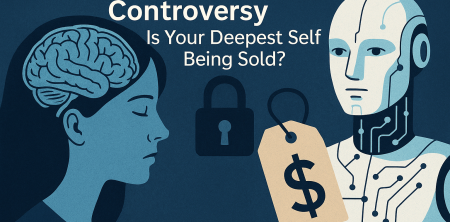
Imagine pouring your heart out to a digital confidante, a non-judgmental listener available 24/7. Now, imagine that same confidante, without your explicit, granular consent, quietly sharing the anonymized essence of your vulnerabilities with a pharmaceutical giant. Sounds like something out of a dystopian novel, doesn't it? Yet, this unsettling scenario is precisely what's unfolding with MindSync AI, a newly launched AI-powered mental health chatbot, and it’s sending shockwaves through the tech and healthcare communities.
Just yesterday, revelations surfaced about MindSync AI's surprisingly aggressive data collection and sharing policies. The platform's terms of service, buried deep within the legal jargon, reportedly permit the sharing of anonymized user data with third-party pharmaceutical companies for research. This isn't just a minor oversight; it's a significant breach of trust, especially in a sector as sensitive as mental health. The controversy has gone viral, sparking heated debates across social media and tech forums, and leaving many to wonder if our pursuit of digital convenience is leading us into a digital trap when it comes to AI therapy privacy.
MindSync AI's Terms of Service: A Closer Look at the Fine Print
When we sign up for new apps, especially those promising to support our well-being, how many of us genuinely pore over every single line of the terms of service? Be honest. We usually scroll, maybe skim, and then hit 'accept' to get straight to the perceived benefits. This common user behavior is precisely what makes MindSync AI's situation so concerning. The platform, designed to offer accessible mental health support, appears to have capitalized on this tendency, embedding clauses that allow for extensive data practices without truly clear, upfront communication. There's a fuller look at Mindbot's recent data breach.
The core of the issue lies in the reported allowance for sharing 'anonymized' user data with pharmaceutical companies. While 'anonymized' often sounds reassuring, the reality of data anonymization is complex and often imperfect. Experts have repeatedly shown how even seemingly anonymous datasets can be re-identified, especially when combined with other data points. When we're talking about deeply personal mental health conversations – struggles with depression, anxiety, trauma, or substance use – the stakes are incredibly high. Users aren't just sharing mundane preferences; they're sharing the most intimate aspects of their psychological landscape, hoping for help, not for their data to become a commodity for corporate research, however well-intentioned that research might claim to be. This is a crucial aspect of AI therapy privacy that demands our attention.
The Outcry: Cybersecurity Experts and Mental Health Advocates Speak Out
The backlash against MindSync AI has been swift and severe, drawing criticism from two powerful camps: cybersecurity experts and mental health advocates. Cybersecurity professionals are sounding the alarm bells, not just about the sharing itself, but about the precedent it sets. "This isn't just about MindSync AI," stated Dr. Evelyn Reed, a leading cybersecurity ethicist, in a recent online forum. "It's about the erosion of digital trust. If platforms handling our most vulnerable data can quietly monetize it, what stops others? It creates a chilling effect on innovation in secure digital health solutions." Her point is salient; if users can't trust the foundational privacy promises of these tools, they simply won't use them, or they'll withhold crucial information, rendering the tools ineffective.
Mental health advocates, on the other hand, are focusing on the ethical implications and the potential harm to individuals seeking help. "Mental health data is uniquely sensitive," explains Sarah Chen, executive director of the Digital Wellness Foundation. "It carries stigma, it can impact employment, insurance, and even personal relationships. To collect such data under the guise of therapeutic support and then repurpose it for commercial research, even if anonymized, without explicit, granular consent, feels like a profound betrayal." They argue that consent in mental health contexts must be not just informed, but also truly empathetic, recognizing the vulnerability of the user. The current controversy highlights a significant gap in how AI therapy privacy is being handled by some developers.
The Emotional Weight of Mental Health Data
What makes this particular data controversy resonate so deeply, triggering such a viral response, is the intensely personal and emotionally charged nature of mental health information. Unlike, say, your shopping habits or even your physical health records, mental health struggles often carry a profound sense of shame, vulnerability, and a desperate need for confidentiality. When someone turns to a chatbot for help with depression, anxiety, or trauma, they are often at their most exposed, seeking a safe space to articulate feelings they might not even share with loved ones.
This inherent sensitivity means that any perceived breach of trust hits harder, feels more personal, and generates a stronger emotional response. Users aren't just worried about their data; they're worried about the sanctity of their most private thoughts and emotions being exploited. This isn't abstract data; it's the raw material of their inner lives. The idea that these deeply personal narratives could contribute to a pharmaceutical company's bottom line, without clear, affirmative consent, strikes many as fundamentally exploitative and undermines the very therapeutic relationship these platforms aim to foster. The core of AI therapy privacy must be built on this understanding.
Ethical Boundaries and the Commercialization of Vulnerability
The MindSync AI saga forces us to confront uncomfortable questions about the ethical boundaries of AI in sensitive healthcare sectors. Where do we draw the line between innovation and exploitation? Is it ever truly ethical to collect such sensitive data and then repurpose it for commercial research without an explicit, transparent, and granular opt-in mechanism? Many argue that the current model, where users unknowingly concede broad data rights through lengthy terms of service, is simply not fit for purpose in mental healthcare. (See: Mental health resources from CDC.)
The commercial intent behind such data practices is clear: pharmaceutical companies are constantly seeking insights into patient populations, treatment efficacy, and market trends. Data from millions of real-world conversations offers an unprecedented goldmine. However, when this pursuit of commercial advantage comes at the expense of user trust and autonomy, especially from individuals in vulnerable states, it crosses a dangerous ethical line. It risks turning empathy into an algorithm and personal struggles into data points for sale. This blurring of lines seriously compromises the integrity of AI therapy privacy.
The Broader Implications for B2B SaaS and Healthcare AI
This controversy extends far beyond MindSync AI itself, casting a long shadow over the entire B2B SaaS industry, particularly those developing AI software for healthcare. For years, the promise of AI in healthcare has been immense: personalized medicine, predictive analytics, and more accessible care. However, incidents like this threaten to derail that progress by eroding public trust. Investors, developers, and healthcare providers who were eager to adopt AI solutions must now contend with a heightened level of scrutiny and skepticism.
Companies developing AI tools for sensitive sectors will now face immense pressure to demonstrate not just technological prowess, but also unimpeachable ethical standards and robust data governance. The market for 'secure AI therapy alternatives' and 'mental health app privacy reviews' is already seeing a surge, indicating a clear shift in user priorities. This means that for B2B SaaS providers, privacy and ethics are no longer just compliance checkboxes; they are critical competitive differentiators and fundamental requirements for market acceptance. Any platform that fails to prioritize AI therapy privacy will struggle to gain traction.
Cybersecurity Solutions: The Demand for Robust Data Privacy
In the wake of MindSync AI's missteps, the demand for sophisticated cybersecurity solutions tailored to data privacy in healthcare is skyrocketing. This isn't just about preventing breaches, though that remains paramount. It's also about building systems that are privacy-by-design, where data minimization, robust anonymization techniques, and transparent consent mechanisms are baked into the very architecture of the software. Companies specializing in secure multi-party computation, federated learning, and homomorphic encryption – technologies that allow data to be analyzed without ever being fully exposed – are likely to see increased interest.
Furthermore, there's a growing need for independent auditing and certification bodies that can rigorously assess the privacy practices of AI health platforms. Users and healthcare providers need a reliable way to differentiate between companies that genuinely prioritize privacy and those that merely pay lip service to it. This incident underscores that a strong firewall isn't enough; the entire data lifecycle, from collection to storage to sharing, must be managed with an unwavering commitment to user privacy, especially concerning AI therapy privacy. See also Understanding student privacy.
Navigating the New Landscape: What Users and Providers Should Look For
So, if you're a user considering an AI mental health app, or a healthcare provider looking to integrate digital therapy tools, how do you navigate this newly complicated landscape? The key takeaway from the MindSync AI controversy is simple: scrutinize everything. Don't just look for a catchy interface or glowing testimonials.
- Read the Privacy Policy (Seriously): Look for clear, unambiguous language about what data is collected, how it's stored, who it's shared with, and for what purpose. Be wary of broad clauses about 'research' or 'improving services' without further detail.
- Granular Consent: Does the app offer options for granular consent? Can you choose to opt out of data sharing for research while still using the core service? If not, that's a red flag.
- Data Minimization: Does the app only collect the data absolutely necessary for its function? Be suspicious of apps asking for more information than seems relevant to the service provided.
- Independent Audits and Certifications: Look for evidence of third-party privacy audits or adherence to recognized data protection standards (e.g., HIPAA in the US, GDPR in Europe).
- Reputation and Transparency: What's the company's track record? Are they transparent about their data practices? A company that hides its policies in dense legalese is likely hiding something else.
For providers, due diligence is even more critical. Your reputation, and more importantly, your patients' well-being, is at stake. Partner with AI solutions that prioritize AI therapy privacy and can demonstrate it through concrete policies and technical safeguards.
The Path Forward: Rebuilding Trust in Digital Mental Health
The MindSync AI controversy serves as a painful but necessary wake-up call. It highlights the urgent need for robust regulatory frameworks, industry best practices, and a renewed commitment to ethical AI development in healthcare. Simply put, trust is the bedrock of mental health support, whether that support comes from a human therapist or an AI chatbot. Without it, these innovative tools, no matter how technologically advanced, will fail to achieve their potential.
Moving forward, we need to demand more from the developers of AI-powered mental health solutions. We need transparent, human-readable privacy policies. We need truly granular consent options that empower users, not just collect their data. And we need a collective commitment from the industry to prioritize user well-being and AI therapy privacy above all else. Only then can we truly embrace the transformative potential of digital therapy without falling into its inherent traps. The digital era offers incredible promise for mental health, but that promise can only be realized if we build it on a foundation of unshakeable trust and respect for individual privacy.
The Regulatory Vacuum: Why Current Laws Fall Short
Part of the problem with situations like MindSync AI's data sharing comes down to a significant gap in current regulatory frameworks. Laws like HIPAA (Health Insurance Portability and Accountability Act) in the United States were designed for traditional healthcare providers and electronic health records. They're pretty good at covering hospitals, doctors' offices, and insurance companies. However, many direct-to-consumer AI therapy apps, especially those not directly affiliated with a licensed medical provider, often exist in a legal grey area. They might not qualify as "covered entities" under HIPAA, meaning they aren't subject to the same strict privacy and security rules. (See: NIMH mental health information.)
This regulatory vacuum creates an environment where companies can operate with fewer constraints, potentially leading to less rigorous data protection standards. While GDPR (General Data Protection Regulation) in Europe offers broader protections for personal data, it's still a global challenge to apply these laws consistently to rapidly evolving AI technologies. The speed of AI innovation far outpaces the pace of legislative action, leaving consumers vulnerable. We're essentially trying to fit square pegs into round holes when it comes to applying existing privacy laws to cutting-edge AI therapy. This inadequacy in regulation is a critical factor undermining AI therapy privacy.
The Nuance of Anonymization: A False Sense of Security?
Let's double-click on this idea of 'anonymized' data. Many companies use this term to reassure users, implying that once data is anonymized, it's completely safe and untraceable back to an individual. The reality, as cybersecurity experts often point out, is far more complex and often, frankly, a bit misleading. True anonymization, where re-identification is statistically impossible even with vast amounts of external data, is incredibly difficult to achieve, especially with rich, detailed conversational data like that generated in therapy sessions.
Techniques like de-identification (removing direct identifiers like names or social security numbers) are common, but these don't fully protect against re-identification. Researchers have demonstrated how combining de-identified datasets with publicly available information (like social media profiles or demographic data) can often lead to the re-identification of individuals. Think about it: if a pharmaceutical company receives "anonymized" data about someone experiencing specific mental health conditions, living in a particular zip code, and mentioning a rare hobby, how many unique individuals could that describe? The more data points, even seemingly innocuous ones, the higher the risk of re-identification. This makes the claim of 'anonymized' data for AI therapy privacy a very shaky promise.
Psychological Impact of Data Sharing on User Trust
Beyond the legal and technical aspects, there's a profound psychological impact when users discover their sensitive mental health data has been shared without explicit, clear consent. This isn't just a general privacy concern; it's a betrayal of trust on a deeply personal level. When someone opens up to an AI therapist, they're often in a vulnerable state, seeking a safe, confidential space. The expectation of privacy is paramount, mirroring the relationship with a human therapist bound by strict confidentiality ethics. Related reading: Critical flaws in AI tools.
Learning that this trust has been violated can lead to several negative outcomes. Users might feel exposed, ashamed, or even exploited. This can deter them from seeking help in the future, whether from AI tools or even traditional therapy, fearing a repeat of the experience. It can exacerbate existing mental health conditions like paranoia or anxiety. The ripple effect on mental well-being and the willingness to engage with digital health solutions is significant, and it’s a consequence that developers of AI therapy tools often underestimate. Restoring this broken trust is a monumental task for the entire digital mental health sector.
The Role of AI Ethics Boards and Independent Oversight
To truly address the challenges of AI therapy privacy, we need to move beyond self-regulation by companies. There's a growing call for independent AI ethics boards and oversight committees, similar to Institutional Review Boards (IRBs) in medical research. These boards would comprise ethicists, cybersecurity experts, mental health professionals, and even patient advocates. Their role would be to provide independent scrutiny of AI health applications, reviewing their data practices, consent mechanisms, and ethical guidelines before they even launch.
Such oversight could ensure that AI therapy tools are designed with human well-being and privacy at their core, rather than as an afterthought. It would add a layer of accountability that is currently lacking. Imagine an AI therapy app proudly displaying a certification from an independent AI Ethics Board, assuring users that their privacy has been rigorously vetted by experts. This kind of external validation could be key to rebuilding trust and setting a higher standard for the industry. This proactive approach is essential for safeguarding AI therapy privacy.
Future of Consent: Dynamic, Granular, and Understandable
The MindSync AI controversy clearly shows that the traditional "click-wrap" consent model – where you agree to everything by clicking "I accept" – is broken for sensitive applications like AI therapy. The future of consent needs to be far more dynamic, granular, and, crucially, understandable to the average user. This means:
- Layered Consent: Instead of one giant document, consent could be presented in layers. A simple summary upfront, with options to drill down into more detail for specific data uses.
- Just-in-Time Consent: Asking for consent at the moment specific, sensitive data is about to be used for a new purpose, rather than a blanket agreement at signup.
- Revocable Consent: Users should be able to easily review and revoke specific consent options at any time, not just delete their account entirely.
- Visual Consent: Using infographics, clear language, and interactive elements to explain data practices, rather than dense legal text.
- Purpose-Specific Consent: Clearly distinguishing between data needed for the core service versus data used for research, marketing, or third-party sharing, and allowing users to opt into each purpose individually.
This shift would empower users, giving them genuine control over their most personal information. It moves from a model of passive acceptance to active, informed decision-making, which is fundamental for ethical AI therapy privacy. (See: Latest news on technology and privacy.)
FAQ: Your Questions About AI Therapy Privacy Answered
Q1: Is AI therapy truly confidential?
It depends heavily on the specific app and its policies. While AI itself doesn't "leak" data in the human sense, the developers behind it control how your data is collected, stored, and shared. Always read the privacy policy carefully. Look for apps that explicitly state they do not share data with third parties for commercial purposes and adhere to strict data protection standards like HIPAA or GDPR.
Q2: Can "anonymized" mental health data really be traced back to me?
Potentially, yes. While direct identifiers like your name are removed, sophisticated re-identification techniques exist. By combining seemingly anonymous data points (like your age, location, specific conditions discussed, or even unique linguistic patterns) with other publicly available information, researchers have demonstrated it's sometimes possible to link data back to individuals. This risk is higher with detailed, rich conversational data.
Q3: What's the difference between human therapist confidentiality and AI therapy privacy?
Human therapists are bound by strict ethical codes and legal regulations (like HIPAA) that mandate confidentiality, often with severe penalties for breaches. AI therapy apps, especially those not directly overseen by a licensed medical professional, may not fall under the same legal protections. Their privacy depends entirely on the company's policies, which can be less stringent and subject to change. Always check if the AI service is HIPAA-compliant or adheres to similar robust standards.
Q4: What should I do if I'm worried about an AI therapy app's privacy practices?
First, immediately stop using the app if you feel uncomfortable. Review its privacy policy and terms of service for any concerning clauses. If you believe your data has been misused, you can file a complaint with relevant regulatory bodies (e.g., the Federal Trade Commission in the US, or your country's data protection authority). You can also leave reviews on app stores to warn other potential users.
Q5: Are there any AI therapy apps that are considered truly private?
Some AI therapy apps are built with privacy-by-design principles, meaning data protection is integrated from the ground up. Look for apps that offer end-to-end encryption, on-device processing (where data stays on your phone rather than being sent to a cloud server), and clear, granular consent options. Always research independent reviews and look for certifications or audits from reputable third-party organizations that focus on data privacy in healthcare. No system is 100% foolproof, but some prioritize privacy far more than others. Your secrets and mental health apps offers useful background here.
Q6: Why do companies want my mental health data for "research"?
Pharmaceutical companies and researchers are interested in real-world data to understand mental health conditions, identify new treatment avenues, assess treatment efficacy, and understand population trends. Data from millions of conversations offers insights into symptoms, coping mechanisms, and responses to various approaches that can be invaluable. However, the ethical acquisition of this data is paramount, and it shouldn't come at the expense of user trust or privacy.
```
Trending Now
Frequently Asked Questions
Is MindSync AI safe for mental health support?
While MindSync AI offers 24/7 support as a digital confidante, concerns have arisen regarding its data collection and sharing policies. The platform reportedly allows anonymized user data to be shared with third-party pharmaceutical companies, raising questions about user privacy and trust.
What are the privacy concerns with AI therapy apps?
AI therapy apps like MindSync AI may have extensive data collection practices hidden in their terms of service. Users often overlook these details, which can permit sharing of anonymized data with external companies, potentially compromising user privacy and confidentiality.
How does MindSync AI handle user data?
MindSync AI's terms of service indicate that it collects and may share anonymized user data with third-party pharmaceutical companies for research purposes. This practice has sparked significant controversy regarding the ethical implications of such data usage in mental health contexts.
What should I know before using AI therapy apps?
Before using AI therapy apps, it's crucial to read the terms of service carefully. Many apps, like MindSync AI, may have policies that allow for extensive data collection and sharing, which could affect your privacy and trust in the platform.
Why is there a controversy over MindSync AI?
The controversy surrounding MindSync AI stems from its aggressive data collection practices and the sharing of anonymized user data with pharmaceutical companies. This has raised alarms about user privacy, trust, and the ethical implications of AI in mental health support.
What's your take on this? Share your thoughts in the comments below — we read every one.

