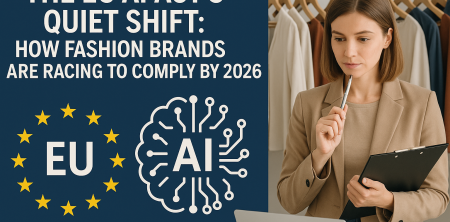
Imagine browsing your favorite online fashion store, admiring a stunning dress modeled by someone who looks impossibly perfect. What if that model wasn't real? What if the entire image, from the fabric's drape to the subtle lighting, was conjured by an algorithm? This isn't science fiction anymore; it's the rapidly evolving reality of fashion marketing. And it's precisely this reality that the European Union is now grappling with, ushering in a new era of transparency through its groundbreaking AI Act. Specifically for the fashion industry, the clock is ticking, with a crucial deadline looming on August 2, 2026. If your brand sells to EU consumers, even if you're thousands of miles away, the EU AI Act fashion regulations will soon demand your attention.
This isn't just another piece of bureaucratic red tape. This is a seismic shift that forces us all to confront the ethical and practical implications of artificial intelligence in a highly visual, aspirational industry. From high-fashion campaigns to everyday product detail pages, the use of AI-generated imagery is becoming pervasive. But with great power, as they say, comes great responsibility. The EU's legislation aims to ensure that consumers are fully aware when they're looking at something crafted by AI, not captured by a camera. It’s a move that’s sparking urgent discussions across boardrooms and creative studios, touching on everything from compliance costs to the very future of human talent in fashion.
The Impending Deadline: Why August 2, 2026, Matters to Fashion
Let's cut right to it: August 2, 2026, is not just a date on a calendar; it's a hard deadline that marks the full applicability of the EU AI Act's transparency obligations for AI-generated content. While the Act itself has a staggered implementation, this particular date is critical for anyone involved in creating or disseminating fashion imagery that reaches European consumers. Before this date, brands have a window to adapt, integrate new technologies, and revise their creative workflows. After it, non-compliance isn't just a hypothetical; it becomes a tangible risk with significant penalties.
Think about the lead times involved in developing new digital assets, overhauling internal processes, and training staff. For many fashion houses, two years might seem like a comfortable buffer, but given the complexity of integrating AI solutions and ensuring legal adherence, it's actually a tight squeeze. This isn't just about slapping a small label on an image; it's about understanding the nuances of 'visible disclosure' for consumers and 'machine-readable marking' for AI providers. The pressure is mounting, and companies that procrastinate risk falling behind or, worse, facing regulatory action.
Understanding the Core Mandate: Transparency for AI-Generated Imagery
At its heart, the EU AI Act fashion regulations are about transparency. The legislation doesn't outright ban the use of AI in fashion imagery, which would be an impossible and perhaps unwise move given the technology's rapid adoption. Instead, it mandates that consumers must be informed when they are interacting with content that has been substantially generated or manipulated by AI. For fashion brands, this means a clear, unambiguous disclosure on any AI-generated images used for everything from product detail pages (PDPs) to elaborate advertising campaigns and digital lookbooks.
Why is this so important? Consider the potential for deception. AI can create hyper-realistic models, perfect lighting, and flawless garments that might not exist in reality. While this offers immense creative freedom and cost savings, it also blurs the lines between authentic representation and digital fabrication. The EU believes consumers have a right to know this distinction. This isn't just about preventing fraud; it's about fostering trust and maintaining a level playing field in a highly competitive market where aspirational imagery is king.
Visible Disclosure for Consumers: What Brands Need to Do
The burden of 'visible disclosure' falls squarely on fashion brands. This isn't a suggestion; it's a legal obligation. What constitutes 'visible disclosure'? While the exact guidelines will likely evolve with further interpretation, it generally means that the disclosure must be easily noticeable and understandable to the average consumer. We're talking about more than just burying a disclaimer in the fine print of a terms and conditions page.
Imagine a small text overlay on an image, a clear icon, or a prominent notice near the image on a website. For video content, it might involve an initial text splash or an audio cue. The key is that it must be obvious. Brands will need to think creatively about how to integrate these disclosures seamlessly into their user experience without detracting from the aesthetic, yet still meeting the legal threshold of visibility. This could mean a radical rethinking of how digital assets are presented, requiring new design elements and user interface considerations.
Machine-Readable Marking: The AI Provider's Responsibility
While brands are responsible for visible disclosure, AI providers – the companies that develop and offer the AI tools for image generation – have their own set of obligations. They are mandated to implement 'machine-readable marking.' This essentially means embedding metadata or digital watermarks directly into the AI-generated images themselves. Think of it like a digital fingerprint that unequivocally identifies the content as AI-generated. (See: Overview of artificial intelligence.)
This technical requirement serves a different, but equally crucial, purpose. It allows automated systems, such as search engines or social media platforms, to identify AI-generated content programmatically. It can also help in tracking the provenance of images, which might become important in cases of misuse or intellectual property disputes. This dual-pronged approach – visible for humans, machine-readable for systems – creates a comprehensive framework for accountability across the AI value chain. It's a smart way to ensure that transparency isn't just a superficial layer, but built into the very fabric of the digital asset.
Global Reach: The EU AI Act Fashion Rules Don't Care Where You're Headquartered
One of the most critical aspects of the EU AI Act, and one that frequently catches non-European companies by surprise, is its extraterritorial reach. The rules apply to any content published to EU consumers, regardless of where the fashion brand or the AI provider is physically headquartered. This is a common feature of EU legislation, often referred to as the 'Brussels effect' or 'GDPR effect,' where regulations designed for the European market effectively set a global standard due to the sheer size and economic power of the EU.
So, if you're a fashion brand based in New York, Tokyo, or Sydney, but you sell your products or market your campaigns to customers within the EU, these regulations apply to you. There's no escaping it by simply being outside the Union. This means a significant expansion of compliance efforts for many international brands, forcing them to either segment their digital content for different regions or, more likely, adopt the stricter EU standards globally to simplify operations and avoid potential missteps. It’s a powerful testament to the EU’s commitment to regulating AI, even beyond its borders. urgent compliance steps for advisors offers useful background here.
The Real Cost of Non-Compliance: Penalties and Reputational Damage
Ignoring the EU AI Act fashion regulations is not an option. The legislation comes with teeth in the form of substantial penalties for non-compliance. While the exact figures can vary depending on the specific violation and the size of the company, they are designed to be a significant deterrent. We're talking about fines that could run into millions of Euros or a percentage of global annual turnover, whichever is higher – a model reminiscent of GDPR fines. For smaller brands, such penalties could be catastrophic, while for larger corporations, they represent a significant hit to the bottom line.
Beyond the financial hit, there's the equally damaging blow to reputation. In an industry built on aspiration, trust, and authenticity, being publicly cited for deceptive practices or non-compliance could erode consumer loyalty faster than any fleeting trend. Imagine the headlines: 'Luxury Brand Fined for Misleading AI Imagery.' In today's hyper-connected world, such news travels fast and can be incredibly difficult to recover from. Brands pride themselves on transparency and ethical sourcing; this extends to their digital content as well. The reputational cost might, in some cases, outweigh the monetary fines.
Ethical Quagmires: AI Models and Job Displacement
The debate surrounding AI in fashion imagery isn't purely legal or technical; it's deeply ethical. The rise of AI-generated models, while offering unparalleled flexibility and cost efficiency, raises profound questions. Are we moving towards a future where the aspirational figures we see are entirely synthetic, devoid of human imperfection and experience? What does this mean for body image, diversity, and the very concept of beauty standards?
Furthermore, the increased reliance on AI tools for image generation sparks genuine concerns about job displacement. Photographers, stylists, makeup artists, and even human models could see their roles diminish or fundamentally change. While AI can undoubtedly augment human creativity, the fear is that it will also replace it. This isn't a new conversation – automation has always sparked anxieties about jobs – but the speed and scope of AI's capabilities make this a particularly urgent issue. Fashion brands, often seen as trendsetters, have a moral obligation to consider these broader societal impacts as they embrace AI.
The Monetization Potential: A New Ecosystem of Services
While the EU AI Act fashion regulations present challenges, they also create significant monetization opportunities, sparking the growth of a whole new ecosystem of services and products. Whenever a complex regulatory framework emerges, a market for solutions inevitably follows. This is particularly true for high-CPC (Cost Per Click) niches, indicating strong demand and willingness to pay for specialized expertise.
Firstly, legal services for compliance advice are booming. Fashion brands, especially those without in-house legal teams specializing in AI regulation, are desperately seeking guidance. Lawyers and consultants who can interpret the nuances of the Act, assess a brand's current practices, and develop robust compliance strategies are in high demand. This niche requires deep expertise not just in law, but also in AI technology and the specificities of the fashion industry.
Secondly, B2B SaaS (Software as a Service) for AI image generation tools with integrated compliance features is a burgeoning market. Brands don't just need AI tools; they need AI tools that are 'AI Act ready.' This means software that automatically embeds machine-readable markings, offers easy-to-implement visible disclosure options, and keeps an audit trail of AI-generated content. Companies that can provide these 'out-of-the-box' compliant solutions will gain a significant competitive edge.
Finally, online education for brands seeking to understand and navigate the new regulations is another high-value niche. Webinars, online courses, certification programs, and detailed guides are essential for marketing teams, creative directors, and even senior management to grasp the implications of the Act. Knowledge is power, and in this complex regulatory landscape, informed decision-making is paramount. (See: Impact of AI on fashion industry.)
Preparing for the Future: Practical Steps for Fashion Brands
So, what should fashion brands be doing right now to prepare for August 2, 2026? Proactivity is key. The worst thing any brand can do is wait until the last minute. Here are some actionable steps:
- Conduct an AI Audit: Start by mapping out all current and planned uses of AI in your imagery. Where are you using AI models? Are you using AI for background generation, garment manipulation, or even subtle retouching? Understanding your current AI footprint is the first step.
- Engage Legal Counsel: Seek expert legal advice on the specific implications of the EU AI Act for your operations. This isn't a DIY project. A lawyer specializing in AI and EU regulations can provide tailored guidance and help mitigate risks.
- Develop Internal Policies: Create clear internal guidelines for the creation and deployment of AI-generated content. Who is authorized to use AI? What are the disclosure requirements for different types of content? Consistency is crucial.
- Invest in Compliant Tools: Prioritize AI image generation tools that are explicitly designed with EU AI Act compliance in mind. Ask providers about their plans for machine-readable marking and integrated disclosure features.
- Train Your Teams: Educate your marketing, creative, and legal teams on the new regulations. Ensure everyone understands their responsibilities and the importance of compliance.
- Pilot Disclosure Mechanisms: Experiment with different methods of visible disclosure on your digital platforms. Get feedback from consumers (or internal testers) to ensure clarity and effectiveness before the deadline.
- Monitor Regulatory Updates: The AI landscape is dynamic. Stay informed about any further guidance or amendments to the EU AI Act. Compliance is an ongoing process, not a one-time fix.
The fashion industry is no stranger to rapid change. From the dizzying speed of trend cycles to the constant evolution of consumer demands, adapting is part of its DNA. The integration of AI, and the subsequent regulatory response from the EU, simply represents the latest frontier. Brands that embrace these changes proactively, focusing on ethical deployment and transparent communication, will not only meet their legal obligations but also reinforce their commitment to their customers and their values. The future of fashion, powered by AI, is undoubtedly exciting, but it demands a mindful, responsible approach.
Beyond Imagery: AI's Broader Impact on Fashion and the Act's Scope
While our focus here is heavily on AI-generated imagery and its transparency requirements, it's crucial to understand that the EU AI Act's scope is much broader. It categorizes AI systems based on their risk level, from "unacceptable risk" (like social scoring) to "minimal risk." Fashion brands should be aware that their AI usage might fall into other categories, even if they don't directly relate to visual content.
For example, AI used in supply chain optimization, predictive analytics for trend forecasting, or even personalized recommendation engines could have different compliance requirements. If an AI system significantly impacts consumer choices or poses a risk to fundamental rights, it might be classified as "high-risk," demanding more rigorous conformity assessments, data governance, and human oversight. While AI-generated imagery falls under specific transparency rules, a fashion brand's overall AI strategy needs a holistic review against the Act's full framework. It's not just about what the customer sees; it's about how the entire operation uses AI.
High-Risk AI Systems in Fashion: What to Watch For
The EU AI Act defines high-risk AI systems quite precisely. For fashion, this could include AI used in:
- Credit scoring: If your brand offers in-house credit or financing options and uses AI to assess customer creditworthiness, that's high-risk.
- Employment decisions: AI tools used in recruitment, employee promotion, or termination processes are high-risk.
- Safety components: AI embedded in wearable technology or smart garments that affect user safety could be high-risk.
- Biometric identification: While less common in general fashion marketing, any use of AI for real-time biometric identification (e.g., for store security or personalized in-store experiences) would be very high-risk and largely restricted.
Understanding these distinctions is paramount. High-risk systems come with much stricter obligations, including mandatory conformity assessments, quality and risk management systems, human oversight, and robust cybersecurity measures. Failing to identify and properly manage a high-risk AI system could lead to even more severe penalties than transparency violations for AI imagery.
Competitive Advantage: Transparency as a Brand Value
It's easy to view the EU AI Act as solely a burden, a set of hurdles to clear. However, forward-thinking fashion brands can flip this narrative and leverage transparency as a significant competitive advantage. In an age where consumers are increasingly scrutinizing brand ethics and authenticity, openly disclosing AI usage can actually build trust rather than erode it.
Consider the rise of conscious consumerism. Customers want to know where their clothes come from, how they're made, and by whom. Extending this desire for transparency to digital content aligns perfectly with these values. A brand that proactively embraces the EU AI Act's spirit, perhaps even going beyond the minimum requirements, can position itself as a leader in ethical AI adoption. This could differentiate them from competitors who view compliance as a reluctant necessity. It's an opportunity to communicate innovation while reinforcing core brand values of honesty and integrity, potentially attracting a new segment of ethically-minded consumers who value digital authenticity.
Expert Perspectives: Insights from Industry Leaders
The fashion industry's response to the EU AI Act is varied, reflecting both excitement about AI's potential and apprehension about regulation. We're seeing a split among brands:
- The Innovators: Brands already heavily investing in AI for design, marketing, and supply chain. They often see the Act as a necessary framework that will ultimately foster responsible innovation, providing clear guardrails within which to experiment. These brands are often at the forefront of developing internal AI ethics guidelines that align with, or even precede, regulatory requirements.
- The Cautious Adopters: Many established brands are taking a wait-and-see approach, perhaps dabbling in AI for internal efficiencies but holding back on public-facing AI-generated content. For them, the Act serves as a catalyst to formalize their AI strategy and ensure compliance before scaling up. They prioritize risk mitigation.
- The Skeptics: A smaller segment still views AI with suspicion, concerned about its impact on human creativity and jobs. While they may still adopt AI out of necessity, they often do so reluctantly, seeing the Act as another layer of complexity rather than an opportunity.
According to a recent survey by McKinsey & Company on AI adoption in the fashion sector, over 70% of fashion executives believe AI will significantly impact their business in the next five years. However, only about 30% feel adequately prepared for upcoming AI regulations. This gap highlights the urgent need for education and strategic planning that the EU AI Act is now forcing into focus. It's clear that while the industry acknowledges AI's power, the readiness for its responsible governance is still catching up.
Frequently Asked Questions About the EU AI Act Fashion Regulations
Q1: Does the EU AI Act apply to fashion brands outside the EU?
Yes, absolutely. The EU AI Act has extraterritorial reach. If your fashion brand sells products or targets advertising campaigns to consumers within the European Union, regardless of where your company is headquartered (e.g., New York, Tokyo, Sydney), you must comply with the regulations, especially concerning transparency for AI-generated content.
Q2: What exactly needs visible disclosure for consumers?
Any fashion imagery (photos, videos, 3D renders) that has been substantially generated or manipulated by AI must include a clear, unambiguous disclosure. This means the average consumer should easily be able to tell that the content is AI-generated, not a traditional photograph. This could be a text overlay, an icon, or a notice directly adjacent to the image on your website, app, or social media post. The goal is to prevent deception.
Q3: What is "machine-readable marking" and how does it affect fashion brands?
Machine-readable marking refers to embedding digital watermarks or metadata directly into AI-generated images. This is primarily the responsibility of AI developers and providers. While brands aren't directly responsible for creating these markings, it's crucial to choose AI tools that *do* implement them. This ensures the provenance of your digital assets can be tracked programmatically, which is important for overall compliance and accountability within the AI ecosystem.
Q4: What are the penalties for non-compliance with the EU AI Act?
The penalties are substantial and designed to be a serious deterrent. They can reach up to €35 million or 7% of a company's total worldwide annual turnover for the preceding financial year, whichever is higher, for violations related to prohibited AI practices. For other violations, like failing to comply with transparency obligations, fines can be up to €15 million or 3% of global annual turnover. Beyond monetary fines, there's also the significant risk of reputational damage, which can be particularly harmful in the fashion industry.
Q5: Does the Act only cover AI-generated models, or other AI uses too?
While AI-generated models are a prominent example for fashion, the Act covers any "substantially generated or manipulated" AI content. This includes AI-generated backgrounds, virtual try-on experiences, AI-assisted garment design, and even subtle retouching that significantly alters the original image. Furthermore, the Act has a broader scope, categorizing AI systems by risk level. So, AI used in supply chain optimization, trend forecasting, or customer service chatbots might also have compliance requirements, even if they don't involve visual content transparency. We covered impact of Google AI updates in more detail.
Q6: How can fashion brands prepare for the August 2, 2026, deadline?
Start now! Key steps include: conducting an AI audit of all current and planned AI uses; engaging legal counsel specializing in AI and EU regulations; developing clear internal policies for AI content creation; investing in AI tools designed with compliance in mind; training your marketing and creative teams; piloting different disclosure mechanisms; and continuously monitoring regulatory updates. Proactive preparation is essential to avoid last-minute panic and potential penalties.
Trending Now
Frequently Asked Questions
What is the EU AI Act and how does it affect fashion brands?
The EU AI Act is a regulation aimed at ensuring transparency in the use of artificial intelligence, particularly in marketing. For fashion brands, it mandates disclosure when AI-generated imagery is used, requiring compliance by August 2, 2026, for any brand selling to EU consumers.
What is the deadline for fashion brands to comply with the EU AI Act?
The critical deadline for fashion brands to comply with the EU AI Act is August 2, 2026. By this date, brands must implement transparency measures regarding the use of AI-generated content in their marketing strategies.
Why is transparency important in AI-generated fashion imagery?
Transparency in AI-generated fashion imagery is essential to inform consumers about the authenticity of what they see. It helps maintain trust and ethical standards in marketing, ensuring that consumers are not misled by images that may not represent real products or models.
How will the EU AI Act impact the fashion industry?
The EU AI Act will significantly impact the fashion industry by enforcing compliance measures for AI-generated content. This shift will require brands to rethink their marketing strategies, potentially altering the landscape of fashion advertising and the role of human models.
What are the potential costs of complying with the EU AI Act for fashion brands?
Complying with the EU AI Act may incur costs related to technology integration, legal consultations, and potential marketing adjustments. Brands will need to invest in systems that ensure transparency and adherence to the new regulations by the 2026 deadline.
Agree or disagree? Drop a comment and tell us what you think.

