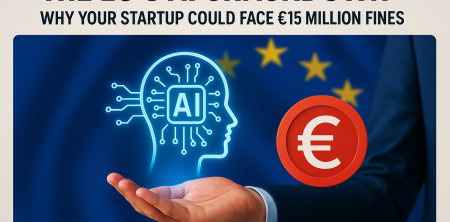
If you're building or deploying AI systems, especially advanced ones, you've likely felt the ground shifting beneath your feet. The regulatory landscape is evolving at breakneck speed, and nowhere is this more apparent than in the European Union. Forget the early days of 'move fast and break things' – when it comes to artificial intelligence, the EU is making it abundantly clear that safety, transparency, and accountability are paramount. And now, they've got the teeth to enforce it.
The European Commission has recently ushered in a significant expansion of its authority, granting regulators unprecedented powers to scrutinize advanced AI systems. This isn't just about some abstract compliance; we're talking about direct oversight of general-purpose AI models, the kind that form the backbone of innovations from giants like Anthropic and OpenAI. Before these systems even hit the market within the EU, they're now subject to intense regulatory review. This latest enforcement phase of the EU AI Act, which fully began on August 2, 2026, isn't a suggestion; it's a mandate. And if you fall foul of it, the financial implications could be devastating, with potential fines soaring up to €15 million (approximately $17 million USD) or 3% of your annual global revenue, whichever is higher.
This isn't just another bureaucratic hurdle. It's a fundamental shift in how AI innovation will be perceived and managed, particularly for startups and established tech companies alike. The EU AI regulations are designed to preemptively address the risks posed by increasingly sophisticated AI, creating a high-stakes environment where compliance isn't optional. For companies operating internationally, this move also intensifies the burgeoning tension between the U.S. and Europe over technology policy, setting a precedent that other jurisdictions might soon follow. Understanding these regulations isn't just good practice; it's essential for survival in the rapidly evolving AI ecosystem.
Understanding the EU AI Act: A Deeper Dive
To truly grasp the implications of the EU's new stance, you need to understand the underlying framework: the EU AI Act. This isn't just a patchwork of directives; it's the world's first comprehensive legal framework for artificial intelligence, and it's designed to be future-proof, or at least as future-proof as legislation can get in a field as dynamic as AI. The Act categorizes AI systems based on their potential risk level, creating a tiered approach to regulation. Low-risk systems, like spam filters, face minimal requirements. High-risk systems, however, are subject to stringent obligations, including robust risk management systems, data governance, human oversight, and clear transparency requirements.
What constitutes a 'high-risk' AI system? Think about applications in critical infrastructure, medical devices, law enforcement, employment, or even credit scoring. These are areas where an AI error or bias could have significant, even life-altering, consequences for individuals. The Act also specifically addresses general-purpose AI (GPAI) models, which are the foundational models like those developed by Anthropic and OpenAI. These models, due to their broad applicability and potential for misuse or unforeseen consequences, are now under the direct scrutiny of regulators. This means that if you're building on top of or developing a GPAI, you're squarely in the crosshairs of these new EU AI regulations.
The phased implementation of the Act means different provisions come into force at different times. While some elements, particularly those related to prohibited AI practices, came into effect earlier, the full enforcement phase for general-purpose AI, which includes these new regulatory powers, kicked off on August 2, 2026. This date isn't just a calendar entry; it marks a significant line in the sand for AI developers and deployers worldwide who wish to operate within the European market.
The Commission's New Enforcement Arsenal: What Regulators Can Demand
So, what exactly can regulators do now? Their expanded authority isn't just about issuing fines after a problem arises. It's about proactive oversight, giving them the power to intervene before an AI system is widely deployed. This is a crucial distinction. Regulators can now demand comprehensive model evaluations from developers of high-risk general-purpose AI systems. This isn't a quick check-the-box exercise; it involves rigorous testing, assessment of potential biases, and a thorough understanding of the model's capabilities and limitations.
Beyond evaluations, the Commission can also restrict or even prohibit the release of AI systems deemed to pose an unacceptable level of risk. Imagine pouring years of R&D into a cutting-edge AI product, only for it to be blocked from entering one of the world's largest economic blocs. That's the power we're talking about. This isn't just a theoretical threat; it's a real consequence that could impact product roadmaps, investment strategies, and even the viability of AI-centric businesses. See also AI's impact on education.
The rationale behind this proactive approach is clear: the EU wants to prevent the widespread deployment of potentially harmful or biased AI systems. They've seen the headlines, heard the concerns, and are acting to mitigate risks ranging from algorithmic discrimination to threats to fundamental rights. For developers, this means that 'build first, ask forgiveness later' is no longer a viable strategy when dealing with EU AI regulations.
The Anthropic and OpenAI Conundrum: Why Leading Models Are Targets
It's no coincidence that names like Anthropic and OpenAI are specifically mentioned in the context of these new EU AI regulations. These companies are at the forefront of developing general-purpose AI models – the large language models (LLMs) and generative AI systems that are rapidly changing how we interact with technology. Their models, like OpenAI's GPT series or Anthropic's Claude, are not designed for a single, narrow task. Instead, they are highly versatile and can be adapted to a vast array of applications, from writing code and generating content to powering complex decision-making systems.
This versatility, while a testament to their innovative power, is precisely what makes them a focus for regulators. A foundational model, if it harbors biases, vulnerabilities, or is prone to generating harmful content, could propagate those issues across countless downstream applications. This creates a systemic risk that the EU is keen to address. For instance, if a foundational model exhibits a particular bias against a demographic, every application built on that model, from hiring tools to financial services, could inherit and amplify that bias. (See: BBC coverage on AI regulations.)
Moreover, the sheer computational power and data requirements to train these models mean that only a handful of companies have the resources to develop them. This concentration of power also raises concerns about market dominance and the potential for these systems to shape public discourse and economic activity in profound ways. The EU's proactive stance on these leading models signals a clear intent to ensure that even the most advanced AI development adheres to ethical and safety standards, regardless of the developer's size or origin.
Financial Stakes: The High Cost of Non-Compliance with EU AI Regulations
Let's talk numbers, because that's often where the rubber meets the road for businesses. The potential fines are not just significant; they are designed to be a genuine deterrent. We're looking at up to €15 million or 3% of your annual global revenue. For a multi-billion dollar tech company, 3% of global revenue could translate into hundreds of millions of euros. For a startup, even the €15 million flat fine could be an existential threat.
Think about the implications: a single misstep, a failure to conduct proper evaluations, or a non-compliance with transparency requirements could lead to a financial penalty that dwarfs your R&D budget or even your annual profits. This isn't just about paying a fine, either. Non-compliance can lead to reputational damage, loss of market trust, and even injunctions that prevent your products from being sold in the EU. The indirect costs, such as legal fees, remediation efforts, and the diversion of engineering talent, can quickly add up.
This financial pressure is intended to incentivize companies to invest heavily in compliance from the outset. It forces a strategic re-evaluation of how AI is developed, tested, and deployed, pushing compliance from an afterthought to a core component of the product lifecycle. For startups especially, understanding these financial stakes means prioritizing legal counsel and compliance strategies earlier than ever before.
The Broader Geopolitical Context: US vs. Europe on AI Policy
This aggressive regulatory stance by the EU isn't happening in a vacuum. It's part of a broader, increasingly complex geopolitical dance around technology policy, particularly between Europe and the United States. While the EU is leaning heavily into a comprehensive, rules-based approach to AI, the U.S. has historically favored a more industry-led, voluntary framework, often emphasizing innovation and economic competitiveness over strict regulation.
This divergence creates tension. U.S. tech giants, many of whom are global players, find themselves navigating a fragmented regulatory landscape. What's permissible and encouraged in Silicon Valley might be heavily restricted or even illegal in Brussels. This can lead to increased operational costs, the need for different product versions for different markets, and potential friction in transatlantic trade relations. The EU sees its AI Act as setting a global standard, often referred to as the 'Brussels Effect,' where its regulations become de facto global norms due to the size and influence of its single market.
This difference in philosophy extends beyond just AI. We've seen similar patterns with data privacy (GDPR) and digital market regulation. For AI, the stakes are even higher, given its transformative potential. As AI continues to evolve, expect this transatlantic debate to intensify, with each side vying to shape the future of global AI governance.
Operational Challenges for AI Developers and Startups
For AI developers and startups, these new EU AI regulations present a formidable set of operational challenges. It's not just about understanding the legal text; it's about embedding compliance into every stage of the AI development lifecycle. First, there's the sheer complexity of model evaluations. How do you rigorously test a large, general-purpose AI model for biases, robustness, and safety across an almost infinite range of potential applications? This requires specialized expertise, sophisticated tooling, and significant computational resources.
Then there's the documentation burden. The Act requires extensive technical documentation, risk management systems, and data governance frameworks. This means meticulous record-keeping, detailed explanations of how models are trained and function, and clear audit trails. For lean startups, this can feel like an overwhelming administrative overhead, diverting precious resources away from core product development.
Finally, there's the ongoing compliance challenge. AI models are not static; they evolve as they learn from new data. This means that compliance isn't a one-time event but an continuous process. You need systems in place to monitor your AI models for drift, emergent biases, or new risks, and be prepared to re-evaluate and update your compliance measures as needed. This requires a cultural shift within organizations, where legal and ethical considerations are integrated directly into engineering and product management. Related reading: exploring AI careers.
The Opportunity in Compliance: Solutions and Services
While the challenges are significant, it's also true that where there's regulatory pressure, there's an opportunity for innovation and new markets. The intense demand for AI compliance solutions is creating a booming niche for B2B SaaS, software, and legal services. Companies are actively searching for tools and expertise to help them navigate the labyrinthine world of EU AI regulations.
This includes AI governance platforms that can automate parts of the compliance process, offering features like bias detection, model explainability, risk assessment, and documentation generation. Think of software that helps you track your model's lifecycle, document data provenance, and generate compliance reports. There's also a burgeoning market for legal advice specializing in AI, helping companies interpret the Act, develop internal policies, and prepare for regulatory scrutiny.
For startups in this space, the opportunity is immense. Developing robust, user-friendly solutions that simplify compliance for other businesses can be incredibly lucrative. This isn't just about selling software; it's about providing peace of mind and enabling innovation within a compliant framework. The demand for comparison guides on AI governance platforms and tools to evaluate and manage AI risks will continue to grow, leading to high-CPC ad opportunities and a vibrant ecosystem of support services. (See: New York Times on EU AI regulations.) For more on this, see the future of AI in schools.
Preparing for the Future: Actionable Steps for AI Innovators
So, what should you be doing right now if you're an AI innovator operating in or eyeing the EU market? Procrastination is not an option. The August 2, 2026, deadline for full enforcement of the general-purpose AI provisions is a hard stop, and preparing for it takes time and resources. Here are some actionable steps:
- Assess Your AI Systems: Categorize all your AI systems based on the EU AI Act's risk classifications. Identify which ones fall under 'high-risk' or 'general-purpose AI' and will therefore be subject to the most stringent requirements.
- Invest in Compliance Expertise: This might mean hiring internal compliance officers with AI expertise, engaging specialized legal counsel, or partnering with consultancy firms that understand the nuances of the EU AI regulations.
- Develop Robust Risk Management Frameworks: Implement systems to identify, analyze, evaluate, and mitigate risks throughout the entire AI lifecycle, from design to deployment and monitoring.
- Prioritize Data Governance and Quality: Ensure your training data is high-quality, representative, and free from biases. Document data sources, collection methods, and any preprocessing steps.
- Focus on Transparency and Explainability: Be prepared to explain how your AI systems work, why they make certain decisions, and their capabilities and limitations. This is crucial for human oversight and accountability.
- Allocate Budget for Compliance Tools: Explore and invest in AI governance platforms and tools that can help automate risk assessments, bias detection, and documentation generation.
- Stay Informed: The regulatory landscape is still evolving. Keep abreast of guidance from the European Commission and national supervisory authorities.
Ignoring these regulations isn't just risky; it's a gamble with your company's future. The EU is serious about shaping AI governance, and its AI Act is a clear signal to the world. For those who embrace compliance as an integral part of their innovation strategy, the path forward, while challenging, is also filled with opportunity.
Expert Perspectives on the EU AI Act's Global Reach
The 'Brussels Effect' isn't just a catchy phrase; it's a phenomenon observed with GDPR where EU regulations, due to the bloc's economic heft, effectively become global standards. With the EU AI Act, many experts anticipate a similar ripple effect. Leading AI ethicists and legal scholars suggest that companies, rather than developing separate AI systems for different markets, will likely build to the highest common denominator of regulation – which, in this case, is the EU's stringent framework.
For example, Meredith Whittaker, president of Signal Foundation and a vocal advocate for responsible AI, has often highlighted how comprehensive regulatory approaches in Europe push the envelope for global tech companies. She argues that even if a company primarily operates outside the EU, the cost and complexity of maintaining distinct compliance regimes often makes it more practical to apply the strictest standards across all operations. This means that the EU AI Act isn't just for Europe; it's quietly influencing how AI is developed in Silicon Valley, Beijing, and beyond.
Conversely, some industry leaders express concern that overly prescriptive regulations could stifle innovation, particularly for smaller companies and startups who lack the resources of tech giants to navigate complex legal frameworks. They argue that a more agile, principles-based approach, perhaps seen in some U.S. policy proposals, might foster faster development without sacrificing safety. However, the EU's stance remains firm: innovation must be tempered with responsibility, especially when dealing with such powerful technology. This ongoing debate among experts underscores the significant, long-term implications of the EU AI Act.
The Role of Data in EU AI Regulations: Quality, Bias, and Privacy
A crucial, yet often underestimated, aspect of the EU AI Act's requirements for high-risk and general-purpose AI systems revolves around data. The Act places immense emphasis on the quality, relevance, and representativeness of the datasets used to train and test AI models. This isn't just a technical detail; it's a fundamental pillar for ensuring fair and non-discriminatory AI.
Think about it: an AI model is only as good, and as unbiased, as the data it learns from. If your training data contains historical biases – for example, a dataset used for hiring that disproportionately reflects past hiring patterns favoring certain demographics – then your AI system will inevitably perpetuate and even amplify those biases. The EU AI Act mandates that developers implement robust data governance practices, including data quality management systems, to minimize such risks. This means careful selection of data sources, thorough data cleaning, and regular auditing for potential biases.
Furthermore, the Act intertwines with existing EU data privacy regulations, notably GDPR. The collection and processing of personal data for AI training must adhere to GDPR principles, ensuring lawful basis, data minimization, and individual rights. For AI developers, this creates a dual compliance challenge: meeting the specific data requirements of the AI Act while remaining fully compliant with GDPR. It's a complex dance that requires meticulous attention to detail and a deep understanding of both frameworks.
Future-Proofing AI: Adaptability and Continuous Monitoring
One of the biggest challenges in regulating rapidly evolving technology like AI is ensuring the legislation remains relevant. The EU AI Act tries to tackle this by building in mechanisms for adaptability and continuous monitoring. It recognizes that AI models aren't static products; they're dynamic systems that can change behavior as they interact with new data or environments.
This means that compliance isn't a one-and-done certification. For high-risk AI systems, developers and deployers are expected to implement post-market monitoring systems. These systems are designed to continuously track the performance of AI models in real-world settings, identify any unforeseen risks or emergent biases, and ensure ongoing conformity with the Act. If a model's behavior deviates or new risks are identified, the responsible parties are obligated to take corrective action, which might include retraining the model, updating its design, or even withdrawing it from the market.
This emphasis on continuous monitoring and adaptability is a forward-thinking approach, aiming to future-proof the regulation against the rapid pace of AI advancement. It shifts the burden onto developers to not just build compliant systems initially, but to maintain that compliance throughout the system's operational lifespan. This requires significant investment in MLOps (Machine Learning Operations) and robust monitoring infrastructure, pushing AI development towards a more mature, lifecycle-oriented discipline.
FAQ: Navigating the EU AI Regulations
Q1: What is the main objective of the EU AI Act?
The main objective of the EU AI Act is to ensure that AI systems placed on the European market are safe, transparent, non-discriminatory, and trustworthy. It aims to protect fundamental rights and promote the responsible development and deployment of AI.
Q2: How does the EU AI Act categorize AI systems?
The Act categorizes AI systems based on their potential risk level: unacceptable risk (prohibited AI), high-risk, limited risk, and minimal risk. The level of regulation increases with the perceived risk. disruption in higher education offers useful background here.
Q3: When do the full enforcement provisions for general-purpose AI models begin?
The full enforcement phase for general-purpose AI models, including the expanded regulatory powers of the European Commission, officially began on August 2, 2026.
Q4: What are the potential penalties for non-compliance with the EU AI Act?
For the most serious infringements, penalties can be up to €15 million or 3% of a company's annual global revenue, whichever is higher. Other infringements carry lower but still significant fines.
Q5: Is the EU AI Act only relevant for companies based in the EU?
No, the EU AI Act has extraterritorial reach. It applies to any AI system placed on the market or put into service in the EU, regardless of whether the provider or user is established inside or outside the EU. This means global companies must comply if they wish to operate in the European market.
Q6: How does the EU AI Act relate to GDPR?
The EU AI Act complements GDPR. While GDPR focuses on the protection of personal data, the AI Act addresses broader risks associated with AI systems, including those that don't directly process personal data. However, if an AI system processes personal data, it must comply with both GDPR and the AI Act.
Q7: What is a 'general-purpose AI model' and why are they specifically targeted?
General-purpose AI (GPAI) models are foundational models like large language models (LLMs) that can perform a wide range of tasks and be integrated into many different applications. They are specifically targeted because their broad applicability means that any biases, vulnerabilities, or harmful capabilities within the foundational model could propagate across numerous downstream systems, posing systemic risks.
Trending Now
Frequently Asked Questions
What are the new EU AI regulations?
The new EU AI regulations involve stringent oversight of advanced AI systems, mandating compliance with safety, transparency, and accountability standards. These regulations, part of the EU AI Act, began enforcement on August 2, 2026, requiring companies to undergo intense regulatory review before deploying general-purpose AI models in the EU.
How much can startups be fined under EU AI laws?
Startups can face fines of up to €15 million or 3% of their annual global revenue, whichever is higher, for non-compliance with the EU AI regulations. This creates significant financial risks for companies involved in developing or deploying advanced AI systems.
What is the purpose of the EU AI Act?
The purpose of the EU AI Act is to preemptively address the risks associated with advanced AI technologies. It aims to ensure that AI systems are safe, transparent, and accountable, thereby protecting users and society while fostering innovation within a regulated framework.
How will the EU AI regulations affect tech startups?
The EU AI regulations will significantly impact tech startups by imposing strict compliance requirements for AI systems. Startups must navigate complex regulatory landscapes and ensure their products meet safety and transparency standards to avoid hefty fines and maintain market access in the EU.
What should companies do to comply with EU AI regulations?
Companies should conduct thorough assessments of their AI systems to ensure compliance with EU AI regulations. This includes implementing safety measures, maintaining transparency in AI operations, and preparing for regulatory reviews before launching their products in the EU market.
What did we miss? Let us know in the comments and join the conversation.

