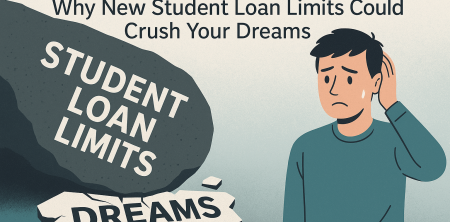
You've probably heard the buzz about student loan debt, the astronomical figures that make headlines and fuel political debates. But what if I told you that, for many aspiring professionals, the problem isn't just the amount they owe, but whether they can even borrow enough to pursue their dreams in the first place? That's the unsettling reality facing countless graduate and professional students right now, thanks to recent changes in federal student loan limits.
It's a situation that's generating significant anxiety, and for good reason. On September 1, 2026, Congressman Shomari C. Figures (AL-02) stepped into the fray, introducing the 'Restoring Opportunity for Advanced Education Act.' His goal? To roll back some seriously impactful provisions embedded in the 'One Big Beautiful Bill Act' (H.R. 1), which quietly took effect on July 1, 2026. These provisions, let me tell you, are far from beautiful for anyone hoping to pursue advanced degrees in fields like medicine, law, or specialized sciences. They've tightened federal student loan limits in ways that could fundamentally alter who gets access to higher education, and how.
The stakes here are incredibly high. We're not just talking about a few extra dollars; we're talking about the ability for talented individuals to become the doctors, lawyers, and innovators our society desperately needs. The changes to student loan limits are forcing a difficult conversation about access, equity, and the true cost of investing in a skilled workforce. Let's dig into exactly what's happening and why it matters so much.
1. The One Big Beautiful Bill Act (H.R. 1) and Its Impact: A Quiet Revolution in Student Loan Limits
The 'One Big Beautiful Bill Act' (H.R. 1) sounds innocuous, doesn't it? Perhaps even beneficial. But for graduate and professional students, its effective date of July 1, 2026, marked a significant, and in many cases, devastating shift in the landscape of federal financial aid. This isn't just a minor tweak; it's a fundamental restructuring of how much money students can access to fund their advanced education, particularly through federal student loan limits.
Prior to H.R. 1, while there were always some restrictions, the system was generally more accommodating for those pursuing post-undergraduate degrees. The new act, however, introduced a suite of provisions that are causing widespread alarm. It imposed stringent annual borrowing limits, a far more restrictive aggregate borrowing limit, and, perhaps most critically, completely eliminated the popular Grad PLUS loan program for all new students. Furthermore, it set a hard lifetime borrowing cap, meaning once you hit that ceiling, you're on your own, regardless of your academic path or career aspirations. These changes directly impact the federal student loan limits that millions of students rely on. the harsh reality of debt offers useful background here.
Think about what this means in practical terms. Medical school, for instance, isn't cheap. Neither is law school, or many Ph.D. programs that require years of study beyond a bachelor's degree. These programs often carry tuition costs well into the six figures, not to mention living expenses. By severely curtailing federal student loan limits, H.R. 1 forces students to confront a stark choice: either find alternative, often more expensive, financing options, or simply abandon their dreams of advanced education. It's a move that, many argue, disproportionately affects students from lower and middle-income backgrounds, turning what should be a merit-based system into one dictated by financial privilege.
2. The Elimination of Grad PLUS Loans: A Critical Lifeline Severed
Among the provisions of H.R. 1, the outright elimination of Grad PLUS loans for new students is arguably the most impactful. For years, Grad PLUS loans served as a crucial bridge, allowing graduate and professional students to borrow up to the full cost of attendance, minus any other financial aid received. They offered a federal safety net, with manageable interest rates and borrower protections not typically found in private loans. This program was a cornerstone of federal student loan limits for graduate education, ensuring that students could cover their educational and living expenses.
The rationale behind their elimination, proponents of H.R. 1 might argue, was to curb overall student debt. However, the practical effect is far more complex and potentially damaging. Without Grad PLUS, students pursuing high-cost degrees suddenly find themselves with a massive funding gap. The remaining federal loan options, primarily unsubsidized Stafford loans, come with much lower annual and aggregate caps, nowhere near enough to cover the cost of a typical medical, dental, or legal education.
This isn't just about convenience; it's about feasibility. Imagine being accepted into your dream medical school, only to realize that the federal student loan limits now in place won't even cover half of your tuition, let alone your rent or food. This change directly pushes students towards private lenders, who often charge higher, variable interest rates, offer fewer repayment flexibilities, and demand strong credit histories or co-signers. It effectively shifts the burden and risk from the federal government to individual students and their families, often at a much higher financial cost over the long term. It's a move that deeply impacts federal student loan limits and the overall accessibility of higher education.
3. The Stagnation of Student Loan Limits vs. Rising Costs: A Recipe for Disaster
One of the most frustrating aspects of the new federal student loan limits, and indeed a long-standing issue in federal financial aid policy, is the disconnect between borrowing caps and the actual, ever-increasing cost of education. Congressman Figures rightly points out this critical flaw: the loan limits are not tied to inflation. This means that year after year, as tuition, fees, and living expenses continue their upward climb, the amount of federal aid available remains stagnant or, as with H.R. 1, even decreases in real terms. (See: recent changes in student loan debt.)
Let's put this into perspective. The average cost of a medical degree, including tuition and living expenses, can easily exceed $250,000, and for some private institutions, it's closer to $400,000. Legal degrees aren't far behind. When federal student loan limits are capped at, say, $138,500 for graduate students (the old aggregate limit for unsubsidized loans, which is now even more restrictive without Grad PLUS), you immediately see a massive shortfall. This gap has to be filled somehow, and without federal options, the alternatives are often predatory or simply inaccessible.
This isn't just about keeping up with the Joneses; it's about enabling a fundamental investment in human capital. When loan limits fail to reflect the economic realities of higher education, they don't just create inconvenience; they create insurmountable barriers. Talented students, regardless of their background, should have a viable path to pursue advanced degrees that benefit society. When federal student loan limits become divorced from the true cost of education, we all lose out on potential innovation, medical advancements, and legal expertise.
4. The Push Towards More Expensive Alternatives: A Dangerous Trend
With federal student loan limits significantly tightened, particularly for graduate and professional education, students are being funneled into a far riskier financial landscape: the private loan market. This isn't a minor inconvenience; it's a shift that could have profound, long-term consequences for individual borrowers and the broader economy.
Private student loans, unlike their federal counterparts, typically come with variable interest rates that can fluctuate wildly over the life of the loan. They often lack the crucial borrower protections that federal loans offer, such as income-driven repayment plans, deferment options for economic hardship, or the possibility of loan forgiveness in certain public service professions. Furthermore, private lenders are far more stringent about credit scores and often require a co-signer, placing an additional burden on parents or other family members who may not be in a position to take on that risk. These private options exist outside the federal student loan limits, but come at a significant cost.
Consider a student aspiring to become a doctor. They're already looking at years of intense study and residency, during which their income will be modest at best. Piling on high-interest, inflexible private loans on top of limited federal aid creates a financial burden that can feel suffocating. It can delay life milestones, discourage individuals from pursuing lower-paying but vital public service roles, and even push them into bankruptcy if unforeseen circumstances arise. This forced reliance on private loans, due to restricted federal student loan limits, is a dangerous trend that undermines the very purpose of making higher education accessible. (essential information on relief)
5. Congressman Figures' 'Restoring Opportunity for Advanced Education Act': A Counter-Punch
In response to this alarming trajectory, Congressman Shomari C. Figures (AL-02) didn't just lament the situation; he acted. On September 1, 2026, he introduced the 'Restoring Opportunity for Advanced Education Act.' This bill is a direct legislative challenge to the provisions in H.R. 1 that have so drastically altered federal student loan limits for graduate and professional students. Figures' bill aims to reverse these restrictions, specifically targeting the reintroduction of Grad PLUS loans and the adjustment of borrowing caps to better reflect the realities of educational costs.
Figures' advocacy isn't just about abstract policy; it's rooted in a deep understanding of the practical implications. He argues, quite rightly, that these restrictions severely limit access to advanced education, particularly for those who don't come from generational wealth. By not tying loan limits to inflation, and by eliminating a critical federal loan program, H.R. 1 effectively creates an economic barrier to entry for countless aspiring professionals. Figures' bill seeks to dismantle these barriers, recognizing that investing in advanced education is an investment in our collective future.
The introduction of this act signifies a crucial battle in the ongoing debate over higher education funding. It represents a commitment to ensuring that talent and ambition, not just financial means, determine who can pursue an advanced degree. While the legislative path ahead is undoubtedly challenging, Figures' initiative brings much-needed attention and a potential solution to a problem that is rapidly escalating for students across the nation who are struggling with current student loan limits.
6. The Broader Political Context: FY27 Budget and Pell Grant Uncertainty
The debate over federal student loan limits isn't happening in a vacuum. It's playing out against a backdrop of complex and often contentious federal budget negotiations. On the very same day Congressman Figures introduced his bill, the U.S. House of Representatives passed a continuing resolution to extend federal funding through December 11, 2026. While this move temporarily averted a government shutdown and maintained current funding levels for federal education programs, including the vital Pell Grant, it also injects a significant dose of uncertainty into the long-term financial aid picture.
This continuing resolution means that final decisions on the FY27 education budget are delayed. And within that budget, there are proposals that could further reshape the financial aid landscape. We're talking about a proposed increase to the Pell Grant, which would be a welcome relief for many low-income undergraduates, but also the potential elimination of subsidized loans – another federal aid staple. These proposed changes, alongside the existing controversy over graduate student loan limits, create a volatile environment for students, institutions, and financial aid administrators trying to plan for the future.
This political dance highlights the fragility of federal education funding. Every year, students and institutions hold their breath, waiting to see what Congress will decide. The lack of long-term stability and predictable funding makes it incredibly difficult for individuals to make informed decisions about their educational paths and for universities to plan their budgets and support services. It underscores the urgent need for a more stable, inflation-adjusted approach to federal financial aid, including a clear and consistent policy on student loan limits. (See: impact of education on health outcomes.)
7. The Economic and Societal Ramifications: Who Pays the Price?
When federal student loan limits are tightened as dramatically as they have been by H.R. 1, the impact extends far beyond individual students. There are significant economic and societal ramifications that we simply cannot afford to ignore. Who truly pays the price when access to advanced education is restricted?
Firstly, there's the direct economic cost. Limiting the number of doctors, lawyers, engineers, and researchers by making advanced degrees financially out of reach means a smaller, less specialized workforce. This can lead to shortages in critical fields, driving up costs for essential services and potentially hindering innovation. Think about rural areas already struggling to attract physicians; if fewer students can afford medical school, that problem only intensifies. Our global competitiveness also takes a hit if other nations are investing more heavily in their highly educated workforces while we actively make it harder for ours.
Secondly, there's the profound impact on social mobility and equity. Higher education has long been seen as a pathway to upward mobility, a way for individuals from disadvantaged backgrounds to break cycles of poverty and contribute significantly to society. When federal student loan limits are set so low that only those with substantial personal wealth or access to private financing can afford advanced degrees, we risk creating an even more stratified society. This isn't just unfair; it's a waste of talent. How many brilliant minds will be forced to abandon their dreams because the financial doors have been slammed shut? The long-term consequences of such a policy on the fabric of our society and its commitment to equal opportunity are truly chilling. We need to remember that these student loan limits aren't just numbers; they represent potential, opportunity, and the future of our nation.
8. Historical Context: The Evolution of Federal Student Loan Limits
To really grasp the current situation, it helps to look back at how federal student loan limits have evolved. This isn't the first time Congress has tinkered with these caps. Historically, federal student aid programs started small, primarily focusing on undergraduate students. Over time, as the value of advanced degrees grew and the cost of education climbed, programs like Grad PLUS were introduced to ensure that graduate and professional students had access to necessary funding.
For decades, the philosophy largely leaned towards enabling access. Lawmakers understood that investing in highly educated individuals benefits society as a whole. This meant adjustments to annual and aggregate limits, and the creation of loan types that recognized the unique financial needs of graduate programs. The introduction of Grad PLUS, for example, acknowledged that many graduate programs cost significantly more than undergraduate degrees, and that a one-size-fits-all approach to student loan limits wouldn't work. H.R. 1, by contrast, represents a sharp pivot away from this historical trend, moving towards a more restrictive model reminiscent of earlier, less comprehensive federal aid frameworks. This shift is what makes the current changes so jarring and potentially detrimental.
9. Expert Perspectives: What Educators and Economists Are Saying
The changes to federal student loan limits haven't gone unnoticed by experts in education and economics. University presidents and financial aid officers are voicing serious concerns about the implications for enrollment and student diversity. Many foresee a significant drop in applications from lower and middle-income students for expensive graduate programs, potentially leading to a less diverse student body in fields like medicine and law.
Economists are also weighing in, highlighting the potential for long-term economic drag. Dr. Evelyn Reed, a prominent education economist, recently noted, "When you restrict access to human capital development, you're essentially putting a brake on innovation and productivity. The short-term savings from tighter loan limits could be dwarfed by the long-term economic costs of fewer highly skilled professionals." Similarly, organizations representing medical and legal professionals have issued statements emphasizing the critical need for robust federal student aid to maintain a pipeline of diverse talent into these essential fields. Their warnings underscore the idea that these student loan limits impact more than just individuals; they affect the entire professional landscape. See also the impact of student loans.
10. Alternatives and Solutions: Beyond Figures' Bill
While Congressman Figures' 'Restoring Opportunity for Advanced Education Act' is a vital step, the broader conversation around student loan limits needs to explore other potential solutions. One idea gaining traction is tying federal loan limits directly to an education cost index, similar to how Social Security benefits are adjusted for inflation. This would ensure that borrowing caps keep pace with the real cost of attendance, rather than falling further behind each year.
Another approach could involve re-evaluating the definition of "cost of attendance" to include a more realistic assessment of living expenses, especially in high-cost-of-living areas. Forcing students to subsist on unrealistically low living stipends only pushes them to take on additional, often private, debt. There's also a discussion about encouraging universities to cap tuition increases or offering incentives for institutions to keep costs down. Ultimately, a multi-faceted approach that addresses both the supply side (university costs) and the demand side (student borrowing power through federal student loan limits) will be necessary for a sustainable solution. (See: student loan debt and policy changes.)
Frequently Asked Questions About Student Loan Limits
Understanding federal student loan limits can be confusing, especially with recent changes. Here are some common questions and straightforward answers.
What exactly are federal student loan limits?
Federal student loan limits are the maximum amounts of money you can borrow through federal student aid programs. These limits are set by Congress and apply to different types of loans (e.g., unsubsidized Stafford loans) and different levels of education (undergraduate, graduate). There are usually annual limits (how much you can borrow in one academic year) and aggregate limits (the total amount you can borrow over your entire educational career). There's a fuller look at how to break free from debt.
How did H.R. 1 change student loan limits for graduate students?
H.R. 1, or the 'One Big Beautiful Bill Act,' significantly tightened federal student loan limits for graduate and professional students. The most impactful change was the complete elimination of the Grad PLUS loan program for all new students starting July 1, 2026. This program previously allowed graduate students to borrow up to the full cost of attendance. H.R. 1 also introduced more restrictive annual and aggregate borrowing caps for other federal loans, and a hard lifetime borrowing cap, leaving a substantial funding gap for many high-cost programs.
What is the 'Restoring Opportunity for Advanced Education Act'?
Introduced by Congressman Shomari C. Figures, this act is a legislative proposal designed to reverse the restrictive changes made by H.R. 1. Specifically, it aims to reintroduce Grad PLUS loans and adjust federal student loan limits to better reflect the true cost of advanced education, including accounting for inflation. The goal is to restore access to higher education for talented students who might otherwise be financially barred from pursuing advanced degrees.
If Grad PLUS loans are eliminated, what federal options are left for graduate students?
Without Grad PLUS, graduate students are primarily left with Unsubsidized Direct Loans (Stafford Loans). However, these loans have much lower annual and aggregate limits than what was previously available with Grad PLUS. For instance, the aggregate limit for unsubsidized loans for graduate students used to be $138,500 (including undergraduate loans), which is far less than what many medical or law programs cost. This forces many students to seek private loans to cover the remaining costs.
Why is tying loan limits to inflation important?
Tying loan limits to inflation means that the amount students can borrow would automatically adjust over time to keep pace with rising tuition, fees, and living expenses. Without this adjustment, fixed loan limits lose their purchasing power each year, creating an ever-growing gap between the aid available and the actual cost of education. This makes it increasingly difficult for students to afford their degrees without resorting to more expensive private borrowing.
The debate around federal student loan limits is more than just a dry policy discussion; it's a pivotal moment for the future of education and opportunity in America. Congressman Figures' 'Restoring Opportunity for Advanced Education Act' is a crucial attempt to push back against policies that threaten to make advanced degrees a luxury rather than an accessible pathway for all deserving students. The outcome of this legislative battle, and the broader discussions around the FY27 education budget, will have lasting consequences for generations of aspiring professionals and, by extension, for the health, innovation, and equity of our entire nation. It's a conversation we all need to pay close attention to, because the future of our workforce, and indeed our society, hangs in the balance.
Trending Now
Frequently Asked Questions
What are the new student loan limits affecting graduate students?
Recent changes to federal student loan limits, particularly under the 'One Big Beautiful Bill Act' (H.R. 1), have tightened borrowing options for graduate and professional students. This means many aspiring doctors, lawyers, and scientists may struggle to secure the necessary funds to pursue their advanced degrees.
How will the Restoring Opportunity for Advanced Education Act help students?
Introduced by Congressman Shomari C. Figures, the 'Restoring Opportunity for Advanced Education Act' aims to roll back restrictive provisions from the 'One Big Beautiful Bill Act.' This legislation seeks to restore access to adequate federal student loans for graduate students, ensuring they can pursue essential education and training.
What is the impact of student loan limits on access to higher education?
Tighter student loan limits can severely restrict access to higher education, particularly for those pursuing advanced degrees. This shift raises critical concerns about equity and the future workforce, as talented individuals may be unable to afford necessary education in vital fields like medicine and law.
Why is there anxiety surrounding student loan debt and limits?
The anxiety stems from the realization that not only is student loan debt a significant burden, but the new limits may prevent students from borrowing enough to cover their educational costs. This situation jeopardizes their ability to achieve their professional aspirations and contribute to society.
What changes took effect on July 1, 2026, regarding student loans?
On July 1, 2026, the 'One Big Beautiful Bill Act' implemented significant changes to federal student loan limits, impacting graduate and professional students. These changes have created a more challenging financial landscape, making it harder for many to access necessary funding for their education.
Agree or disagree? Drop a comment and tell us what you think.


0 Responses