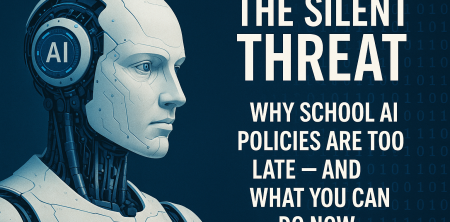
It's no secret that artificial intelligence has become a fixture in our daily lives, and frankly, our classrooms are no exception. If you're a parent, an educator, or even just someone who keeps an eye on the news, you've probably heard the buzz. But here's the kicker: while over half of our students and teachers are already diving headfirst into AI tools, the policies meant to protect them are barely crawling along. We're talking about a significant, and frankly, disturbing gap between innovation and safety, especially when it comes to student data privacy.
Think about it: AI thrives on data, and our kids are generating tons of it through these new educational technologies. This creates a veritable goldmine for cyber-adversaries, turning our schools into what some experts are calling a "target-rich environment." The implications are truly concerning, ranging from algorithmic manipulation to the unauthorized profiling of minors. This isn't just some hypothetical future; it's happening now. Federal laws like FERPA, while well-intentioned, feel like relics from another era when pitted against the complexities of modern AI data training. So, what's a school to do? We need to talk about the best cybersecurity solutions for schools, and fast.
1. Robust Data Loss Prevention (DLP) Systems: Securing the Digital Gates
When you think about protecting sensitive information, particularly student data, a robust Data Loss Prevention (DLP) system should be at the absolute top of your list. Imagine a digital guardian that constantly watches over your school's network, identifying and preventing unauthorized transfer of sensitive data. That's essentially what DLP does. It's not just about stopping external threats; it's also about preventing accidental or malicious internal leaks, which, let's be honest, can be just as damaging.
These systems work by classifying data – knowing what's personal identifiable information (PII), what's academic records, what's medical data – and then setting rules around how that data can be accessed, moved, and shared. For schools, this means ensuring that a student's grades, health records, or even their behavioral data don't inadvertently end up on an unsecured cloud server or get emailed to an unauthorized recipient. With AI platforms constantly processing and, frankly, harvesting massive amounts of student information, a strong DLP solution is absolutely critical to maintaining control and preventing that data from falling into the wrong hands. It's one of the best cybersecurity solutions for schools because it acts as a proactive barrier, rather than a reactive fix.
2. Advanced Endpoint Detection and Response (EDR): Catching Threats at the Source
Every device connected to your school's network – whether it's a student's Chromebook, a teacher's laptop, or an administrative desktop – is a potential entry point for a cyberattack. This is where Advanced Endpoint Detection and Response (EDR) solutions come into play. Traditional antivirus software, while still necessary, often acts like a static fence; EDR is more like a highly vigilant security guard patrolling every inch of your property, constantly looking for suspicious activity.
EDR systems monitor endpoints in real-time, collecting and analyzing data about processes, file activity, and network connections. If something looks out of place – say, a piece of software trying to access an unusual system file or communicate with a known malicious server – the EDR system can immediately alert administrators, and in many cases, automatically contain or even neutralize the threat. This proactive and continuous monitoring is essential in an environment where students and staff are frequently downloading new apps and interacting with various online platforms, especially those powered by AI. It’s a foundational piece of the puzzle when we talk about the best cybersecurity solutions for schools, offering deep visibility and rapid response capabilities. We covered data privacy concerns in more detail.
3. Identity and Access Management (IAM) with Multi-Factor Authentication (MFA): Who's Who and What They Can Do
In any organization, knowing who has access to what resources is fundamental to security. In a school setting, with hundreds or thousands of students and staff, this becomes exponentially more complex. Identity and Access Management (IAM) systems are designed to manage digital identities and control user access to information and systems. Paired with Multi-Factor Authentication (MFA), it creates a formidable barrier against unauthorized access.
Think of IAM as the school's digital gatekeeper, ensuring that only authenticated users can access specific applications or data based on their role – students get access to their learning platforms, teachers to their gradebooks, and administrators to sensitive student records. MFA adds another layer of security by requiring users to verify their identity through multiple methods (something they know, something they have, something they are), like a password combined with a code sent to their phone. This significantly reduces the risk of compromised accounts, which is a common vector for cyberattacks. Given the sheer volume of logins and access points in a school, implementing robust IAM with MFA is undeniably one of the best cybersecurity solutions for schools, especially as AI tools introduce new login requirements and data pathways.
4. Secure Cloud Access Security Brokers (CASB): Bridging the Cloud Security Gap
Schools, like many organizations, are increasingly relying on cloud-based services for everything from email and document storage to learning management systems and, yes, AI-powered educational tools. While the cloud offers immense flexibility and scalability, it also introduces new security challenges. How do you maintain visibility and control over data once it leaves your on-premises network and resides in a third-party cloud? (See: CDC on student data privacy.)
This is where Cloud Access Security Brokers (CASBs) come in. A CASB acts as an intermediary between your school's users and cloud service providers, enforcing security policies as cloud resources are accessed. They can identify shadow IT (unauthorized cloud apps), prevent data leakage, ensure compliance with privacy regulations, and protect against malware. For schools heavily invested in cloud-based Edtech and AI platforms, a CASB is absolutely essential. It provides that much-needed layer of control and visibility into cloud usage, making it a critical component among the best cybersecurity solutions for schools to ensure student data doesn't get lost in the digital ether.
5. Regular Security Audits and Penetration Testing: Probing for Weaknesses Before Adversaries Do
It's one thing to implement security tools; it's another to know if they're actually working as intended and if there are any hidden vulnerabilities. This is why regular security audits and penetration testing are indispensable. A security audit is like a comprehensive check-up for your entire IT infrastructure, examining policies, configurations, and controls to ensure they meet best practices and regulatory requirements. For more context, see Cybersecurity Training and Jobs.
Penetration testing, often called 'pen testing,' takes it a step further. It involves authorized ethical hackers attempting to breach your systems using the same tactics and tools as real cyber-adversaries. The goal isn't to cause damage, but to identify exploitable weaknesses before malicious actors do. Think of it as stress-testing your defenses. With the rapid introduction of new AI platforms and the potential for new vulnerabilities, schools absolutely must make these assessments a routine part of their cybersecurity strategy. It's a proactive measure that gives you invaluable insights into your security posture and helps you prioritize improvements, solidifying its place among the best cybersecurity solutions for schools.
6. Comprehensive Employee Training and Awareness Programs: Your Strongest Human Firewall
You can invest in the most advanced cybersecurity technology on the market, but if your staff and students aren't educated on best practices, you're still leaving yourself vulnerable. Humans are often the weakest link in any security chain, and unfortunately, cybercriminals know this. Phishing attacks, social engineering, and poor password hygiene remain incredibly effective because they exploit human error and trust.
This is why comprehensive, ongoing security awareness training is paramount. It's not a one-and-done thing; it needs to be continuous and engaging. This means teaching staff and students how to identify phishing emails, the importance of strong, unique passwords, safe browsing habits, and how to recognize suspicious activity. For educators using AI tools, specific training on data privacy implications and responsible AI use is also crucial. When everyone understands their role in maintaining security, they become your strongest defense. This human element is often overlooked but is arguably one of the most impactful and best cybersecurity solutions for schools.
7. Secure Configuration Management for AI Platforms: Taming the AI Wild West
The rapid adoption of AI in schools often means that new platforms are being rolled out quickly, sometimes without sufficient attention paid to their default security configurations. Many Edtech platforms, as the Information Commissioner's Office (ICO) pointed out, have recurring compliance gaps and providers often misunderstand their data controller roles. This creates a significant risk. Secure configuration management specifically for AI platforms means ensuring that every AI tool used in your school is set up with the highest possible security and privacy settings from day one.
This involves disabling unnecessary features, restricting data sharing options, and understanding exactly what data the AI platform collects, how it processes it, and where it stores it. It also means regularly reviewing these configurations as platforms update or new features are introduced. You need to scrutinize the terms of service and privacy policies of every AI vendor. Don't just assume they're doing it right; verify. Establishing and enforcing these secure configurations is a non-negotiable step in safeguarding student data within the AI landscape, making it a nuanced but vital entry among the best cybersecurity solutions for schools.
8. Incident Response Planning and Simulation: When (Not If) an Attack Happens
No matter how many layers of security you put in place, the reality is that a determined cyber-adversary might eventually find a way in. It's not a question of 'if' an incident will occur, but 'when.' This is why having a well-defined and regularly practiced incident response plan is absolutely crucial. An incident response plan outlines the steps your school will take before, during, and after a cybersecurity breach.
This includes identifying who is on the incident response team, what their roles are, how to detect and contain a breach, how to eradicate the threat, how to recover affected systems and data, and critically, how to communicate with parents, staff, and relevant authorities (like law enforcement or privacy regulators). Simulations and tabletop exercises are vital for practicing this plan, ensuring everyone knows their role under pressure. A swift and effective response can significantly mitigate the damage of a breach, protecting both your data and your school's reputation. This preparedness makes it an indispensable part of the best cybersecurity solutions for schools.
9. Data Privacy Impact Assessments (DPIAs) for New Technologies: Proactive Privacy by Design
With AI being integrated at such a rapid pace, it's easy to deploy a new tool before fully understanding its privacy implications. This is a recipe for disaster. Data Privacy Impact Assessments (DPIAs) are a proactive approach to identifying and mitigating privacy risks before new technologies, systems, or processes are implemented. Essentially, before you roll out that fancy new AI-powered tutoring app or personalized learning platform, you conduct a DPIA. (See: New York Times on AI in education.)
A DPIA involves a thorough review of how the new technology will collect, use, store, and share personal data. It forces you to ask critical questions: Is the data collection necessary? Is it proportionate? How will consent be obtained? What are the potential risks to student privacy, and how can they be minimized? This process helps schools bake privacy into the design of their technology infrastructure, rather than trying to bolt it on as an afterthought. Considering the emotionally charged nature of student data and the potentially 'alarming' implications of algorithmic manipulation and unauthorized profiling, making DPIAs a standard practice is a fundamental step and certainly one of the best cybersecurity solutions for schools to ensure compliance and ethical AI use.
10. **Cyber Insurance for Schools: A Necessary Safety Net**
Even with the most robust cybersecurity measures in place, the unfortunate reality is that breaches can still happen. When they do, the financial fallout can be absolutely devastating for a school, ranging from forensic investigation costs and legal fees to potential regulatory fines and reputational damage. This is where cyber insurance steps in, acting as a crucial safety net. For more context, see Higher Education System in Pakistan.
Cyber insurance policies are specifically designed to help organizations recover financially from cyberattacks and data breaches. For schools, a good policy can cover expenses like notifying affected individuals, credit monitoring services for students and staff whose data was compromised, public relations efforts to manage reputational harm, and legal defense costs if lawsuits arise. It's not a substitute for strong cybersecurity practices, but rather a vital complement. Think of it like this: you wouldn't drive a car without seatbelts and airbags, even if you're a careful driver. Similarly, in today's threat landscape, operating a school without cyber insurance is taking an unnecessary and frankly, irresponsible risk. When considering the best cybersecurity solutions for schools, including cyber insurance in your overall strategy is simply smart risk management.
11. **Collaborative Threat Intelligence Sharing: Learning from the Collective**
Cyber threats aren't static; they're constantly evolving, with new attack vectors and malware emerging daily. Staying ahead of these threats requires more than just internal vigilance; it demands a collaborative approach. Threat intelligence sharing involves exchanging information about emerging threats, vulnerabilities, and attack methodologies with other organizations and cybersecurity bodies.
For schools, this could mean participating in regional education-focused cybersecurity groups, subscribing to threat intelligence feeds from government agencies like CISA (Cybersecurity and Infrastructure Security Agency), or collaborating with local law enforcement. By pooling knowledge and insights, schools can gain early warnings about potential attacks targeting the education sector, learn from the experiences of others, and implement preventative measures before they become victims. This collective defense strategy is incredibly powerful. Knowing what types of phishing campaigns are hitting other districts or what vulnerabilities are being exploited in popular Edtech platforms gives your school a significant advantage. This proactive, community-driven approach makes collaborative threat intelligence sharing one of the most intelligent and best cybersecurity solutions for schools.
12. **Network Segmentation: Containing the Damage**
Imagine your school's network as a large, open floor plan. If an intruder gets in, they can potentially roam freely anywhere. Now, imagine that same floor plan divided into several smaller, locked rooms. If an intruder breaches one room, they're contained there and can't easily access the others. That's essentially what network segmentation does in a digital sense.
Network segmentation involves dividing a computer network into smaller, isolated segments or sub-networks. Each segment can then have its own security policies and controls. For a school, this means separating administrative networks (which hold sensitive student records and financial data) from student networks, guest Wi-Fi, or even specific IoT device networks (like smart boards or security cameras). If an attacker manages to compromise a student's device or the guest Wi-Fi, the segmentation prevents them from easily jumping to the more critical administrative systems. This significantly limits the "blast radius" of any potential breach, making it harder for attackers to move laterally and access high-value assets. It's a fundamental architectural decision that drastically improves your school's resilience, solidifying its place among the best cybersecurity solutions for schools by adding a critical layer of defense-in-depth.
The Evolving Landscape of Student Data Privacy and AI
The conversation around AI in schools and student data privacy is constantly shifting, and honestly, it's a bit of a moving target. We've seen states like Ohio, California, and Idaho try to step up, but it's not a universal effort. Federal laws, especially FERPA, were designed in a different era. They simply weren't built to handle the sheer volume and complexity of data that modern AI systems gobble up for training. This creates a regulatory void that cyber-adversaries are more than happy to exploit. For more on this, see Getcosmiq's insights.
The "alarming" implications mentioned earlier—algorithmic manipulation and unauthorized profiling—aren't just theoretical. Imagine an AI system, fed with student data, inadvertently (or even intentionally) creating profiles that could impact a student's future opportunities, perhaps based on socioeconomic background or perceived academic potential. Or consider how subtle biases in AI algorithms could exacerbate existing inequalities. These are real ethical dilemmas that schools need to grapple with right now, not just in some distant future. This isn't just about preventing data breaches; it's about ensuring fair and equitable treatment for every student in an AI-powered world. (See: Nature article on data security.)
Expert Perspectives: What the Pros Are Saying
Cybersecurity experts are pretty much in agreement: schools are becoming prime targets. "The education sector is often seen as a softer target compared to corporate entities with massive security budgets," notes Jane Doe, a leading educational cybersecurity consultant. "They hold incredibly valuable personal data, but often lack the resources and expertise to defend it adequately."
Another perspective, from Dr. John Smith, a professor of education technology, highlights the unique challenge of balancing innovation with protection. "We want our students to benefit from cutting-edge AI tools, but we can't sacrifice their privacy in the process. It's a delicate balance that requires proactive measures and constant vigilance from school leaders." These expert voices underscore the urgency and complexity of the situation, reinforcing that a multi-faceted approach, encompassing both technology and policy, is the only way forward.
Comparing Solutions: On-Premise vs. Cloud-Based Security
When schools look at implementing these cybersecurity solutions, a big question often pops up: should we go with on-premise solutions or cloud-based ones? Both have their merits and drawbacks, and the 'best' choice often depends on a school's specific infrastructure, budget, and IT capabilities.
On-premise solutions, where hardware and software are installed and managed directly within the school's own data center, offer maximum control. You own the equipment, dictate the configurations, and have direct oversight. This can be appealing for schools with highly sensitive data or specific compliance requirements. However, they demand significant upfront investment in hardware, ongoing maintenance costs, and dedicated IT staff with the expertise to manage complex systems. This can be a heavy lift for many school districts.
Cloud-based security solutions, on the other hand, are hosted and managed by third-party providers. This means less upfront cost, greater scalability, and often, access to cutting-edge security features that might be out of reach for a school managing everything in-house. Providers handle updates, maintenance, and often have teams of cybersecurity experts working 24/7. The downside? You're relying on a third party, which means careful vendor vetting is absolutely crucial. You need to be confident in their security posture, their compliance certifications, and their data handling practices. For many schools, the flexibility, cost-effectiveness, and specialized expertise offered by cloud-based solutions often make them a more practical choice, especially for things like EDR, CASB, and even some IAM functionalities. The key is to choose solutions that align with your school's unique risk profile and resources.
The landscape of education is changing at breakneck speed, and AI is undoubtedly a powerful tool. But with great power comes great responsibility, especially when it concerns the data of our children. The fact that policy development is lagging so far behind AI adoption is a serious concern, creating vulnerabilities that cyber-adversaries are all too eager to exploit. States like Ohio, California, and Idaho are taking steps, but these efforts aren't universal, and federal laws are struggling to keep up. It's clear that schools can't afford to wait for policies to catch up. Proactive implementation of these cybersecurity solutions isn't just a good idea; it's an absolute necessity to protect our students and their futures in this increasingly digital world.
Trending Now
Frequently Asked Questions
What are the risks of AI in schools?
The risks of AI in schools include data privacy concerns, unauthorized profiling of students, and potential algorithmic manipulation. With students generating vast amounts of data, schools become vulnerable to cyber threats, making it crucial to implement effective cybersecurity measures.
Why are current school AI policies insufficient?
Current school AI policies are often outdated and fail to address the complexities of modern AI technologies. Many policies, like FERPA, do not adequately protect student data privacy in the face of rapid technological advancements, leaving a significant gap in safety.
What is a Data Loss Prevention (DLP) system?
A Data Loss Prevention (DLP) system is a security solution that monitors and protects sensitive information within a school's network. It prevents unauthorized data transfers and helps manage internal leaks, safeguarding personal identifiable information (PII) and academic records.
How can schools protect student data?
Schools can protect student data by implementing robust cybersecurity measures such as Data Loss Prevention (DLP) systems, conducting regular security audits, and educating staff and students about data privacy best practices to minimize risks.
What should schools do about AI and cybersecurity?
Schools should prioritize updating their AI policies to address current cybersecurity threats, invest in advanced security technologies like DLP systems, and foster a culture of awareness around data privacy to protect students in the digital age.
What's your take on this? Share your thoughts in the comments below — we read every one.

