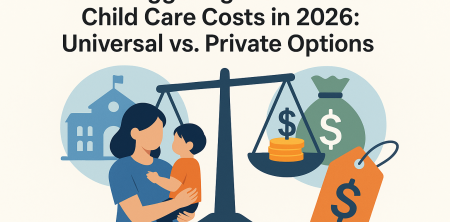
As a lifelong educator, I've seen firsthand how the foundational years of a child's life shape their entire educational journey. But let's be honest, for millions of families across the U.S. in 2026, the discussion around early childhood education isn't just about developmental milestones; it's about survival. It's a conversation dominated by a single, crushing reality: the astronomical cost of child care. This isn't just a minor line item in the family budget anymore; it's a defining economic theme, a pressure point that’s forcing impossible choices and reshaping household dynamics. When we talk about universal child care vs private child care 2026, we're really talking about two fundamentally different approaches to alleviating a crisis that's costing families their financial stability and the broader economy billions.
The numbers are frankly, alarming. We're looking at an average annual cost exceeding $13,000 per child. Think about that for a moment. For many families, that’s more than college tuition, more than a mortgage payment in some areas, and certainly a significant chunk of a typical household income. This isn't just an inconvenience; it's a direct threat to a family's ability to thrive. I’ve heard countless stories from parents forced to scale back their work hours, or worse, leave the workforce entirely, all because the cost of care makes working simply not worth it. This isn't just about individual families struggling; it's about a national economic hemorrhage, with estimates suggesting the U.S. economy could lose an astounding $329 billion over the next decade due to this lack of accessible, affordable child care.
So, what are the options? The debate often boils down to two main philosophies: the public, collective approach of universal child care, or the more individualized, market-driven path of private child care. Both have their proponents and their significant drawbacks. As we navigate the complexities of 2026, understanding the nuances of each system – their costs, their accessibility, and most importantly, the quality of care they provide – is absolutely critical for parents trying to make the best decisions for their children and their financial future.
1. The Crushing Weight of Child Care Costs in 2026: More Than Just a Budget Line Item
Let's not mince words: child care costs are out of control. When the average family is staring down a bill of over $13,000 per child annually, it’s not just an expense; it’s a financial burden that can feel insurmountable. This isn't a new problem, but it has certainly intensified by 2026, becoming a central pillar of the broader affordability crisis gripping the nation. For many, it's the single largest household expenditure after housing, often surpassing the cost of college tuition or even a second car payment. And unlike college, which is years away, this is an immediate, monthly drain on resources for families with young children.
The ripple effects of these costs are profound and far-reaching. I’ve seen parents, particularly mothers, forced to make agonizing decisions. Do they continue their careers, knowing a huge portion of their salary will go directly to child care, effectively working just to pay for someone else to raise their kids? Or do they reduce their hours, sacrificing career progression and financial independence, to save on care costs? For many, the math simply doesn't add up, leading them to exit the workforce altogether. This isn't just a personal tragedy for these individuals; it's a societal loss, as valuable talent and experience are removed from our economy. The current system, or lack thereof, essentially penalizes parents for having children and for wanting to contribute to the workforce.
2. Universal Child Care: A Public Good or an Unattainable Dream?
Universal child care proposes a system where early education and care are treated as a public good, much like K-12 schooling. The idea is that the government would subsidize or directly provide child care services, making them free or significantly reduced in cost for all families, regardless of income. States like New Mexico and cities like San Francisco are already leading the charge, implementing their own versions of universal pre-kindergarten and expanding access. This isn't just about babysitting; it's about recognizing the critical importance of early childhood development and ensuring every child has access to high-quality learning environments from a young age.
The primary argument in favor of universal child care is equity. In a truly universal system, the financial barrier to quality care would be largely removed, leveling the playing field for children from all socioeconomic backgrounds. This has the potential to significantly reduce achievement gaps even before kindergarten, setting children up for greater success in elementary school and beyond. From an economic standpoint, proponents argue that by freeing parents from the crushing burden of child care costs, it allows them to fully participate in the workforce, boosting productivity and overall economic growth. Imagine the potential surge in economic activity if millions of parents, currently sidelined by child care demands, could re-enter or increase their hours in the workforce.
3. The Appeal of Private Child Care: Choice, Flexibility, and Perceived Quality
On the other side of the coin, private child care encompasses a vast array of options, from independent daycare centers and in-home providers to nannies and au pairs. This sector operates largely on market principles, with costs determined by supply and demand, location, and the specific services offered. For many families, the appeal of private child care lies in the sheer breadth of choice and the perceived flexibility it offers. You can often find programs tailored to specific educational philosophies, religious affiliations, or even specialized developmental needs. This ability to handpick a program that aligns perfectly with a family's values and schedule is a significant draw.
Furthermore, many parents associate private options with higher quality or more individualized attention. While this isn't universally true – there are exceptional and subpar providers in both public and private sectors – the perception persists. Families might seek out private centers with lower child-to-staff ratios, specialized curricula, or particular certifications that they believe will give their child an edge. The ability to negotiate terms, hours, and even curriculum with a private provider can offer a sense of control that might be less present in a more standardized universal system. However, this level of choice and personalization almost invariably comes with a hefty price tag, which brings us back to the core dilemma of universal child care vs private child care 2026.
4. Accessibility: Who Gets Care and Where?
Accessibility is a critical factor when comparing universal and private child care. In the current fragmented private system, access is largely dictated by location and ability to pay. Urban areas often have more options, but also higher costs, while rural communities frequently face "child care deserts" where options are scarce or nonexistent. Even if you can afford private care, finding an open slot at a high-quality center can be a year-long waiting game, especially for infants and toddlers. This scarcity exacerbates the problem, driving up prices and adding immense stress for parents trying to secure care. (See: importance of early childhood education.)
Universal child care aims to dramatically improve accessibility by ensuring that every child has a right to care, much like their right to public education. This would involve significant government investment in building new facilities, expanding existing programs, and training a larger workforce of early childhood educators. The goal is to eliminate child care deserts and ensure that families, regardless of their zip code or income level, have reliable and affordable options. While the implementation is complex and costly, the vision is one where accessibility is a given, not a luxury. This shift in perspective is what makes the debate around universal child care vs private child care 2026 so urgent. For more context, see impact of child care costs on families.
5. Quality of Care: A Non-Negotiable Imperative
No parent should have to compromise on the quality of care their child receives, regardless of their financial situation. This is where the debate around universal versus private systems often gets heated. Proponents of universal care argue that a publicly funded system can set and enforce rigorous quality standards across the board, ensuring all children receive developmentally appropriate care from well-trained educators. They envision a system where curriculum, staff qualifications, and facility safety are standardized and regularly monitored, elevating the baseline quality for everyone.
However, critics of universal systems sometimes worry about a potential "race to the bottom" in terms of quality, fearing that a standardized approach might stifle innovation or lead to overcrowded classrooms with less individualized attention. In the private sector, quality can vary wildly. While some private centers are truly exceptional, others may cut corners to keep costs down, leading to lower staff wages, higher child-to-staff ratios, and less robust educational programming. The challenge for any system, whether public or private, is to ensure that quality is not just an aspiration but a fundamental guarantee, backed by adequate funding and oversight.
6. Economic Impact: Lifting Families and Boosting the Nation
The economic arguments for addressing the child care crisis are compelling. As I mentioned, the U.S. economy stands to lose an estimated $329 billion over the next decade due to parents being unable to access child care. This isn't just theoretical; it's tangible lost productivity, reduced tax revenues, and delayed economic growth. When parents, particularly mothers, are forced out of the workforce, it impacts household incomes, retirement savings, and overall financial security. This directly contributes to cycles of poverty and economic inequality.
Universal child care advocates argue that the upfront investment, while substantial, would pay dividends many times over. By enabling more parents to work full-time, it would increase the labor force, boost consumer spending, and generate more tax revenue. Furthermore, research consistently shows that high-quality early childhood education leads to better long-term outcomes for children, including higher educational attainment, increased earning potential, and reduced reliance on social services later in life. This creates a virtuous cycle of economic benefit that extends far beyond the immediate child care years. The choice between universal child care vs private child care 2026 isn't just a social decision; it's an economic imperative.
7. Legislative Efforts and Bipartisan Proposals in 2026
The good news is that lawmakers are finally taking notice of this crisis. In 2026, we’re seeing a renewed push for bipartisan solutions to lower costs and expand access to child care. One significant area of focus is updates to child care tax credits. These credits, if expanded and made fully refundable, could put thousands of dollars back into the pockets of working families, directly offsetting some of the crushing costs. While not a universal solution, it’s a pragmatic step that could offer immediate relief to many.
Beyond tax credits, proposals like the Child Care Modernization Act are gaining traction. These initiatives aim to streamline regulations, invest in child care infrastructure, and support the child care workforce. It's a recognition that the problem is multifaceted and requires a comprehensive approach. While a full universal child care program might still face political hurdles on a national level, these bipartisan efforts demonstrate a growing consensus that the current system is unsustainable and that government intervention, in some form, is essential to secure the future of our children and our economy. This evolving legislative landscape will undoubtedly shape the future of universal child care vs private child care 2026.
8. The Future of Early Education: A Public Good?
The trend we're seeing in states like New Mexico and cities like San Francisco, where universal child care programs are being implemented, signals a profound philosophical shift. These initiatives are moving away from the idea that early childhood education is a private family expense and towards treating it as a fundamental public good, much like public K-12 schooling. This isn't just about providing care; it's about recognizing the immense developmental benefits of high-quality early learning and the long-term societal advantages of investing in our youngest citizens.
If early education is truly seen as a public good, it fundamentally alters the debate around funding and access. It suggests that every child, regardless of their family's income or background, deserves access to the best possible start in life. This perspective acknowledges that the benefits of early childhood education extend beyond the individual child and family, contributing to a more educated workforce, a more equitable society, and a stronger economy for everyone. It’s a vision that demands bold leadership and a willingness to invest in our collective future, and it's a vision that I, as an educator, wholeheartedly support. The conversation around universal child care vs private child care 2026 is, at its heart, a debate about what kind of society we want to build.
9. Making the Right Choice for Your Family in 2026
So, given all of this, how do you, as a parent, make the best decision for your family in 2026? The reality is, there's no single, universally correct answer. Your choice between universal child care (where available) and private child care options will depend heavily on your specific circumstances, financial situation, location, and the availability of programs in your area. (See: rising costs of child care in the U.S..)
If you live in a region that offers robust universal pre-kindergarten or subsidized child care programs, these could be incredibly attractive options. The financial relief alone can be life-changing, and many of these programs are designed with strong educational frameworks. Don't assume that 'public' automatically means lower quality; many publicly funded early learning centers are top-notch, staffed by passionate educators and adhering to strict developmental guidelines. Investigate your local and state government websites, talk to other parents, and visit these facilities if possible. The goal is to understand the specific offerings and quality benchmarks in your immediate vicinity.
However, for many families, private child care will remain the only viable option, either due to lack of universal programs or specific needs that only a private provider can meet. If you're going the private route, be prepared for significant costs and be diligent in your search. Look for centers with accreditation, low child-to-staff ratios, experienced and stable staff, and a curriculum that aligns with your educational philosophies. Don't be afraid to ask tough questions about staff turnover, safety protocols, and parent communication. This is an investment in your child's future, and it's worth the exhaustive research to ensure you're getting the best possible care for your money. Remember, the landscape of universal child care vs private child care 2026 is dynamic, so staying informed about local policies and available subsidies is crucial. For more context, see approaches to early childhood education.
10. The Role of Technology in Bridging the Child Care Gap
It's 2026, and technology is playing an increasingly vital role in how families find and manage child care, whether it’s universal or private. Online platforms and apps are making it easier for parents to search for providers, compare costs, read reviews, and even handle scheduling and payments. For example, some services connect parents with vetted in-home caregivers, offering more flexible options than traditional centers. Other platforms are helping states manage waitlists and allocate subsidies for universal programs more efficiently.
Beyond logistics, educational technology is also transforming the quality of care. Many modern child care centers, both public and private, are incorporating interactive learning apps, smart toys, and digital curricula designed to enhance early childhood development. These tools can personalize learning experiences for children and provide parents with real-time updates on their child's progress. While tech can't replace human interaction, it can certainly augment it, making care more transparent, accessible, and engaging. This blend of traditional care with modern tools is a key factor in the ongoing universal child care vs private child care 2026 discussion.
11. Expert Perspectives: What Leaders Are Saying
I've had countless conversations with fellow educators, economists, and policymakers about this crisis, and there's a growing consensus: the status quo is unsustainable. Leaders from organizations like the Center for American Progress and the First Five Years Fund consistently highlight the dual benefits of robust child care investment – both for child development and economic stability. They often point to international models, like those in Scandinavian countries or Quebec, Canada, where significant government investment has created more affordable, high-quality systems that benefit both families and the broader economy.
For instance, Nobel laureate in economics, James Heckman, has extensively researched the long-term returns on investment in early childhood education. His work shows that every dollar invested in high-quality early learning can yield a return of $4 to $9 in terms of increased tax revenue, reduced crime rates, and lower healthcare costs later in life. These aren't just feel-good statistics; they're hard economic realities that underscore the urgency of addressing this issue. The experts are clear: investing in our children’s early years isn't just a social program; it's a smart economic strategy, directly influencing the debate around universal child care vs private child care 2026.
12. Addressing the Workforce Crisis in Child Care
One critical aspect often overlooked in the universal child care vs private child care 2026 debate is the severe workforce crisis plaguing the early childhood education sector. Many child care workers, predominantly women of color, are paid extremely low wages, often barely above the poverty line, despite performing one of society's most important jobs. This leads to high turnover rates, staffing shortages, and a struggle to attract and retain qualified educators.
Both universal and private systems grapple with this. Universal child care proposals often include significant investments in raising wages and providing benefits for child care workers, recognizing that quality care starts with a well-compensated and respected workforce. In the private sector, centers often face the difficult choice of raising tuition to pay staff more, which makes care even less affordable for families, or keeping wages low, which perpetuates the turnover problem. Any sustainable solution to the child care crisis must address this foundational issue of valuing and investing in the early childhood education workforce.
13. FAQ: Understanding Universal vs. Private Child Care in 2026
Q1: What exactly is universal child care?
Universal child care is a system where the government subsidizes or directly provides early childhood education and care services for all children, making it free or significantly reduced in cost for families, much like public K-12 schooling. The goal is equitable access and high-quality standards for every child, regardless of family income or background. For more context, see protecting children in today's environment.
Q2: How does private child care differ?
Private child care operates on market principles, with services provided by independent centers, in-home providers, nannies, or au pairs. Costs are determined by supply, demand, location, and specific services, and families pay the full cost or a portion, often with some tax credits or employer benefits.
Q3: What's the average cost of child care in 2026?
In 2026, the average annual cost of child care in the U.S. exceeds $13,000 per child. This figure can vary significantly by state and type of care, often surpassing college tuition or mortgage payments in many areas.
Q4: Will universal child care eliminate private options?
Not necessarily. Even in countries with robust universal systems, private options often coexist, catering to families who prefer specific educational philosophies, specialized care, or more flexible hours that might not be available in a standardized public system.
Q5: How would universal child care be funded?
Funding for universal child care typically comes from a combination of federal, state, and local taxes. This could include new taxes, reallocating existing funds, or leveraging economic growth spurred by increased parental workforce participation.
Q6: What are the main benefits of universal child care?
Key benefits include increased affordability for families, greater workforce participation for parents (especially mothers), reduced achievement gaps for children, and long-term economic benefits for society through a more educated and productive populace.
Q7: What are the perceived drawbacks of universal child care?
Concerns sometimes include the substantial upfront cost of implementation, potential for bureaucratic inefficiencies, worries about standardized quality or a "one-size-fits-all" approach, and the impact on existing private child care providers.
Ultimately, the child care crisis of 2026 isn't just a personal challenge; it's a societal failure that demands collective action. While we wait for comprehensive national solutions, individual families are left to navigate a complex, expensive, and often frustrating system. My hope, as an educator and an advocate, is that we continue to push for a future where high-quality, affordable child care isn't a luxury for the few, but a fundamental right for every child and every family. Our nation's future, quite literally, depends on it.
Trending Now
- the complete explanation
- This Game-Changing EU Kids Act Could Finally Make the Internet Safe for Your Children
- this guide on ‘it’s a huge concern’: families of kids with complex medical needs worry about frequent measles outbreaks | cidrap
- this guide on schools don’t have to tell parents about student gender identity — unless they ask, judge rules – la times
- this guide on this elite private school’s radical new method will leave you speechless
Frequently Asked Questions
What are the average child care costs in 2026?
In 2026, the average annual cost of child care is projected to exceed $13,000 per child. This figure highlights the financial burden many families face, often surpassing costs associated with college tuition and mortgage payments.
How does child care impact family finances?
The escalating costs of child care significantly affect family finances, leading many parents to reduce their work hours or leave the workforce altogether. This situation creates a ripple effect, threatening not only individual families' stability but also the broader economy.
What are the differences between universal and private child care?
Universal child care represents a public, collective approach aimed at making child care accessible for everyone, while private child care is driven by market forces and individual choice. Each option has its benefits and drawbacks, influencing family decisions in 2026.
Why is child care considered an economic crisis?
The high costs of child care are viewed as an economic crisis because they restrict families' financial stability and workforce participation. Estimates suggest a potential loss of $329 billion to the U.S. economy over the next decade due to inadequate access to affordable child care.
What can families do about rising child care costs?
Families can explore various options, including advocating for universal child care policies, seeking financial assistance programs, or considering alternative care arrangements. Understanding the implications of both universal and private child care can help families make informed choices.
Agree or disagree? Drop a comment and tell us what you think.

