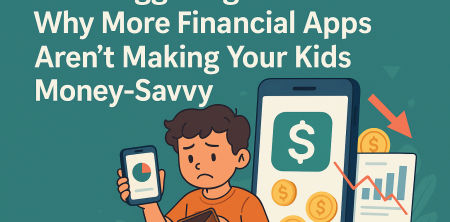
It’s a head-scratcher, isn’t it? We live in an age brimming with digital tools, from banking apps that fit in your pocket to sophisticated investment platforms. You’d think with all this innovation, our kids would be financial whizzes by the time they hit high school. Yet, a recent Wealth Enhancement survey from August 2026 threw a bit of a wrench into that assumption. It revealed something quite frankly, troubling: over half of American parents and grandparents are convinced that today’s children are less prepared to manage money than past generations. That’s more than 50% of adults looking at our digitally native youth and saying, “Nope, not ready.”
This isn't just a casual observation; it’s a deep-seated concern that highlights a significant disconnect. We have an abundance of fintech solutions, digital wallets, and apps designed to make money management easier, but actual financial preparedness among young people seems to be lagging. Parents, myself included, often grapple with how to instill core financial habits. How do you teach a kid to resist the siren song of impulse purchases when everything is a click away? How do you explain the value of a dollar earned when transactions are invisible swipes? The struggle is real when it comes to budgeting effectively, truly grasping where money comes from, and, perhaps most importantly, practicing consistent saving.
The irony isn't lost on me. As someone who's spent years in education, seeing firsthand the challenges of effective learning, it’s clear that simply providing tools isn't enough. We need to bridge the gap between access and application. That's where the best financial literacy apps for kids 2023 come into play. These aren't just glorified calculators; they're designed to make learning about money engaging, interactive, and, dare I say, fun. Because if we can make financial education enjoyable, we stand a much better chance of equipping our kids with the skills they need to navigate a complex financial world.
The Modern Money Dilemma: Why Parents Are Worried
Let's be honest, teaching kids about money today is fundamentally different from how our parents or grandparents learned. Gone are the days of counting change from a piggy bank and seeing cash physically exchange hands. Most transactions are digital, invisible, and often instantaneous. This shift creates a real challenge for parents trying to convey the tangible value of money and the effort required to earn it. When a child sees money appear on a screen or a payment go through with a tap, it can feel abstract, almost like play money.
The Wealth Enhancement survey really hit the nail on the head by identifying key areas of parental anxiety. Impulse buying, for instance, is a huge one. With online shopping and in-app purchases, instant gratification is always just a few taps away. How do you teach delayed gratification and the importance of thinking before spending when every ad is screaming 'buy now!'? Budgeting is another tough nut to crack. For adults, it's often a chore; for kids, it can feel utterly irrelevant until they face real-world consequences. And then there's the core concept of earning money – not just having it appear, but understanding that it's a direct result of work, effort, and value.
It's not that parents aren't trying; it's that the landscape has changed so dramatically. We're looking for tools that can translate these complex, often abstract financial concepts into something concrete and relatable for our children. We want them to understand that money isn't an endless resource, that saving is vital for future goals, and that every spending decision has an impact. This is precisely why finding the best financial literacy apps for kids 2023 is such a critical task for modern parents.
1. Greenlight: The Debit Card with Training Wheels
When you talk about comprehensive financial tools for kids, Greenlight often comes up first, and for good reason. It's more than just an app; it’s a debit card for kids, managed by parents, that comes packed with robust educational features. Think of it as a safe sandbox for your children to learn about earning, saving, spending, and even investing, all under your watchful eye. It offers a unique blend of real-world experience and parental control, which is a powerful combination for fostering financial responsibility.
With Greenlight, parents can set up chores, automate allowance payments, and instantly send money. But the real magic lies in its customizable spending controls. You can designate specific stores where the card can be used, set spending limits, and even block certain categories of merchants. This means your child can experience the independence of having their own card, while you retain the peace of mind that they won't blow their allowance on something inappropriate. It teaches them to budget within boundaries, a crucial skill that’s often overlooked.
Beyond the practicalities, Greenlight also offers an 'Earn' section where kids can see their chores and associated payments, directly linking work to reward. The 'Save' feature allows them to set savings goals and track their progress, visualizing their efforts toward a desired item. And for older kids, the investing feature (Greenlight Max) introduces them to the stock market with fractional shares, all parent-approved, of course. It’s a holistic approach to financial education that helps kids build habits that will serve them well into adulthood. For many, this is a top contender among the best financial literacy apps for kids 2023. (See: CDC Youth Risk Behavior Survey.)
2. BusyKid: Chore Management Meets Investment Savvy
BusyKid takes the concept of earning and spending to another level by integrating chore management with real-world financial opportunities, including investing. This app understands that for kids, the concept of money truly clicks when they understand it's tied to effort and choices. It's designed to make the whole process of allowances, chores, and even charitable giving intuitive and engaging for children, while giving parents powerful oversight. For more context, see transitioning to higher education.
Parents can easily assign chores, set their monetary value, and approve completion. Once the chores are done, the allowance is paid, and that's where BusyKid really shines. It encourages kids to divide their earnings into different categories: Spend, Save, Share, and Invest. This deliberate partitioning helps children grasp the multi-faceted nature of money management from an early age. The 'Spend' portion can be loaded onto a BusyKid Visa Prepaid Debit Card, giving them practical experience with a physical card.
The 'Invest' feature is particularly noteworthy. BusyKid allows kids to invest in real stocks, albeit in small amounts and under parental supervision. They can choose from a list of well-known companies, making the stock market less intimidating and more relatable. Imagine a child owning a piece of a company they admire – that’s a powerful lesson in how money can grow. By offering this early exposure to investing, BusyKid is certainly one of the best financial literacy apps for kids 2023 for parents looking to go beyond basic saving.
3. Acorns Early: Planting Seeds for Future Wealth
Acorns has been a popular micro-investing platform for adults, helping people automatically invest their spare change. Acorns Early extends this philosophy to children, allowing parents and guardians to open custodial investment accounts (UGMA/UTMA) for minors. This isn't just about teaching kids to budget; it's about actively building a financial future for them, starting from birth or whenever you choose to begin.
The core idea behind Acorns Early is 'set it and forget it' investing. You can link your bank account and set up recurring contributions, or even round up your everyday purchases and invest the spare change directly into your child's account. This passive approach demonstrates the power of consistent, long-term investing without requiring constant attention or complex decisions. It's a tangible way to show children (as they grow older and you explain it) that small amounts, consistently invested, can grow significantly over time due to compound interest.
While the child doesn't directly interact with the app in the same way they would with a spending-focused app, Acorns Early provides a fantastic educational opportunity for parents. You can sit down with your child, explain how their money is growing, discuss the concept of different investment portfolios, and talk about long-term goals like college or a first car. It’s about more than just the money; it's about initiating important conversations and demonstrating the value of foresight, making it a unique entry among the best financial literacy apps for kids 2023.
4. GoHenry: Empowering Kids with Smart Spending Habits
GoHenry offers a similar proposition to Greenlight, providing a prepaid debit card for kids and teens with a robust app for both children and parents. Its mission is clear: empower young people to learn about money management through practical experience, all within a safe and controlled environment. GoHenry understands that experiential learning is often the most effective, especially when it comes to something as practical as personal finance.
Parents have complete control over how much money is loaded onto the card, where it can be spent, and what the spending limits are. This flexibility allows parents to gradually increase their child's financial autonomy as they demonstrate responsibility. The app also features a 'Money Missions' section, which is a gamified learning module covering various financial topics like saving, earning, and even entrepreneurship. These bite-sized lessons make learning engaging and accessible, moving beyond abstract concepts to actionable knowledge.
For kids, the GoHenry app is intuitive and visually appealing. They can track their balance, see where they’ve spent money, and set savings goals. The ability to pause their card instantly from the app if it’s lost or stolen also teaches a valuable lesson in security and responsibility. It’s a comprehensive tool that focuses on teaching smart spending habits and the practicalities of managing a debit card, solidifying its place among the best financial literacy apps for kids 2023.
5. Current (formerly Chase First Banking): A Big Bank's Entry into Youth Finance
Current, previously known as Chase First Banking, represents a notable entry into the youth financial literacy space by a major financial institution. This app and debit card combination is designed for kids aged 6 to 17, providing a structured way for them to learn about earning, spending, and saving, backed by the stability and features you'd expect from a banking giant like Chase. (See: Associated Press News on financial literacy.)
One of the key advantages here is the seamless integration for parents who already bank with Chase. It makes managing their child's account a natural extension of their existing financial ecosystem. Parents can set spending limits, choose where the card can be used, and even block certain transaction types. This level of control is crucial for parents who want to guide their child's financial journey without completely removing their independence. For more context, see health and mental health.
The app offers features like chore tracking, allowance payments, and the ability for kids to set savings goals. Kids can see their balance in real-time and track their spending, giving them immediate feedback on their financial decisions. The connection to a reputable bank also provides an inherent layer of trust and security. For families looking for a banking solution that grows with their child and offers a clear path to more advanced financial products later on, Current is definitely one of the best financial literacy apps for kids 2023 to consider.
6. FamZoo: Virtual Banking for Real-World Lessons
FamZoo operates on a slightly different model, focusing on virtual family banking with an emphasis on practical financial education. Instead of a physical debit card as the primary tool (though they do offer prepaid cards), FamZoo's strength lies in its robust IOU system, which allows parents to manage virtual money for their kids within the app. This is particularly powerful for younger children or for families who want to teach concepts without immediately introducing a physical card.
Parents can set up allowance schedules, track chores, and even simulate loans with interest – yes, you read that right, simulating loans! This feature is incredibly valuable for teaching kids about debt, interest rates, and the importance of paying back what they owe. It's a safe way to let them experience the consequences of borrowing money in a controlled environment, which can be a far more impactful lesson than any lecture.
Kids get their own login to view their accounts, track their earnings and spending, and see their savings goals. FamZoo encourages a more hands-on, interactive approach to learning where parents are actively involved in setting up the financial rules and scenarios. It’s highly customizable, allowing families to tailor the system to their specific values and financial lessons, making it a standout among the best financial literacy apps for kids 2023 for its educational depth.
7. Savings Spree: Gamified Learning Without the Real Money Stress
Sometimes, the best way to learn is through play, and that's exactly where Savings Spree shines. Unlike the other apps on this list that integrate real money and banking services, Savings Spree is purely a game designed to teach children aged 6 and up about making smart financial choices. It's an excellent entry point for younger kids or as a supplementary tool to reinforce concepts learned elsewhere, without the pressure of actual financial transactions.
In Savings Spree, players are presented with various scenarios throughout a 'day' where they have to make decisions about how to spend, save, donate, or invest virtual money. Each choice has immediate consequences, showing kids how their decisions impact their short-term and long-term financial goals. For example, choosing to buy a toy now might mean not having enough money for a desired future purchase, illustrating the concept of opportunity cost.
The game covers a range of financial literacy topics, including budgeting, charitable giving, unexpected expenses, and even the basics of investing. It’s colorful, engaging, and provides instant feedback, making learning fun and memorable. For parents who want a risk-free way to introduce foundational money concepts and decision-making skills, Savings Spree is undoubtedly one of the best financial literacy apps for kids 2023 that focuses purely on educational gameplay. For more context, see finding part-time work. (See: New York Times on kids and financial literacy.)
Beyond the Apps: Cultivating a Financial Mindset
While these financial literacy apps for kids 2023 offer incredible tools, it's crucial to remember they are just that – tools. They aren't a substitute for open conversations, real-world examples, and consistent reinforcement from parents. The Wealth Enhancement survey's findings underscore this: simply having access to tools isn't enough to foster financial preparedness. We, as parents, are the primary educators when it comes to money matters, and the apps should be seen as powerful allies in that mission.
Think about how you can integrate these apps into daily life. If your child uses Greenlight or GoHenry, review their spending with them periodically. Discuss their savings goals on BusyKid. Explain how the money is growing in their Acorns Early account. These regular check-ins turn abstract numbers into tangible lessons. It’s about creating a culture of financial awareness in the home, where money isn't a taboo subject but rather a tool to be understood and managed responsibly.
Making Money Conversations Part of Everyday Life
One of the biggest hurdles for parents is simply starting the conversation. Money can feel intimidating, even for adults. But it doesn't have to be. Start small. Talk about the cost of groceries. Explain why you choose one brand over another. Let your kids help you make a shopping list and stick to a budget. When a child asks for something, instead of a flat 'no,' turn it into a teaching moment: "That's a great idea, but it's not in our budget right now. How could we save up for it?"
Encourage earning opportunities beyond just chores. Maybe they can do extra tasks for a neighbor, or even start a small entrepreneurial venture like a lemonade stand or pet-sitting service. Connecting effort directly to earning builds a fundamental understanding of work ethic and value. The more opportunities they have to earn, save, and spend (and sometimes make mistakes!), the better equipped they'll be. It’s about hands-on experience, guided by your wisdom, that truly makes a difference.
The Power of Example: You Are Their Financial Role Model
Finally, and perhaps most importantly, your own financial habits speak volumes. Kids are incredibly observant. If they see you constantly making impulse purchases, stressing about bills, or never discussing financial goals, they’ll internalize those behaviors. Conversely, if they see you budgeting, saving for future aspirations, and making thoughtful spending decisions, they're much more likely to adopt those positive habits themselves.
Be transparent (within reason, of course) about your own financial planning. Let them see you paying bills, discussing family budgets, or even investing. Share your financial wins and losses as learning opportunities. It’s not about being perfect; it’s about being real and demonstrating that managing money is an ongoing process that requires discipline and continuous learning. By leveraging the best financial literacy apps for kids 2023 and leading by example, we can truly empower the next generation to be financially confident and prepared, rather than falling into the trap of being less money-ready than those who came before them.
Trending Now
Frequently Asked Questions
Why are kids today less financially savvy than previous generations?
Despite the availability of numerous financial apps and tools, many parents believe that today's children are less prepared to manage money than past generations. This disconnect may stem from the ease of digital transactions, which can obscure the value of money and hinder the development of core financial habits.
What are the challenges of teaching kids about money?
Teaching kids about money involves overcoming challenges such as impulse buying due to easy access to digital payments and the abstract nature of money management. Parents often struggle to convey the importance of budgeting, saving, and understanding the source of income in a world dominated by instant transactions.
How can financial literacy apps help children?
Financial literacy apps designed for kids aim to bridge the gap between access and practical application. These tools make learning about money engaging and interactive, helping children develop essential financial skills in a fun way, ultimately preparing them for real-world financial situations.
What role do parents play in their children's financial education?
Parents play a crucial role in their children's financial education by modeling good financial habits, discussing money management openly, and using tools like financial literacy apps. Their involvement is key to instilling core principles of saving, budgeting, and responsible spending.
Are financial apps enough to teach kids about money?
While financial apps can provide valuable resources and interactive learning experiences, they are not a standalone solution. Effective financial education requires active parental involvement and a broader approach that combines digital tools with real-life experiences and discussions about money.
Agree or disagree? Drop a comment and tell us what you think.

