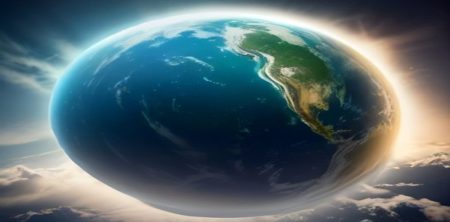
When we talk about the environment, our minds often jump to familiar culprits: climate change, plastic pollution, deforestation, species extinction. These are undeniable, massive challenges that demand our immediate attention and concerted effort. But what if I told you there’s a more insidious, perhaps even more destabilizing force at play, one that underlies many of these visible problems? It’s a pervasive sense of environmental uncertainty, a profound lack of predictability that's making it incredibly difficult for societies, economies, and even ecosystems to adapt and plan effectively. We’re not just facing known problems; we’re grappling with a rapid increase in the unknown, the unexpected, and the unquantifiable.
Think about it: for centuries, human civilization has thrived by understanding and, to some extent, mastering its environment. Farmers knew when to plant, coastal communities understood the rhythms of the tides, and builders planned for expected weather patterns. Today, those foundational assumptions are crumbling. The 'new normal' isn't normal at all; it's a constant state of flux. This isn't just about extreme weather events, though those are certainly a stark manifestation. It's about the erosion of our collective ability to forecast, prepare, and respond because the rules of the game are changing faster than we can comprehend them. It’s a profound shift that demands a deeper look beyond the headlines of individual disasters.
The Shifting Sands of Prediction: Why Forecasting Fails
For a long time, we relied on historical data to predict future environmental conditions. Climate models, weather forecasts, even agricultural planning were built on the premise that past patterns offered a reliable guide. But in an era of accelerating climate change and widespread ecological disruption, this historical lens is becoming increasingly blurry, even misleading. We're seeing phenomena that simply didn't exist in our historical records or are occurring with unprecedented frequency and intensity. This makes accurate prediction a monumental, sometimes impossible, task.
Consider the '100-year flood.' This term used to describe a flood event with a 1% chance of occurring in any given year. Sounds reassuring, right? Except now, many regions are experiencing '100-year floods' every few years, sometimes even annually. The statistical basis for these predictions has been fundamentally undermined by altered precipitation patterns, rising sea levels, and changes in land use. This isn't just an academic problem; it has direct, devastating consequences for infrastructure planning, insurance markets, and community resilience. How do you design a bridge to last 50 years when you can't reliably predict the river's behavior over the next decade? This kind of environmental uncertainty is eroding our sense of control and preparedness.
Beyond Climate: The Interconnected Web of Uncertainty
While climate change is undoubtedly a primary driver of environmental uncertainty, it's crucial to understand that the problem is far broader. Our planet is a complex, interconnected system, and disruptions in one area ripple through others, often in unpredictable ways. Deforestation in one region can alter rainfall patterns hundreds of miles away. Ocean acidification, a direct consequence of increased CO2 absorption, doesn't just threaten coral reefs; it impacts entire marine food webs, which in turn affect global fisheries and the livelihoods of millions. These interdependencies create a cascading effect of unknowns.
Think about biodiversity loss. We often focus on the aesthetic or ethical arguments for preserving species, and rightly so. But there's also a deeply practical, self-interested reason: ecosystems with greater biodiversity are generally more resilient to disturbance. When we lose species, we're not just losing unique life forms; we're eroding the stability and predictability of the natural systems that support us. A healthy forest with a diverse array of plants and animals is better able to withstand a pest outbreak or a drought than a monoculture plantation. As we simplify these natural systems, we inadvertently amplify environmental uncertainty, making future shocks more likely and more severe.
Economic Fallout: The Bill for Unpredictability
The economic implications of growing environmental uncertainty are staggering and often underestimated. Businesses, especially those reliant on natural resources or stable climatic conditions, face immense challenges. Agricultural sectors, for instance, are on the front lines. Farmers in many parts of the world are grappling with erratic growing seasons, unexpected droughts, or sudden deluges that decimate crops. This leads to volatile food prices, supply chain disruptions, and increased food insecurity.
But it's not just agriculture. The insurance industry, which traditionally thrives on calculating and pricing risk, is struggling to keep pace. As extreme weather events become more frequent and intense, the actuarial models that underpin insurance policies are breaking down. We're seeing insurers pulling out of high-risk areas, premiums skyrocketing, and even entire communities becoming uninsurable. This isn't just a niche problem; it strikes at the heart of our financial systems, threatening property values, mortgage markets, and the fundamental ability of people to protect their assets. The cost of environmental uncertainty is a hidden tax on everyone, manifesting in higher prices, increased taxes for disaster relief, and diminished economic stability.
Societal Stress: Migration, Conflict, and Mental Health
Beyond the economic sphere, the rising tide of environmental uncertainty is generating significant societal stress. When people lose their homes, livelihoods, and sense of security due to environmental shifts, they often have little choice but to migrate. We're already seeing 'climate refugees' on the move, both internally within countries and across borders. This mass displacement can strain resources in host communities, exacerbate existing social tensions, and even contribute to conflict. It's a humanitarian crisis unfolding right before our eyes, often disguised as economic migration or political instability. (See: climate change uncertainty article.)
Furthermore, the constant barrage of environmental news – reports of unprecedented heatwaves, devastating floods, and species on the brink – is taking a toll on mental health. 'Eco-anxiety' and 'climate grief' are increasingly recognized psychological phenomena. The feeling of powerlessness in the face of such overwhelming and unpredictable change can lead to chronic stress, depression, and a sense of existential dread, particularly among younger generations who face a lifetime of these challenges. This isn't just about physical survival; it's about the psychological well-being of entire populations.
The Policy Paralysis: Responding to the Unknowable
How do governments and international bodies formulate effective policy when the future is so uncertain? This is a core dilemma. Traditional policy-making relies on data, trends, and predictable outcomes. But when environmental parameters are shifting rapidly and unpredictably, long-term planning becomes incredibly difficult. Investments in infrastructure, energy systems, and public health must now account for a much wider range of potential future scenarios, many of which seem improbable based on historical norms.
Consider the challenge of designing resilient cities. Should we build higher sea walls, invest in permeable surfaces to manage stormwater, relocate communities, or some combination of all these? The 'best' solution depends on future sea-level rise, rainfall intensity, and storm surge frequency – all elements steeped in environmental uncertainty. This can lead to policy paralysis, where decision-makers hesitate to commit to expensive, long-term projects when the underlying assumptions might change within a decade. It fosters a reactive rather than proactive approach, which is far less efficient and often more costly in the long run.
Technological Hopes and Limitations: Can Innovation Save Us?
Naturally, human ingenuity often turns to technology in times of crisis. Can innovation help us navigate this era of environmental uncertainty? Absolutely, to some extent. Advances in remote sensing, artificial intelligence, and big data analytics are providing unprecedented insights into environmental systems. Satellites can monitor deforestation rates in real-time, AI models can forecast localized weather patterns with greater precision, and genetic engineering offers potential pathways for more resilient crops.
However, it's crucial to acknowledge the limitations. Technology can help us understand the *symptoms* of environmental uncertainty better, and perhaps even offer tools for adaptation and mitigation. But it doesn't fundamentally address the *root causes* of the uncertainty itself, which often lie in our unsustainable consumption patterns, systemic inequalities, and a fundamental disconnect from the natural world. Moreover, relying solely on technological fixes can create a dangerous moral hazard, where we postpone necessary behavioral and systemic changes in the hope that a future invention will solve everything. Technology is a powerful tool, but it's not a magic bullet for reversing the fundamental shifts in our planetary systems. We covered community resilience in action in more detail.
Building Resilience: A New Paradigm for a Shifting World
Given the pervasive nature of environmental uncertainty, our focus must shift from simply trying to predict and control, to building genuine resilience. What does that mean in practice? It means designing systems – whether they are agricultural, urban, or economic – that can absorb shocks, adapt to change, and even transform in the face of unexpected challenges. It's about redundancy, flexibility, and diversity.
For instance, in agriculture, it means moving away from monocultures towards diversified farming systems that incorporate a variety of crops and livestock, making them less vulnerable to a single pest outbreak or weather event. In urban planning, it involves 'green infrastructure' – parks, wetlands, and permeable surfaces – that can manage stormwater naturally, rather than relying solely on concrete and pipes. It's about empowering local communities with knowledge and resources, recognizing that decentralized, localized solutions are often more adaptable than top-down mandates. Building resilience isn't about perfectly forecasting the future; it's about being prepared for whatever the future might throw at us.
The Imperative of Collaboration and Knowledge Sharing
Perhaps one of the most vital responses to environmental uncertainty is a radical increase in collaboration and knowledge sharing. No single nation, scientific discipline, or community has all the answers. The challenges we face are global and interconnected, demanding coordinated action across borders and sectors. This means fostering open data initiatives, enabling scientists worldwide to share their findings rapidly, and creating platforms for policy-makers, local communities, and indigenous populations to exchange best practices and insights.
It also means investing heavily in interdisciplinary research. The traditional silos between climatology, ecology, economics, and social sciences are no longer fit for purpose. We need holistic approaches that understand the complex feedbacks between human and natural systems. By pooling our collective intelligence and working together, we can improve our understanding of these complex uncertainties, develop more robust adaptive strategies, and ensure that solutions are equitable and effective for all. The more eyes we have on the problem, and the more diverse perspectives we bring to the table, the better our chances of navigating this turbulent era.
The Role of Indigenous Knowledge in Navigating Uncertainty
When discussing environmental uncertainty and resilience, it's absolutely crucial to acknowledge the profound wisdom held within indigenous knowledge systems. These communities have often lived in close harmony with their local environments for millennia, developing deep understandings of ecological rhythms, weather patterns, and sustainable resource management. Their knowledge isn't based on abstract models but on generations of direct observation, adaptation, and a reciprocal relationship with nature. (See: impact of environmental uncertainty.)
For instance, many indigenous groups have traditional fire management practices that reduce wildfire risks, something modern forestry has only recently begun to re-learn. Their agricultural techniques often prioritize biodiversity and local plant varieties, inherently building resilience against pests and changing conditions. Integrating indigenous knowledge with contemporary scientific approaches offers a powerful, synergistic path forward. It provides a nuanced understanding of local ecosystems that often eludes broad scientific models, and it offers culturally appropriate, community-led solutions that are more likely to be effective and sustainable. Ignoring this invaluable resource would be a significant oversight in our collective effort to adapt to an unpredictable future.
Funding the Future: Investment in Adaptation and Mitigation
Addressing environmental uncertainty isn't just about policy changes and knowledge sharing; it also requires significant financial investment. The costs of inaction are already mounting, as seen in the rising economic toll of disasters. We need to redirect capital towards both mitigation efforts (reducing the causes of uncertainty, like carbon emissions) and adaptation strategies (preparing for the impacts we can't avoid).
This means public and private sector collaboration on a massive scale. Governments need to prioritize green infrastructure projects, fund scientific research into resilient systems, and create financial incentives for businesses to adopt sustainable practices. Private investors, in turn, can see the long-term value in sustainable agriculture, renewable energy, and climate-resilient urban development. Insurance companies can play a role by incentivizing risk reduction through lower premiums for resilient homes and businesses. The financial markets are slowly waking up to the systemic risks posed by environmental uncertainty, but the pace of investment needs to accelerate dramatically to match the urgency of the challenge. We're talking about a global reorientation of capital, not just minor adjustments.
Ethical Dimensions: Fairness and Justice in an Uncertain World
As environmental uncertainty grows, so do the ethical considerations surrounding its impacts. It's a stark reality that those who have contributed least to environmental degradation often bear the brunt of its consequences. Developing nations, small island states, and marginalized communities frequently lack the resources and infrastructure to adapt to extreme weather events, sea-level rise, or agricultural disruptions.
This raises fundamental questions of environmental justice and equity. How do we ensure that adaptation strategies are fair? Who pays for the damage caused by historical emissions? The concept of "loss and damage" in international climate negotiations attempts to address this, seeking to provide financial support to vulnerable countries for unavoidable climate impacts. Furthermore, within nations, ensuring equitable access to resources, early warning systems, and resilient infrastructure is paramount. Ignoring these ethical dimensions risks exacerbating existing inequalities and creating deeper societal divisions, making collective action even harder to achieve in the face of shared environmental threats.
Measuring and Communicating Uncertainty Effectively
One of the biggest challenges in tackling environmental uncertainty is how we measure and communicate it. Traditional scientific models often present projections as precise figures, which can be misleading when dealing with complex, non-linear systems. We need better methods to quantify ranges of possibility, probabilities, and tipping points, rather than single-point forecasts.
Equally important is how this information is conveyed to the public and policy-makers. Jargon-filled reports and overly technical explanations can lead to misunderstanding or apathy. Scientists and communicators need to learn to translate complex uncertainties into actionable insights, emphasizing the range of potential outcomes and the importance of preparing for multiple scenarios. This includes being transparent about what we *don't* know, fostering a culture of informed adaptability rather than demanding perfect foresight. Clear, honest communication about uncertainty can empower people to make better decisions, rather than paralyzing them with fear or overwhelming them with data.
A Call to Action: Embracing the Unpredictable Future
Ultimately, confronting environmental uncertainty requires a fundamental shift in mindset. We must move beyond the illusion of control and embrace a more humble, adaptive approach to our relationship with the planet. This doesn't mean succumbing to despair, but rather acknowledging the unpredictable nature of our future and proactively building systems, communities, and policies that are robust enough to withstand it.
It demands personal responsibility in our consumption choices, advocating for systemic change, and supporting leaders who prioritize long-term ecological health over short-term economic gain. It's about cultivating a deeper respect for the natural world, understanding that our well-being is inextricably linked to its health. The path ahead is undoubtedly challenging, fraught with unknowns, but by fostering resilience, promoting collaboration, and acting with foresight, we can hope to forge a more stable, sustainable future, even amidst the swirling currents of uncertainty. (See: CDC climate and health resources.)
Frequently Asked Questions about Environmental Uncertainty
What exactly is environmental uncertainty?
Environmental uncertainty isn't just about not knowing the future. It's a state where the natural systems we rely on – like climate, ecosystems, and water cycles – are changing so rapidly and unpredictably that our traditional methods of forecasting and planning are no longer reliable. It's the erosion of predictability, making it incredibly difficult for societies and economies to adapt effectively. We're talking about shifts that fall outside historical patterns and statistical norms, meaning we're grappling with novel situations.
How is environmental uncertainty different from climate change?
Climate change is a primary *driver* of environmental uncertainty, but the two aren't interchangeable. Climate change refers to the long-term shift in global weather patterns, largely caused by human activities. Environmental uncertainty is the *consequence* of climate change and other ecological disruptions (like biodiversity loss, pollution, deforestation) leading to a lack of predictability in natural systems. So, while climate change causes things like rising temperatures and sea levels, environmental uncertainty is the resulting unpredictability in, say, when and where heavy rainfall will occur, or how an ecosystem will respond to stress.
Can technology solve environmental uncertainty?
Technology can definitely help us manage and adapt to environmental uncertainty, but it's not a complete solution. Tools like advanced climate modeling, satellite monitoring, and AI for early warning systems can improve our understanding and response capabilities. For example, precision agriculture can help farmers adapt to erratic weather. However, technology doesn't address the root causes of the uncertainty, which are often systemic issues like unsustainable consumption or habitat destruction. Relying solely on tech might even create a false sense of security, delaying necessary societal and behavioral changes.
What are the biggest economic impacts of environmental uncertainty?
The economic impacts are widespread. We're seeing increased costs for disaster relief and recovery, volatile food prices due to disrupted agriculture, and instability in insurance markets as extreme events become harder to price. Supply chains are vulnerable to disruptions from unpredictable weather. There's also a significant risk to property values in areas prone to floods or wildfires, and entire industries, like tourism in coastal regions, face existential threats. Essentially, it adds a massive, unquantifiable risk factor to all economic planning and investment.
How does environmental uncertainty affect mental health?
The constant exposure to news of environmental degradation and unpredictable disasters can significantly impact mental health. Terms like 'eco-anxiety' and 'climate grief' describe the feelings of worry, sadness, and powerlessness people experience. For those directly affected by environmental disasters, there's the trauma of loss, displacement, and an uncertain future. This psychological burden can lead to chronic stress, depression, and a diminished sense of hope, especially among younger generations who see these challenges unfolding over their lifetimes.
What can individuals do to address environmental uncertainty?
While environmental uncertainty is a systemic problem, individual actions are still important. You can reduce your carbon footprint through conscious consumption, supporting sustainable businesses, and advocating for policy changes. Building personal and community resilience is key – understanding local risks, participating in community preparedness, and supporting local food systems. Educating yourself and others about these issues, and engaging in local or national environmental initiatives, all contribute to a more informed and adaptive society. It’s about being part of the solution, however small your individual contribution might feel.
Trending Now
Frequently Asked Questions
What is environmental uncertainty?
Environmental uncertainty refers to the unpredictability and lack of reliability in forecasting environmental conditions. This phenomenon makes it challenging for societies, economies, and ecosystems to adapt, as traditional methods based on historical data are becoming less effective in the face of rapid climate change and ecological disruption.
How is climate change affecting our ability to predict environmental conditions?
Climate change is altering established patterns, making historical data less reliable for predictions. As extreme weather events and other ecological changes become more common, our traditional forecasting models fail to account for these new variables, leading to increased uncertainty and challenges in planning.
What are the consequences of environmental unpredictability?
The consequences of environmental unpredictability include difficulties in agricultural planning, increased vulnerability for coastal communities, and challenges in infrastructure development. This unpredictability undermines our ability to prepare for and respond to environmental changes, leading to potentially destabilizing effects on societies and economies.
Why is it important to address environmental uncertainty?
Addressing environmental uncertainty is crucial for effective planning and adaptation. By understanding and mitigating this unpredictability, societies can better prepare for future challenges, enhance resilience, and develop strategies that account for the rapidly changing environmental landscape.
What strategies can help cope with environmental uncertainty?
Strategies to cope with environmental uncertainty include investing in flexible and adaptive systems, utilizing real-time data for decision-making, and fostering collaboration among communities to share knowledge and resources. Developing a deeper understanding of emerging environmental trends is also essential for effective response strategies.
What did we miss? Let us know in the comments and join the conversation.

