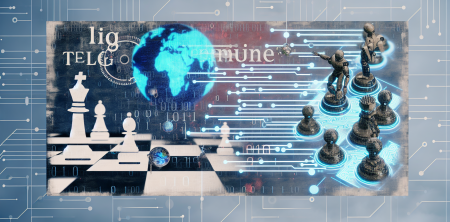
The technological rivalry between the United States and China has reached new heights as the U.S. government has raised alarms regarding China's practices in artificial intelligence (AI) distillation. This term refers to the process of extracting valuable intellectual property from existing AI models, a practice that the U.S. government views as unauthorized and detrimental to its own technological advancement. The recent debut of DeepSeek V4, a sophisticated AI model from China, has intensified these concerns, highlighting the growing capabilities of the Chinese AI ecosystem and the implications for global technology governance.
Understanding AI Distillation
AI distillation is a process that involves the extraction of knowledge from a large, complex AI model to create a smaller, more efficient version without losing much of the original model's performance. This technique can be seen as a double-edged sword; while it enables more efficient use of AI technologies, it raises significant ethical and legal questions when the source models are proprietary or protected by intellectual property laws.
In the context of U.S.-China relations, the U.S. government has expressed concerns that China is leveraging this technology to gain access to American intellectual property (IP) without proper authorization. The rapid advancements in AI capabilities in China, particularly with the introduction of new models such as DeepSeek V4, have prompted a renewed focus on how these technologies are developed and the potential implications for global power dynamics.
DeepSeek V4: A Game-Changer in AI Technology
Launched on April 25, 2026, DeepSeek V4 represents a significant leap forward in China's AI capabilities. Developed by a consortium of Chinese tech firms and leveraging Huawei's Ascend chips, DeepSeek V4 is designed to perform complex tasks that range from natural language processing to advanced data analysis.
One of the most striking aspects of DeepSeek V4 is its reported ability to operate without relying on hardware from U.S. tech giants like NVIDIA. This circumvention is particularly notable given that the Trump administration had proposed the use of NVIDIA's H200 chips for AI development. By utilizing domestically produced components, DeepSeek V4 not only showcases China's growing self-sufficiency in technology but also signals a shift in the global tech supply chain.
The Implications of China's AI Advancements
The advancements represented by DeepSeek V4 have far-reaching implications, not just for U.S.-China relations but for the global landscape of technology and AI governance. As China continues to develop its AI capabilities, there is a growing concern in the U.S. that this could lead to an imbalance in technological power.
- National Security Concerns: The U.S. government fears that China's advancements in AI could lead to new forms of cyber warfare and espionage, making it imperative for the U.S. to maintain its technological edge.
- Intellectual Property Theft: The unauthorized extraction of IP through AI distillation could undermine U.S. companies and lead to significant financial losses.
- Global Tech Governance: The emergence of advanced AI models like DeepSeek V4 raises questions about how AI technologies should be regulated on a global scale.
Escalating Tensions: A Call for Action
The U.S. has responded to these developments with calls for increased scrutiny of Chinese tech companies and their practices. The Biden administration has highlighted the importance of protecting American intellectual property and ensuring that U.S. technological advancements are not undermined by unauthorized practices abroad.
Key steps being considered by the U.S. government include:
- Stricter Export Controls: The U.S. may impose tighter restrictions on the export of technology that could be used by Chinese firms in unauthorized AI distillation processes.
- Increased Oversight: Enhanced monitoring of Chinese tech companies operating in the U.S. and partnerships between American and Chinese firms.
- Investment in Domestic AI Research: The U.S. is likely to increase funding for AI research and development to maintain a competitive edge.
The Role of International Collaboration
Despite the escalating tensions, some experts argue that international collaboration is essential to address the challenges posed by AI technologies. The global nature of AI development means that unilateral actions may not be sufficient to tackle issues like IP theft and ethical AI use.
Collaborative frameworks could include:
- Global Standards for AI Development: Establishing international regulations that govern AI research and development to ensure ethical practices.
- Joint Research Initiatives: Promoting partnerships between countries to share knowledge and best practices in AI technology.
- Transparency Measures: Encouraging companies to disclose their AI practices and how they handle proprietary technologies.
Conclusion: Navigating a Complex Landscape
The debut of DeepSeek V4 marks a pivotal moment in the ongoing U.S.-China tech rivalry, raising critical questions about the future of AI development and governance. As both nations navigate this complex landscape, the balance between innovation and ethical practices will be crucial in determining the trajectory of global technology. The U.S. government's alarm over China's AI distillation practices underscores the need for vigilance in protecting intellectual property while fostering an environment conducive to responsible AI advancements.
As the world watches these developments unfold, the stakes for both nations—and the broader global community—could not be higher. The outcome of this technological rivalry will likely shape the future of AI, international relations, and economic competition for years to come.

