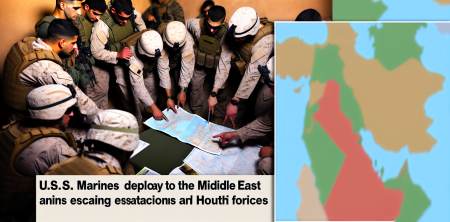
In a significant escalation of military presence in the Middle East, an expeditionary force of U.S. Marines arrived in the region on Saturday. This deployment coincides with increased military activity from the Iran-aligned Houthi forces in Yemen, who launched an unsuccessful missile attack targeting Israel.
Context of the Conflict
The conflict in the Middle East has intensified as Houthis, who are backed by Iran, have ramped up their military operations. The attempted missile strike on Israel, although thwarted, signals a dangerous expansion of hostilities that could draw in multiple nations, including the United States and key regional players.
U.S. Military Response
The arrival of U.S. Marines comes at a time when tensions are running high. President Trump has indicated that the U.S. is engaged in "very strong talks" with Iran in an effort to find a diplomatic resolution to the escalating conflict. However, recent strikes on both Friday and Saturday demonstrate a significant lack of progress towards de-escalation.
Escalation of Hostilities
The missile attack by the Houthis appears to be part of a broader strategy aligned with Iran's interests in the region. The group has previously threatened to target Israel and U.S. interests in retaliation for perceived aggressions. Despite the unsuccessful nature of the missile attack, it underscores the fragile security environment in the Middle East.
Key Players in the Conflict
The ongoing conflict involves several key players:
- United States: Reinforcing its military presence to deter further Iranian aggression.
- Israel: Responding to threats from Iran and its proxies in the region.
- Iran: Supporting Houthi forces as part of its strategy to exert influence across the Middle East.
- Houthis: Engaging in missile strikes against Israel as a demonstration of their capabilities.
Implications for Regional Stability
The involvement of U.S. Marines signifies a potential shift in U.S. military strategy in the Middle East. Analysts suggest that this deployment could serve multiple purposes, including:
- Deterrence against further Houthi aggression.
- Support for Israeli defense capabilities.
- Reassurance for U.S. allies in the region who may feel threatened by Iranian expansionism.
However, the introduction of U.S. troops may also escalate tensions and provoke further retaliatory actions from Iranian-backed groups, complicating the already delicate situation.
International Reactions
Global reactions to the developments have been mixed, with some countries expressing support for U.S. efforts to stabilize the region, while others criticize the military buildup as a provocative measure. The United Nations has called for restraint from all parties involved and urged diplomatic solutions to the ongoing crisis.
Future Prospects
As diplomatic talks between the U.S. and Iran continue, the situation remains precarious. The U.S. military presence in the region is likely to remain high, especially with the continued threats from Houthi forces and other Iranian proxies. Observers are closely monitoring the situation, as any further escalation could lead to broader conflict.
Conclusion
The arrival of U.S. Marines in the Middle East amid Houthi missile strikes against Israel represents a crucial moment in a rapidly evolving conflict. With diplomatic talks underway but showing limited progress, the potential for increased military engagement looms large. Stakeholders in the region and around the world will be watching closely as the situation develops, hoping for a peaceful resolution to the tensions that threaten stability in the Middle East.

