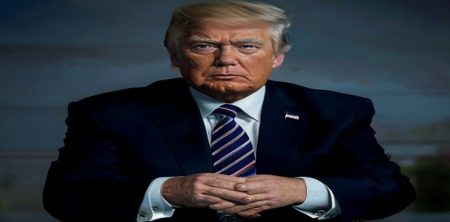
The air crackles with a tension so thick you could cut it with a knife. For weeks, the world has watched, aghast, as the already strained relationship between the United States and Iran has spiraled into something far more dangerous. We're talking about direct threats, not veiled diplomatic warnings, but raw, unvarnished declarations of intent to inflict pain. President Donald Trump has been particularly blunt, stating that Iran “haven't received enough pain yet” and vowing a “massive” Trump Iran attack of “unprecedented proportion.”
It's a chilling escalation, one that feels less like a chess match between nations and more like a high-stakes game of chicken with global consequences. The rhetoric isn't just heated; it's practically incandescent. When you hear phrases like “a head for an eye” coming from the Secretary of State, you know we've moved beyond the usual diplomatic dance. This isn't just about regional stability anymore; it's about the potential for a conflict that could reshape the Middle East and send shockwaves through the global economy, particularly the already delicate energy markets. Let's dig into how we got here and what might come next.
The Escalating Rhetoric: From Sanctions to Suffering
For a long time, the U.S. strategy against Iran has largely revolved around economic pressure – sanctions designed to cripple their economy and force changes in their behavior. But recently, the tone has shifted dramatically. President Trump’s declaration that Iran hasn't experienced “enough pain yet” marks a significant rhetorical departure. It suggests a desire not just for policy change, but for a punitive response, a kind of retribution that goes beyond economic leverage.
This isn't just a turn of phrase; it's a window into a potentially more aggressive posture. When a head of state speaks so openly about inflicting pain, it signals a willingness to consider actions that might have previously been off the table. It sets a dangerous precedent, opening the door to interpretations of what ‘enough pain’ truly entails. For Iran, it’s a clear message: the U.S. is prepared to escalate beyond economic measures, and that threat alone creates immense instability.
The 'Eye for an Eye' vs. 'Head for an Eye' Doctrine
The concept of retaliation in international relations often conjures images of tit-for-tat responses, a measured 'eye for an eye' approach where each party seeks to inflict equivalent damage. Iran's Foreign Minister Abbas Araghchi has explicitly invoked this principle, vowing to answer any American aggression with an 'eye for an eye' retaliation. This suggests a desire for parity, a symmetrical response designed to show resolve without necessarily seeking overwhelming escalation.
However, Secretary of State Marco Rubio’s counter-declaration of a “head for an eye” policy fundamentally alters this dynamic. This isn't just a proportional response; it's a deliberate embrace of disproportionate force. It means that for any Iranian action, the U.S. is signaling its intent to respond with significantly greater severity, aiming to inflict damage far exceeding the initial provocation. This imbalance itself is a potent catalyst for escalation. If one side is always prepared to hit harder, the cycle of retaliation becomes incredibly difficult to break, pushing both parties towards increasingly destructive acts. A 'head for an eye' strategy is designed to deter, but in practice, it often invites desperate measures from the party facing overwhelming force.
Targeting Civilian Infrastructure: A Troubling Precedent
One of the most concerning aspects of the recent U.S. actions, preceding the direct threats, has been the alleged targeting of Iranian civilian infrastructure. Reports indicate strikes on vital networks like bridges, railways, and water facilities. If true, these are not merely military targets; they are the arteries of a nation, essential for the daily lives of its citizens. Destroying such infrastructure goes beyond weakening military capabilities; it directly impacts the populace, hindering transportation, commerce, and access to basic necessities.
This type of targeting carries significant ethical and legal implications under international law, which generally seeks to protect civilian populations and infrastructure during armed conflict. More critically, from a strategic standpoint, it’s a highly provocative move. Attacking civilian targets is often seen as an act of desperation or a deliberate attempt to break the will of a nation by making its people suffer. Such actions are almost guaranteed to harden resolve rather than break it, fueling anti-American sentiment and increasing the likelihood of widespread popular support for retaliatory measures. It’s a dangerous path that can quickly push a conflict past the point of no return, where a Trump Iran attack would have far-reaching consequences.
The Houthi Connection: Widening the Conflict's Scope
The conflict isn't confined to direct U.S.-Iran confrontations. The involvement of Houthi rebels in Yemen, who have allegedly attacked Saudi oil tankers in the Red Sea, adds another perilous layer to this already complex situation. The U.S. and its allies frequently accuse Iran of backing the Houthis, providing them with weapons and strategic support. While Iran denies direct military involvement, the perception of their influence on groups like the Houthis is a major factor in the regional power struggle.
These attacks on shipping lanes are not just isolated incidents; they are direct threats to global energy security. The Red Sea is a critical maritime choke point, and any disruption there has immediate repercussions for oil prices and international trade. The U.S. response to these Houthi actions has been swift and stern, with warnings of “major military punishment.” This broadens the potential scope of any Trump Iran attack scenario, moving it beyond direct bilateral engagement to a wider regional conflict involving proxies and strategic maritime routes. It means that an incident far from Iranian borders could still trigger a direct confrontation, making the entire region a powder keg.
The Global Energy Market on Edge
Perhaps no sector feels the immediate tremor of this escalating tension more acutely than the global energy market. The Strait of Hormuz, bordering Iran, is the world's most important oil transit choke point, through which roughly one-fifth of the world's total petroleum consumption passes daily. Any significant disruption or perceived threat to this waterway sends oil prices soaring, impacting economies worldwide. The Red Sea, as mentioned, is another crucial artery for energy transport. (See: Iran health and geopolitical issues.)
The mere threat of a Trump Iran attack, let alone an actual military engagement, injects enormous volatility into these markets. Traders react to uncertainty, and the prospect of a major conflict in the Middle East is the ultimate uncertainty. We saw this in 2019 after attacks on Saudi oil facilities, when prices surged dramatically. A full-scale conflict would undoubtedly lead to a sustained price spike, potentially pushing the global economy into recession. For consumers, this means higher gas prices, increased costs for goods and services, and a general squeeze on household budgets. The economic consequences alone are a powerful deterrent, yet the rhetoric continues to intensify. Related reading: US-Iran tensions escalation.
The Danger of Miscalculation and Escalation
In any highly volatile geopolitical situation, the greatest danger often lies in miscalculation. Both sides may believe they understand the other's red lines, but in the heat of a crisis, signals can be misinterpreted, intentions can be misunderstood, and actions can trigger unintended consequences. When rhetoric is already at boiling point, with threats of “massive” and “unprecedented” attacks, the margin for error becomes incredibly thin.
Consider a scenario: a localized skirmish, a perceived slight, or an accidental engagement could quickly spiral out of control. Each side, feeling compelled to respond forcefully to avoid appearing weak, could find itself trapped in an escalatory ladder with no easy off-ramps. The 'head for an eye' policy, while intended to deter, could perversely incentivize Iran to take more desperate or covert actions, knowing that a direct, proportional response would be met with overwhelming force. This creates a feedback loop where each action, no matter how small, has the potential to trigger a much larger reaction, leading to a full-blown Trump Iran attack that neither side truly desires but cannot avoid.
A Look Back: The History of U.S.-Iran Tensions
To truly grasp the gravity of the current situation, it helps to understand the long and often fraught history between the U.S. and Iran. Their relationship has been characterized by periods of cooperation, but more often by deep mistrust and animosity, dating back to the 1953 U.S.-orchestrated coup that overthrew Iran's democratically elected Prime Minister Mohammad Mosaddegh. That act installed the Shah, a monarch largely supported by the West, a move that still fuels resentment in Iran today.
The 1979 Islamic Revolution, which saw the overthrow of the Shah and the establishment of the Islamic Republic, fundamentally reshaped the dynamic. The hostage crisis at the U.S. embassy in Tehran became a symbol of the new era of hostility. Decades followed with various flashpoints: U.S. support for Iraq during the Iran-Iraq War in the 1980s, Iran's pursuit of a nuclear program, and ongoing proxy conflicts across the Middle East. The 2015 Joint Comprehensive Plan of Action (JCPOA), or Iran nuclear deal, offered a brief moment of de-escalation, but President Trump's withdrawal from the agreement in 2018 reignited tensions, setting the stage for the current crisis. This history means that trust is virtually non-existent, and every action is viewed through a lens of deep-seated suspicion and historical grievance, making a Trump Iran attack a historical flashpoint.
The Human Cost of Conflict
While geopolitical strategists and economists debate oil prices and strategic choke points, it's crucial not to lose sight of the most devastating consequence of any potential conflict: the human cost. A “massive” Trump Iran attack, particularly one targeting civilian infrastructure, would inevitably lead to widespread death, injury, and displacement. Families would be torn apart, homes destroyed, and lives irrevocably altered. The images from other conflicts in the region – Syria, Yemen, Iraq – offer a stark preview of the devastation that could unfold.
Beyond the immediate casualties, a war would have long-term impacts on public health, education, and the social fabric of Iran. It would create a new generation scarred by conflict, fueling further instability and cycles of violence for decades to come. The region is already grappling with humanitarian crises on an unprecedented scale; adding a major U.S.-Iran conflict would push it past any imaginable breaking point. This isn't just about abstract national interests; it's about the very real suffering of millions of people caught in the crossfire.
What Happens Next? Navigating the Precipice
So, where do we go from here? The situation is incredibly fluid, and predicting the exact trajectory is impossible. However, several paths are plausible, each with its own set of terrifying implications. One possibility is continued escalation, where each provocation is met with a stronger response, ultimately leading to direct military engagement. The rhetoric from both sides certainly suggests this grim outcome is a distinct possibility.
Another scenario involves a period of intense brinkmanship, where both sides push the boundaries without crossing the threshold into full-scale war. This would involve continued covert operations, proxy conflicts, and economic warfare, maintaining a state of high alert and instability in the region. A third, more hopeful but seemingly less likely path, would involve de-escalation through back-channel diplomacy or the intervention of international mediators. However, given the current public pronouncements and the deep-seated mistrust, finding common ground for negotiation seems incredibly challenging.
The world watches, holding its breath. The direct threats, the targeting of infrastructure, the widening scope of the conflict, and the emotionally charged language all point to a deeply volatile situation. The consequences of a misstep, or a deliberate decision to unleash a “massive” Trump Iran attack, would be truly catastrophic, reverberating across the globe for years to come. It’s a moment that demands not just vigilance, but a profound understanding of the stakes involved.
The Role of Cyber Warfare in Modern Conflict
In today's interconnected world, military conflict isn't just about boots on the ground or missiles in the air. Cyber warfare has emerged as a crucial, and often invisible, front. Both the U.S. and Iran have sophisticated cyber capabilities, and they've shown a willingness to use them. The Stuxnet virus, widely attributed to the U.S. and Israel, famously targeted Iran's nuclear centrifuges, setting back its program without firing a single shot. In retaliation, Iran has been implicated in cyberattacks against U.S. financial institutions and critical infrastructure.
In the context of a potential Trump Iran attack, cyber warfare could play several roles. It could be a precursor, softening targets and disrupting command and control systems before a kinetic strike. It could be used to sow chaos within Iran, disrupting essential services like power grids, banking, or communication networks, creating internal unrest and weakening the government's ability to respond. Conversely, Iran could launch its own cyberattacks against U.S. interests or those of its allies, aiming to disrupt infrastructure, steal sensitive data, or even influence public opinion. The challenge with cyber warfare is attribution – it's often difficult to definitively prove who launched an attack, which can complicate retaliation and further muddy the waters of escalation. It also means attacks can happen without clear declarations of war, keeping tensions high and the possibility of a "hot" war always present. (See: BBC report on U.S.-Iran tensions.)
International Reactions and Alliances
A Trump Iran attack wouldn't happen in a vacuum. The international community would react, and those reactions would significantly shape the conflict's trajectory. Key U.S. allies in Europe, like France, Germany, and the UK, have consistently advocated for de-escalation and a return to the Iran nuclear deal. They would likely condemn any unilateral military action and could even impose diplomatic or economic pressure on the U.S. to prevent further escalation. This could isolate the U.S. on the global stage, making it harder to build a broad coalition if the conflict expands.
Regional alliances are also critical. Saudi Arabia and Israel, long-time adversaries of Iran, would likely support U.S. action, viewing it as an opportunity to diminish a common foe. However, their involvement could also widen the conflict, drawing in other regional actors and potentially igniting proxy wars across the Middle East. Russia and China, both with significant economic and strategic interests in Iran, would almost certainly oppose a military strike, potentially offering diplomatic cover or even limited material support to Iran, further complicating the geopolitical landscape. The complex web of alliances means that a bilateral conflict between the U.S. and Iran could quickly become a multi-national crisis, with unpredictable consequences for global stability.
Domestic Pressures and Public Opinion
Leaders don't make decisions in a vacuum; they operate under significant domestic pressures. In the U.S., public opinion on military intervention is often divided. While some might support a strong stance against Iran, others would fear another costly and protracted conflict in the Middle East. The economic impact of soaring oil prices and the human cost of war would weigh heavily on public sentiment, potentially affecting domestic political calculations for any administration contemplating a Trump Iran attack.
In Iran, the regime faces its own set of internal challenges, including economic hardship exacerbated by U.S. sanctions and occasional public protests. External threats, however, often have the paradoxical effect of unifying a populace against a common enemy, strengthening the regime's hand. An attack could rally Iranians around their government, regardless of their internal grievances, making any U.S. objective of regime change even harder to achieve. Understanding these domestic pressures on both sides is crucial for interpreting their actions and predicting potential responses in a crisis.
The Nuclear Dimension: A Constant Shadow
Beneath all the rhetoric and threats lies the ever-present shadow of Iran's nuclear program. While Iran maintains its program is for peaceful purposes, many international observers believe it has sought, or could quickly develop, nuclear weapons capability. This perception is a primary driver of U.S. and Israeli concern and a major reason for the 'maximum pressure' campaign.
A Trump Iran attack, if it were to occur, would inevitably bring the nuclear question to the forefront. Some argue that a military strike might be aimed at degrading Iran's nuclear facilities, setting back its capabilities. However, such an action could also have the opposite effect: pushing Iran to accelerate its nuclear program in defiance, viewing nuclear weapons as the ultimate deterrent against future attacks. The possibility of Iran eventually acquiring nuclear weapons dramatically raises the stakes, transforming a regional conflict into one with global existential implications. This nuclear dimension means that any military action carries an inherent, profound risk of unintended and irreversible consequences.
Potential Exit Strategies and De-escalation Pathways
Given the immense risks, it's worth considering what potential exit strategies or de-escalation pathways exist, however unlikely they may seem in the current climate. One avenue could be third-party mediation. Countries like Switzerland or Oman have historically played roles as intermediaries between the U.S. and Iran. A neutral party could facilitate back-channel discussions, allowing both sides to explore options without public loss of face.
Another pathway could involve a phased return to elements of the JCPOA, the Iran nuclear deal. While the Trump administration withdrew from it, future administrations might see a renewed deal as a way to cap Iran's nuclear ambitions and provide a framework for de-escalation. This would likely require significant concessions from both sides, but it offers a structured diplomatic solution. Finally, a clear demonstration of off-ramps from either side – perhaps a verifiable reduction in provocative actions or a public commitment to dialogue without preconditions – could open a door. The challenge, of course, is that in a climate of "head for an eye" rhetoric, offering such off-ramps can be perceived as weakness, making the political will for de-escalation incredibly difficult to muster.
Frequently Asked Questions About a Trump Iran Attack
What is the primary cause of current U.S.-Iran tensions?
The current tensions largely stem from the U.S. withdrawal from the 2015 Iran nuclear deal (JCPOA) in 2018, followed by the re-imposition of severe economic sanctions. This action, coupled with long-standing animosity, Iran's regional activities, and its nuclear program, has created a highly volatile situation.
What does "massive" and "unprecedented proportion" mean in this context?
When President Trump used these phrases, it generally signaled an intent for a military response that would be far greater in scale and impact than anything seen before in U.S.-Iran confrontations. It implies a willingness to use overwhelming force, potentially targeting a wide range of military and even strategic civilian infrastructure. (See: New York Times analysis of Trump's Iran strategy.)
How would a Trump Iran attack affect global oil prices?
Any military conflict involving Iran, especially one that impacts the Strait of Hormuz (a critical oil choke point), would almost certainly cause global oil prices to skyrocket. Even the threat of conflict causes significant market volatility. This would lead to higher gasoline prices for consumers and increased costs for businesses worldwide.
Is targeting civilian infrastructure legal under international law?
International humanitarian law, specifically the Geneva Conventions, prohibits direct attacks on civilian populations and civilian objects unless they are being used for military purposes. Even then, the principle of proportionality must be observed, meaning the expected military advantage must outweigh the harm to civilians. Allegations of targeting non-military infrastructure raise serious concerns about violations of these laws.
What role do proxy groups like the Houthis play in this conflict?
Proxy groups complicate the conflict by allowing the U.S. and Iran to engage indirectly without direct, declared warfare. Iran is accused of supporting groups like the Houthis in Yemen, who have attacked U.S. allies like Saudi Arabia. These actions can be seen as provocations that broaden the conflict's scope and can easily trigger direct responses from the U.S. or its allies.
Could a Trump Iran attack lead to a wider regional war?
Absolutely. The Middle East is a complex web of alliances and rivalries. A direct U.S.-Iran conflict could easily draw in regional powers like Saudi Arabia and Israel, who have their own grievances with Iran. This could lead to multiple fronts opening, including in Yemen, Iraq, Syria, and even Lebanon, creating a humanitarian catastrophe and further destabilizing the entire region.
What is the status of Iran's nuclear program?
After the U.S. withdrew from the JCPOA, Iran gradually began to roll back its commitments under the deal, increasing its uranium enrichment levels and accumulating enriched uranium beyond the limits set by the agreement. While Iran maintains its program is peaceful, these actions have brought it closer to the capability of developing nuclear weapons, raising international alarm.
Are there any diplomatic off-ramps to de-escalate the situation?
Diplomatic off-ramps are always possible, but they require political will from both sides. These could include indirect negotiations facilitated by third-party countries, a return to some form of the nuclear deal, or a mutual de-escalation of rhetoric and provocative actions. However, the deep mistrust and public commitments to a hard line make diplomacy incredibly challenging in the current environment.
What would be the human cost of a full-scale military conflict?
The human cost would be catastrophic. It would result in widespread civilian casualties, massive displacement of populations, destruction of cities and infrastructure, and a severe humanitarian crisis. The long-term effects would include widespread trauma, exacerbated poverty, and further cycles of instability in a region already grappling with immense suffering.
Trending Now (high stakes military operation)
Frequently Asked Questions
What are Trump's threats against Iran?
President Trump has made direct threats against Iran, stating they 'haven't received enough pain yet' and vowing a 'massive' attack of 'unprecedented proportion.' This marks a significant escalation in rhetoric, indicating a potential shift from economic sanctions to military action.
How has the relationship between the US and Iran changed?
The relationship has deteriorated significantly, moving from economic sanctions to open threats of military action. The rhetoric has become increasingly aggressive, signaling a possible shift towards a more confrontational U.S. stance under President Trump.
What impact could a US-Iran conflict have on the global economy?
A conflict between the U.S. and Iran could have severe implications for global stability, particularly in the energy markets. Given Iran's role in oil production, military action could disrupt supply chains, leading to spikes in oil prices and broader economic instability.
What does Trump's rhetoric about Iran suggest?
Trump's rhetoric, including phrases like 'a head for an eye,' suggests a willingness to consider aggressive military responses rather than just diplomatic or economic measures. This indicates a potential escalation in U.S. foreign policy towards Iran.
What strategies has the US previously used against Iran?
The U.S. has primarily relied on economic sanctions aimed at crippling Iran's economy to force behavioral changes. However, recent statements by Trump indicate a shift towards a more aggressive approach, potentially involving military action.
What did we miss? Let us know in the comments and join the conversation.

