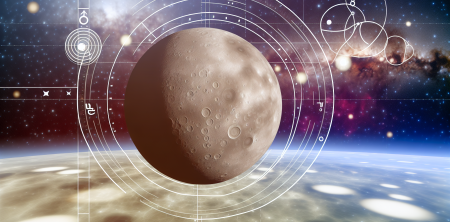
Tonight, on March 19, 2026, the planet Mercury will conclude its retrograde motion, an event that has long fascinated both astronomers and those interested in astrology. The retrograde period, which began on February 25, 2026, is about to end as Mercury reaches its stationary point and resumes its normal prograde motion. This phenomenon is often misunderstood, leading to various beliefs and superstitions surrounding the implications of this celestial event.
What is Retrograde Motion?
Retrograde motion refers to the apparent backward movement of a planet as observed from Earth. This optical illusion occurs due to the relative speeds and positions of Earth and the other planets in their orbits around the Sun. When Earth, moving in its orbit, overtakes another planet, it appears as though that planet is moving backward against the backdrop of stars. This is particularly noticeable for inner planets like Mercury and Venus.
Mercury's Retrograde Cycle
Mercury is known for its frequent retrograde cycles, occurring approximately three to four times a year. Each retrograde period typically lasts around three weeks. During these times, people often report experiencing communication breakdowns, technological malfunctions, and misunderstandings in relationships—common themes attributed to Mercury's influence in astrology.
However, it is essential to recognize that these experiences are not caused by Mercury's motion itself but rather by the way we interpret the planet's position in the sky. The conclusion of this retrograde period signifies a return to normalcy, with many looking forward to the positive changes that may follow.
Astronomical Reality vs. Astrological Beliefs
While astrology often imbues retrograde motion with significant meaning, the scientific explanation is rooted in the laws of physics. In reality, retrograde motion is purely an effect of perspective and does not indicate any actual change in the planet's behavior or influence over human affairs.
For instance, when Mercury is in retrograde, it does not change its physical properties or its position in relation to the Sun. Instead, it is a result of the intricate dance of celestial bodies, governed by Newton's laws of motion and Kepler's laws of planetary motion.
Current Planetary Movements
As Mercury wraps up its retrograde cycle, it is noteworthy that no other planets are currently in retrograde, adding to the significance of this celestial event. Looking ahead, Jupiter will enter its retrograde phase on December 13, 2026, followed by Mars, which will begin its retrograde on January 11, 2027. Understanding these cycles can provide insights into the broader context of planetary movements and their implications.
Why Does Retrograde Motion Matter?
For astronomers, the study of retrograde motion offers valuable insights into the dynamics of our solar system. Each retrograde cycle presents an opportunity to observe the planets and their motions more closely. This phenomenon allows astronomers to refine their models of planetary motion and gain a deeper understanding of gravitational interactions.
Conversely, for enthusiasts of astrology, the end of a retrograde period often symbolizes a time of renewed energy and clarity. Many people take this opportunity to reflect on the challenges faced during the retrograde phase and to set intentions for the upcoming period.
Embracing the Change
As Mercury transitions from retrograde to prograde motion, individuals may find a shift in their mindset. It is a time to release any lingering energy from the retrograde and embrace new beginnings. Whether one subscribes to astrological interpretations or prefers a purely scientific perspective, the conclusion of this retrograde offers a moment for reflection and growth.
In conclusion, while Mercury's retrograde motion may evoke a mix of apprehension and curiosity, it is essential to differentiate between the scientific reality and the astrological narrative. Understanding the true nature of retrograde motion can enhance our appreciation for the intricate workings of our solar system, while also providing a framework for personal growth and reflection.
Final Thoughts
As we bid farewell to Mercury's retrograde period, let us embrace the knowledge that this celestial event is merely a fascinating aspect of our universe's dynamics. By appreciating both the astronomical phenomena and the cultural interpretations that arise from them, we can cultivate a deeper connection with the cosmos and the rhythms of life on Earth.

