```html
When it comes to education, the landscape is rich with theories and practices that aim to enhance student learning. Among these, the concepts of scaffolding in education and the Zone of Proximal Development (ZPD), both stemming from the work of psychologist Lev Vygotsky, stand out as fundamental frameworks. These two concepts are not just educational jargon; they are pivotal in shaping teaching methodologies and understanding how students learn. This article will explore these concepts in depth, comparing and contrasting them, and providing insights into their practical applications in modern classrooms.
1. Who Was Lev Vygotsky?
Lev Vygotsky was a Russian psychologist whose work in the early 20th century laid the foundation for many contemporary educational theories. Born in 1896 in Orsha, Belarus, Vygotsky's academic career flourished in the midst of the socio-political upheaval in Russia. His ideas emerged during a time when psychology was beginning to shift away from merely observing behavior to exploring the cognitive processes behind it.
Vygotsky's most notable contributions to psychology and education include his theories on cognitive development, particularly the concept of the Zone of Proximal Development and the role of social interaction in learning. His work emphasizes the importance of culture and social context in cognitive development, suggesting that learning is inherently a social process.
2. Understanding Scaffolding in Education
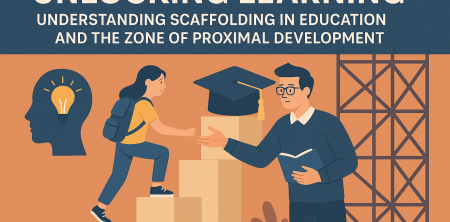
Scaffolding in education refers to the process of providing support to learners that is gradually removed as they become more proficient. This concept mirrors the scaffolding used in construction, where temporary structures support a building until it can stand on its own. In a classroom setting, teachers use various strategies—such as modeling, questioning, and providing hints—to support students in mastering new skills or concepts.
The primary goal of scaffolding is to foster independence in learners. For instance, when introducing complex mathematical concepts, a teacher might first demonstrate the problem-solving process, then guide students through similar problems, and eventually allow them to tackle challenges on their own. This gradual release of responsibility is crucial in helping students build confidence and competence in their abilities.
3. The Zone of Proximal Development Explained
The Zone of Proximal Development (ZPD) is a key concept introduced by Vygotsky that describes the range of tasks that a learner can perform with the guidance of a more knowledgeable other (MKO), such as a teacher or a peer. According to Vygotsky, there are three levels of learning: what a learner can do independently, what they can do with assistance, and what they cannot do, even with help.
This framework suggests that effective teaching occurs within the ZPD. By identifying tasks that are just beyond a learner's current abilities but attainable with support, educators can facilitate meaningful learning experiences. For example, if a student can understand basic algebra but struggles with quadratic equations, a teacher might guide them through the solving process, helping them to eventually master the topic.
4. Scaffolding vs. Zone of Proximal Development
While scaffolding and the Zone of Proximal Development are closely related, they serve different roles in the educational process. Scaffolding is the method through which teachers provide support. In contrast, the ZPD defines the context in which that support is most effective. Essentially, scaffolding is a strategy utilized to help learners bridge the gap within their ZPD.
For instance, if a student is learning to write essays, a teacher might scaffold the learning by first teaching the structure of an essay, providing outlines, and offering feedback on drafts. This support occurs within the ZPD, as the student is able to write a competent essay with these aids but would struggle to do so independently at first. (See: Lev Vygotsky's contributions to psychology.)
5. Practical Applications of Scaffolding in Education
Implementing scaffolding in the classroom requires thoughtful planning and a clear understanding of student needs. Here are several practical strategies educators can use:
- Modeling: Teachers can demonstrate a task or skill explicitly before asking students to attempt it themselves. This provides a clear framework for students to follow.
- Chunking Information: Breaking down complex information into smaller, manageable parts helps students to process and understand material more effectively.
- Guided Practice: Providing opportunities for students to practice with immediate feedback allows them to refine their skills with support.
- Peer Collaboration: Encouraging students to work together fosters an environment of shared learning and allows them to support each other within their ZPD.
- Gradual Release of Responsibility: As learners become more proficient, teachers should slowly reduce the amount of support they provide, empowering students to take ownership of their learning.
6. Current Relevance of Vygotsky’s Theory
Vygotsky's theories remain incredibly relevant today, particularly as educators increasingly recognize the value of social interaction in learning. In an age where collaborative learning environments are promoted, Vygotsky's emphasis on social context aligns perfectly with modern pedagogical practices.
Furthermore, the concept of scaffolding has gained traction in various educational settings, from elementary schools to higher education. As educators adapt their teaching to include technology and online learning platforms, the principles of scaffolding continue to guide instructional design, ensuring that students receive the support they need to succeed.
7. Challenges and Considerations
While scaffolding in education and the Zone of Proximal Development offer powerful tools for enhancing learning, they are not without their challenges. Educators must be mindful of a few key considerations:
- Individual Differences: Every student learns at their own pace, and what works for one may not work for another. Teachers need to tailor their scaffolding techniques to meet the diverse needs of their students.
- Over-Scaffolding: There's a risk of providing too much assistance, which can lead to dependency rather than independence. Striking the right balance is crucial.
- Assessment of ZPD: Accurately identifying a student's ZPD requires careful observation and assessment, which can be challenging in a classroom with many learners.
- Professional Development: Educators may require training and resources to effectively implement scaffolding strategies and understand the nuances of the ZPD.
8. Examples of Scaffolding in Different Subjects
Scaffolding can be applied across various subjects, each requiring tailored strategies that fit the specific content area. Here are a few examples:
- Mathematics: Teachers may use visual aids or manipulatives to help students grasp abstract concepts before introducing more complex equations.
- Literature: In a literature class, teachers can guide students through texts by providing summaries, leading discussions, and modeling literary analysis before asking students to analyze a text independently.
- Science: In science education, teachers might conduct experiments together with students, providing step-by-step instructions, before allowing students to design and conduct their own experiments.
- History: When studying historical events, teachers can help students synthesize information by creating timelines or graphic organizers that connect events and themes.
9. The Role of Technology in Scaffolding
In today's digital age, technology plays a significant role in enhancing scaffolding practices. Online platforms and educational software can provide personalized learning experiences that adapt to student needs. Here are some ways technology supports scaffolding:
- Interactive Learning Tools: Applications like Khan Academy or Google Classroom offer interactive lessons and exercises that adapt to the learner’s pace, providing scaffolding as students progress through material.
- Online Tutorials: Various educational websites provide video tutorials and guided exercises that can serve as scaffolds for students struggling with specific concepts.
- Discussion Forums: Platforms like Edmodo or Padlet allow students to collaborate and engage in peer learning, providing support as they work through their ZPD together.
- Gamification: Incorporating game elements in learning can motivate students and provide scaffolding through incremental challenges that adjust to their skill levels.
10. Case Studies of Scaffolding in Action
Several case studies illustrate the effectiveness of scaffolding in education. One notable example is the use of scaffolding in a middle school math classroom:
In a study conducted at a suburban middle school, a teacher implemented a scaffolding strategy for teaching geometry. Initially, she introduced basic shapes and their properties using visual aids and physical models. Then she guided students through group activities where they collaborated on solving geometric problems. As students demonstrated understanding, she gradually reduced her support, allowing them to tackle more complex problems independently. Results showed a significant increase in student confidence and performance in geometry assessments.
Another example comes from a high school English class, where scaffolding was used to enhance critical analysis skills. The teacher employed a structured approach: first, modeling how to analyze a poem, then providing guided practice with a different poem, and finally allowing students to analyze a poem of their choice independently. Feedback indicated that students felt more equipped to articulate their thoughts and engage with literature critically. (See: importance of social interaction in learning.)
11. Comparative Analysis: Scaffolding vs. Traditional Teaching Methods
Scaffolding significantly differs from traditional teaching methods, which typically rely on direct instruction and rote memorization. Here’s a comparative look:
| Aspect | Scaffolding | Traditional Teaching |
|---|---|---|
| Student Engagement | Encourages active participation and collaboration. | Often passive, with students receiving information. |
| Learning Pace | Adapts to individual student needs and allows for differentiation. | Standardized pace for all students, regardless of their abilities. |
| Assessment | Formative assessment used to guide instruction. | Usually relies on summative assessments at the end of a unit. |
| Teacher's Role | Facilitator who provides support and guidance. | Primary source of knowledge and information. |
12. Common Misconceptions About Scaffolding
Despite its proven effectiveness, several misconceptions about scaffolding in education persist:
- Scaffolding is only for struggling students: While scaffolding is beneficial for students who need extra support, it can also enhance learning for all students, including advanced learners who may need different types of challenges.
- Scaffolding means giving all the answers: Effective scaffolding involves guiding students to find answers themselves rather than simply providing them.
- Scaffolding is time-consuming: Although it requires thoughtful planning, effective scaffolding can streamline the learning process and lead to faster mastery of concepts.
13. FAQ: Scaffolding in Education
What is scaffolding in education?
Scaffolding in education is the support provided to students to help them learn new concepts and skills. This support is gradually removed as students gain independence and confidence in their abilities.
How does scaffolding relate to the Zone of Proximal Development?
Scaffolding is a teaching strategy that occurs within a learner's Zone of Proximal Development (ZPD). It helps students bridge the gap between what they can do independently and what they can do with assistance.
Can scaffolding be applied in online learning environments?
Yes, scaffolding can be effectively implemented in online learning environments through interactive tools, guided tutorials, and peer collaboration platforms.
What are some examples of scaffolding strategies?
Common scaffolding strategies include modeling tasks, chunking information, providing guided practice, encouraging peer collaboration, and gradually releasing responsibility to students.
How can teachers assess a student’s ZPD?
Teachers can assess a student's ZPD through careful observation, formative assessments, and understanding their prior knowledge and skills.
14. Final Thoughts on Scaffolding and the ZPD
Understanding the concepts of scaffolding in education and the Zone of Proximal Development can significantly enhance teaching and learning experiences. By recognizing the importance of support and the social nature of learning, educators can create dynamic and effective learning environments that empower students. Vygotsky's theories remind us that learning is a collaborative journey, and with the right supports in place, every learner has the potential to reach new heights. (See: Harvard University educational resources.)
15. Expanding the Concept of Scaffolding
Scaffolding isn't just limited to academic skills; it can be applied to social and emotional learning as well. For instance, teachers can scaffold students' social interactions by modeling appropriate communication skills, encouraging peer feedback, and guiding conflict resolution strategies. By embedding these social learning opportunities within the curriculum, educators can support students in developing critical life skills alongside academic competencies.
16. Scaffolding in Special Education
In special education, scaffolding plays an essential role in accommodating diverse learning needs. Educators are trained to identify specific challenges that students may face and implement tailored scaffolding techniques. For example, a special education teacher might use visual supports, such as picture schedules or graphic organizers, to assist students with autism spectrum disorders. By providing these visual cues, students can better understand tasks and expectations, enabling them to engage more fully in the learning process.
17. Scaffolding and Differentiated Instruction
Scaffolding naturally aligns with differentiated instruction, which is an approach that tailors teaching to meet the varied needs of students in a classroom. Teachers can differentiate the level of scaffolding based on students' readiness, interests, and learning profiles. For example, advanced learners may receive scaffolding in the form of more complex tasks that challenge their critical thinking skills, while struggling learners might need more structured support. This tailored approach ensures that all students receive the necessary guidance to thrive.
18. Research Support for Scaffolding
Numerous studies have validated the effectiveness of scaffolding in various educational contexts. Research indicates that students who receive scaffolding not only perform better academically but also exhibit increased motivation and engagement. A meta-analysis published in the Review of Educational Research found that scaffolding interventions led to significant improvements in both student achievement and self-efficacy. These findings underscore the importance of incorporating scaffolding strategies into classroom practices to foster a supportive learning environment.
19. Future Directions for Scaffolding in Education
As education continues to evolve, the role of scaffolding is likely to expand further. With the integration of artificial intelligence and adaptive learning systems, educators may have access to sophisticated tools that provide real-time analytics on student performance. This data can help teachers make informed decisions about the type and level of scaffolding required for each student. As technology advances, it will be crucial for educators to remain adaptable and innovative, continually seeking ways to enhance their scaffolding techniques.
20. Conclusion
Scaffolding in education, rooted in Vygotsky's theories, is a powerful tool for fostering meaningful learning experiences. By understanding and applying these principles, educators can better support their students' academic journeys and equip them with the skills they need to become independent learners. The potential of scaffolding extends beyond traditional subjects, impacting social, emotional, and life skills development, making it an invaluable approach in the modern educational landscape.
```
Trending Now
Frequently Asked Questions
What is scaffolding in education?
Scaffolding in education refers to the support provided to students as they learn new skills or concepts, which is gradually removed as they gain proficiency. This method helps learners become independent by using strategies like modeling, questioning, and hints to guide them in mastering material.
How does the Zone of Proximal Development work?
The Zone of Proximal Development (ZPD) is a concept introduced by Lev Vygotsky that defines the range of tasks a learner can perform with guidance but not independently. It emphasizes the importance of social interaction and the role of teachers in helping students reach their potential.
Who is Lev Vygotsky and why is he important?
Lev Vygotsky was a Russian psychologist known for his work on cognitive development and educational theory in the early 20th century. His concepts, particularly the Zone of Proximal Development and scaffolding, have significantly shaped contemporary educational practices and understanding of learning.
What are the benefits of scaffolding in the classroom?
Scaffolding provides numerous benefits, including promoting student independence, enhancing understanding of complex concepts, and facilitating a supportive learning environment. By gradually removing support, students build confidence and develop critical thinking skills necessary for their academic growth.
How can teachers implement scaffolding strategies?
Teachers can implement scaffolding strategies by using techniques such as modeling behaviors, asking targeted questions, providing hints, and breaking tasks into manageable steps. This approach allows educators to tailor support to individual student needs, fostering effective learning experiences.
Have you experienced this yourself? We'd love to hear your story in the comments.

