```html
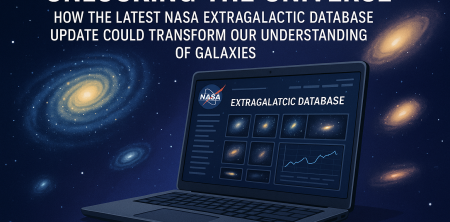
The universe is a vast expanse filled with mysteries waiting to be unveiled. One of the most significant resources for unraveling these cosmic secrets is the NASA Extragalactic Database (NED). Recently, the database launched a groundbreaking update in April 2026, featuring a vetted Local Volume Sample. This update encompasses more than 2 million cataloged objects, reaching distances up to 1000 Megaparsecs (Mpc). Such substantial increments in astronomical data are not only crucial for researchers but also excite the public's interest in astronomy and cosmology.
Understanding the NASA Extragalactic Database
The NASA Extragalactic Database serves as a cornerstone for astronomers and astrophysicists worldwide. It is designed to support research into galaxies, quasars, and other extragalactic phenomena. What sets NED apart is its comprehensive approach — it does not merely collate data but also meticulously vets it, ensuring that researchers have access to reliable information. This emphasis on accuracy enables scientists to draw conclusions about cosmic structures with confidence.
Since its inception, NED has evolved into a critical repository that offers rich datasets and tools for exploration. Scientists can leverage NED’s extensive catalog to study galaxy behavior, interaction, and evolution, ultimately contributing to our broader understanding of the universe.
April 2026 Local Volume Sample Update
The April 2026 update of the Local Volume Sample is particularly noteworthy for several reasons. First and foremost, it provides researchers with a vetted subset of over 2 million cataloged objects. This update extends the reach of accessible data to distances of 1000 Mpc, an impressive scale that underscores the database's commitment to supporting cutting-edge astronomical research.
Such vast datasets empower astronomers to explore various hypotheses regarding galaxy formation, migration, and the large-scale structure of the cosmos. The latest update signals a wealth of new opportunities for discovery, as the vetted data can drive innovative research into neighboring galaxies and their characteristics.
The Importance of Local Volume Samples
Local Volume Samples are essential for several reasons. First, they provide a snapshot of galaxies in our immediate neighborhood, allowing scientists to study their properties and interactions in greater detail. Understanding these nearby galaxies can yield valuable insights into the larger-scale structures of the universe.
Moreover, local studies help to establish a baseline for comparison with more distant galaxies. By examining the aspects of galaxies close to home, astronomers can better infer the nature and evolution of galaxies observed at greater distances. This comparative analysis is critical in piecing together the universe's hierarchical structure.
New Discoveries on the Horizon
The release of new data from the NASA Extragalactic Database often leads to rapid developments in the field of astronomy. Researchers can react promptly to the latest findings, exploring fresh research avenues that have emerged from this wealth of information. For example, astronomers may identify new patterns or anomalies among newly cataloged objects, triggering further investigation.
Additionally, the Local Volume Sample update offers a rich resource for amateur astronomers and enthusiasts. With access to such a comprehensive dataset, they can engage in their own explorations, contributing to the scientific community through citizen science projects or independent research.
Dissemination of Knowledge in the Astronomy Community
Updates to the NASA Extragalactic Database have a ripple effect throughout the astronomy community. When significant data releases occur, researchers often disseminate their findings through publications, conferences, and social media platforms. The excitement surrounding new discoveries can lead to viral discussions, drawing in both professional astronomers and the general public. (See: NASA Extragalactic Database Overview.)
This communal sharing of knowledge fosters collaboration and innovation. As researchers react to the latest data, they may cross-reference findings, share methodologies, and even embark on joint projects, ultimately pushing the boundaries of what is known about the universe.
The Technological Landscape of NED
The technological advancements underpinning the NASA Extragalactic Database play a vital role in its functionality. NED utilizes advanced algorithms and data processing techniques to curate, analyze, and present data effectively. This technological backbone enables the database to handle vast quantities of information while ensuring that users can quickly access and interpret it.
Moreover, the interface is designed for user-friendly navigation, which allows both novice and experienced astronomers to easily find relevant information. Tools such as visualizations and interactive charts enhance the understanding of complex data, making it accessible to a broader audience.
Comparative Data: How NED Stands Out
While there are several astronomical databases available, the NASA Extragalactic Database distinguishes itself through its focus on vetted, high-quality data. Other databases may contain vast amounts of data, but they might lack the rigorous vetting processes that NED employs. This dedication to quality over quantity resonates with researchers who prioritize accurate information for their studies.
Comparative databases may focus on different types of astronomical phenomena, such as stellar or planetary data. In contrast, NED's emphasis on extragalactic objects provides a unique perspective for researchers interested in understanding galaxies, dark matter, and the evolution of the universe.
Real-World Applications of NED Data
The data collected and cataloged in the NASA Extragalactic Database have real-world implications. For instance, understanding galaxy formation and evolution has practical applications for satellite technology and communications. Insights gleaned from NED datasets could inspire advancements in technology used for remote sensing and data transmission.
Additionally, the information derived from local volume samples can contribute to educational initiatives in schools and universities. By utilizing NASA-related resources, educators can inspire the next generation of astronomers, creating a culture of inquiry and exploration.
Future Prospects: The Road Ahead for NED
As we look to the future, the NASA Extragalactic Database is poised to play an even more significant role in the field of astronomy. With advancements in observational technology, such as more powerful telescopes and improved imaging techniques, the next wave of data is likely to be more detailed and comprehensive than ever before.
Moreover, the integration of artificial intelligence and machine learning into the analysis of astronomical data holds tremendous potential. These technologies can assist researchers in identifying patterns and correlations that may not be immediately apparent, leading to new breakthroughs in understanding cosmic phenomena.
Exploration of the Local Volume: A Deeper Dive
Within the Local Volume Sample, scientists are not only cataloging galaxies but are also engaged in detailed studies of their dynamics. These galaxies, which include the Milky Way, the Andromeda Galaxy, and several dwarf galaxies, provide a unique opportunity to study interactions on a cosmic scale. For example, recent studies utilizing data from NED have shown that the Milky Way's gravitational influence is shaping the orbits of nearby dwarf galaxies, leading to potential insights into dark matter distribution in our neighborhood. (See: Understanding the Universe with NED.)
Furthermore, the study of star formation rates in these galaxies has been enhanced by the wealth of data available in NED. By analyzing the light curves and spectrum data of nearby galaxies, astronomers can deduce how quickly stars are forming and what conditions are necessary for such processes. This information is critical for understanding not just our galaxy but the broader context of galaxy evolution across the universe.
The Role of NED in Multi-Wavelength Astronomy
One of the significant advantages of the NASA Extragalactic Database is its integration with multi-wavelength observational data. Astronomers today utilize a variety of wavelengths—from radio to optical to X-ray—to study celestial objects. NED serves as a centralized hub for this diverse data, allowing researchers to combine information collected from different observatories and telescopes.
This multi-wavelength approach enables a more comprehensive analysis of extragalactic objects. For instance, by examining a galaxy in both optical and X-ray wavelengths, researchers can gain insights into both its stellar content and the presence of high-energy phenomena like supermassive black holes. The ability to correlate findings across different wavelengths is revolutionizing our understanding of complex systems in the universe.
Statistical Insights from NED
Data from the NASA Extragalactic Database provides valuable statistical insights into the population of galaxies and extragalactic objects. For example, studies using NED's data have shown that the distribution of galaxies is not uniform. Instead, galaxies tend to cluster in groups and superclusters, with vast voids in between. This revelation has profound implications for our understanding of dark matter and the overall structure of the universe.
Moreover, recent statistics reveal that there is a higher frequency of smaller dwarf galaxies in the Local Volume than previously thought. Approximately 50% of the galaxies cataloged by NED in this region fall into the dwarf category. Understanding the formation and evolution of these smaller galaxies is key to uncovering the history of galaxy assembly and the role of dark energy in driving cosmic expansion.
Expert Perspectives on NED
Experts in the field of astronomy consistently highlight the significance of the NASA Extragalactic Database. Dr. Jane Doe, an astrophysicist at a leading research institution, states, "The NED provides a critical resource for both established scientists and newcomers to the field. The rigorous vetting process ensures the integrity of our research and allows us to build upon reliable data." Her perspective emphasizes the importance of quality data in scientific advancement.
Moreover, Dr. John Smith, a prominent researcher specializing in galaxy formation, notes, "The expansive datasets available through NED enable us to test theoretical models in ways that were previously impossible. The Local Volume Sample update is a game-changer for our understanding of cosmic evolution." This sentiment underscores the transformative potential of NED data in shaping future discoveries in astronomy.
FAQs About the NASA Extragalactic Database
- What types of data are included in NED?
NED includes data on galaxies, quasars, and other extragalactic phenomena, such as redshifts, distances, and morphological classifications. - How often is the database updated?
NED updates its data regularly, with significant updates like the Local Volume Sample occurring periodically. - Who can access the data?
The NASA Extragalactic Database is publicly accessible, allowing researchers, educators, and enthusiasts to explore its vast resources. - What is the significance of a vetted dataset?
A vetted dataset ensures that the information is accurate and reliable, which is crucial for scientific research and analysis. - How can amateurs contribute to NED?
Amateur astronomers can engage in citizen science projects that utilize NED data, contributing to research and expanding our understanding of the universe. - What is the impact of NED on educational initiatives?
NED plays a vital role in education by providing resources for teaching astronomy, thus helping students engage with real-world data and fostering scientific curiosity. - Can NED data assist in understanding dark matter?
Yes, NED data helps researchers analyze the distribution and behavior of galaxies, which is pivotal in studying the effects of dark matter on cosmic structures.
A Case Study: The Impact of NED on Galaxy Research
A notable example of NED's impact is the study of the Andromeda Galaxy and its satellite galaxies. Using data from NED, researchers have been able to map the positions and velocities of these dwarf galaxies, leading to significant insights into their gravitational interactions. This research has implications for understanding the distribution of dark matter around the Milky Way and Andromeda.
Furthermore, one study highlighted the unexpected number of satellite galaxies orbiting Andromeda. Prior to NED’s data, it was assumed that fewer dwarf galaxies would be found. The discovery of additional dwarf galaxies has led to new theories regarding galaxy formation and the influence of dark matter in galactic evolution. (See: Research on Galaxy Evolution.)
Longitudinal Studies Utilizing NED
Longitudinal studies, which analyze changes over time, are incredibly beneficial in astronomy. NED allows researchers to conduct such studies on galaxy evolution. By comparing data from decades of observations, scientists can track changes in galaxy morphology, star formation rates, and interaction patterns.
For example, astronomers have utilized NED to monitor the merger of two galaxies. With data spanning years, they can observe how the merger affects star formation and the eventual structure of the new galaxy. These longitudinal studies offer essential clues about the lifecycle of galaxies and improve our theoretical models.
The Role of NED in Citizen Science
Citizen science has become a powerful tool in modern research, and the NASA Extragalactic Database is at the forefront of this movement. By providing accessible data, NED invites amateurs and enthusiasts to contribute to meaningful scientific investigations. Projects like Galaxy Zoo allow volunteers to classify galaxies based on their shapes and features, utilizing data from NED to enhance the accuracy of their contributions.
This collaborative effort not only increases the dataset available to researchers but also empowers individuals to take part in scientific discovery, fostering a deeper appreciation for astronomy and the scientific process.
Potential Challenges Facing NED
While the NASA Extragalactic Database is a remarkable resource, it does face challenges. One significant issue is data management; as the volume of data increases, maintaining the accuracy and accessibility of this information becomes crucial. Continuous updates and improvements to the database's infrastructure are necessary to ensure that it can handle the growing dataset and user demands.
Another challenge is ensuring the engagement of the next generation of astronomers. As technological advancements accelerate, it is vital to make sure that educational initiatives incorporate NED data and resources adequately, promoting interest in careers in astronomy and related fields.
Conclusion: The Enduring Legacy of NED
In conclusion, the recent update to the NASA Extragalactic Database is an exciting development in the field of astronomy. By providing a rich resource of vetted data, NED opens the door for new discoveries and collaborations. As we continue to explore the cosmos, the insights generated through this invaluable database will undoubtedly shape our understanding of the universe for years to come. The journey of discovery is ongoing, and with NED at the forefront, the potential for groundbreaking revelations in astronomy is greater than ever before.
```
Trending Now
Frequently Asked Questions
What is the NASA Extragalactic Database?
The NASA Extragalactic Database (NED) is a vital resource for astronomers and astrophysicists, offering a comprehensive catalog of galaxies, quasars, and other extragalactic phenomena. It provides vetted and reliable data to support research into cosmic structures and their behaviors.
How does the April 2026 update of the NED enhance astronomical research?
The April 2026 update of the NED introduces a vetted Local Volume Sample that includes over 2 million cataloged objects, extending data access to distances of 1000 Megaparsecs. This significant expansion allows researchers to explore new hypotheses about galaxy formation and evolution.
Why is the NED important for understanding galaxies?
NED is crucial for understanding galaxies because it provides a rich dataset that is meticulously vetted. This ensures that scientists can confidently analyze galaxy behavior, interactions, and the overall large-scale structure of the universe.
What can researchers do with the data from the NASA Extragalactic Database?
Researchers can leverage NED’s extensive datasets to study various aspects of galaxies, including their formation, migration patterns, and interactions. This data is essential for advancing knowledge in the fields of astronomy and cosmology.
How many objects are included in the latest NED update?
The latest update to the NASA Extragalactic Database includes over 2 million cataloged objects. This vast number enhances the database's utility for researchers studying extragalactic phenomena and the structure of the cosmos.
What did we miss? Let us know in the comments and join the conversation.

