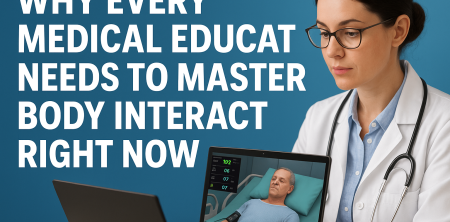
Look, the landscape of medical education is changing fast. For years, we've relied on textbooks, lectures, and maybe a few hours with standardized patients to teach clinical reasoning. And don't get me wrong, those methods have their place. But if you're not integrating advanced simulation tools into your curriculum, you're leaving your students—and ultimately, their future patients—at a disadvantage. That's where platforms like Body Interact come in, offering a truly immersive, dynamic way to cultivate those critical diagnostic and treatment skills. This isn't just about fancy tech; it's about preparing the next generation of healthcare professionals to think on their feet, under pressure, and with real-time consequences, all within a safe, virtual environment.
As someone who's spent years in education, from K-12 classrooms to university deanships, I've seen firsthand the power of hands-on, experiential learning. Body Interact takes that to a whole new level, providing virtual patient simulations that mirror the complexities of actual clinical practice. If you're wondering how to use Body Interact for clinical reasoning education effectively, you're in the right place. We're going to break down how to leverage this incredible tool to maximize learning outcomes, bridge the gap between theory and practice, and truly enhance your medical students' diagnostic acumen. This isn't just about 'playing a game' – it's about building foundational skills that save lives. See also Perplexity Pro overview.
1. Setting the Stage: Initial Setup and Curriculum Integration
Before your students can dive into the virtual world of Body Interact, there's some groundwork to lay. Think of it like preparing a classroom for a complex lab experiment – you need the right tools, the right environment, and a clear understanding of the objectives. The first step involves getting your institution set up with the Body Interact platform itself. This usually means coordinating with your IT department and the Body Interact support team to ensure smooth installation and access for all users. You'll want to make sure your network infrastructure can handle the demands of the software, especially if you're planning on running multiple simulations simultaneously across a cohort of students.
Once the technical side is sorted, the real pedagogical work begins: integrating Body Interact into your existing curriculum. This isn't just an add-on; it should be a thoughtful, intentional part of your teaching strategy. Identify specific learning objectives that Body Interact can uniquely address. Are you looking to improve diagnostic speed for acute conditions? Or perhaps refine differential diagnosis skills for complex, multi-system diseases? By aligning the simulations with your course goals, you ensure that the time spent with Body Interact is directly contributing to measurable improvements in clinical reasoning. It's about designing a learning pathway where theory from lectures seamlessly transitions into practical application within the simulation, making the 'how to use Body Interact for clinical reasoning education' question fundamentally about thoughtful curriculum design.
2. Crafting the Experience: Scenario Selection and Customization
One of the most powerful features of Body Interact is its extensive library of patient scenarios. These aren't just generic cases; they're designed to simulate a wide range of medical conditions, from common ailments to rare, critical presentations. As an educator, your role here is crucial: you need to select scenarios that are appropriate for your students' level of training and directly relevant to the curriculum topics they're currently studying. Throwing a first-year medical student into a complex ICU scenario might be overwhelming and counterproductive, whereas a final-year student might find basic cases too simplistic. It's about finding that sweet spot of challenge and relevance.
Beyond selection, Body Interact often allows for a degree of scenario customization. This is where you can truly tailor the learning experience. Perhaps you want to emphasize a particular diagnostic test, or introduce a specific comorbidity that complicates the case. Customizing scenarios allows you to create targeted learning opportunities, pushing students to think critically about specific aspects of patient management. This flexibility is key to effectively using Body Interact for clinical reasoning education, enabling you to build scenarios that directly address common pitfalls or reinforce specific diagnostic algorithms you've taught in lectures. Don't be afraid to experiment with these customization options – they're there to help you create truly impactful learning moments.
3. The Simulation Itself: Guiding Students Through Virtual Encounters
Once the scenario is selected and launched, your role shifts from designer to facilitator. During the simulation, students will be presented with a virtual patient and tasked with taking a history, performing a physical exam, ordering diagnostic tests, and initiating treatment. This is where their clinical reasoning truly gets tested. As they interact with the virtual patient, they'll receive real-time feedback and observe the consequences of their decisions, much like in a real clinical setting. Did they order the right test? Was their diagnosis accurate? Did their treatment plan improve the patient's condition, or worsen it?
It's important to encourage students to verbalize their thought processes as they navigate the case. This 'think-aloud' approach can be incredibly insightful, allowing you to identify gaps in their reasoning or misunderstandings of pathophysiological principles. While Body Interact provides its own feedback mechanisms, your presence as a guide is invaluable. You can prompt them with questions like, 'Why did you choose that test?' or 'What are you considering as your top differential diagnoses right now?' This active engagement during the simulation is pivotal to how to use Body Interact for clinical reasoning education effectively, transforming a solo activity into a deeply reflective and guided learning experience. (See: importance of simulation in medical education.)
4. The Debrief: The Cornerstone of Learning
If the simulation is the experiment, the debrief is the analysis. This is arguably the most critical component of the entire learning process. Simply going through a simulation without a structured debrief is like reading a textbook without reflecting on its content – you might absorb some information, but you won't truly learn or internalize it. A good debrief isn't about telling students what they did wrong; it's about facilitating self-reflection and critical analysis of their performance. Start by allowing students to articulate their own perceptions of how they performed. What went well? What challenges did they face? What would they do differently next time? For more context, see health and mental health education.
Then, you can delve into the specifics, using the data and feedback provided by Body Interact. The platform often tracks every decision made, every test ordered, and every minute spent, providing objective metrics for discussion. This data, combined with your observations and the students' self-reflection, forms a powerful basis for learning. Discuss alternative approaches, explore the rationale behind correct decisions, and, crucially, analyze the consequences of incorrect ones. This structured reflection, often guided by an experienced educator, is what truly solidifies learning and hones clinical reasoning skills, making the debrief the absolute linchpin of how to use Body Interact for clinical reasoning education.
5. Leveraging Analytics for Personalized Feedback and Growth
Beyond just running the simulations, Body Interact provides a wealth of data through its analytics features. This isn't just about a pass/fail grade; it’s a detailed breakdown of student performance across various parameters: diagnostic accuracy, speed of decision-making, cost-effectiveness of investigations, and adherence to protocols. As an educator, this data is your goldmine for providing truly personalized feedback. Instead of generic advice, you can point to specific instances within the simulation where a student hesitated, ordered an unnecessary test, or missed a key piece of information.
Imagine being able to tell a student, 'On minute 15 of case A, you didn't consider a cardiac etiology, even though the patient presented with radiating arm pain and diaphoresis. Let's review the pathophysiology behind that presentation.' This level of detail allows for targeted remediation and helps students understand not just *what* they got wrong, but *why*. You can also use aggregate data to identify common learning gaps across your cohort, informing future lecture topics or additional practice scenarios. This analytical power is a significant part of how to use Body Interact for clinical reasoning education to its fullest potential, moving beyond simple practice to data-driven improvement.
6. Best Practices for Maximizing Learning Outcomes
To truly get the most out of Body Interact, there are several best practices you should keep in mind. First, don't treat it as a one-off event. Integrate it into a longitudinal curriculum, allowing students to revisit scenarios, practice different approaches, and track their improvement over time. Repetition and spaced learning are crucial for skill acquisition, and Body Interact facilitates this beautifully. Consider assigning pre-simulation readings or short lectures to ensure students have the foundational knowledge before tackling a case, and post-simulation assignments to reinforce learning.
Second, foster a psychologically safe learning environment. Students need to feel comfortable making mistakes in the simulation, knowing that these are learning opportunities, not punitive failures. Emphasize that the goal is improvement, not perfection. Encourage peer-to-peer learning by having students work in small groups or observe each other's simulations, followed by constructive discussion. Finally, actively model good clinical reasoning yourself. During a debrief, you might walk through a scenario, verbalizing your own thought process and demonstrating how an experienced clinician would approach the case. These practices collectively elevate how to use Body Interact for clinical reasoning education from a mere tool to a transformative learning experience.
7. Addressing the Elephant in the Room: Cost and Accessibility
Now, let's talk about the practicalities that often come up with cutting-edge technology. Platforms like Body Interact, and other immersive VR/AI solutions such as vDOC.AI that are gaining traction for realistic virtual patient encounters, are undeniably powerful. They bridge the gap between theoretical knowledge and practical application in ways traditional methods simply can't. However, the advanced nature of these platforms often comes with a significant price tag. This isn't just a small expenditure; it can represent a substantial investment for an educational institution.
This high cost inevitably raises questions about equitable access. While these innovations are celebrated for enhancing learning outcomes and ultimately improving patient care, we need to honestly discuss who gets to benefit. Are we inadvertently creating a two-tiered system where only well-funded institutions can provide their students with these game-changing tools? This isn't just a concern for educators; it's a societal issue that demands attention. As we champion the incredible advancements in medical EdTech, we also have a responsibility to advocate for solutions that ensure these powerful learning experiences are accessible to all aspiring healthcare professionals, regardless of their institution's budget. It's a critical part of the larger conversation surrounding how to use Body Interact for clinical reasoning education responsibly and ethically. (See: benefits of virtual patient simulations.)
8. The Psychological Impact: Building Confidence and Reducing Anxiety
Beyond the technical skills, there's a significant psychological component to clinical reasoning that often gets overlooked in traditional medical education. Students, especially early in their training, can feel immense pressure and anxiety when faced with real patients. The fear of making a mistake, of not knowing enough, or of causing harm can be paralyzing. This is where virtual simulation tools like Body Interact offer a unique advantage.
In a safe, consequence-free virtual environment, students can experiment, make mistakes, and learn from them without the weight of real-world repercussions. This iterative process of trial and error is fundamental to building confidence. When they see a virtual patient's condition improve because of their correct diagnosis and treatment, it reinforces their learning and builds self-efficacy. Conversely, when a virtual patient's condition worsens, they immediately understand the impact of their decisions in a way that reading a textbook simply can't convey, but without the emotional toll of a real adverse event. This repeated exposure to challenging scenarios, coupled with immediate feedback, helps desensitize them to the stress of clinical practice, gradually reducing anxiety and fostering a more resilient and confident future clinician. It's about empowering them to embrace uncertainty, knowing they have a robust toolkit of reasoning skills to fall back on. For more context, see transitioning to higher education.
9. Integrating Interprofessional Education with Body Interact
Modern healthcare is a team sport. Patients rarely interact with just one type of provider; they're cared for by physicians, nurses, pharmacists, therapists, and many others, all collaborating to achieve the best outcomes. Clinical reasoning, in this context, isn't just an individual skill; it's also about how you reason and communicate within a team. Body Interact offers a fantastic opportunity to integrate interprofessional education (IPE) into your curriculum.
Imagine running a simulation where medical students are paired with nursing students or pharmacy students. Each professional brings their unique perspective and scope of practice to the virtual patient case. The medical student might focus on differential diagnosis and treatment plans, while the nursing student assesses patient responses, administers medications, and monitors vital signs. The pharmacy student could evaluate medication interactions, dosages, and patient education. This kind of collaborative simulation forces students to not only apply their individual clinical reasoning but also to communicate effectively, understand each other's roles, and collectively problem-solve. It highlights the importance of shared decision-making and how different professional insights contribute to a holistic patient management plan. This approach transforms how to use Body Interact for clinical reasoning education from a solo activity into a dynamic, team-based learning experience that mirrors real-world practice.
10. Future Trends: AI, VR, and Personalized Learning Paths
The field of medical education technology isn't standing still, and platforms like Body Interact are just the beginning of what's possible. We're on the cusp of even more sophisticated integrations of Artificial intelligence (AI) and Virtual Reality (VR) that will revolutionize how we teach clinical reasoning.
Think about AI-powered tutors that can dynamically adjust the difficulty of a Body Interact scenario based on a student's real-time performance, challenging them precisely where they need it most. Or imagine VR environments that allow students to physically interact with virtual patients, performing procedures and communicating with AI-driven avatars that respond to their verbal and non-verbal cues. These technologies will enable truly personalized learning paths, where each student progresses at their own pace, focusing on their specific strengths and weaknesses. AI could analyze vast amounts of student data from simulations to identify subtle patterns in reasoning errors that even an experienced human educator might miss, providing hyper-targeted feedback. The goal is to create learning experiences that are not only immersive and engaging but also supremely efficient and effective in developing expert-level clinical reasoning. As these technologies mature, understanding how to use Body Interact for clinical reasoning education will evolve to include leveraging these advanced AI and VR capabilities to create an even richer, more adaptive learning environment.
Frequently Asked Questions About Using Body Interact for Clinical Reasoning Education
Q1: What is Body Interact, and how does it specifically aid clinical reasoning?
Body Interact is a virtual patient simulation platform designed to immerse medical students and healthcare professionals in realistic clinical scenarios. It aids clinical reasoning by allowing users to practice the entire diagnostic and treatment process in a safe, virtual environment. Students can take patient histories, perform virtual physical exams, order diagnostic tests, interpret results, and initiate treatment plans. The platform provides real-time feedback on their decisions, showing the immediate consequences of their actions on the virtual patient's condition. This iterative process of decision-making, observation, and reflection is crucial for developing robust clinical reasoning skills, helping students bridge the gap between theoretical knowledge and practical application.
Q2: How do I choose the right scenarios for my students?
Choosing the right scenarios is key to effective learning. You should select cases that align with your curriculum's current learning objectives and are appropriate for your students' level of training. For early-stage students, start with more straightforward cases involving common conditions to build foundational skills. As they progress, introduce more complex scenarios with comorbidities, atypical presentations, or critical situations that require rapid decision-making. Body Interact's customization options also allow you to modify existing scenarios to emphasize specific learning points or address common diagnostic challenges your students face. The goal is to provide a challenge that's stimulating but not overwhelming. For more context, see applications to technical universities.
Q3: Can Body Interact be used for assessment, or is it purely a learning tool?
Body Interact can absolutely be used for both learning and assessment. While its primary strength lies in providing a safe space for practice and iterative learning, its robust analytics capabilities make it an excellent assessment tool. The platform tracks every decision, every test ordered, and the time taken for each action, providing objective data on diagnostic accuracy, treatment efficacy, resource utilization (e.g., ordering unnecessary tests), and adherence to protocols. This data can be used to grade performance, identify individual and cohort-wide learning gaps, and track progress over time. When used for assessment, it's vital to pair the simulation results with a structured debrief to ensure students understand the rationale behind their scores and how to improve.
Q4: How important is the debriefing session after a Body Interact simulation?
The debriefing session is arguably the most critical component of the entire learning process when using Body Interact. Without a structured debrief, students might go through a simulation but miss key learning opportunities. A good debrief, led by an experienced educator, helps students reflect critically on their performance, understand the consequences of their decisions, and learn from mistakes in a supportive environment. It's a chance to discuss alternative approaches, explore the rationale behind correct choices, and delve deeper into the pathophysiology or clinical guidelines relevant to the case. The debrief transforms the simulation from a mere activity into a profound learning experience, solidifying clinical reasoning skills.
Q5: What technical requirements are needed to run Body Interact effectively in a classroom setting?
To run Body Interact effectively, especially with multiple students simultaneously, you'll need a stable internet connection and sufficient bandwidth. The platform is typically cloud-based, so reliable connectivity is paramount. Individual workstations should have up-to-date operating systems (Windows or macOS usually), a modern web browser, and sufficient processing power and RAM to handle the interactive graphics and real-time simulations. While specific requirements can vary, a dedicated computer lab with strong network infrastructure is ideal. It's always best to consult Body Interact's official system requirements and conduct pilot tests with your IT department to ensure smooth operation before full-scale implementation.
The move towards immersive VR/AI platforms for medical training is a significant step forward. We're seeing news from as recent as August 2026 highlighting the increasing adoption of these technologies, and for good reason. They offer an unparalleled opportunity for students to practice, fail safely, and refine their clinical judgment before they ever interact with a real patient. My experience, from teaching K-12 to leading university departments, has consistently shown that the most effective learning happens when students are actively engaged, challenged, and given immediate feedback. Body Interact delivers on all these fronts.
While the discussions around cost and accessibility are vital and ongoing, the pedagogical benefits of tools like Body Interact are undeniable. For educators committed to preparing truly competent, confident, and compassionate healthcare providers, understanding how to use Body Interact for clinical reasoning education isn't just an advantage—it's fast becoming a necessity. Embrace it, integrate it thoughtfully, and watch your students develop the critical thinking skills that will define their careers and impact countless lives.
Trending Now
Frequently Asked Questions
What is Body Interact in medical education?
Body Interact is an advanced simulation platform designed for medical education. It provides immersive virtual patient simulations that help students develop critical diagnostic and treatment skills in a safe environment, bridging the gap between theoretical knowledge and practical application.
How can Body Interact enhance clinical reasoning skills?
Body Interact enhances clinical reasoning skills by allowing students to engage in realistic scenarios where they must make decisions under pressure. This interactive experience helps them think critically and apply their knowledge in real-time, ultimately preparing them for actual clinical practice.
Why is simulation important in medical training?
Simulation is crucial in medical training because it offers hands-on, experiential learning opportunities. It allows students to practice clinical skills in a controlled environment, reducing the risk of errors in real-life situations and improving their confidence and competence.
What are the benefits of using Body Interact for students?
Using Body Interact offers numerous benefits, including improved diagnostic acumen, enhanced critical thinking skills, and a deeper understanding of clinical scenarios. Students can practice and refine their skills without the pressure of real-life consequences, leading to better preparedness for patient care.
How do you integrate Body Interact into the medical curriculum?
Integrating Body Interact into the medical curriculum involves coordinating with IT for setup, training educators on the platform, and aligning simulations with learning objectives. This ensures that students can effectively utilize the tool to enhance their clinical reasoning and practical skills.
What's your take on this? Share your thoughts in the comments below — we read every one.

