```html
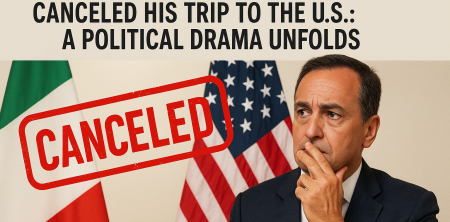
In a surprising twist of diplomatic events, Italy’s foreign minister has canceled a planned trip to the United States, igniting a political controversy that has captured the attention of both international observers and social media users alike. The catalyst for this decision? Recent comments made by former President Donald Trump regarding Giorgia Meloni, the Prime Minister of Italy. This incident not only highlights the complexities of current international relations but also serves as a reminder of the delicate balance between personal remarks and state diplomacy.
The Context: A New Era in Italian Politics
Giorgia Meloni, leader of the Brothers of Italy party, ascended to the premiership in late 2022, marking a significant shift in the Italian political landscape. Her government is known for its right-leaning populist policies, which have garnered both significant support and sharp criticism within Europe and beyond. Meloni's rise has not only changed Italy's domestic policy but has also influenced the country’s standing on the global stage.
As a prominent European leader, Meloni's interactions with global figures, especially with someone as polarizing as Trump, are bound to attract attention. The intertwining of personal and political dynamics, particularly when it involves former heads of state, often leads to volatile situations. In this case, Trump's remarks about Meloni have not only created a stir but also set the stage for a diplomatic rift.
The Controversial Comments
During a recent public appearance, Trump made comments that many interpreted as disrespectful towards Meloni. Although the specifics of the remarks remain somewhat ambiguous, they reportedly involved Trump's suggestions of personal admiration veering into offensive territory. This prompted Italy’s foreign minister to reassess the planned diplomatic visit to the United States, leading to the abrupt cancellation.
The reaction from the Italian government was swift. Officials emphasized the importance of mutual respect in international dialogue, suggesting that Trump's comments deviated from the norms of diplomatic conduct. The incident underscores how quickly a political issue can escalate, particularly in an age where social media amplifies every sentiment and remark.
The Impact on U.S.-Italy Relations
Relations between the United States and Italy have historically been robust, characterized by cooperation on various fronts, from economics to security. However, the cancellation of the trip by Italy’s foreign minister, a key figure in maintaining these relations, raises questions about the potential for strained ties moving forward.
Political analysts have pointed out that this incident could have long-term implications for U.S.-Italy relations. With Meloni's government leaning towards a more nationalist agenda, any misstep from the American side could lead to a broader realignment in diplomatic priorities. If Italy perceives disrespect from a major ally, it could recalibrate its approach to international alliances, perhaps seeking stronger ties with other global powers.
The Role of Social Media
In today's digital age, the rapid dissemination of information through social media plays a critical role in shaping public perception and political narratives. This incident has garnered substantial attention on platforms like Twitter, Facebook, and Instagram, where snippets of Trump's comments have been shared widely, often accompanied by heated debates.
Social media serves as a double-edged sword in this scenario. On one hand, it allows citizens to engage in discussions about international affairs, fostering a sense of community and shared concern. On the other hand, it can exacerbate tensions, as emotionally charged posts tend to spread faster than nuanced discussions. The Italian foreign minister's decision to cancel his trip has quickly become a trending topic, further fueling public interest and debate.
Historical Precedents
This isn’t the first time personal remarks from political leaders have led to diplomatic fallout. History is replete with examples where seemingly innocuous comments have resulted in significant diplomatic rifts. For instance, in 2016, then-Prime Minister of Canada Justin Trudeau found himself in hot water after an offhand remark about President Trump’s hairstyle, which led to a flurry of media coverage and a brief diplomatic chill.
Another notable example is the infamous “reset” of U.S.-Russia relations under President Obama, which was undermined by a series of miscommunications and personal remarks exchanged between leaders. Such historical examples illustrate the fragile nature of diplomatic relations and how quickly they can shift based on personal interactions.
The Broader European Context
In addition to the bilateral implications for U.S.-Italy relations, this diplomatic incident resonates within the broader European political landscape. As European nations navigate their own internal divisions and external pressures, the way leaders interact with one another can either exacerbate tensions or foster cooperation. (See: Giorgia Meloni's political background.)
Meloni’s government, with its right-wing populist agenda, is already seen as a departure from more traditional, centrist European policies. If relations with the U.S. become strained, other European nations may reevaluate their partnerships in light of shifting political allegiances. This dynamic could lead to a realignment of alliances and a reevaluation of collective responses to global challenges such as climate change, immigration, and security.
The Response from Italian Officials
In light of the cancellation of the trip, Italian officials have been vocal about their disappointment. They have reiterated that respect and constructive dialogue are essential for maintaining strong international partnerships. The Italian government has also taken the opportunity to emphasize its commitment to engaging with allies on global issues, but with a clear expectation of mutual respect.
This situation provides a unique opportunity for Italian officials to reinforce their political stance domestically. They can frame the cancellation as a matter of national pride and dignity, appealing to constituents who may be skeptical of international relations. In a politically charged environment, such narratives resonate well and can bolster support for Meloni’s government.
Expert Opinions on the Fallout
Political analysts and international relations experts have weighed in on the potential fallout from this incident. Many agree that the comments made by Trump could have unintended consequences, not just for U.S.-Italy relations, but for Trump’s own image as a global leader.
Some experts argue that Trump's need for attention, often manifested through provocative statements, overshadows the nuance required in international diplomacy. Others suggest that the backlash from Italy could signal a broader trend where leaders are more willing to stand up for their national dignity, especially in the face of perceived disrespect.
Looking Forward: The Future of Diplomatic Engagement
As the dust settles on this incident, the question remains: how will both the U.S. and Italy move forward? Diplomatic engagements are often fraught with tension, and this cancellation may serve as a wake-up call for both sides to reassess their communication strategies.
For the U.S., a more measured approach may be necessary to rebuild trust with European allies. For Italy, this incident could reinforce a narrative of assertiveness in international relations, which may resonate positively within its domestic political context. The future will depend on how both nations choose to manage this fallout and whether they can find a path to restore productive dialogue.
The Bigger Picture: Global Implications
In a world where global challenges require cooperative solutions, the implications of this diplomatic incident extend beyond just U.S.-Italy relations. As nations grapple with issues such as climate change, health crises, and geopolitical tensions, the interactions between leaders will continue to shape the international landscape.
The Italian foreign minister's decision to cancel his trip serves as a reminder that relationships between countries are intricately tied to the personal dynamics of their leaders. Future diplomatic efforts will necessitate a careful balancing act between personal interactions and state interests, especially in an era where every word is scrutinized and amplified through media channels.
Ultimately, the incident surrounding the Italian foreign minister's canceled trip highlights the need for respectful discourse in international relations. As leaders navigate their roles on the world stage, it becomes increasingly vital to consider the ramifications of their words and actions, both for their own countries and for their allies.
Potential Consequences for the Italian Government
The cancellation of the foreign minister's trip could have immediate political repercussions for Meloni’s government. Domestically, it provides an opportunity for Meloni to strengthen her narrative of national pride and sovereignty. Many Italians may view the foreign minister's decision as a bold stand against disrespect from a powerful ally, reinforcing Meloni’s image as a leader willing to defend Italian interests on the world stage.
However, the incident also poses risks. If relations with the U.S. sour, Italy could face challenges in securing support for key initiatives, whether it be economic aid, NATO commitments, or collaborative efforts against global challenges such as climate change. Meloni's administration may need to tread carefully to maintain a balance between asserting Italian dignity and ensuring essential foreign partnerships remain intact.
Public Opinion and Media Reaction
Public opinion in Italy regarding Trump's comments and the subsequent cancellation is likely to be mixed. While some may support the foreign minister's decision as a necessary stand for national dignity, others may view it as an overreaction that jeopardizes valuable international relations. How the media frames this incident could significantly influence public sentiment.
Italian newspapers have responded to the incident with varying degrees of criticism and support. Some outlets have focused on the diplomatic implications, warning that a cooling relationship with the U.S. could hinder Italy's influence in Europe. Others have praised the government for prioritizing respect in international relations, framing it as a necessary response to Trump's behavior. (See: BBC coverage on Italy's political landscape.)
Comparative Responses from Other Countries
This incident is not an isolated case but rather part of a larger trend where leaders from various countries are increasingly vocal about their grievances regarding disrespectful treatment from powerful nations. For instance, when Boris Johnson was Prime Minister of the UK, he faced backlash for comments made by then-President Trump that many viewed as condescending.
Similarly, leaders from nations like Canada and France have also expressed concern over the tone and content of remarks made by U.S. officials. By comparing these responses, one can see a pattern of countries asserting their sovereignty and demanding respect in international dialogues. This shift may indicate a growing willingness among nations to prioritize national dignity over diplomatic niceties, prompting a reevaluation of traditional alliances.
FAQ: Understanding the Incident
Why did the Italian foreign minister cancel his trip to the U.S.?
The cancellation was prompted by comments made by former U.S. President Donald Trump regarding Italian Prime Minister Giorgia Meloni, which were perceived as disrespectful by the Italian government.
What are the implications for U.S.-Italy relations?
This incident has raised concerns about the potential for strained relations between the U.S. and Italy, particularly as Italy's government leans towards a more nationalist agenda under Meloni.
How does social media influence diplomatic incidents like this?
Social media amplifies public reactions and can escalate diplomatic incidents by rapidly spreading information and opinions. This can put additional pressure on government officials to respond in a way that aligns with public sentiment.
What historical precedents exist for similar situations?
There have been numerous instances in history where personal remarks by leaders have led to diplomatic fallout, including Justin Trudeau's comments about Trump and the challenges faced during the U.S.-Russia reset under Obama.
What might happen next for Italy's foreign minister?
The foreign minister may seek to re-engage with U.S. officials to clarify positions and restore dialogue, but the path forward will depend heavily on how both sides choose to approach this diplomatic rift.
Can this incident affect Italy's relationships with other countries?
Yes, if Italy perceives a lack of respect from the U.S., it may seek to strengthen ties with other nations, potentially leading to a shift in its diplomatic alignments and partnerships.
New Developments: The Aftermath of the Cancellation
As the diplomatic fallout continues, various stakeholders within the Italian government and the opposition are weighing in on the implications of the foreign minister's canceled trip. Some members of Meloni's coalition have suggested that the incident could be leveraged to bolster Italy's assertiveness on the world stage, while opposition parties are concerned about the potential diplomatic isolation that could result.
Moreover, the Italian media landscape is buzzing with analyses and opinions. Political analysts emphasize that Italy's future interactions with both the U.S. and other global powers will be shaped by this incident. The broader implications could lead to a shift in Italy's foreign policy priorities, particularly regarding its relationships with Eastern European countries and nations in the Mediterranean basin.
The Influence of Traditional Media in Shaping Public Discourse
In addition to social media, traditional media outlets play a pivotal role in shaping the public narrative around diplomatic incidents. Major Italian news channels have devoted substantial airtime to discussing the ramifications of the canceled trip, featuring expert commentary and public opinion polls. (See: New York Times article on Meloni and Trump.)
These discussions often highlight the historical context of U.S.-Italy relations, detailing both the ups and downs over the decades. Analysts have pointed out that while personal remarks can lead to temporary tensions, the foundational interests shared by the two nations often prevail in the long run.
What’s Next for Meloni and Her Administration?
As Meloni navigates this complex situation, the fallout could act as a litmus test for her leadership style. The political landscape in Italy is dynamic, and how she addresses the cancellation will likely impact her approval ratings and political capital. Meloni has publicly stated the importance of maintaining strong ties with the U.S., but she may also choose to adopt a firmer stance on Italy's sovereignty and dignity.
Should the opportunity arise, Meloni might look to engage with other global leaders to reaffirm Italy's position and explore new collaborations. This could involve strengthening ties with European allies or even courting relationships with countries that share Italy's interests, thereby diversifying its diplomatic portfolio.
Potential Economic Impacts
The diplomatic rift could also have economic implications for Italy. The U.S. and Italy have strong trade ties, and any cooling of relations might lead to apprehension among investors, both Italian and American. Trade agreements, joint ventures, and cooperative economic policies may be put on hold as both sides reassess their priorities.
Analysts are now watching closely to see whether the Italian government will take proactive measures to reassure markets and stakeholders that Italy remains a reliable partner. This may include outlining strategies for economic growth and stability, alongside a commitment to engaging constructively with foreign partners.
Public Sentiment: Gallup Poll Insights
Recent polls conducted by renowned organizations such as Gallup have shown varied public sentiment regarding the cancellation. While a substantial portion of Italians agree that respect is paramount in international relations, many also express concerns about potential economic fallout. The duality of pride in national dignity and the pragmatic need for strong international partnerships reflects the complexity of public opinion in Italy.
Analyzing these poll results provides more insight into how citizens perceive their government’s diplomatic approach. As the situation unfolds, ongoing public sentiment studies will likely reveal shifts in opinion as new developments arise.
Lessons Learned: Navigating Future Diplomatic Incidents
This incident serves as a crucial learning opportunity for leaders worldwide. The relationship between personal comments and international diplomacy cannot be overstated. For politicians, maintaining a respectful tone, even when disagreements occur, is essential in fostering enduring partnerships. Going forward, both established and emerging leaders may want to take a page from this incident, considering the potential ramifications of their public statements and the impact they may have on international relations.
As we observe the unfolding dynamics between the U.S. and Italy, it’s clear that this incident is just one of many that underscore the intricate dance of diplomacy in a rapidly changing world.
``` Related reading: Trip cancellation details.
Trending Now
Frequently Asked Questions
Why did the Italian Foreign Minister cancel his trip to the U.S.?
The Italian Foreign Minister canceled his trip following controversial comments made by former President Donald Trump about Italian Prime Minister Giorgia Meloni. The remarks, perceived as disrespectful, prompted a reassessment of the diplomatic visit.
What did Trump say about Giorgia Meloni?
Trump's comments regarding Giorgia Meloni were interpreted as disrespectful. While the specifics were vague, they included personal admiration that crossed into offensive territory, leading to a diplomatic fallout.
How has Giorgia Meloni's rise affected Italy's international relations?
Giorgia Meloni's ascent to the premiership in late 2022 has shifted Italy's political landscape, influencing its international relations. Her right-leaning populist policies have garnered both support and criticism, affecting interactions with global leaders.
What are the implications of the diplomatic rift between Italy and the U.S.?
The diplomatic rift following the cancellation of the Italian Foreign Minister's trip highlights the delicate balance between personal remarks and state diplomacy, potentially straining Italy's relations with the U.S. during a politically sensitive time.
What does this incident reveal about international diplomacy?
This incident underscores the complexities of international diplomacy, where personal comments from influential figures can lead to significant political consequences, affecting relationships between countries and their leaders.
What did we miss? Let us know in the comments and join the conversation.

