```html
Conflict is a natural part of human interaction, stemming from differences in opinions, beliefs, and goals. How we handle these conflicts can significantly influence the outcomes of our relationships, whether personal or professional. While verbal communication often gets the spotlight, nonverbal communication plays a crucial, yet frequently overlooked, role in conflict resolution. This article delves into how nonverbal communication in conflict resolution can enhance understanding, foster empathy, and lead to more effective solutions.
Understanding Nonverbal Communication
Nonverbal communication encompasses all the ways we convey messages without words. This includes body language, facial expressions, gestures, tone of voice, and even the physical distance between individuals. According to a study published in Psychological Bulletin, nonverbal cues account for approximately 93% of communication effectiveness when it comes to conveying emotions. Understanding these signals is essential during conflict resolution, as they often reveal more than words alone ever could.
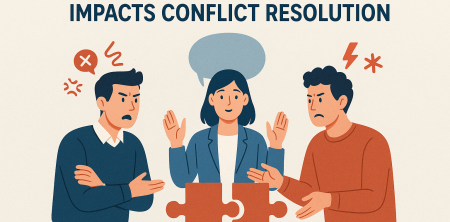
For instance, a simple crossed arm may suggest defensiveness, while an open posture can signify receptiveness. Recognizing these cues can help individuals navigate conflicts more effectively, allowing for a deeper understanding of the underlying emotions driving the disagreement.
The Role of Nonverbal Cues in Conflict
During conflicts, emotions often escalate, and the stakes feel higher. Nonverbal communication becomes even more critical at these moments. A raised eyebrow or a smirk can escalate tensions, while a genuine smile can help defuse a heated situation. Understanding the role of nonverbal cues in conflict can assist in interpreting intentions and feelings that may not be openly expressed.
For example, consider a workplace disagreement over project directions. If one team member appears disengaged, it may not just be a matter of differing opinions; their body language could indicate frustration or a lack of respect for others’ ideas. Recognizing this can prompt a more empathetic approach to address the conflict.
Building Empathy Through Nonverbal Communication
Empathy is a cornerstone of effective conflict resolution. Nonverbal communication allows individuals to connect on an emotional level, which can be particularly useful in de-escalating conflicts. When you mirror another person's body language or maintain eye contact, it can create a sense of understanding and validation.
For instance, research shows that individuals who engage in empathetic nonverbal cues, such as nodding and leaning in, are more likely to foster cooperative behavior in others. By creating an environment where all parties feel seen and heard, the conflict can shift from confrontational to collaborative.
Practical Strategies for Effective Nonverbal Communication in Conflict Resolution
To harness the power of nonverbal communication in conflict resolution, individuals can employ several practical strategies:
- Be aware of your body language: Maintain an open posture and avoid closed-off signals like crossing your arms. This sets a tone for openness and willingness to engage.
- Use facial expressions thoughtfully: Ensure your facial expressions align with your verbal messages. A smile can soften criticism, while a frown can exacerbate tensions.
- Practice active listening: Show that you’re engaged through nodding, maintaining eye contact, and leaning forward. This nonverbal feedback encourages the speaker to continue sharing their thoughts.
- Observe others’ nonverbal cues: Pay attention to the body language and facial expressions of those involved in the conflict. This can provide invaluable insight into their emotions and help guide your responses.
- Establish appropriate physical distance: Proxemics, or the use of personal space, can impact communication. Be mindful of how close or far away you stand from others, as personal space needs can vary greatly between cultures.
Culture and Nonverbal Communication
Understanding nonverbal communication in conflict resolution also requires awareness of cultural differences. Nonverbal cues can vary widely across cultures; what is considered friendly in one culture may be perceived as invasive or aggressive in another. For example, while maintaining direct eye contact is seen as a sign of confidence in many Western cultures, it may be considered disrespectful in certain Asian cultures.
Being culturally sensitive involves recognizing these differences and adapting your approach accordingly. This kind of flexibility can significantly enhance conflict resolution efforts, as it reduces the likelihood of misunderstandings that stem from cultural misinterpretations. (See: Study on nonverbal communication effectiveness.)
Case Studies: Nonverbal Communication in Action
Real-world examples illustrate how nonverbal communication can impact conflict resolution. In a famous negotiation between the United States and the Soviet Union during the Cold War, nonverbal cues played a vital role. The negotiators’ body language and facial expressions were closely monitored and analyzed, leading to a better understanding of each other’s stances. This awareness ultimately contributed to de-escalating tensions and paving the way for future diplomatic relations.
Another case is the 2008 financial crisis, where communication breakdowns among banking executives led to conflicts. Institutions that prioritized empathetic nonverbal communication tended to resolve disputes more efficiently, fostering a collaborative atmosphere that focused on solutions rather than blame.
Technology: The New Frontier of Nonverbal Communication
In our increasingly digital world, nonverbal communication still plays a vital role, even in virtual settings. Video conferencing platforms have become the go-to for remote conflict resolution, but they also present challenges. Nonverbal cues can be less pronounced or misinterpreted when viewed on a screen. For instance, the lag in audio can cause awkward pauses, leading to misunderstandings.
To adapt to this digital environment, individuals must enhance their awareness of their nonverbal signals. Making a conscious effort to maintain eye contact with the camera, using expressive gestures, and ensuring your body language aligns with your verbal messages can help convey empathy and understanding, even through a screen.
Overcoming Barriers to Effective Nonverbal Communication
Despite its significance, several barriers can hinder effective nonverbal communication in conflict resolution. Stress and anxiety can distort nonverbal signals, leading to misinterpretations. For instance, someone may appear defensive or closed off simply due to nervousness, rather than a lack of interest or respect.
To overcome these barriers, individuals can practice self-regulation techniques. Deep breathing, mindfulness, and grounding exercises can help manage anxiety and ensure that nonverbal cues accurately reflect the intended message.
The Future of Nonverbal Communication in Conflict Resolution
As society evolves, so too does the understanding of nonverbal communication in conflict resolution. With the rise of remote work and digital communication, it’s crucial to adapt our nonverbal strategies to ensure they remain effective across various platforms. Training in emotional intelligence and nonverbal communication can equip individuals with the necessary tools to navigate conflicts successfully. See also cultural nuances in communication.
Moreover, as organizations increasingly prioritize diversity and inclusion, understanding cultural nuances in nonverbal communication will become even more essential. By fostering a workplace culture that values empathy and adaptability, organizations can create an environment where conflicts are resolved efficiently and constructively.
Frequently Asked Questions (FAQ)
What are some common examples of nonverbal communication in conflict resolution?
Common examples include maintaining eye contact to show engagement, using open hand gestures to indicate openness, nodding to express understanding, and mirroring the other person's body language to build rapport. Each of these nonverbal cues can signal your willingness to engage constructively in a conflict.
How can I improve my nonverbal communication skills?
You can start by becoming more aware of your own body language and how it might be perceived by others. Practicing mindfulness techniques can help you stay present and manage your nonverbal signals. Additionally, observing others in conversations and reflecting on their body language can provide insights into how to improve your own communication. (See: BBC article on body language importance.)
Are there specific nonverbal cues to avoid during conflicts?
Yes, there are several nonverbal cues to avoid. Crossing your arms can imply defensiveness, while avoiding eye contact may suggest disinterest or insincerity. Additionally, fidgeting or looking at your phone can convey a lack of respect for the other person's perspective. Being conscious of these signals can help you maintain a constructive dialogue.
What role does emotional intelligence play in nonverbal communication?
Emotional intelligence is vital for interpreting and responding to nonverbal cues. It allows individuals to recognize their own emotional states and those of others, enabling more effective communication. Those with high emotional intelligence are often better at managing their nonverbal signals and can read the emotions behind others' body language, which is crucial in conflict resolution.
Can nonverbal communication vary based on personality types?
Absolutely. Different personality types may exhibit distinct nonverbal behaviors. For example, extroverts may be more expressive with their gestures and facial expressions, while introverts might display more subdued body language. Understanding these differences can enhance interactions and lead to more productive conflict resolution.
What should I do if I'm unsure about someone's nonverbal cues?
If you're uncertain about what someone's nonverbal communication means, it's okay to ask for clarification. Phrasing your inquiry in a non-confrontational way can help. For instance, you might say, "I noticed you seem a bit uncomfortable; is there something you'd like to discuss?" This invites the other person to share their feelings and can lead to a more open dialogue.
Nonverbal Communication in Mediation Settings
Mediation is a structured process where a neutral third party helps disputing parties find a resolution. Nonverbal communication in mediation settings is especially significant because it can set the tone for the entire interaction. Mediators often rely on their own nonverbal cues to convey neutrality and support, while also observing the nonverbal signals of the parties involved.
For example, a mediator who maintains an open posture and uses affirmative gestures can foster a more positive atmosphere conducive to resolution. Additionally, recognizing signs of discomfort or resistance in participants can prompt the mediator to adjust their approach, perhaps by changing the seating arrangement or redirecting the conversation to a less contentious topic.
Examples from Mediation Practices
In family mediation, for instance, a mediator might notice a parent crossing their arms and tapping their foot while discussing visitation arrangements. This body language could suggest anxiety or defensiveness. By acknowledging this nonverbal cue, the mediator can address the underlying concerns, perhaps by allowing that parent to express their fears about the arrangement before moving forward. This can lead to a more productive and less emotionally charged conversation.
Case Study: Nonverbal Communication in High-Stakes Negotiations
High-stakes negotiations, such as those involving international treaties or corporate mergers, often hinge on the ability to interpret nonverbal cues accurately. A notable example is the negotiation of the Paris Agreement on climate change. During discussions, delegates from various countries used nonverbal communication to signal their agreement or disagreement with proposed terms.
For instance, a slight nod or a shift in posture may have indicated consensus, while crossing arms or leaning back could signify resistance. The ability of negotiators to read these nonverbal signals played a crucial role in achieving the final agreement. This case underlines the importance of nonverbal communication in creating a collaborative environment even amid intense negotiations.
Statistics on Nonverbal Communication in Conflict Resolution
Research indicates that nonverbal communication significantly impacts the outcomes of conflict resolution. A study conducted by the University of California revealed that over 75% of conflict resolution success can be attributed to effective nonverbal communication. Furthermore, surveys of mediators reveal that 80% believe they can gauge the likelihood of a successful resolution based solely on the nonverbal cues displayed by the parties involved.
In workplace settings, organizations that train employees in nonverbal communication skills report a 30% increase in successful conflict resolutions, according to a study published in the Journal of Organizational Behavior. These statistics underscore the critical role that nonverbal communication plays in navigating conflicts effectively.
The Impact of Emotional States on Nonverbal Communication
Emotional states can dramatically influence the way we communicate nonverbally. For instance, during a conflict, if one party feels angry, their body language may become more aggressive—clenching fists, raising their voice, or leaning forward aggressively. Conversely, someone feeling anxious might display closed-off body language, such as avoiding eye contact or fidgeting.
Recognizing and addressing these emotional states can help facilitate more effective communication. If you sense that the other party is angry, acknowledging their feelings through empathetic nonverbal cues—like nodding your head and maintaining an open posture—can help diffuse tension. On the other hand, if you're the one feeling overwhelmed, taking a moment to breathe and compose yourself before responding can be beneficial for effective communication.
Adapting Nonverbal Communication in Different Contexts
It's essential to adapt your nonverbal communication based on the context of the conflict. In a formal setting, such as a corporate meeting, maintaining a professional demeanor is crucial. This may involve standing or sitting up straight, using restrained gestures, and keeping a neutral expression to convey seriousness and respect for the situation.
In contrast, conflicts arising in informal settings, such as among friends or family, may allow for more relaxed nonverbal communication. Here, a warm smile, open gestures, and a relaxed posture can help ease tensions and encourage honest dialogue. Understanding when to employ different nonverbal styles can significantly affect the resolution process.
Conclusion
Nonverbal communication is a powerful tool in conflict resolution, transcending language barriers and fostering deeper understanding. By becoming more aware of our own nonverbal signals and those of others, we can navigate conflicts more effectively, promoting empathy and collaboration. As we continue to adapt to changing communication landscapes, prioritizing nonverbal communication in conflict resolution will be crucial for cultivating healthy relationships in every aspect of life.
```
Trending Now
Frequently Asked Questions
What is nonverbal communication and why is it important in conflict resolution?
Nonverbal communication includes body language, facial expressions, and gestures that convey messages without words. It's crucial in conflict resolution as it accounts for about 93% of communication effectiveness, revealing emotions and intentions that words may not express, thus enhancing understanding and empathy.
How can body language affect conflict resolution?
Body language significantly impacts conflict resolution by conveying emotions and attitudes. For instance, open postures can indicate receptiveness, while crossed arms may suggest defensiveness. Recognizing these cues helps individuals navigate conflicts more effectively and fosters a deeper understanding of underlying issues.
What role do nonverbal cues play in escalating or de-escalating conflicts?
Nonverbal cues play a critical role in conflict dynamics. A raised eyebrow or a smirk can escalate tensions, while a genuine smile or relaxed posture can help defuse a heated situation. Understanding these signals can assist individuals in interpreting feelings and intentions during conflicts.
How does emotional expression influence conflict resolution?
Emotional expression, often conveyed through nonverbal communication, influences conflict resolution by revealing underlying feelings. Recognizing and addressing these emotions can lead to more effective solutions, fostering empathy and understanding between conflicting parties.
What strategies can improve nonverbal communication during conflicts?
To improve nonverbal communication during conflicts, individuals should focus on maintaining open body language, making eye contact, and being aware of their facial expressions. Active listening and reflecting on the nonverbal cues of others can also enhance understanding and facilitate more constructive dialogue.
What did we miss? Let us know in the comments and join the conversation.


0 Responses