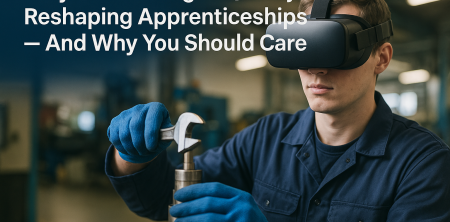
For generations, the traditional apprenticeship model has been the bedrock of vocational training. You learn by doing, under the watchful eye of a seasoned expert, slowly but surely mastering a craft. It’s a time-honored approach, steeped in history, and it has produced countless skilled tradespeople who built our world. But what if I told you there's a new kid on the block that's not just challenging this ancient system, but, in some cases, outperforming it dramatically? We're talking about virtual reality (VR) training, and its impact on vocational education is nothing short of astonishing.
It’s a debate that educators, industry leaders, and policymakers are increasingly grappling with: VR training vs traditional apprenticeships. Which method truly prepares students for the demands of a modern workforce? Is the immersive, digital realm merely a fancy supplement, or does it offer a fundamentally superior learning experience? The evidence, I'm finding, points to a future where VR plays a central, if not dominant, role in how we train the next generation of skilled professionals. This isn't just about cool tech; it's about performance outcomes, cost efficiency, and how well students actually retain what they learn. Let’s dig into what’s really happening on the ground.
1. Performance Outcomes: Beyond the Hype
When we talk about performance, we're not just discussing whether a student can complete a task; we're talking about the quality, speed, and accuracy of their work. Traditional apprenticeships pride themselves on hands-on experience, and rightly so. There’s an undeniable value in physically manipulating tools and materials, feeling the weight, hearing the sounds, and smelling the distinct odors of a workshop or construction site. This sensory richness is often cited as an irreplaceable aspect of learning a trade.
However, recent pilot studies are revealing something quite unexpected: VR-trained students are not just keeping pace, they're often exceeding their traditionally trained counterparts. One particularly compelling study, focused on welding, reported that students who underwent VR training performed a staggering 75% better than those in traditional programs. Think about that for a moment: 75% better. That's not a marginal improvement; that's a significant leap in skill acquisition and proficiency. This kind of data forces us to seriously reconsider our assumptions about what constitutes effective vocational training.
2. Employment Rates: A Direct Line to Jobs
Ultimately, the goal of any vocational training program is to equip individuals with the skills necessary to secure meaningful employment. This is where the rubber meets the road, and again, VR training is demonstrating an impressive advantage. The same pilot study that showed a 75% performance boost in VR-trained welders also reported a 100% employment rate for those students. Yes, you read that correctly: every single student who completed the VR welding program found a job.
Compare this to the often more varied employment outcomes of traditional apprenticeships, which, while generally strong, can be influenced by local market demand, the availability of master craftspeople, and the specific opportunities offered by a given employer. The direct correlation between VR training and full employment suggests that these immersive technologies are not just teaching skills, but teaching the *right* skills, in a way that employers value and recognize. This isn't just a win for the students; it's a win for industries struggling to find qualified talent.
3. Safety First: Mitigating High-Risk Environments
Many vocational trades involve inherent risks. Think about welding, where sparks fly and intense heat is involved; or construction, with heavy machinery and heights; or even healthcare, where precision and sterile environments are paramount. In traditional apprenticeships, learning in these environments means exposing apprentices to these risks from day one, albeit under supervision. Mistakes can be costly, both in terms of materials and, more importantly, personal safety.
VR training fundamentally changes this equation. It provides a completely safe, consequence-free environment where trainees can practice complex, high-risk tasks repeatedly without any danger to themselves or others. Imagine a welding student making a mistake in a VR simulation – no burns, no wasted materials, just an opportunity to instantly reset and try again. This capability is invaluable, allowing students to build muscle memory and confidence before ever stepping into a real-world hazardous situation, significantly reducing the potential for accidents and injuries in the actual workplace.
4. Cost Efficiency: Saving Money Without Sacrificing Quality
Let's face it, vocational training can be expensive. Equipping a workshop with specialized machinery, purchasing raw materials, and maintaining facilities all add up. Traditional apprenticeships also often involve a significant time investment from experienced mentors, which has its own cost in terms of their lost productivity on billable projects. These are real financial considerations for vocational schools and companies alike.
VR training offers a compelling argument for cost reduction. While there's an initial investment in VR hardware and software, the long-term savings can be substantial. You reduce the need for expensive raw materials, minimize wear and tear on actual machinery, and can train a larger number of students with fewer physical resources. Think about the sheer volume of metal a welding program goes through annually, or the construction materials used in a building trade. VR simulations eliminate much of that recurring expense, making high-quality training more accessible and economically sustainable in the long run. This is a crucial factor for scaling vocational education. (See: impact of virtual reality training.)
5. Repeatability and Iteration: The Power of Practice
One of the unsung heroes of effective learning is repetition. The ability to practice a skill over and over again, refining technique with each attempt, is how mastery is achieved. In a traditional apprenticeship, the opportunities for this kind of focused, immediate repetition can be limited. A mentor might only have time for a few demonstrations, or the cost of materials might restrict how many practice runs a student can have.
VR environments are built for infinite repeatability. A trainee can perform the same complex task – say, a delicate surgical procedure in healthcare or a specific type of weld – hundreds of times, receiving instant feedback and iterating on their performance with each attempt. This 'practice makes perfect' approach is supercharged in VR, allowing students to quickly identify weaknesses, correct mistakes, and build proficiency at an accelerated pace. This kind of deliberate practice, free from real-world constraints, is a powerful differentiator for VR training vs traditional apprenticeships. For more context, see the importance of college education.
6. Enhanced Skill Retention: Making Learning Stick
It's one thing to learn a skill; it's another to retain it over time and be able to apply it effectively months or years later. Traditional apprenticeships, with their emphasis on hands-on experience, generally foster good retention. But VR, with its immersive and often gamified approach, taps into different cognitive pathways that can lead to even stronger recall and application.
The highly engaging nature of VR experiences often translates to deeper learning. When you're fully immersed in a virtual environment, your brain processes the information in a more active and memorable way. Coupled with the ability for unlimited practice and immediate feedback, VR training can help solidify learned skills, making them more resilient to the passage of time. This improved retention means less need for refresher training down the line and a workforce that remains highly competent and adaptable.
7. Standardization and Consistency: Quality Across the Board
A challenge with traditional apprenticeships, for all their strengths, can be the variability in training quality. An apprentice's experience often depends heavily on the specific master craftsperson they learn from, the projects available, and the resources of the individual company or workshop. While this can lead to unique specialties, it can also result in inconsistencies in foundational skill sets across different trainees.
VR training offers a powerful solution to this problem: standardization. Every student, regardless of their location or instructor, can go through the exact same high-quality, meticulously designed training modules. This ensures a consistent baseline of knowledge and skill, guaranteeing that every graduate meets a predefined standard of competence. For industries that rely on precise procedures and uniform quality, this level of standardization provided by VR training vs traditional apprenticeships is a game-changer, ensuring a consistently well-prepared workforce.
8. Accessibility and Scalability: Reaching More Learners
Traditional apprenticeships often face limitations in terms of scalability. They require physical space, specialized equipment, and a sufficient number of experienced mentors. These factors can restrict how many individuals can be trained at any given time, and can also create geographical barriers for aspiring tradespeople, especially in rural areas or regions lacking specific industry infrastructure.
VR training breaks down these barriers. With a VR headset and the right software, high-quality vocational training can be delivered almost anywhere, to virtually anyone. This dramatically increases the accessibility of specialized skills, allowing more people to enter lucrative trades. Furthermore, VR programs can be scaled up or down much more easily than physical workshops. Adding more 'seats' in a virtual welding lab doesn't require building new facilities or hiring more master welders; it simply means licensing more software and acquiring more headsets. This scalability is absolutely critical for addressing widespread skill shortages and democratizing access to vocational education.
9. The Future of Vocational Education: A Hybrid Approach?
So, does this mean traditional apprenticeships are dead? Absolutely not. While VR training is demonstrating incredible potential and, in some key areas, outperforming traditional methods, it's not an 'either/or' proposition. In fact, the most effective path forward for vocational education likely lies in a hybrid model that intelligently combines the best of both worlds. Imagine a scenario where foundational skills, safety protocols, and complex task repetitions are mastered in VR, providing a strong, consistent baseline of knowledge and proficiency.
Once students have built that solid virtual foundation, they can then transition to traditional, hands-on apprenticeships with real tools, real materials, and real-world projects. At this stage, they'd be far more prepared, confident, and less prone to costly or dangerous mistakes. The mentor's role would shift from basic instruction to refining advanced techniques, troubleshooting unique problems, and imparting the nuanced wisdom that only years of experience can provide. This blended approach could create a generation of tradespeople who are not only highly skilled but also incredibly adaptable, leveraging the precision and safety of VR with the invaluable practical experience of a master's guidance. The conversation around VR training vs traditional apprenticeships isn't about replacement; it's about evolution and optimization, ensuring we're preparing our students for a future that demands both technical prowess and real-world resilience.
10. Cognitive Load and Engagement: Keeping Learners Hooked
One aspect often overlooked in the VR training vs traditional apprenticeships debate is the cognitive load on the learner and their level of engagement. Traditional apprenticeships, while hands-on, can sometimes overwhelm new learners with too many variables at once – the pressure of performance, the real-world consequences of mistakes, and the constant observation by a master. This can lead to increased stress and reduced learning efficiency for some individuals. (See: VR training in vocational education.)
VR training excels here by allowing for a controlled learning environment. Designers can carefully manage the cognitive load, introducing complexity gradually. Trainees can focus on one skill at a time, without the distractions or pressures of a live work environment. This focused learning, combined with the inherently engaging and often gamified nature of VR, keeps students more invested. When learning feels like a game or a fascinating exploration, people are more likely to stick with it, absorb the information, and remember it. The immersive nature of VR reduces external distractions, helping learners maintain focus and achieve a flow state that's highly conducive to skill acquisition.
11. Bridging the Skills Gap: A National Imperative
Many industries are facing a critical skills gap. There just aren't enough qualified people to fill available positions, particularly in skilled trades. This isn't just an economic issue; it's a societal one. Traditional apprenticeship models, while effective, often can't scale quickly enough to address these widespread shortages. The time it takes to train a master, and then for that master to train an apprentice, is a lengthy process that limits the output of new talent. For more context, see ditching traditional schools.
VR training offers a powerful solution for rapidly upskilling and reskilling the workforce. By making high-quality, standardized training accessible and scalable, VR can significantly accelerate the production of skilled labor. Imagine a scenario where a national initiative uses VR to train thousands of welders, electricians, or HVAC technicians simultaneously, across different regions. This speed and efficiency are crucial for industries struggling to keep up with demand and for national economic competitiveness. It's not just about individual learning outcomes; it's about a strategic tool for workforce development on a grand scale.
12. Adaptability to New Technologies and Techniques
The world of vocational trades is constantly evolving. New materials, tools, and techniques emerge regularly, requiring continuous learning and adaptation. Traditional apprenticeships, by their nature, can sometimes be slower to integrate these innovations. A master might stick to methods they've used for decades, or the cost of acquiring new, cutting-edge equipment for training can be prohibitive.
VR training platforms, on the other hand, are incredibly agile. Software updates can quickly incorporate the latest industry standards, new machinery simulations, or updated safety protocols. This means trainees are always learning the most current and relevant skills. As industries adopt new technologies, VR training can be rapidly deployed to teach those new skills, ensuring the workforce remains current and competitive. This dynamic adaptability makes VR a forward-thinking solution for vocational education, preparing students not just for today's jobs, but for tomorrow's innovations.
13. Expert Perspectives: What Industry Leaders Are Saying
It's one thing for educators to champion VR, but what are the people on the front lines of industry saying? Across various sectors, from manufacturing to healthcare, leaders are increasingly recognizing VR's potential. For example, major automotive companies are using VR to train assembly line workers on complex processes, reducing errors and speeding up new model introductions. Healthcare systems are deploying VR for surgical training, allowing residents to practice intricate procedures hundreds of times before ever touching a patient.
These industry endorsements aren't just about flashy tech; they're driven by tangible results: improved safety records, faster onboarding of new employees, and a reduction in training costs. Companies are investing heavily in VR not because it's novel, but because it's proving to be an effective, efficient, and measurable way to build a highly skilled workforce. They see the data – the improved performance, the higher employment rates – and they're responding by integrating VR into their training pipelines. This widespread adoption by industry is a strong indicator of VR's long-term viability and impact on vocational education.
14. The Psychological Impact: Confidence and Self-Efficacy
Beyond the measurable skills, there's a profound psychological benefit to VR training: the building of confidence and self-efficacy. In traditional apprenticeships, especially in high-stakes environments, the fear of making a mistake can be paralyzing. An apprentice might hesitate, second-guess themselves, and ultimately learn slower due to anxiety.
VR removes this fear. Because there are no real-world consequences, trainees feel free to experiment, fail, and try again without judgment. This safe space fosters a growth mindset, where mistakes are seen as learning opportunities, not failures. As students repeatedly succeed in virtual tasks, their confidence grows significantly. When they eventually transition to real-world tasks, they do so with a stronger sense of self-efficacy – the belief in their own ability to succeed – which is invaluable for professional development and job performance. This psychological edge is a quiet but powerful advantage of VR training.
15. Ethical Considerations and Equity in Access
While VR training offers immense benefits, it's important to consider ethical implications and ensure equitable access. The initial investment in VR hardware and software, while offset by long-term savings, can still be a barrier for smaller vocational schools or community programs. We need to ensure that the promise of VR doesn't inadvertently create a new digital divide, where only well-funded institutions can provide cutting-edge training. (See: VR technology in education.)
Policymakers and educators must work together to develop funding models, grants, and partnerships that make VR technology accessible to all learners, regardless of their socioeconomic background or location. This might involve shared VR training centers, subsidized hardware, or open-source VR educational content. The goal should be to leverage VR to democratize access to high-quality vocational education, not to create new inequalities. Addressing these considerations proactively will be key to VR's successful and ethical integration into the broader educational landscape.
Frequently Asked Questions About VR Training vs Traditional Apprenticeships
Q1: Is VR training going to completely replace traditional apprenticeships?
No, not entirely. While VR training is incredibly effective and, in some areas, outperforms traditional methods, the consensus among educators and industry experts is that a hybrid approach is the most effective. VR is fantastic for building foundational skills, practicing high-risk tasks safely, and ensuring consistent instruction. Traditional apprenticeships still offer invaluable hands-on experience with real materials, real-world problem-solving, and the nuanced mentorship that only a seasoned expert can provide. Think of VR as the ultimate preparation tool, making apprentices much more efficient and effective when they do step into a physical workshop.
Q2: What kind of vocational trades benefit most from VR training?
VR training is particularly impactful in trades that involve complex procedures, high-risk environments, expensive materials, or a need for precise motor skills. This includes fields like welding, construction (especially heavy machinery operation and safety protocols), automotive repair, aviation maintenance, healthcare (surgical training, emergency response), and even intricate manufacturing processes. Essentially, any trade where mistakes are costly, dangerous, or require significant resources to correct can see huge benefits from a VR-first training approach.
Q3: How expensive is it to implement VR training programs?
The initial investment in VR hardware (headsets, powerful PCs if needed) and software licenses can seem significant. However, it's crucial to look at the long-term cost savings. VR reduces the need for expensive raw materials, minimizes wear and tear on actual equipment, lowers the risk of accidents (and associated costs), and can train more students with fewer physical resources and instructors. Many organizations find that the ROI on VR training, especially for high-cost or high-risk trades, is very positive, often paying for itself within a few years through these savings and improved performance.
Q4: How do students react to learning in VR? Is it difficult to adapt?
Student reactions are overwhelmingly positive. The immersive and often gamified nature of VR makes learning engaging and fun, which significantly boosts motivation and retention. Most students, especially younger generations, adapt quickly to the technology. While there might be a short adjustment period to get used to the headset and controllers, the intuitive design of most vocational VR simulations means learners can jump right into practicing skills. The immediate feedback and consequence-free environment also reduce anxiety, allowing students to learn at their own pace and build confidence rapidly.
Q5: Can VR training fully replicate the 'feel' of working with real tools and materials?
VR technology has made incredible strides, and haptic feedback (which simulates the sense of touch) is constantly improving. While it can simulate the weight, resistance, and vibrations of tools quite well, fully replicating every sensory detail – the exact smell of molten metal, the subtle give of wood under a chisel, or the precise tactile feedback of a specific material – is still an area of ongoing development. However, for developing muscle memory, understanding procedures, and practicing complex movements, VR provides an incredibly close and effective approximation. It's about building proficiency and confidence in the core skills, which then transfers effectively to the real world.
Q6: What are the main challenges in adopting VR for vocational training?
Some challenges include the initial upfront cost of hardware and software, the need for instructors to be trained on how to integrate VR effectively into their curriculum, and ensuring content remains up-to-date with industry standards. There's also the challenge of developing high-quality, realistic VR simulations that accurately reflect real-world tasks. However, as the technology matures and becomes more affordable, and as more educational content developers enter the space, these challenges are steadily being addressed, making VR an increasingly viable and attractive option for vocational education.
Trending Now
Frequently Asked Questions
How is VR training changing traditional apprenticeships?
VR training is reshaping traditional apprenticeships by offering an immersive learning experience that can enhance performance outcomes. Studies show that VR-trained students often outperform their peers in traditional systems, demonstrating improved speed, accuracy, and retention of skills, thus challenging the long-standing apprenticeship model.
What are the benefits of VR training in vocational education?
The benefits of VR training in vocational education include enhanced engagement, improved skill retention, and cost efficiency. VR allows students to practice in a risk-free environment, gaining hands-on experience without the constraints of physical materials, ultimately preparing them better for real-world scenarios.
Is VR training effective compared to traditional methods?
Yes, VR training has been shown to be effective compared to traditional methods. Pilot studies indicate that students trained in VR often achieve better performance outcomes, demonstrating high levels of quality, speed, and accuracy in their work, which can surpass those trained through conventional apprenticeships.
What industries are adopting VR training for apprenticeships?
Industries such as construction, healthcare, and manufacturing are increasingly adopting VR training for apprenticeships. These sectors benefit from the technology's ability to simulate real-life scenarios, allowing apprentices to practice essential skills safely and effectively, thereby enhancing workforce readiness.
What challenges does VR training face in vocational education?
Challenges facing VR training in vocational education include the high initial costs of technology, the need for specialized training for educators, and the potential resistance from traditionalists who value hands-on experience. However, the growing evidence of its effectiveness is gradually overcoming these hurdles.
What did we miss? Let us know in the comments and join the conversation.

