```html
Cognitive development is a crucial aspect of childhood education, particularly during the formative years of elementary school. It refers to how children think, explore, and figure things out, laying the foundation for their ability to learn and process information throughout their lives. In this article, we’ll explore conservation tasks — activities that can significantly enhance cognitive development activities for elementary students. From understanding the concept of conservation itself to practical applications in the classroom, we’ll cover everything you need to know.
Understanding Cognitive Development
Cognitive development encompasses the mental processes that help children understand the world around them. This includes memory, problem-solving, decision-making, and information processing. Jean Piaget, a Swiss psychologist, was one of the first to study cognitive development in children and proposed that children move through four stages of cognitive development: sensorimotor, preoperational, concrete operational, and formal operational. Elementary students typically fall into the concrete operational stage, which is characterized by the ability to think logically about concrete events.
What Are Conservation Tasks?
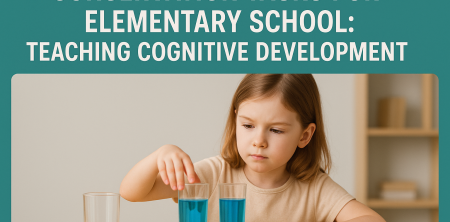
Conservation tasks are tasks designed to assess a child’s understanding of the concept of conservation — the idea that certain properties of objects remain the same, even when their form or appearance changes. For instance, if you pour water from a short, wide glass into a tall, narrow glass, children who understand conservation will recognize that the amount of water remains unchanged, despite its different appearance.
These tasks are essential for gauging cognitive development in elementary students, particularly in terms of their logical reasoning abilities. Mastering conservation is crucial for children as it signifies their capacity to think abstractly and understand the permanence of certain properties in the face of transformations.
Why Conservation Tasks Matter
Conservation tasks are not just academic exercises; they are pivotal for nurturing essential cognitive skills. By engaging in these tasks, children can develop:
- Logical Thinking: Mastery of conservation tasks requires logical reasoning, helping children learn to make sense of changes in their environment.
- Problem-Solving Skills: These tasks encourage students to analyze situations critically and derive conclusions based on observations.
- Foundation for Future Learning: A solid grasp of conservation concepts paves the way for more complex mathematical and scientific understanding.
- Confidence: Successfully completing conservation tasks can boost students' self-esteem, showing them that they can solve problems independently.
Practical Conservation Activities for Elementary Students
Now that we understand the significance of conservation tasks, let’s delve into some practical activities that can be implemented in elementary classrooms:
1. Liquid Conservation Task
This simple yet effective activity involves pouring liquids from one container to another. Provide students with two containers of different shapes, such as a tall, narrow glass and a short, wide glass. Fill both with the same amount of liquid and ask students to predict which container holds more. After pouring the liquid from one to the other, ask them to reassess their prediction. This hands-on activity helps solidify their understanding of liquid volume.
2. Clay Conservation Task
Using modeling clay, present students with a small ball of clay. Ask them to flatten it and compare the size of the flattened shape to the original ball. This activity allows students to see that the quantity of clay remains constant, even when its shape changes. It’s a tactile way to engage them in the concept of conservation.
3. Number Conservation Task
Arrange a set of objects, like blocks or counters, in a specific configuration (e.g., a line). Then, spread the objects out and ask students if there are still the same number of objects. This activity helps children understand that quantity remains unchanged regardless of arrangement. (See: Cognitive Development Overview.)
4. Area Conservation Task
Present students with a rectangle made of tiles and then ask them to rearrange the same tiles into different shapes. Have them discuss whether the area has changed despite the shape alteration. This task introduces spatial reasoning and the idea of area conservation effectively.
Integrating Conservation Tasks in the Curriculum
To maximize the impact of conservation tasks, they should be integrated into the broader curriculum. Here are some strategies to ensure that cognitive development activities for elementary students are effectively woven into various subjects:
Collaboration with Math Lessons
Many conservation tasks directly relate to mathematical concepts. Teachers can incorporate these activities into math lessons by connecting them to measurement, geometry, and spatial awareness. For instance, when introducing measurement, teachers can use conservation tasks to illustrate how volume and area are preserved.
Incorporating Science Experiments
Science offers a fantastic opportunity to explore conservation tasks. For example, when studying states of matter, teachers can use liquid conservation tasks to discuss how liquids maintain volume regardless of the container. Engaging students in hands-on experiments fosters their understanding of scientific principles through the lens of conservation.
Enhancing Arts and Crafts Projects
Arts and crafts can also play a role in reinforcing conservation concepts. When children work with materials like clay or paper, they can explore how transformations—such as reshaping or cutting—do not affect the amount of material they have. These projects allow for creativity while also emphasizing cognitive development.
Challenges and Considerations
While conservation tasks are beneficial, there are challenges teachers may face. One significant hurdle is the varying cognitive abilities present in any classroom. Some students may struggle with these concepts, requiring additional support and differentiated instruction. Here are some strategies to address these challenges:
- Tailored Instruction: Provide various task levels to accommodate different learning styles and abilities. Offer immediate feedback and encouragement to support struggling students.
- Use of Visual Aids: Incorporate visual aids, such as diagrams and charts, to help illustrate conservation concepts, making them more accessible to visual learners.
- Frequent Practice: Regularly practice conservation tasks to strengthen understanding. Repetition can help solidify concepts in students’ minds.
- Parental Involvement: Engage parents in the learning process by suggesting conservation activities they can do at home, fostering learning beyond the classroom.
Current Trends in Cognitive Development Activities for Elementary Students
The landscape of education is ever-evolving, and so are the methods for teaching cognitive development activities for elementary students. Current trends emphasize a child-centered approach, where students are encouraged to take an active role in their learning. Here are some notable trends:
Play-Based Learning
Play-based learning has gained traction as an effective educational approach. This method recognizes the importance of play in cognitive development and promotes engagement in conservation tasks through playful activities. For example, incorporating games that require children to manipulate objects can create a fun environment for understanding conservation concepts.
Technology Integration
With the rise of educational technology, many teachers are leveraging apps and online resources to enhance cognitive development activities. Interactive simulations and videos can illustrate conservation tasks dynamically, making concepts more relatable and engaging for students.
Social-Emotional Learning (SEL)
Integrating social-emotional learning into cognitive development activities is another growing trend. Understanding one’s emotions and developing social skills can enhance cognitive functions. Collaborative conservation tasks that require teamwork can nurture these skills while reinforcing cognitive development.
Assessment of Cognitive Development through Conservation Tasks
Assessment is crucial in understanding how well students grasp conservation concepts. Teachers can employ various assessment techniques to evaluate students’ understanding and progress: (See: Child Development and Learning.)
- Observational Assessments: Teachers can observe students during activities, noting their thought processes and reasoning while engaged in conservation tasks.
- Standardized Tests: While these can be limiting, standardized tests can sometimes provide a benchmark for assessing cognitive developmental milestones.
- Portfolio Assessments: Compiling students’ work over time allows teachers to evaluate their progress in understanding conservation and cognitive development comprehensively.
- Peer Assessments: Encouraging students to evaluate each other’s understanding can foster collaboration and reinforce learning among peers.
The Role of Educators in Promoting Cognitive Development
Teachers play a pivotal role in promoting cognitive development among elementary students. They are not just facilitators but also mentors who can inspire curiosity and a love for learning. Here are some key ways that educators can support cognitive development:
- Creating an Inclusive Environment: Fostering a classroom culture that values diversity and encourages risk-taking can significantly enhance cognitive development. Students should feel comfortable expressing their thoughts and ideas without fear of judgment.
- Encouraging Inquiry: Prompting students to ask questions and explore ideas fosters critical thinking. Inquiry-based learning encourages children to discover concepts independently, enhancing their cognitive abilities.
- Professional Development: Educators need ongoing training and professional development to stay informed about the latest research and strategies in cognitive development.
- Collaboration with Families: Establishing strong home-school connections can reinforce learning. Educators can provide families with resources and activities to do at home, supporting cognitive development outside the classroom.
FAQ: Cognitive Development Activities for Elementary Students
Here are some frequently asked questions about cognitive development activities, especially regarding conservation tasks:
1. What age group is most appropriate for conservation tasks?
Conservation tasks are particularly effective for children aged 5 to 11 years, as they fall within the concrete operational stage of Piaget's theory. This is when children begin to think logically about concrete events and understand the principles of conservation.
2. How can parents reinforce conservation concepts at home?
Parents can engage in simple activities like measuring liquids during cooking, comparing sizes of different objects, or even discussing how the shape of a cookie changes when it's flattened. These hands-on experiences can reinforce conservation concepts outside the classroom.
3. Are there any resources or tools available for teachers to implement conservation tasks?
Yes! Many educational websites offer free resources, worksheets, and activity ideas specifically designed for teaching conservation tasks. Additionally, teacher resource books on cognitive development often include practical activities and strategies.
4. How do conservation tasks relate to other areas of learning?
Conservation tasks have strong connections to math (understanding volume, area, and counting) and science (exploring states of matter). They also support critical thinking and problem-solving skills, which are essential across the curriculum.
5. What are some common misconceptions children have about conservation?
Children often assume that changing the appearance of an object alters its quantity. For example, they might think a tall glass holds more water than a short, wide one, despite both having the same volume. It takes guided exploration and discussion to help them overcome these misconceptions.
Additional Cognitive Development Activities
In addition to conservation tasks, there are numerous other cognitive development activities that educators can implement in the classroom. Here are a few more ideas that can further enhance students' cognitive skills:
6. Puzzle Solving
Puzzles come in various forms, from jigsaw puzzles to logic puzzles. They challenge students to think critically, make connections, and develop problem-solving strategies. Collaborating in small groups can also foster teamwork and communication skills, allowing children to learn from one another.
7. Story Mapping
Engaging students in story mapping helps them develop comprehension skills by visually organizing elements of a story such as characters, plot, and setting. This activity boosts their ability to analyze content and understand narrative structure, which is crucial for their cognitive growth.
8. Memory Games
Memory games can be both fun and educational. Simple card matching games or interactive digital memory challenges exercise children's memory and recall abilities, enhancing their cognitive capacity while promoting concentration and attention to detail.
9. Science Simulations
Science simulations using virtual labs or interactive websites can make complex concepts more tangible. For instance, students can conduct virtual experiments related to physical changes in states of matter, allowing them to explore conservation principles in a digital format.
10. Strategy Board Games
Incorporating strategy-based board games into the classroom can significantly benefit cognitive development. Games like chess or checkers promote strategic thinking, foresight, and decision-making skills. Children learn to anticipate their opponent's moves, fostering logical reasoning and planning.
Measuring the Impact of Cognitive Development Activities
To understand the effectiveness of cognitive development activities for elementary students, it’s essential to evaluate their impact on learning outcomes. Here are some methods educators can use to measure this impact:
- Pre- and Post-Assessments: Conduct assessments before and after implementing cognitive development activities to measure progress and understanding of specific concepts.
- Student Reflective Journals: Encourage students to maintain journals where they reflect on their learning experiences. This can provide insights into their thought processes and help teachers adjust their instructional strategies accordingly.
- Feedback from Students: Gathering feedback from students about what they enjoy and find challenging in cognitive development activities can inform future lesson planning and activity design.
- Parent Feedback: Engaging parents in discussions about their child's learning experiences and progress can provide a comprehensive view of how well cognitive development activities are resonating at home and in the classroom.
Conclusion: Empowering Cognitive Growth through Conservation
Conservation tasks are essential for fostering cognitive development activities for elementary students. Not only do these tasks enhance logical reasoning and problem-solving skills, but they also provide a foundation for future learning in math and science. By integrating practical conservation activities into the curriculum, educators can nurture young minds and empower them to think critically about the world around them. Through a combination of innovative teaching approaches, supportive environments, and effective assessment strategies, we can help children thrive in their cognitive development, preparing them for a lifetime of learning.
```
Trending Now
Frequently Asked Questions
What are conservation tasks in cognitive development?
Conservation tasks are activities designed to assess a child's understanding of the concept that certain properties of objects remain constant despite changes in form or appearance. They are crucial in evaluating cognitive development, particularly in elementary students, as they reflect logical reasoning abilities.
Why is cognitive development important in elementary education?
Cognitive development is vital in elementary education as it lays the groundwork for how children think, learn, and process information. It encompasses skills like memory, problem-solving, and decision-making, which are essential for academic success and everyday functioning.
How do conservation tasks enhance learning in children?
Conservation tasks enhance learning by helping children develop logical reasoning and abstract thinking skills. By engaging in these tasks, students learn to recognize that quantities remain unchanged despite physical transformations, fostering a deeper understanding of the world around them.
What are the stages of cognitive development according to Piaget?
Jean Piaget identified four stages of cognitive development: sensorimotor, preoperational, concrete operational, and formal operational. Elementary students typically fall into the concrete operational stage, where they can think logically about concrete events and understand concepts like conservation.
How can teachers implement conservation tasks in the classroom?
Teachers can implement conservation tasks in the classroom through hands-on activities that involve measuring, pouring, or sorting objects. These practical applications help students grasp the concept of conservation while actively engaging in cognitive development exercises.
What's your take on this? Share your thoughts in the comments below — we read every one.

