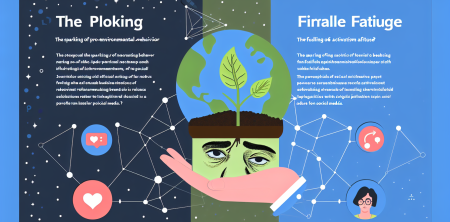
As the world grapples with the urgent consequences of climate change, social media has emerged as a powerful tool in influencing pro-environmental behavior. A recent study published in Frontiers in Psychology on May 11, 2026, reveals a complex relationship between social media engagement and environmental activism. The study suggests that while social media can galvanize action among individuals with strong environmental identities, it can conversely lead to feelings of demotivation and burnout among those with weaker connections to environmental issues.
The Study: A Closer Look
The research, conducted by a collaborative team from the University of California and ETH Zurich, analyzed data from 1,200 participants across five different countries. This international scope offered a comprehensive view of how social media engagement affects individuals' pro-environmental behavior, particularly in the context of viral campaigns.
Key Findings
- Impact of Environmental Identity: The study found that 68% of users with a strong environmental identity transitioned from merely liking posts to making actual donations and taking tangible actions following viral environmental campaigns.
- Performative Activism Fatigue: In stark contrast, 42% of participants with a low environmental identity reported feeling overwhelmed and demotivated by constant exposure to dire environmental content, leading to what the researchers term "performative activism fatigue." This phenomenon highlights a significant downside to social media activism.
- Echo Chambers: The research suggests that social media platforms can create echo chambers where urgent calls to action are amplified, further motivating some individuals while contributing to burnout in others.
The Dual-Edged Sword of Social Media
Social media acts as a double-edged sword for climate activism. On one side, it serves as a catalyst for pro-environmental behavior, inspiring individuals to take action through viral content that resonates with their values. The emotional engagement that strong environmental identities foster can transform a simple click into substantial contributions, such as donations or participation in grassroots movements.
However, the other side of this sword reveals the dark aspect of social media's influence. As users encounter a perpetual stream of alarming environmental news and statistics, some may experience activism fatigue. This fatigue can lead to apathy, where the overwhelming nature of information diminishes the motivation to act. Therefore, understanding the psychological mechanisms at play is crucial for effectively leveraging social media to foster positive environmental actions.
Understanding Environmental Identity
Environmental identity refers to the extent to which individuals perceive themselves as part of the natural world and identify with environmental values. This identity shapes their responses to environmental challenges and influences their pro-environmental behavior.
Individuals with a strong environmental identity are more likely to engage in behaviors such as recycling, supporting sustainable brands, and participating in activism. The study's findings underline the importance of this identity in determining how social media affects an individual's likelihood to act on environmental issues.
Mechanisms of Influence
The research highlights several mechanisms through which social media shapes environmental behavior:
- Viral Campaigns: Campaigns that go viral often touch on emotional aspects, resonating with users’ values and identities, thus motivating action.
- Social Proof: Observing peers engaging in environmental actions can create a sense of social responsibility, pushing others to follow suit.
- Urgency and Alarmism: Content that emphasizes urgent action can either mobilize individuals with strong identities or overwhelm those with weaker connections, leading to feelings of helplessness.
The Role of Social Media in Activism
Social media platforms serve as vital communication channels for environmental activists, enabling them to reach broader audiences and mobilize support quickly. They offer tools for organizing events, sharing information, and rallying communities around common causes.
Despite these advantages, the study illustrates that the effectiveness of social media in promoting pro-environmental behavior is not uniformly positive. The phenomenon of performative activism, where individuals engage with content superficially without substantive action, poses a challenge to the integrity of social movements.
Personal Narratives and Their Impact
The trending discussions on social media platforms, particularly on X, have sparked heated debates under the hashtag #EcoClickActivism. Users share personal stories, depicting how social media has either motivated them to take environmental action or contributed to feelings of burnout. These narratives highlight the need for a balanced approach in utilizing social media.
While some users express empowerment and actionable steps taken after engaging with environmental content, others recount experiences of feeling inundated by negativity, leading them to disengage from environmental issues altogether.
Strategies for Positive Engagement
To harness the positive aspects of social media while mitigating its downsides, several strategies can be employed:
- Encouraging Community Engagement: Fostering local community initiatives can provide actionable steps for individuals, empowering them beyond online engagement.
- Promoting Positive Messaging: Sharing success stories and positive outcomes can inspire users and counterbalance the often overwhelming negative narratives prevalent in environmental discussions.
- Support Systems: Creating networks for individuals to share experiences and support each other can reduce feelings of isolation and burnout.
The Future of Social Media and Environmental Activism
As the digital landscape continues to evolve, the relationship between social media and pro-environmental behavior will likely grow more complex. Understanding the dynamics of online engagement will be essential for activists and organizations seeking to create meaningful change.
By analyzing user behavior and adopting strategies that emphasize emotional connection, community involvement, and positive reinforcement, social media can be transformed into a force for good in the environmental movement.
Conclusion
The recent study from the University of California and ETH Zurich sheds light on the intricate interplay between social media and environmental identity. It challenges the notion that social media is solely detrimental to environmental activism, revealing that its impact is profoundly shaped by the identities of the users involved. As society faces escalating climate challenges, leveraging social media effectively could catalyze a shift toward more impactful pro-environmental behavior. Engaging individuals with strong environmental identities while providing support for those at risk of burnout holds the key to a more sustainable future.

