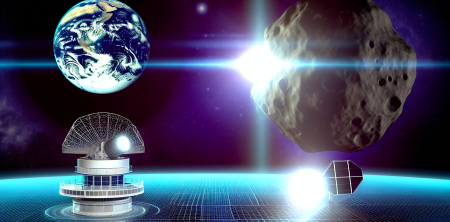
On March 18, 2026, an asteroid designated as 2026 FB will make a close approach to Earth, traveling at a staggering speed of 34,000 mph. Measuring approximately 69 feet in diameter, this celestial object is roughly the size of a commercial airplane. Fortunately, NASA has confirmed that the asteroid's closest approach will be at a distance of about 683,000 miles from our planet, which is nearly three times the distance from the Earth to the Moon.
Asteroid 2026 FB: What We Know
Asteroid 2026 FB is classified as a Near-Earth Object (NEO), meaning it has the potential to come close to our planet. Despite its impressive speed and size, experts have reassured the public that there is no immediate danger posed by this asteroid. Objects of similar size often burn up in the atmosphere before they can reach the Earth's surface, significantly mitigating any potential risk.
NASA's Monitoring Efforts
NASA's ongoing efforts to track asteroids like 2026 FB are crucial for enhancing our understanding of near-Earth objects. Continuous observations allow scientists to refine their models for predicting the trajectories and behaviors of such celestial bodies. This data is essential not only for risk assessment but also for developing effective planetary defense strategies.
The Importance of Tracking Near-Earth Objects
As technology advances, our ability to detect and track NEOs has improved dramatically. The tracking of asteroids such as 2026 FB plays a pivotal role in planetary defense. Here are some key reasons why monitoring these objects is vital:
- Risk Assessment: Identifying and tracking NEOs enables scientists to assess the risk they pose to Earth. Calculating their orbits and potential impact scenarios allows for timely warnings and preparedness.
- Scientific Research: Studying asteroids helps scientists understand the early solar system's conditions and the processes that shaped our planet. They can provide valuable insights into the formation of celestial bodies.
- Planetary Defense: By actively monitoring NEOs, researchers can develop strategies to divert or mitigate potential threats. This is critical for ensuring the safety of our planet and its inhabitants.
How Do We Prepare for Potential Threats?
While 2026 FB poses no threat, the scientific community continues to explore various methods of planetary defense. Some of the strategies under consideration include:
- Deflection Missions: Sending spacecraft to alter the course of an asteroid, potentially using kinetic impactors or gravity tractors.
- Evacuation Plans: Developing regional evacuation strategies in case of a predicted impact scenario.
- Public Awareness Campaigns: Educating the public about NEOs and their risks to ensure preparedness for any future threats.
Conclusion: A Watchful Eye on the Skies
As we look ahead to March 18, 2026, the approach of asteroid 2026 FB serves as a reminder of the dynamic nature of our solar system. NASA's vigilant tracking of near-Earth objects not only enhances our understanding but also reinforces the importance of planetary defense. While this particular asteroid is not a cause for concern, it exemplifies the need for ongoing monitoring and research.
In a world where the potential for asteroid impacts exists, our capacity to observe and respond to these threats will play a crucial role in safeguarding the future of our planet. As scientists continue to study the cosmos, they remain committed to ensuring that we remain one step ahead of any potential dangers from the skies.

