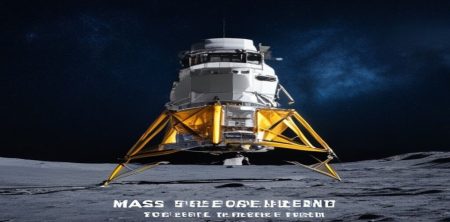
The Moon, our closest celestial neighbor, has always held a powerful allure, a silent observer in the night sky. For decades after the Apollo missions, it seemed an unreachable frontier for human exploration. But now, the dream of a sustained lunar presence is not just alive; it's accelerating at an astonishing pace. NASA, in a move that underscores both its ambition and its pragmatic approach to risk, is gearing up for an unprecedented orbital rehearsal during the Artemis III mission in 2027. This isn't just another test flight; it's a meticulously planned dress rehearsal involving Orion astronauts rendezvousing and docking with prototype NASA Moon landers from two of the most prominent private space companies: Blue Origin and SpaceX. It's a high-stakes endeavor, designed to iron out the incredibly complex maneuvers that will be critical for future crewed lunar missions, effectively laying the groundwork for humanity's long-term return to our dusty satellite.
This isn't a small gamble. NASA has already poured nearly a billion dollars into these initial Moon Base missions, a significant investment that speaks volumes about the agency's commitment to establishing a permanent human presence on the Moon. This funding isn't just for landers; it extends to the development of Lunar Terrain Vehicles (LTVs) and various other essential components of a burgeoning lunar infrastructure. The stakes are immense, not just for scientific discovery and national prestige, but also for the burgeoning lunar economy. The 'new space race' isn't just about planting flags; it's about building a sustainable ecosystem, extracting resources, and creating new industries in an extraterrestrial environment. It’s a vision that has captured public imagination and, crucially, significant private investment, with companies like Intuitive Machines (LUNR) already actively developing lunar landers and data networks, poised to capitalize on this monumental shift.
The Artemis III Mission: A Pivotal Orbital Rehearsal
Artemis III, slated for 2027, stands as a cornerstone of NASA's lunar strategy. While the ultimate goal is to land astronauts on the Moon, this particular mission will feature a crucial orbital rehearsal that many might not fully appreciate. Imagine this: a crew of Orion astronauts, fresh from their journey from Earth, will execute a precise rendezvous and docking maneuver not with a single lander, but with two distinct prototypes – one from Jeff Bezos's Blue Origin, and another from Elon Musk's SpaceX. This isn't just about proving the technology works; it's about refining the intricate dance of spaceflight in lunar orbit, a dance that involves multiple spacecraft, complex trajectories, and the lives of human beings thousands of miles from home.
The decision to conduct this rehearsal in orbit, rather than attempting a full landing immediately, is a testament to NASA's lessons learned over decades of space exploration. It minimizes risk, allowing engineers and astronauts to identify and address potential issues in a relatively controlled environment before the ultimate challenge of a lunar touchdown. Think of it like a dress rehearsal for a Broadway show – you don't open on day one without countless hours of practice and problem-solving. This orbital phase will be invaluable for collecting data on propulsion systems, navigation algorithms, life support integration, and, perhaps most critically, the human element of piloting these advanced vehicles. The insights gained here will directly inform the design and operational procedures for all subsequent crewed NASA Moon landers.
Dual-Track Approach: Why Two Commercial Partners?
One might ask why NASA has opted for a dual-track approach, engaging both Blue Origin and SpaceX for these critical NASA Moon landers. The answer lies in a blend of redundancy, competition, and innovation. Relying on a single provider, no matter how capable, introduces a single point of failure. If one company encounters significant technical hurdles or financial difficulties, the entire program could be jeopardized. By fostering competition between two industry giants, NASA not only mitigates risk but also encourages both companies to push the boundaries of technological innovation and efficiency. This competitive dynamic often leads to better, more robust, and potentially more cost-effective solutions in the long run.
Furthermore, each company brings its unique strengths and design philosophies to the table. SpaceX, with its Starship program, offers a fully reusable, massive launch and lander system that promises unprecedented payload capacity. Blue Origin, with its Blue Moon lander, has focused on a more modular approach, designed for flexibility and sustained lunar operations. By testing both, NASA gains a broader understanding of different architectural approaches to lunar landing, allowing for a more informed strategy for future missions. This diversification isn't just smart engineering; it's smart program management, ensuring that humanity's return to the Moon is not only successful but also resilient.
Billions Invested: The Cost of Lunar Ambition
The price tag for returning humanity to the Moon is, predictably, substantial. NASA's commitment of nearly $1 billion in initial Moon Base missions highlights the sheer scale of this undertaking. This isn't just pocket change; it's a significant chunk of the federal budget, reflecting a national priority to re-establish American leadership in space exploration. This investment covers a vast array of components, from the sophisticated avionics and propulsion systems of the NASA Moon landers themselves, to the development of Lunar Terrain Vehicles (LTVs) that will allow astronauts to traverse the lunar surface with greater ease and range. It also includes contracts for various logistical deliveries, ensuring that future lunar outposts are adequately supplied with everything from scientific instruments to life support consumables.
These contracts extend beyond just the big names. NASA’s Commercial Lunar Payload Services (CLPS) program, for instance, has been instrumental in fostering a vibrant ecosystem of smaller, innovative companies. These firms are developing everything from compact landers designed for scientific instruments to specialized drills for resource prospecting. The billion-dollar investment isn't just funding specific hardware; it's cultivating an entire industrial base dedicated to lunar exploration, creating jobs, driving technological advancements, and positioning the United States at the forefront of the burgeoning lunar economy. It's an investment not just in space hardware, but in future innovation and economic growth.
The Perilous Path: Canceled Missions and Financial Risks
While the prospects of a lunar future are exciting, the path to achieving it is fraught with peril. The space industry, particularly the cutting-edge commercial sector, is inherently risky. We saw a stark reminder of this with NASA's recent cancellation of a $73 million commercial lunar lander mission with contractor Draper. The reason? Significant delays. This wasn't a minor setback; it was a substantial financial loss and a blow to the program's timeline. It underscores a crucial reality: developing advanced space hardware, especially for a celestial body as unforgiving as the Moon, is incredibly difficult, often running over schedule and budget. (See: NASA Artemis program overview.)
These cancellations aren't just about money; they represent lost opportunities for scientific research and delays in the overall lunar exploration roadmap. For smaller companies, a canceled contract can be catastrophic, potentially leading to layoffs or even bankruptcy. For NASA, it means reassessing strategies, reallocating funds, and finding new partners, all of which consume valuable time and resources. This incident serves as a sobering reminder that while private industry brings agility and innovation, it also introduces a layer of financial and operational risk that NASA must carefully manage. The agency has to balance the desire for rapid progress with the need for robust oversight and realistic expectations from its commercial partners developing these crucial NASA Moon landers.
The 'New Space Race' and the Lunar Economy
We are undeniably in the midst of a 'new space race,' but this time, the finish line isn't just about planting a flag; it's about establishing a permanent, economically viable presence on the Moon. This race isn't just between superpowers; it's a multi-faceted competition involving nations, private corporations, and even individual entrepreneurs. The goal is clear: to secure access to lunar resources, establish strategic outposts, and build the infrastructure for future deep-space missions. Imagine a future where lunar ice is harvested for rocket fuel, where rare earth elements are mined from the regolith, and where the Moon serves as a stepping stone for missions to Mars and beyond. This isn't science fiction anymore; it's the driving force behind massive public and private investment.
The monetization avenues in this burgeoning lunar economy are substantial. Think about it: investments in space infrastructure companies, like the publicly traded Intuitive Machines (LUNR), are already proving lucrative. These companies aren't just building landers; they're developing the entire ecosystem – communication networks, power generation systems, habitat modules, and even data collection services. Every piece of equipment, every flight, every data point collected on the Moon represents a potential revenue stream. The promise of a self-sustaining lunar economy, one that can eventually support itself through resource utilization and commercial ventures, is a powerful motivator, attracting venture capitalists and institutional investors eager to get in on the ground floor of this extraterrestrial gold rush. The success of NASA Moon landers is intrinsically linked to this economic vision.
Intuitive Machines (LUNR): A Glimpse into the Future
When we talk about the commercial entities driving this lunar revolution, Intuitive Machines (LUNR) is a name that frequently comes up. This company isn't just a hopeful startup; it's a publicly traded entity actively developing and deploying lunar landers and data networks. Their recent success with the Odysseus lander, which touched down on the Moon in February 2024 as part of NASA's CLPS program, was a historic moment. It marked the first American soft landing on the Moon in over 50 years and the first-ever by a private company. While the landing wasn't without its challenges, the mission successfully delivered scientific payloads and demonstrated the viability of commercial lunar operations.
Intuitive Machines' approach is holistic. They understand that simply getting to the Moon isn't enough. You need to be able to communicate, collect data, and eventually, sustain operations. Their development of lunar data networks is particularly critical. Imagine a lunar internet, allowing for seamless communication between landers, rovers, and future human habitats. This infrastructure is as vital as the landers themselves, enabling real-time scientific research, remote operation of equipment, and ensuring the safety of astronauts. Companies like Intuitive Machines are paving the way for a future where the Moon isn't just visited, but inhabited and industrialized, showcasing the potential for commercial NASA Moon landers. There's a fuller look at Artemis III preparations.
The Human Element: Astronauts and Complex Maneuvers
Ultimately, the Artemis program is about returning humans to the Moon. The 2027 orbital rehearsal with the Blue Origin and SpaceX NASA Moon landers isn't just about machines; it's about the astronauts who will be performing these incredibly complex maneuvers. Imagine the precision required to guide the Orion capsule to rendezvous with a lander, then dock securely, all while traveling at thousands of miles per hour in lunar orbit. This isn't a simple parking job; it's a ballet of orbital mechanics, requiring split-second decisions, advanced piloting skills, and unwavering focus.
The training for these astronauts will be intense, simulating every conceivable scenario. They'll need to master the controls of two different lander interfaces, understand the unique characteristics of each propulsion system, and be prepared for contingencies ranging from equipment malfunctions to communication blackouts. The psychological toll of such a mission also cannot be underestimated. They are literally putting their lives on the line for the advancement of human exploration. The success of these orbital rehearsals will not only validate the engineering but also build confidence in the human crews who will eventually make the historic descent to the lunar surface. It's a testament to human ingenuity and courage, pushing the boundaries of what's possible in space.
Looking Beyond 2027: A Permanent Lunar Presence
The 2027 orbital rehearsal is a critical waypoint, not the final destination. Looking beyond this pivotal mission, NASA's vision is clear: to establish a permanent human presence on the Moon. This means building a sustainable Moon Base, not just a temporary outpost. It entails developing technologies for in-situ resource utilization (ISRU), such as extracting water ice for drinking water and rocket fuel, and using lunar regolith for construction materials. Imagine 3D-printing habitats directly on the lunar surface, reducing the need to launch everything from Earth. This long-term vision is what truly differentiates Artemis from Apollo.
This permanent presence will serve multiple purposes. Scientifically, it will allow for continuous research into lunar geology, the origins of our solar system, and the effects of long-duration spaceflight on the human body. Strategically, it will establish a forward operating base for future deep-space missions, making journeys to Mars and beyond more feasible and less costly. Economically, it will solidify the foundations of the lunar economy, creating new industries and opportunities. The success of the NASA Moon landers, both in their initial tests and subsequent deployments, is the linchpin for this ambitious future. It's an exciting prospect, a true testament to humanity's unyielding drive to explore and expand our reach into the cosmos.
The Role of International Collaboration
While the focus is often on NASA and its commercial partners, the return to the Moon is increasingly a global endeavor. International collaboration plays a significant role in making this ambitious vision a reality, sharing both the scientific rewards and the substantial costs. The Artemis Accords, for example, are a set of non-binding principles for responsible civil space exploration that have been signed by over 35 nations. These accords aim to establish a common framework for lunar operations, promoting transparency, interoperability, and the peaceful use of space resources. (See: NASA partners for lunar exploration.)
Countries like Canada, Japan, and the European Space Agency (ESA) are already contributing critical components to the Artemis program. Canada is providing the Canadarm3 robotic arm for the Lunar Gateway, a crucial outpost orbiting the Moon. Japan is exploring contributions for lunar surface operations and crew support. ESA is supplying service modules for the Orion spacecraft, which will carry astronauts to lunar orbit. This international cooperation isn't just about sharing technology; it's about building a collective human presence in space, demonstrating that the challenges of lunar exploration are best tackled together. These partnerships help solidify the long-term viability and sustainability of lunar operations, ensuring that the infrastructure supporting NASA Moon landers is robust and globally supported.
Technological Hurdles and Innovations
Landing on the Moon is incredibly hard, as evidenced by numerous past failures and the challenges even successful missions face. Beyond the orbital mechanics and docking procedures, there are significant technological hurdles that NASA and its partners are actively trying to overcome. For instance, precise navigation in the lunar environment, especially near the poles where future bases are planned, is a major challenge due to limited GPS signals and difficult terrain. New navigation systems, potentially using a combination of optical, lidar, and even lunar beacons, are under development to ensure pinpoint accuracy for NASA Moon landers.
Another area of innovation is power generation on the Moon. Extended human presence requires reliable and substantial power. While solar panels are viable during lunar day, the two-week-long lunar night demands alternative solutions. Small modular reactors (SMRs) designed for space, often referred to as fission power systems, are being explored as a potential game-changer. These compact nuclear reactors could provide continuous, high-wattage power, enabling science experiments, resource extraction, and habitat heating during the harsh lunar night. Innovations in dust mitigation, radiation shielding, and closed-loop life support systems are also crucial for long-duration missions and the eventual establishment of a permanent lunar outpost. Each successful test of a NASA Moon lander also acts as a testbed for these critical future technologies.
Environmental Considerations and Planetary Protection
As humanity prepares for a sustained presence on the Moon, it's vital to consider the environmental impact and uphold principles of planetary protection. The Moon is a unique scientific laboratory, preserving billions of years of solar system history in its pristine regolith. Future missions must be designed to minimize contamination of scientifically sensitive areas, such as permanently shadowed regions that might harbor water ice and ancient volatile compounds. NASA has strict planetary protection guidelines, but as more commercial and international players enter the lunar arena, harmonizing these standards becomes increasingly important.
Concerns also extend to the preservation of historical sites, like the Apollo landing zones. These areas are not just monuments to human achievement; they are also unique scientific laboratories, undisturbed for decades. Discussions are ongoing about how to manage traffic around these sites and potentially designate them as protected zones. The goal is to balance the drive for exploration and resource utilization with the imperative to protect the lunar environment and heritage for future generations. This responsible approach to lunar operations is an integral part of the long-term strategy for all entities involved, including those deploying NASA Moon landers.
Frequently Asked Questions About NASA Moon Landers
What is the primary goal of the Artemis program?
The primary goal of the Artemis program is to return humans to the Moon, establish a sustainable lunar presence, and use the Moon as a stepping stone for future deep-space missions, particularly to Mars. It's about long-term exploration and building infrastructure, not just one-off visits.
Why is NASA using commercial partners like Blue Origin and SpaceX for Moon landers?
NASA is leveraging commercial partners for several reasons: to foster competition and innovation, mitigate risk through a dual-track approach, reduce costs by utilizing private sector efficiency, and accelerate the development and deployment of lunar technologies. It allows NASA to focus on core research and exploration while commercial entities handle vehicle development and operations.
What exactly is the Artemis III orbital rehearsal?
The Artemis III orbital rehearsal, slated for 2027, is a critical test where Orion astronauts will rendezvous and dock with prototype lunar landers from both Blue Origin and SpaceX in lunar orbit. This isn't a landing; it's a practice run to validate the complex maneuvers, systems, and human interfaces required for future crewed lunar landings, ensuring safety and precision. (See: New York Times on NASA's moon lander.)
What are the main differences between SpaceX's Starship and Blue Origin's Blue Moon lander?
SpaceX's Starship is designed as a fully reusable, massive integrated launch and landing system capable of carrying large payloads and numerous crew members. Blue Origin's Blue Moon lander, while also substantial, is designed with a more modular approach, focusing on flexibility for various payloads and sustained operations, and uses a different engine technology (BE-7). Both offer unique advantages for NASA's lunar strategy.
How much has NASA invested in these lunar missions?
NASA has initially committed nearly $1 billion into early Moon Base missions, funding not just the landers themselves but also Lunar Terrain Vehicles (LTVs), logistical deliveries, and other vital components of a future lunar infrastructure. This investment is part of a larger multi-billion dollar commitment to the overall Artemis program.
What happened with the canceled Draper lunar lander mission?
NASA canceled a $73 million commercial lunar lander mission with contractor Draper due to significant delays. This incident highlighted the inherent risks and challenges in developing advanced space hardware, especially for lunar missions, and underscores the need for careful oversight and realistic timelines in commercial space contracts.
What role does Intuitive Machines (LUNR) play in the 'new space race'?
Intuitive Machines (LUNR) is a publicly traded company actively developing and deploying lunar landers and data networks. They achieved a historic milestone with their Odysseus lander, the first American private company to soft-land on the Moon in February 2024. They are instrumental in building the commercial infrastructure needed for a sustainable lunar economy, including communication and data services.
What is "in-situ resource utilization" (ISRU) and why is it important for lunar exploration?
ISRU involves utilizing resources found on the Moon, such as water ice for drinking water and rocket fuel, or lunar regolith for construction materials. It's critical for establishing a permanent lunar presence because it reduces the need to launch everything from Earth, making lunar operations more sustainable, cost-effective, and independent in the long run. For more on this, see NASA's Artemis II launch.
The Moon is no longer just a distant dream; it's becoming a tangible, accessible destination. The orbital rehearsal scheduled for Artemis III in 2027 with the Blue Origin and SpaceX NASA Moon landers represents a monumental step in this journey. It's a period of intense innovation, significant investment, and calculated risk. While challenges and setbacks, like the Draper mission cancellation, are inevitable, they only underscore the complexity and importance of getting it right. The ongoing 'new space race' isn't just about prestige; it's about forging a sustainable future for humanity beyond Earth, a future where the Moon serves as both a scientific laboratory and a vibrant economic hub. Watching these developments unfold, it's hard not to feel a surge of excitement for what the coming years will bring to our understanding and utilization of our nearest celestial neighbor.
Trending Now
- Why Millions Are Turning to Digital Therapy: BetterHelp vs Kooth Uncovered
- this guide on the startling truth about ai: why college students are ditching traditional therapy
- the complete explanation
- Why Kredit Quest Is Quietly Reshaping Financial Education for Gen Z
- Uncovering the Secret: Why These 9…
Frequently Asked Questions
What is NASA's Artemis III mission?
NASA's Artemis III mission, set for 2027, is a pivotal step towards establishing a sustained human presence on the Moon. It involves a detailed rehearsal where Orion astronauts will practice docking with prototype Moon landers developed by private companies like Blue Origin and SpaceX, aiming to ensure the success of future lunar missions.
Why is 2027 significant for lunar exploration?
The year 2027 is significant for lunar exploration as it marks NASA's Artemis III mission, which will serve as a critical rehearsal for complex maneuvers needed for future crewed lunar missions. This mission underscores NASA's commitment to returning humans to the Moon and establishing a long-term presence there.
How much funding has NASA invested in Moon missions?
NASA has invested nearly a billion dollars into initial Moon Base missions, reflecting its dedication to developing the necessary infrastructure for a sustainable human presence on the Moon. This funding supports not only Moon landers but also Lunar Terrain Vehicles and other essential components.
What companies are involved in NASA's Moon lander development?
NASA's Moon lander development involves prominent private space companies, notably Blue Origin and SpaceX. These partnerships are crucial for the Artemis III mission, where astronauts will practice docking with their prototype landers as part of the broader goal to establish a lunar economy.
What is the goal of establishing a lunar economy?
The goal of establishing a lunar economy is to create a sustainable ecosystem on the Moon that includes resource extraction and new industries. This vision is part of the 'new space race,' aiming not just for exploration but for long-term human habitation and economic opportunities in space.
Have you experienced this yourself? We'd love to hear your story in the comments.

