```html
When you think about brain development in infants and young children, you might picture the usual suspects: reading, singing, or playing with blocks. However, there's a lesser-known yet crucial aspect of cognitive development that is often overlooked: object permanence. Understanding this concept opens doors to a variety of engaging and educational activities that can significantly benefit your child's brain development. In this article, we’ll explore the importance of object permanence, some exciting object permanence games, and practical insights on how to implement these activities in your daily routine.
What is Object Permanence?
Object permanence is a fundamental cognitive milestone that typically develops in infants between 4 to 8 months of age. It refers to the understanding that objects continue to exist even when they cannot be seen, heard, or touched. This concept is pivotal because it marks a significant stage in a child's cognitive development — it allows them to form mental representations of the world around them. Jean Piaget, the renowned developmental psychologist, identified this concept as a key component of his theory of cognitive development.
To illustrate, think of an infant watching a toy as it rolls under a couch. If the child has grasped the idea of object permanence, they will expect that the toy is still there, even though it’s out of sight. On the other hand, if they haven't yet developed this understanding, they may simply lose interest, believing the toy has vanished completely. This understanding lays the groundwork for more complex cognitive skills, such as memory, problem-solving, and the ability to predict outcomes based on previous experiences.
The Importance of Object Permanence in Brain Development
Understanding object permanence is key not only for cognitive maturation but also for emotional and social growth. Here’s why it’s so important:
- Promotes Memory Skills: Recognizing that objects persist leads to improved memory retention. Children begin to remember where items are located and can anticipate their presence even when they can’t see them.
- Enhances Problem-Solving Abilities: Understanding that an object continues to exist allows children to engage in problem-solving activities. They start to experiment with finding hidden objects or figuring out how to retrieve something they want.
- Builds Trust and Security: When parents and caregivers consistently return to their child after disappearing from view, it reinforces the idea of stability and trust. Children learn that caregivers are still present, even when out of sight, fostering feelings of security.
- Facilitates Social Interactions: With object permanence, children become more engaged in social play. They understand that others have independent existences and can share experiences even when they are not physically together.
Simple Object Permanence Games to Try at Home
Now that we appreciate the significance of object permanence, let’s explore some engaging object permanence games that you can easily incorporate into your playtime with your child. These activities not only stimulate cognitive growth but are also fun!
1. Peek-a-Boo
This classic game is perhaps the most straightforward way to teach object permanence. When you cover your face with your hands or a cloth and then reveal it, you’re demonstrating that you still exist even when hidden. This simple action delights infants and reinforces their understanding that people and objects don’t just disappear.
How to play:
- Get your child’s attention and cover your face with your hands.
- Slowly unveil your face and say, “Peek-a-boo!”
- Encourage your child to mimic your actions!
2. Hiding Objects
Another fantastic game involves hiding toys under cups or cloths. This activity can easily get your child to actively search for the hidden object, reinforcing their understanding that just because they can’t see it doesn’t mean it’s gone.
How to play:
- Choose a small toy and show it to your child.
- Hide the toy under a cup or cloth while your child watches.
- Encourage them to find the toy by lifting the cup or cloth.
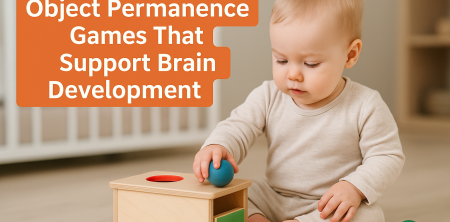
3. The Box Game
For this game, you’ll need a box with a lid. It’s an engaging way to introduce your child to the concept of hiding and retrieving objects. This also helps develop fine motor skills as they learn to manipulate the box.
How to play:
- Place a toy inside a box and show it to your child.
- Put the lid on and make a big deal about the toy being inside.
- Encourage your child to open the box and find the toy.
4. The Blanket Game
This game is all about using a blanket to cover and uncover objects. It introduces the idea that something can be hidden but still exists underneath. (See: Wikipedia article on object permanence.)
How to play:
- Hide a toy under a blanket while your child watches.
- Wiggle the blanket to create excitement, then remove it to reveal the toy.
- Gradually let your child take the lead and hide the toy themselves.
5. Treasure Hunt
Once your child has grasped the concept of object permanence, you can elevate the challenge with a treasure hunt. This game encourages both critical thinking and problem-solving.
How to play:
- Hide several toys around a room while your child is not looking.
- Provide hints or clues to help them find the hidden toys.
- Celebrate their success when they locate each toy!
Materials That Encourage Object Permanence
While games are a great way to teach object permanence, certain materials can also foster this understanding. Here are some toys and resources that promote this developmental milestone:
- Stacking and Nesting Toys: Toys that stack or nest help children understand that objects can exist in a contained manner.
- Transparent Containers: Using clear plastic boxes allows children to see objects while they are “hidden,” reinforcing the idea that they still exist.
- Shape Sorters: These toys encourage children to think about how objects can fit together, promoting spatial awareness.
- Pop-Up Toys: Toys that have objects that pop up or disappear can illustrate the concept of object permanence through surprise.
Age-Appropriate Object Permanence Games
As children grow, their understanding of object permanence deepens and becomes more sophisticated. Tailoring games to their age and developmental stage can enhance learning while keeping it fun. Here’s how you can adapt your approach based on age:
Infants (0-12 months)
For infants, it’s all about simple, engaging games that encourage interaction. Peek-a-boo, hiding toys under blankets, and simple games with your hands are most effective. At this age, the focus should be on sensory experiences and visual stimulation.
Toddlers (1-3 years)
As children enter toddlerhood, their cognitive skills advance quickly. Introduce more complex games like treasure hunts and shape sorters. They will also enjoy stories that include themes of hiding and finding. Encourage them to recount their experiences and what they learned through play.
Preschoolers (3-5 years)
Preschool-aged children can engage in even more elaborate object permanence games. You can introduce board games that require them to remember the locations of pieces or even simple hide-and-seek games involving friends or family. At this stage, their discussions about the game can also deepen their understanding.
The Role of Caregivers in Reinforcing Object Permanence
Caregivers play a crucial role in helping children grasp the concept of object permanence. Here are some ways you can reinforce this understanding:
- Consistent Interaction: Regularly playing games that highlight object permanence can create a sense of stability for your child. Being present during playtime is vital for their emotional security.
- Encouragement: Praise your child when they successfully find a hidden object or complete a game. This positive reinforcement boosts their confidence and encourages further exploration.
- Patience: Be patient as your child learns. Mastering the concept of object permanence can take time — every child develops at their own pace.
Current Relevance of Object Permanence Games
In today’s digital age, where screens often dominate playtime, it’s essential to remember the importance of physical play and the role that object permanence games can play in cognitive development. As children are increasingly drawn to tablets and mobile devices, incorporating traditional play methods can counterbalance this trend.
Research suggests that interactive play significantly impacts brain development. Engaging in object permanence games not only fosters cognitive skills but also encourages social interaction and emotional bonding, both of which are vital for holistic development.
Final Thoughts: The Lifelong Impact of Object Permanence Games
Playing object permanence games with your child is not just about entertainment; it's an investment in their cognitive and emotional development. These activities provide foundational skills that will serve them throughout the rest of their lives. Understanding that objects exist even when out of sight is a stepping stone to more complex reasoning and problem-solving abilities.
As a caregiver, you have the power to shape your child's understanding of the world around them. By weaving object permanence games into your everyday routine, you're nurturing a curious mind, encouraging exploration, and fostering a love for learning. So the next time you’re wondering how to engage your little one, remember that simple games can create lasting impacts on their brain development. (See: CDC on child development milestones.)
Deeper Dive into Research on Object Permanence
Several studies have highlighted the significance of object permanence in early childhood development. For instance, research conducted by researchers at the University of California, Berkeley, found that infants as young as 3.5 months show signs of understanding object permanence. This study used a technique called the violation-of-expectation method, where infants were shown events that either aligned with or violated their expectations about object permanence. The results suggested that even very young infants have some understanding that objects continue to exist when removed from view.
Further findings suggest that the development of object permanence is directly correlated with later cognitive skills like memory and problem-solving. As children start associating hidden objects with reality, they develop the ability to think abstractly. This type of cognitive growth is critical for success in school and later life.
Expert Perspectives on the Importance of Object Permanence
Experts in child development emphasize that object permanence is not just a milestone but a gateway to various cognitive abilities. Dr. Amanda Gummer, a child development expert, notes, "Mastering the concept of object permanence is foundational. It helps children understand the world is consistent, and this consistency aids in building trust with caregivers." This sentiment is echoed by other developmental psychologists who note that object permanence can be a precursor to skills such as empathy and social understanding.
Incorporating object permanence games into your daily interactions can help solidify this understanding. Playtime should be an environment where curiosity thrives, allowing children to experiment with and explore their surroundings freely.
Comparative Analysis: Object Permanence in Different Cultures
Interestingly, the understanding and development of object permanence may vary across different cultures. In some societies, children are exposed to varied experiences and interactions that influence their grasp of this concept. For example, in cultures where communal living is prevalent, children might interact with multiple caregivers, which can enhance their understanding of people as stable figures in their lives.
Studies comparing Western and non-Western children have shown that children raised in more communal environments tend to develop social skills earlier as they are continuously interacting with various adult figures. This might lead to a more nuanced understanding of object permanence, as they experience it not just with toys but with people who come and go in their daily lives.
FAQs about Object Permanence Games
What age should I start playing object permanence games with my child?
It's ideal to start introducing object permanence games as early as 4 months old. At this age, infants begin to notice when objects disappear and can enjoy games like peek-a-boo. Continue these games as they grow to strengthen their understanding.
Can object permanence games help with my child's emotional development?
Absolutely! These games foster a sense of security and trust. When caregivers consistently engage with children, it reassures them that their caregivers will return even after disappearing from view.
How long should we play these games each day?
Even a few minutes of play each day can be beneficial. Keep it light and fun; short and frequent sessions can be more impactful than longer play periods. Aim for at least 10-15 minutes of focused playtime to explore these concepts.
Can older children benefit from object permanence games?
Yes! While older children may have a solid grasp of object permanence, they can still benefit from games that challenge their memory and problem-solving skills. Consider more complex hide-and-seek variations or memory card games.
What are some signs that my child understands object permanence?
Signs include your child actively searching for hidden objects, showing excitement when finding them, or expressing surprise when something they expect to be there is not. These behaviors indicate they are beginning to grasp the idea that objects continue to exist even when out of sight.
Additional Activities to Foster Object Permanence
In addition to traditional games, there are various activities that can enhance the understanding of object permanence. Here are some suggestions: (See: NIH on child development milestones.)
- Storybooks with Flaps: Reading books that have flaps to lift can help children learn about hidden objects. Each flap reveals a new surprise, reinforcing the idea that things can be hidden but still exist.
- DIY Hide-and-Seek with Stuffed Animals: Create simple scenarios where your child has to find stuffed animals you’ve hidden around the room. This can be adapted as they grow by increasing the number of animals or making the hiding spots more challenging.
- Interactive Apps and Programs: Some educational apps designed for toddlers incorporate the concept of hidden objects in a digital format. While physical play is crucial, these can also be effective in reinforcing the concept in a fun and engaging way.
- Nature Explorations: Take your child outside to explore. Hide a small object in the garden or a park and encourage them to find it. This not only teaches object permanence but also connects them with nature.
Importance of Consistency in Object Permanence Learning
One key aspect in mastering object permanence is consistency. Repetitive play using the same games helps reinforce the concept. For instance, if you play peek-a-boo regularly, your child will start to expect the pattern and understand the nature of object permanence more naturally. This repetition creates a sense of security and assurance in your child’s mind, as they begin to recognize that their world is stable, even when things are out of sight.
Promoting Object Permanence in Group Settings
Engaging in object permanence games in group settings, such as playdates or classes, can also amplify learning. Watching peers participate can motivate children to engage more actively and learn from one another. Group activities that involve hiding and seeking can lead to collaborative play, where children not only grasp object permanence but also learn valuable social skills related to teamwork and communication.
Long-Term Benefits of Object Permanence Understanding
As children grow older, the understanding of object permanence can translate into enhanced skills in various domains. For instance, children who have a strong grasp of this concept may excel in spatial awareness, an essential skill for subjects like mathematics and science. They might also show advanced capabilities in narrative skills, understanding storytelling, and following plots where characters or objects may be present or absent.
In educational settings, these early skills can significantly impact their ability to succeed, particularly in learning environments that require critical thinking and logical reasoning. Recognizing that objects and concepts exist beyond one’s immediate perception is foundational for academic success.
Encouraging Object Permanence in Everyday Life
Integrating object permanence practices into everyday routines can be extremely beneficial. For example, during mealtime, you can hide a toy in a bag and have your child guess what’s inside. This fosters anticipation and reinforces the idea of hidden objects. Similarly, during bath time, you can play games involving floating toys that disappear when submerged, which can also be tied into learning about water physics in an age-appropriate manner.
Being mindful of how you incorporate these principles into daily life not only enriches your child’s understanding but also provides opportunities for bonding and shared experiences that are crucial for emotional development.
Final Words on Object Permanence Games
Object permanence games are an integral part of early childhood learning. They serve as building blocks for cognitive development and emotional growth. Parents and caregivers who actively engage in these games are likely to notice a positive impact on their child’s ability to learn and adapt as they grow.
Remember, the goal is not just to teach but to enjoy the moments spent together, creating memories that last a lifetime. So gather your toys, and let the games begin!
```
Trending Now
Frequently Asked Questions
What is object permanence in child development?
Object permanence is the understanding that objects continue to exist even when they cannot be seen, heard, or touched. This cognitive milestone typically develops in infants between 4 to 8 months and is crucial for forming mental representations of the world.
Why is object permanence important for infants?
Object permanence is vital for cognitive maturation, as it lays the foundation for memory, problem-solving, and predicting outcomes. It also contributes to emotional and social growth, helping children understand their surroundings better.
How can I teach my baby about object permanence?
You can teach your baby about object permanence through simple games like peek-a-boo or hiding toys under a cloth. These activities encourage them to search for the hidden objects, reinforcing their understanding that things still exist even when out of sight.
What are some games that promote object permanence?
Games that promote object permanence include peek-a-boo, hiding toys, and playing with boxes. These activities engage infants and young children, helping them develop the understanding that objects continue to exist even when they cannot see them.
At what age do babies understand object permanence?
Babies typically begin to understand object permanence between 4 to 8 months of age. This cognitive milestone is crucial as it helps them engage more deeply with their environment and develop essential cognitive skills.
What did we miss? Let us know in the comments and join the conversation.

