```html
When it comes to early childhood development, play isn’t just a pastime; it’s a crucial part of learning. Two significant forms of play that emerge in young children are parallel play and associative play. Understanding these play types can offer valuable insights into child development, social skills, and the overall process of learning. In this article, we will explore the differences between parallel play and associative play, their developmental stages, and their implications for children's growth.
1. What is Parallel Play?
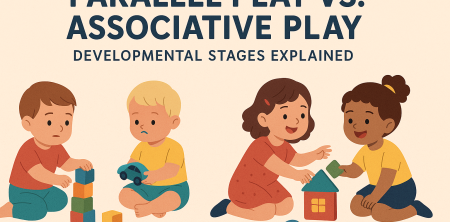
Parallel play is a stage of play where children play alongside each other but do not directly interact. This form of play typically occurs among toddlers, usually between the ages of 2 and 3 years. During parallel play, children engage in similar activities, such as building blocks or coloring, but do so independently. Despite the lack of direct interaction, the presence of peers is essential for this stage, as it allows children to observe and learn from one another.
This type of play is fundamental in helping children develop their own skills. As they play alongside others, they begin to understand the concept of sharing space and observing social cues. While they may mimic actions or behaviors, they are primarily focused on their activities. This does not mean that parallel play lacks value; rather, it establishes a foundation for more complex interactions in later stages.
2. Characteristics of Parallel Play
Parallel play is defined by certain characteristics that differentiate it from other types of play. Typically, children in this stage will:
- Engage in similar activities without direct interaction
- Use similar materials or toys while maintaining their own space
- Occasionally glance at or mimic the actions of peers without engaging
These behaviors indicate that even though children are not interacting directly, they are still processing the presence of others, which is a crucial step in social development. The absence of conflict is another hallmark of parallel play, as children are more focused on their individual experiences rather than negotiating or sharing with others.
3. What is Associative Play?
As children grow, they transition from parallel play to associative play, generally occurring between the ages of 3 and 4 years. During associative play, children begin to engage with one another, sharing materials and ideas while still maintaining a level of independence in their activities. Unlike parallel play, where children are solitary in their endeavors, associative play involves interactions, such as exchanging toys or collaborating on a shared project.
This form of play is essential for developing social skills. Children learn to communicate, negotiate, and cooperate with others, which are foundational skills for healthy relationships. Associative play helps children practice empathy as they navigate their interactions, often requiring them to consider the feelings and needs of their peers.
4. Characteristics of Associative Play
Associative play is marked by several distinct features:
- Children engage in similar activities while also interacting with others
- There is sharing of toys or materials, and children may collaborate on tasks
- Children may seek out one another for help, ideas, or companionship
During associative play, children are still not fully organized like in cooperative play, where they work together toward a common goal. However, they express a newfound interest in building relationships with their peers, which is vital for emotional and social development.
5. The Developmental Progression: From Parallel to Associative Play
The transition from parallel play to associative play is part of a natural developmental progression. Children typically move through these stages as their cognitive and social skills mature. In the early years, children are focused on individual exploration and self-discovery, evident in their parallel play. As they grow, they start to understand social norms and the importance of relationships, paving the way for associative play.
Researchers suggest that this progression is influenced by a variety of factors, including the child’s environment, exposure to peers, and opportunities for social interaction. For instance, children who attend playgroups or preschool are likely to experience these stages more fluidly, as they are given ample opportunity to engage with a variety of peers.
6. Importance of Both Play Types in Development
Both parallel and associative play play crucial roles in a child's development. Parallel play encourages independence, self-reliance, and the ability to focus on individual tasks without distraction. Children learn to enjoy their own company and engage their imagination during this time.
On the other hand, associative play is critical for fostering social skills. It helps children learn how to communicate their thoughts and feelings effectively. From sharing toys to negotiating roles in a game, associative play provides a platform for practicing social interactions that will be essential as they continue to grow. Both play types are interconnected and serve as building blocks for more advanced forms of play. (See: CDC on play and child development.)
7. Practical Insights for Parents and Educators
Understanding the differences between parallel play and associative play can help parents and educators support children’s development more effectively. Here are some practical insights:
- Provide opportunities for both types of play: Create environments where children can engage in parallel play while also facilitating activities that encourage associative play.
- Encourage peer interaction: Playdates, group activities, and collaborative projects can help children transition from parallel to associative play.
- Observe and guide: Pay attention to how children interact during play. If you notice a child struggling to share or communicate, gently guide them in finding ways to engage with their peers.
By fostering an environment that values both types of play, caregivers can enhance children's social skills and emotional intelligence.
8. Current Relevance of Play Types in Modern Education
In today’s educational landscape, understanding parallel play vs. associative play is more relevant than ever. As educational institutions increasingly adopt play-based learning models, the significance of these play types is being recognized in curricula. Educators are now emphasizing the importance of social play in promoting cognitive and emotional growth.
Moreover, with the rise of technology and digital play, it’s essential to strike a balance. While screen time can offer educational benefits, it’s crucial to ensure that children also engage in physical, social play. Schools are incorporating more interactive, play-based activities into their programs to support this aspect of development.
9. Comparative Analysis of Parallel Play and Associative Play
Understanding the nuances between parallel play and associative play is fundamental not only for parents and educators, but also for psychologists and child development specialists. Both types of play occur in distinct contexts and involve different interactions. For example, in parallel play, children may have a shared interest in the same toy, yet their interaction is limited to proximity rather than collaboration. Conversely, in associative play, children actively engage with each other, demonstrating a shift from solitary focus to shared experiences.
Experts like Dr. Susan Johnson, a child psychologist, emphasize that while parallel play is vital for fostering independence, associative play is crucial in developing communication skills. This analysis underscores the importance of transitioning smoothly between the two stages, as children who struggle with associative play might face challenges in social settings later on.
10. Statistics and Studies on Play Types
A variety of studies have highlighted the importance of play types in early childhood development. For instance, research conducted by the National Association for the Education of Young Children (NAEYC) indicates that children who engage in more associative play demonstrate improved social skills compared to those who engage predominantly in parallel play. In fact, children involved in associative play were reported to have a 30% higher chance of developing effective conflict resolution skills by the age of 4.
Another study published in the Journal of Child Development found that children who participated in both types of play showed greater adaptability in social situations. The research suggests that a balance between parallel and associative play contributes to a child’s overall ability to navigate complex social dynamics as they grow older.
11. Common Misconceptions About Play Types
There are several misconceptions surrounding parallel and associative play that can affect how caregivers approach playtime. One common myth is that parallel play is a sign of social deficiency. In reality, parallel play is a normal and healthy part of development. Many children thrive in this stage as it allows them to explore their environment independently.
Another misconception is that once children start engaging in associative play, parallel play is no longer necessary. However, both play types serve unique functions in child development, and it’s essential for children to experience both to build a comprehensive set of social skills.
12. Real-Life Examples of Parallel and Associative Play
To illustrate the differences between parallel play and associative play, consider a scenario in a preschool setting. In one corner of the classroom, two children may sit side by side, each building a tower with blocks. They might occasionally glance at each other’s work but remain engrossed in their individual projects. This represents parallel play.
In another area, you might observe a group of children sharing art supplies. One child suggests using crayons to draw a specific character, while another child adds to the drawing and suggests colors. This interaction showcases associative play, as the children not only share materials but also contribute ideas and work together.
13. FAQ: Understanding Parallel Play vs. Associative Play
What is the primary difference between parallel play and associative play?
The primary difference lies in interaction. In parallel play, children play next to each other without direct interaction, while in associative play, they engage with each other, sharing materials and collaborating on activities.
At what age does parallel play typically occur?
Parallel play usually occurs in toddlers, typically between the ages of 2 and 3 years.
When do children transition to associative play?
Children generally transition to associative play around the ages of 3 to 4 years, as they start to understand social norms and the importance of relationships.
How can parents encourage associative play?
Parents can encourage associative play by organizing playdates, engaging in group activities, and creating opportunities for collaborative projects that require sharing and communication. (See: NIH on learning and development.)
Is parallel play important for development?
Absolutely! Parallel play is crucial as it fosters independence and self-exploration, which are foundational for later social interactions.
Can children thrive if they mostly engage in parallel play?
While children can thrive in parallel play, it's important for them to experience both types to develop a well-rounded set of social skills. Transitioning to associative play is vital for enhancing communication and cooperation.
14. The Future of Play: Trends in Understanding Play Types
As research on child development continues to evolve, so does our understanding of play types. The growing recognition of the significance of play—including parallel and associative play—has led to innovative approaches in early childhood education. Educators are now integrating play-based learning strategies that not only promote cognitive skills but also emphasize social-emotional learning.
One notable trend is the inclusion of structured playtime in school curriculums, where educators facilitate activities that encourage children to engage in both parallel and associative play. This approach not only aids in development but also cultivates a love for learning, making it an enjoyable experience for children.
Additionally, as technology becomes more embedded in children’s lives, there's an emerging focus on balancing digital play with traditional forms of play. Educators and parents are encouraged to create environments that promote social interactions, ensuring that children can benefit from both types of play in various contexts.
15. Final Thoughts on Parallel Play vs. Associative Play
The distinctions between parallel play vs associative play provide valuable insights into how young children learn and interact with the world around them. Both play types are essential for fostering the skills necessary for later life, from emotional intelligence to problem-solving abilities. As caregivers, understanding and supporting these stages can significantly enhance a child's developmental journey.
It's essential to recognize that play is not merely a break from learning but a vital aspect of it. By nurturing environments that encourage both parallel and associative play, we can empower children to develop the skills they need to thrive in social settings and beyond.
16. Expert Perspectives on Play Types
Experts in child development often stress the importance of recognizing and facilitating different types of play. Dr. Emily Chen, a child psychologist specializing in early childhood education, notes that "play is the language of childhood." She emphasizes that both parallel and associative play are not only crucial for social skills but also for cognitive development. "When children engage in parallel play, they are not just playing—they are learning to think independently. As they transition to associative play, they begin to process not only their own thoughts but also the perspectives of others," she explains.
Furthermore, Dr. Andrew Parker, a developmental psychologist, highlights that these types of play should not be viewed as rigid stages. "Children may fluctuate between parallel and associative play, depending on their mood, the setting, and their peers," he says. This insight is vital for parents and educators, as it encourages flexibility in how we perceive children's play. Providing children with varied play opportunities can help them transition between these stages naturally.
17. Case Studies on Play Development
Several case studies illustrate the importance of parallel and associative play in real-world environments. In one study conducted at a local preschool, researchers observed three groups of children over six months. They documented various play scenarios, capturing instances of both parallel and associative play.
In the first group, children who frequently engaged in parallel play exhibited significant improvements in their fine motor skills. They became adept at using tools like scissors and crayons, demonstrating the independent focus that parallel play fosters.
Conversely, in the second group, children who participated in more associative play showed enhanced verbal communication skills. They were able to articulate their ideas better and negotiate roles within games, which was reflected in their improved ability to collaborate on group projects.
The findings from this study highlight how both play types contribute differently to child development, emphasizing the need for a balanced approach that incorporates both forms.
18. Applying Play Concepts to Home and School Environments
Parents and educators can apply the concepts of parallel and associative play in various ways. At home, parents can create play zones that encourage both types of play. For example, setting up a crafting station with supplies for individual projects (parallel play) alongside a building area where children can collaboratively work on large structures (associative play) can promote diverse play experiences.
In educational settings, teachers can develop curricula that include structured playtime, allowing children to freely choose between parallel and associative activities. For instance, incorporating centers where children can either work on solitary tasks like puzzles or engage in group games fosters both types of interaction.
Additionally, using storytelling sessions where children can either share their own narratives (parallel) or build a story together (associative) can further blend these play types effectively, enriching the learning environment.
19. Resources for Further Learning
If you're interested in exploring more about parallel play and associative play, there are many resources available. Books such as "The Playful Classroom" by Jewell and Sweeney discuss how play facilitates learning in educational settings.
Websites like the American Academy of Pediatrics provide articles and research on child development that delve into the significance of play in early childhood. Furthermore, organizations such as the National Association for the Education of Young Children offer workshops and materials for educators to enhance their understanding of play types.
Attending seminars or webinars on child development can also provide fresh insights and practical strategies for supporting children's play interactions.
20. Encouraging Play in Diverse Situations
It’s important to remember that play is not confined to structured environments like schools or homes. Children also engage in play in parks, community centers, and during family gatherings. Encouraging play in these varied settings can help solidify the skills learned during parallel and associative play.
For example, family picnics can present opportunities for parallel play, where children spread out with individual toys or activities while still being in the same space as their siblings or cousins. At the same time, games like tag or any group activities can encourage associative play, fostering teamwork and cooperation.
Encouraging play in diverse situations not only enhances children's adaptability but also enriches their social experiences, allowing them to practice their skills in various contexts.
```
Trending Now
Frequently Asked Questions
What is parallel play in child development?
Parallel play is a stage where children play alongside each other without direct interaction, commonly seen in toddlers aged 2 to 3 years. During this phase, they engage in similar activities independently, allowing them to observe and learn from their peers while developing their own skills.
What are the characteristics of parallel play?
Children in parallel play typically engage in similar activities without interacting directly, use similar materials while maintaining their own space, and may glance at or mimic peers' actions. These behaviors show that they are aware of others, which is essential for social development.
How does parallel play help in child development?
Parallel play helps children develop essential skills by allowing them to observe and learn from their peers. It lays the groundwork for understanding social cues and sharing space, which are critical for more complex interactions in later developmental stages.
What is associative play and how does it differ from parallel play?
Associative play occurs when children start to interact and share materials while still playing independently. Unlike parallel play, where there is no direct interaction, associative play involves communication and cooperation, marking a progression in social skills.
At what age does parallel play typically occur?
Parallel play usually occurs in toddlers around the ages of 2 to 3 years. This stage is crucial for their development as they learn to play alongside peers while focusing on their own activities, paving the way for more interactive play styles later on.
What's your take on this? Share your thoughts in the comments below — we read every one.

