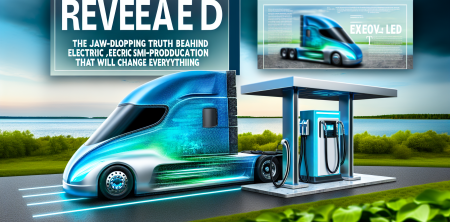
On April 30, 2026, a groundbreaking event in the automotive industry unfolded as Tesla officially kicked off high-volume Semi production in Nevada. This milestone not only marks a significant achievement for the company but also serves as a pivotal moment in the electrification of the commercial trucking sector. With this announcement, Tesla is poised to reshape the landscape of logistics and transportation, leading the charge toward zero-emission solutions in an industry long reliant on fossil fuels.
The Significance of High-Volume Production
The commencement of high-volume production for the Tesla Semi signifies a major breakthrough that goes beyond the company’s already impressive portfolio of consumer electric vehicles. As the demand for sustainable transportation solutions grows, Tesla’s move to ramp up production of its Semi truck is indicative of a broader shift in the industry. For logistics companies and fleet operators, this represents an opportunity to significantly reduce carbon footprints while also optimizing their operations.
Impact on the Trucking Industry
The trucking industry is a vital component of the global economy, responsible for transporting goods across vast distances. However, it is also one of the largest contributors to greenhouse gas emissions. As such, the transition to electric vehicles (EVs) in this sector is essential in combating climate change. Tesla’s commitment to high-volume Semi production addresses these challenges head-on.
- Reduction in Emissions: Electric vehicles produce zero tailpipe emissions, which is crucial for improving air quality and meeting international climate goals.
- Cost Efficiency: The lower operating costs associated with electric trucks, including reduced fuel expenses and maintenance, are attractive to fleet operators looking to streamline their budgets.
- Technological Advancements: The Tesla Semi is equipped with cutting-edge technology that enhances performance, safety, and efficiency, making it a competitive option in the marketplace.
Moving Beyond Consumer Vehicles
Tesla’s expansion into commercial vehicles with the Semi is a clear indication of its ambition to diversify beyond the consumer segment. While Tesla has made a name for itself in the passenger car market with models like the Model S, Model 3, Model X, and Model Y, entering the commercial sector opens up new avenues for growth. The move also aligns with Tesla’s mission to accelerate the world's transition to sustainable energy.
Growing Demand for Zero-Emission Solutions
The demand for zero-emission vehicles in the trucking industry is accelerating, driven by stringent regulations and increasing pressure from consumers and stakeholders. Companies are recognizing that sustainability is no longer just a trend; it’s a requirement. As a result, the timing of Tesla’s high-volume production launch is impeccable.
Industry analysts expect that the introduction of the Tesla Semi will inspire other manufacturers to follow suit, further enhancing competition in the electric commercial vehicle segment. This shift could lead to innovations that benefit the entire sector, helping to lower costs and improve performance across the board.
Challenges Ahead for Tesla Semi Production
While the start of high-volume production is a cause for celebration, it does not come without its challenges. Tesla has faced obstacles in scaling its production capabilities in the past, often resulting in delays and setbacks. As the company ramps up Semi production, several key issues will need to be addressed:
- Supply Chain Constraints: The ongoing global supply chain disruptions could impact the availability of essential components, which may hinder production timelines.
- Market Acceptance: Convincing traditional trucking companies to adopt electric vehicles remains a challenge, especially as many are accustomed to diesel-powered fleets.
- Infrastructure Development: The expansion of charging infrastructure is critical for the widespread adoption of electric trucks. Without sufficient charging stations, the practicality of electric trucks may be limited.
Competitive Landscape
Tesla is entering a competitive landscape as several other manufacturers race to develop their own electric commercial vehicles. Companies like Rivian and Nikola are also making strides in this space, and their innovations could challenge Tesla's dominance. However, Tesla’s established reputation in the EV market, combined with its advanced technology, positions it favorably to lead the charge in the electrification of the trucking industry.
The Broader Implications of Tesla's Semi Production
The implications of Tesla’s high-volume Semi production extend beyond just the automotive industry. As the world grapples with the effects of climate change, the need for sustainable transportation solutions is becoming increasingly critical. Tesla’s commitment to producing electric trucks could serve as a catalyst for change, encouraging other industries to innovate and adopt similar practices.
Advancing Sustainability Goals
As nations strive to meet ambitious sustainability goals, the adoption of electric vehicles in commercial transport plays a crucial role. By providing an alternative to traditional diesel trucks, Tesla is positioning itself as a leader in the transition to zero-emission logistics. The positive environmental impact of the Tesla Semi production is expected to resonate with stakeholders across various sectors, from government agencies to consumers.
- Support for Renewable Energy: The shift towards electric trucking aligns with broader efforts to promote renewable energy sources, further reducing the environmental impact of transportation.
- Job Creation: As Tesla expands its production capabilities, it is likely to create jobs in manufacturing, research and development, and infrastructure development.
- Innovation and Research: The push for electric trucks will encourage research into battery technology, energy efficiency, and other areas that could benefit the entire automotive sector.
Conclusion: A New Era for Electric Trucking
The launch of high-volume Tesla Semi production represents a new era for electric trucking and holds the potential to transform the logistics landscape. As Tesla continues to innovate and push the boundaries of what is possible in the commercial vehicle sector, the implications for sustainability, economic growth, and technological advancement are profound.
With the trucking industry under increasing pressure to adopt greener practices, Tesla's entry into this market could serve as a model for other companies. The excitement surrounding the Semi has already generated substantial engagement among automotive enthusiasts, fleet operators, and sustainability advocates. As we move forward, it will be essential to keep a close eye on how this development unfolds and the impact it has on the future of transportation.
In summary, the high-volume production of the Tesla Semi not only illustrates the company's commitment to innovation but also emphasizes the critical shift towards sustainable transportation solutions. As we stand on the brink of this new chapter in automotive history, one cannot help but feel optimistic about the future of electric vehicles in the commercial sector.

