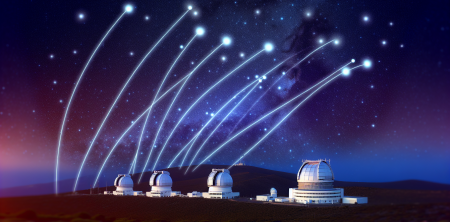
The astrophysics community is buzzing with excitement following the recent announcements from the Rubin Observatory regarding its new real-time alerts and the allocation of observing time on the James Webb Space Telescope (JWST). These developments signal a significant leap forward in astronomical research capabilities and open new avenues for discovery in the cosmos.
Revolutionizing Real-Time Alerts
With the launch of its real-time alert system, the Rubin Observatory is set to enhance the way astronomers engage with transient astronomical events. This innovative feature allows researchers to receive immediate notifications about significant celestial occurrences, such as supernovae, gamma-ray bursts, and other fleeting phenomena. The alerts enable astronomers to quickly mobilize observational resources, ensuring that they capture critical data before these events fade from view.
As highlighted in the March 2026 Night Sky News episode, the observatory's alerts are designed to foster collaboration within the scientific community. By providing timely information about dynamic events, the Rubin Observatory aims to facilitate coordinated observations across multiple telescopes, maximizing the scientific yield from each event.
James Webb Space Telescope Proposals
In addition to the real-time alerts, the James Webb Space Telescope has awarded observing time to several scientific programs, marking a milestone for researchers eager to explore the depths of space. This coveted observing time will allow scientists to utilize JWST's advanced capabilities to study a variety of astronomical phenomena, from the formation of distant galaxies to the chemical composition of exoplanet atmospheres.
The selection of these proposals emphasizes the importance of collaboration and innovation in astrophysics. Researchers from around the world submitted proposals detailing their intended observations, demonstrating the global interest and diverse topics being explored with JWST. This program not only enhances our understanding of the universe but also encourages the development of new technologies and methodologies in astronomical research.
Artemis Mission Updates
In a related development, updates regarding the Artemis mission have also captured the attention of space enthusiasts and researchers alike. The Artemis program, which aims to return humans to the Moon by the mid-2020s, has undergone several changes that are designed to enhance mission safety and science objectives. These adjustments reflect ongoing assessments of mission logistics and the evolving landscape of lunar exploration.
The Artemis program is not just about returning humans to the Moon; it is also about establishing a sustainable presence and paving the way for future missions to Mars. As part of this initiative, scientists are keen to investigate the Moon's resources, which could potentially support long-term human habitation and serve as a launch point for deeper space exploration.
DART Mission Insights
The recent findings from the Double Asteroid Redirection Test (DART) mission further illustrate the dynamic advancements in space science. Evidence of asteroid material transfer has been observed, showcasing the effectiveness of using kinetic impactors to alter the trajectory of asteroids. This groundbreaking mission not only tests planetary defense techniques but also provides valuable insights into the composition and behavior of asteroids.
DART's success could have significant implications for future planetary defense strategies, as it demonstrates a practical method for mitigating potential threats from near-Earth objects (NEOs). Scientists are now analyzing the data collected from this mission to understand better the structural and compositional characteristics of asteroids, which could inform future missions aimed at resource utilization.
Night Sky Highlights
As the scientific community delves into these exciting developments, skywatchers are treated to several celestial events in March 2026. Notably, on March 26th, the Moon will be positioned near Jupiter and the star Pollux, creating a stunning visual display in the night sky. This event offers an excellent opportunity for amateur astronomers and enthusiasts to observe and appreciate the beauty of our solar system.
Such occurrences not only provide a moment of wonder but also serve as a reminder of the vastness of the universe and our ongoing quest for knowledge. As the Rubin Observatory and JWST continue to push the boundaries of what we know, the excitement surrounding these advancements will likely inspire a new generation of astronomers and scientists.
Conclusion
The recent announcements from the Rubin Observatory and updates from the James Webb Space Telescope and Artemis mission represent a significant chapter in the ongoing exploration of our universe. With real-time alerts enhancing observational capabilities, innovative research proposals being awarded time on JWST, and new findings from the DART mission, the field of astrophysics is poised for unprecedented discoveries. As we look to the skies, the promise of new knowledge and understanding beckons, reminding us of the wonders that lie beyond our planet.

