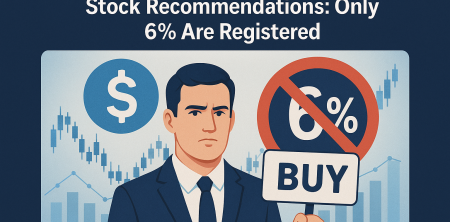
Social media has become a wild west for financial advice, a bustling marketplace where quick tips and bold promises often overshadow sound investment principles. You've probably seen them pop up in your feed: the 'finfluencers' touting the next big stock, sharing their 'can't lose' strategies, and flashing lavish lifestyles that hint at their supposed financial prowess. It's an alluring vision, especially for those new to investing or feeling the pinch of economic uncertainty. But here's a startling truth that should make anyone pause: a recent report by the CFA Institute sheds a harsh light on this unregulated corner of the internet, revealing that a staggering 33% of these finfluencers are actively recommending stocks, yet a mere 6% are actually registered as investment advisors with the Securities and Exchange Board of India (Sebi).
Think about that for a moment. You're potentially taking financial advice, sometimes very specific finfluencers stock recommendations, from someone with no official oversight, no accountability, and often, no disclosure of their own vested interests. This isn't just a minor oversight; it's a gaping chasm in investor protection. The allure of quick returns, combined with the often-slick production values of these social media personalities, creates a dangerous cocktail. People are drawn in by the promise of financial freedom, only to find themselves navigating a minefield of potential scams and biased information. It's a critical issue that's not just confined to India; regulators globally, including the US Securities and Exchange Commission (SEC), are grappling with similar challenges, even cracking down on misleading practices like 'AI-washing' where firms exaggerate their artificial intelligence capabilities to entice investors. So, how did we get here, and what exactly are the risks you need to be aware of? Let's break down the alarming landscape of finfluencers and their often-unregulated stock recommendations.
1. The Unregulated Wild West: Where 'Advice' Reigns Free
The core of the problem lies in the sheer lack of regulation. When someone stands on a soapbox in a public square and shouts out stock tips, there's a certain level of natural skepticism. But on social media, the curated persona, the direct interaction, and the perception of a personal connection can erode those natural defenses. The CFA Institute's finding that 33% of finfluencers are making finfluencers stock recommendations is alarming enough on its own. Now couple that with the fact that only 6% are registered with Sebi, and you start to grasp the scale of the issue.
This isn't about stifling free speech or preventing people from sharing their opinions. It's about investor protection. Registered investment advisors (RIAs) go through rigorous training, pass stringent exams, and are legally bound by fiduciary duties to act in their clients' best interests. They are subject to audits, disclosures, and face severe penalties for misconduct. A finfluencer, on the other hand, operates largely outside this framework. They can share whatever they want, often without any real consequence, even if their advice leads to significant financial losses for their followers. It creates an uneven playing field where genuine experts are held to high standards, while charismatic amateurs (or worse, bad actors) can dispense advice with impunity.
2. Conflicts of Interest: The Hidden Hand
One of the most insidious aspects of the finfluencer phenomenon is the prevalence of undisclosed conflicts of interest. The CFA Institute report highlights this starkly: a shocking 37.5% of finfluencers fail to disclose crucial information like sponsored content. Imagine someone telling you to buy a particular stock, only for you to later discover they were paid handsomely by that company to promote it. That's a direct conflict of interest, and it fundamentally undermines the trust you place in their advice.
This isn't just about direct payments from companies. Conflicts can take many forms: a finfluencer might own a significant stake in a stock they're promoting, hoping to pump up the price before selling their shares (a classic 'pump and dump' scheme). They might be affiliated with a brokerage firm, an investment product, or even a specific trading platform that benefits from their recommendations. Without clear, upfront disclosure, you, the follower, are left in the dark, unable to properly assess the impartiality of their advice. This lack of transparency is a major red flag when considering any finfluencers stock recommendations.
3. The Allure of Quick Returns: A Dangerous Siren Song
Why are so many people falling for these unregulated finfluencers? Part of it is human nature: the desire for quick, easy wealth. Social media amplifies this desire, showcasing curated images of luxury cars, exotic vacations, and flashy gadgets, all supposedly attained through clever investing. The narrative often goes something like this: 'I started with nothing, followed this one simple strategy, and now look at me!' It's a powerful story, particularly for younger demographics or those struggling financially, offering a tantalizing shortcut to financial freedom.
However, real investing is rarely quick or easy. It involves patience, research, diversification, and a deep understanding of risk. What finfluencers often present as a 'secret' or a 'hack' is usually a simplified, often cherry-picked, success story that ignores the numerous failures and the inherent volatility of markets. They might show a single winning trade while conveniently omitting a dozen losing ones. This selective storytelling creates a false sense of security and encourages reckless behavior, leading people to take on far more risk than they can afford, often with devastating consequences for their financial well-being.
4. The 'AI-Washing' Crackdown: A Broader Regulatory Push
It's not just individual finfluencers making dubious stock recommendations that regulators are concerned about. The push for greater transparency and accountability extends to larger financial firms as well. The US Securities and Exchange Commission (SEC) has started cracking down on a phenomenon they've dubbed 'AI-washing.' This is where investment firms mislead investors about their artificial intelligence capabilities, often exaggerating how AI is used in their investment products or strategies. This might be promoted through social media, webinars, or even traditional advertising. (See: U.S. Securities and Exchange Commission.)
The SEC's concern here is similar to the finfluencer problem: firms are using buzzwords and hype to attract investors without providing concrete evidence or transparent explanations of their technology. It creates a false sense of sophistication and competitive edge, potentially leading investors to make decisions based on exaggerated claims rather than genuine innovation or performance. This broader regulatory action signals a global trend: authorities are increasingly wary of any marketing or advice that blurs the lines between genuine expertise and misleading promotion, regardless of whether it comes from an individual on TikTok or a multi-billion dollar asset manager.
5. The Appeal to the Uninitiated Investor: Why It Works
Let's face it, the world of finance can be intimidating. Jargon, complex charts, economic theories – it's a lot to take in. Traditional financial education often feels dry and inaccessible. This is where finfluencers often step in, offering what appears to be a simplified, engaging, and digestible entry point into investing. They speak your language, use relatable examples, and often present information in bite-sized, entertaining formats like short videos or infographics. This makes complex topics feel approachable, even exciting.
For someone just starting their investment journey, or someone who feels left out of traditional financial systems, a finfluencer can seem like a friendly guide. They often foster a sense of community, with followers engaging in comments sections and forums, reinforcing the perceived credibility of the advice. This emotional connection, combined with the perception of ease and simplicity, makes their finfluencers stock recommendations particularly potent, even if they lack substance or are fundamentally flawed. It's a powerful combination that exploits both financial illiteracy and the natural human desire for connection and belonging.
6. Monetization and Motivation: Following the Money Trail
So, what's in it for the finfluencers? Why do they dedicate so much time and effort to creating content and dispensing advice, often without registration? The answer, unsurprisingly, usually comes down to money. While some might genuinely want to help, the vast majority are driven by significant monetization opportunities.
This can range from direct payments for sponsored content (as the CFA report highlighted), to affiliate marketing deals with brokerages or trading platforms, where they earn a commission for every new user they refer. They might sell their own 'exclusive' courses, eBooks, or premium Discord group memberships promising deeper insights or 'secret' strategies. Some even engage in 'pump and dump' schemes, accumulating shares in a little-known stock, hyping it up to their followers, and then selling their own holdings as the price temporarily spikes due to increased demand. Understanding these underlying financial incentives is crucial when evaluating any finfluencers stock recommendations; if someone is making money by getting you to act, their advice might not be entirely unbiased.
7. The Dangers of Groupthink and Echo Chambers: Following the Crowd Off a Cliff
Social media platforms are notoriously good at creating echo chambers. Algorithms show you more of what you already engage with, reinforcing existing beliefs and limiting exposure to dissenting opinions. This phenomenon is particularly dangerous in the context of finfluencers stock recommendations. When a finfluencer makes a strong recommendation, their followers often amplify it, creating a snowball effect.
Dissenting voices or critical analyses are often drowned out or dismissed as 'haters.' This can lead to groupthink, where individuals conform to the opinions of the majority, even if those opinions are poorly founded. We saw this play out dramatically during the 'meme stock' phenomenon, where coordinated buying efforts, often fueled by social media sentiment, led to extreme volatility. While some made money, many others lost substantial amounts when the hype subsided. The collective enthusiasm, rather than fundamental analysis, became the primary driver, illustrating how easily a crowd can be led astray when relying on unregulated advice.
8. The Future of Regulation: Catching Up to the Digital Age
Regulators are clearly playing catch-up. The traditional frameworks for financial advice were designed for a world of face-to-face meetings, licensed professionals, and established institutions. They weren't built for the instant, global, and often anonymous nature of social media. However, the tide is turning. The fact that the CFA Institute is publishing reports like this, and that bodies like the SEC are actively pursuing 'AI-washing,' indicates a growing awareness and intent to act. See also the truth about lost money.
We can expect to see more stringent guidelines emerge, potentially requiring finfluencers to disclose their registration status, any conflicts of interest, and clear disclaimers about the risks involved. There might be increased enforcement against those who offer investment advice without proper licensing. The challenge, of course, is how to regulate without stifling innovation or legitimate financial education. It's a delicate balance, but one that authorities are increasingly pressured to strike as the public's financial well-being is at stake. The era of completely unregulated finfluencers stock recommendations may be drawing to a close.
9. Empowering Yourself: Your First Line of Defense
Given the current landscape, the most effective defense against misleading finfluencers stock recommendations is you. Empowering yourself with financial literacy is paramount. Don't rely solely on what you see in your feed. Here are some actionable steps you can take: (See: Investor.gov for investment advice.)
- Verify Credentials: Always check if a financial advisor is registered with the relevant regulatory body (like Sebi in India or the SEC in the US). If they're not, be extremely wary.
- Understand Disclosures: Look for clear disclosures of conflicts of interest. If you can't find them, assume they exist and proceed with extreme caution.
- Do Your Own Research: Never invest based solely on a recommendation. Learn how to research companies, understand financial statements, and evaluate risk.
- Diversify: Don't put all your eggs in one basket. A diversified portfolio is key to managing risk.
- Consult a Registered Professional: For personalized advice tailored to your specific financial situation, nothing beats a qualified, regulated financial advisor.
10. The Global Impact: A Universal Challenge
While the CFA Institute report focuses on India, it's vital to recognize that the finfluencer phenomenon isn't localized. It's a truly global challenge. Regulators in Australia, the UK, Europe, and North America are all grappling with similar issues. For instance, the Australian Securities and Investments Commission (ASIC) has issued specific warnings and taken enforcement actions against finfluencers operating without proper licenses. The Financial Conduct Authority (FCA) in the UK has also highlighted the risks, particularly for younger investors, and has ramped up its monitoring of financial promotions on social media.
This global nature means that a finfluencer based in one country can easily influence investors in another, complicating regulatory oversight. It underscores the need for international cooperation among financial watchdogs. The internet doesn't respect geographical borders, and neither do these financial trends. The strategies for attracting followers, the types of products promoted, and the underlying psychological appeals are remarkably consistent across different cultures and regulatory environments. This universal appeal and inherent danger make it a shared concern for investor protection agencies worldwide.
11. Case Studies: Learning from Past Mistakes
History is replete with examples of individuals suffering significant losses due to unregulated financial advice. While finfluencers are a relatively new iteration, the core problem remains the same. Think back to early internet stock forums where anonymous users would hype up penny stocks, leading to predictable crashes. Or even further, to snake oil salesmen peddling worthless investments in the analog age. The medium changes, but human vulnerability to the promise of easy money doesn't.
More recently, the meme stock frenzy saw many retail investors, often influenced by social media personalities and communities, pour their life savings into highly volatile stocks. While some early participants saw astronomical gains, many others bought in at the peak, only to watch their investments plummet. These aren't just abstract statistics; they represent real people losing significant portions of their wealth, sometimes their entire savings, based on social media hype rather than sound financial analysis. These events serve as stark reminders of the potential for widespread financial harm when advice is dished out without accountability.
12. The Psychological Game: Why We Trust Strangers Online
Beyond the allure of quick riches, there's a powerful psychological component to why finfluencers resonate so deeply. Social media cultivates a sense of intimacy and authenticity. When a finfluencer shares personal anecdotes, displays their 'success,' and interacts directly with comments, it builds a parasocial relationship – a one-sided connection where the follower feels like they know and trust the influencer. This feeling of familiarity can override critical thinking.
We're also wired to seek shortcuts and confirmation. If a finfluencer's narrative aligns with our desire for financial freedom, we're more likely to accept it without scrutiny. The constant stream of positive comments and testimonials (which can sometimes be faked or incentivized) creates a powerful social proof, making us believe that if so many others trust them, we should too. This psychological manipulation, often unintentional on the part of the finfluencer but highly effective, makes their finfluencers stock recommendations particularly persuasive, even when logic dictates caution.
Frequently Asked Questions About Finfluencers and Stock Recommendations
Q1: What exactly is a 'finfluencer'?
A finfluencer is a portmanteau of "financial" and "influencer." It refers to individuals who use social media platforms like Instagram, TikTok, YouTube, or Twitter to share financial advice, investment tips, or promote financial products. They often build a following by presenting complex financial topics in an accessible, engaging, and sometimes entertaining way.
Q2: Why are finfluencers stock recommendations considered risky?
They are risky primarily because most finfluencers are not licensed financial professionals. This means their advice isn't regulated, they aren't bound by fiduciary duties to act in your best interest, and they may have undisclosed conflicts of interest (e.g., being paid to promote a stock). Their recommendations often lack thorough research, can be biased, and might lead to significant financial losses for followers who act on them without proper due diligence.
Q3: How can I tell if a finfluencer is legitimate or just trying to scam me?
It can be tough, but look for red flags. A legitimate financial professional will be registered with a regulatory body (like Sebi or the SEC) and will disclose their credentials clearly. They won't promise guaranteed returns or offer specific stock picks without understanding your financial situation. Scammers or risky finfluencers often push for quick, high returns, use aggressive marketing, lack transparency about conflicts of interest, and pressure you to act fast.
Q4: Is all financial content from finfluencers bad?
Not necessarily. Some finfluencers provide valuable general financial education, budgeting tips, or motivational content. The danger arises when they cross the line into offering specific investment advice or finfluencers stock recommendations without the proper licensing or disclosures. It's crucial to differentiate between general educational content and specific calls to action that could impact your investments.
Q5: What should I do if I've lost money due to a finfluencer's advice?
If you suspect you've been a victim of fraud or have lost money due to misleading advice from an unregulated finfluencer, you should first document everything. Gather screenshots, communication logs, and transaction details. Then, contact the relevant financial regulatory body in your country (e.g., Sebi, SEC, ASIC, FCA) and report the incident. They might be able to investigate and take action. Consulting with a legal professional specializing in financial fraud could also be an option.
Q6: Can regulators actually stop finfluencers from giving bad advice?
Regulators are working on it, but it's a complex challenge due to the global and decentralized nature of social media. They can issue warnings, impose fines, and take legal action against finfluencers operating within their jurisdiction without proper licenses. However, tracking every individual and every piece of content is incredibly difficult. The goal is to create a framework that protects investors while also allowing for legitimate financial education.
Ultimately, the responsibility for your financial decisions rests with you. While finfluencers can be entertaining and sometimes even educational, their primary role is often as content creators, not as your personal financial guide. Treat any finfluencers stock recommendations as entertainment, not gospel.
The rise of finfluencers is a fascinating, if sometimes troubling, byproduct of the digital age. While they've democratized access to financial information for many, the glaring lack of regulation and transparency highlighted by the CFA Institute report presents significant risks. The fact that only 6% of finfluencers recommending stocks are actually registered investment advisors should be a wake-up call for everyone. In a world saturated with information, discerning reliable advice from dangerous hype has never been more critical. Your financial future depends on it.
Trending Now
Frequently Asked Questions
What are finfluencers and how do they impact stock recommendations?
Finfluencers are social media personalities who provide financial advice and stock recommendations. Their influence can significantly impact investor decisions, particularly among novices. However, many finfluencers lack proper regulation, with only 6% being registered as investment advisors, raising concerns about the reliability of their advice.
Why should I be cautious about following finfluencers' stock tips?
Caution is warranted because a significant number of finfluencers are unregulated, with only 6% registered as investment advisors. This lack of oversight can lead to biased information and potential scams, making it risky to rely on their stock tips without proper accountability.
What percentage of finfluencers are registered as investment advisors?
Only 6% of finfluencers are registered as investment advisors with the Securities and Exchange Board of India (Sebi). This highlights a major gap in investor protection, as most finfluencers operate without official oversight.
How does the SEC regulate misleading financial practices?
The US Securities and Exchange Commission (SEC) actively regulates misleading financial practices, including those by finfluencers. They are cracking down on tactics like 'AI-washing', where firms exaggerate their AI capabilities to mislead investors, promoting transparency and accountability.
What risks are associated with following unregulated financial advice?
Following unregulated financial advice from finfluencers can expose investors to significant risks, including scams and biased recommendations. The lack of accountability can lead to poor investment decisions, particularly for those unfamiliar with sound financial principles.
Have you experienced this yourself? We'd love to hear your story in the comments.

