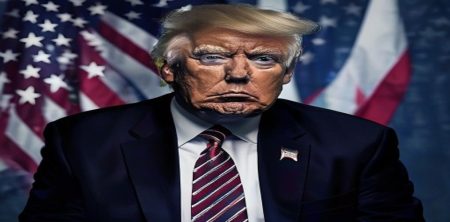
Well, here we are again. Just when you thought the dust might settle, President Donald Trump has once more shaken up the global economic order. On July 24, 2026, a new wave of Trump tariffs slammed into effect, targeting not just a few adversaries, but a staggering 60 of America's largest trading partners. We're talking about the European Union, Canada, Mexico, India, China, and Japan – essentially, the heavy hitters. These aren't minor tweaks; they're substantial tariffs, ranging from 10% to 12.5%, and they've replaced a temporary 10% global tariff that had only just expired. It's a move that has sent ripples of concern through Washington and capitals worldwide, signaling a defiant continuation of the President's protectionist economic agenda.
The timing and justification for these new Trump tariffs are particularly intriguing, to put it mildly. This action comes hot on the heels of a Supreme Court ruling that struck down his previous emergency powers tariffs, which many saw as a significant blow to his trade arsenal. Undeterred, the administration has invoked a rather obscure section of the 1974 Trade Act. Their official reasoning? They allege that these 60 nations are failing to outlaw or enforce anti-slavery laws, thereby implying the use of forced labor in their production processes. It's a claim that has immediately raised eyebrows, with critics suggesting this is less about human rights and more about a calculated maneuver to maintain a protectionist stance. Let's dig into what this really means for you, your wallet, and the future of global trade.
1. The Broad Stroke of the New Trump Tariffs: A Global Reach
When we talk about the scope of these new Trump tariffs, it's crucial to understand just how wide a net has been cast. This isn't a surgical strike against a specific industry or a single nation; it's a sweeping policy affecting virtually every major economic power that trades with the United States. Sixty nations, including long-standing allies and critical economic partners like the EU, Canada, and Mexico, are now facing these increased import duties. Think about the sheer volume of goods and services that flow between these countries and the U.S. every single day.
This extensive reach means that the impact won't be confined to niche markets. From automobiles to electronics, agricultural products to textiles, nearly every sector of the American economy that relies on imports from these 60 nations is likely to feel the pinch. Businesses that have carefully constructed global supply chains over decades are now forced to re-evaluate their strategies, grappling with higher costs and increased uncertainty. For consumers, this translates directly into higher prices on countless everyday items. The implications are far-reaching, touching everything from the price of your morning coffee to the cost of your next car.
2. The 'Zombie Law' Justification: A Controversial Legal Basis
Perhaps one of the most contentious aspects of these new Trump tariffs is the legal framework the administration has chosen to employ. They've invoked a specific section of the 1974 Trade Act, alleging a failure by these 60 nations to adequately combat forced labor. Now, on the surface, who wouldn't want to fight forced labor? It's a morally reprehensible practice. However, the immediate backlash from critics, including Senator Ron Wyden, suggests there's more to this story than meets the eye. Wyden, a prominent voice on trade policy, has derided this as the use of a "zombie law" – a term that implies an obscure, perhaps even archaic, piece of legislation being resurrected for a purpose far removed from its original intent.
The core of the criticism isn't about the moral imperative to fight forced labor itself, but rather the sincerity of the administration's stated motivation. Is this truly a principled stand against human rights abuses, or is it a convenient legal loophole being exploited to push a pre-existing protectionist agenda? Many argue the latter, pointing to the fact that forced labor concerns, while legitimate, are suddenly being applied broadly to 60 diverse economies, many of which have robust labor laws and enforcement mechanisms in place. This raises serious questions about the evidentiary basis for such widespread allegations and whether this is simply a pretext for economic tariffs.
3. The Economic Fallout for American Consumers and Businesses: A Hefty Price Tag
Let's be blunt: when tariffs go up, prices go up. This isn't some abstract economic theory; it's a direct consequence that American consumers and businesses will experience firsthand. The new Trump tariffs, ranging from 10% to 12.5%, are essentially a tax on imported goods. Who pays that tax? Ultimately, it's you, the consumer, and the businesses that rely on these imports. Think about a small business owner who imports specialized machinery from Germany or raw materials from Mexico. Their costs just jumped by at least 10%.
These increased costs don't just disappear. They're either absorbed by the business, cutting into their already thin margins, or, more commonly, passed on to the consumer in the form of higher retail prices. This means everything from your new smartphone to the parts used to repair your car, from imported clothing to specialized medical equipment, could become more expensive. For American businesses, especially manufacturers and retailers, this creates a significant competitive disadvantage, potentially leading to reduced sales, slower growth, and in some cases, even job losses as they struggle to compete with domestic alternatives that might not exist or be of comparable quality.
4. A Post-Supreme Court Defiance: Doubling Down on Protectionism
The context surrounding these new Trump tariffs is absolutely crucial. This isn't an isolated policy decision; it's a defiant continuation of a specific economic philosophy, especially in light of recent legal setbacks. Just prior to these tariffs taking effect, the Supreme Court delivered a significant blow to the administration's trade strategy by striking down previous emergency powers tariffs. That ruling was widely interpreted as a curtailment of the President's authority to unilaterally impose tariffs on broad national security grounds.
Instead of scaling back, President Trump has essentially doubled down. By invoking the 1974 Trade Act and framing the issue around forced labor, he appears to be finding new avenues to pursue his protectionist agenda, even when earlier attempts have been legally challenged. This demonstrates a deep commitment to using tariffs as a primary tool of economic policy, regardless of domestic or international opposition. It signals that we should expect a continued reliance on such measures, and perhaps even a search for further legal or statutory justifications, as long as this administration is in power. (See: understanding protectionism in economics.)
5. Impact on Key Trading Partners: From Allies to Adversaries?
Consider the list of nations targeted by these Trump tariffs: the European Union, Canada, Mexico, India, China, and Japan. These aren't just random countries; they represent a significant portion of global economic activity and include some of America's closest allies. Canada and Mexico are signatories to the USMCA, a trade agreement designed to foster closer economic ties. The EU and Japan are vital partners in security and economic cooperation.
Imposing such broad tariffs, especially under the controversial guise of forced labor, risks alienating these key allies. It can strain diplomatic relations, provoke retaliatory tariffs, and ultimately undermine the very alliances that have underpinned global stability for decades. When the U.S. levies tariffs on its friends, it sends a clear message: economic self-interest trumps collaborative partnership. This shift could lead to a fragmentation of global trade blocs, with nations seeking new alliances and supply chains that exclude the United States, ultimately isolating American businesses and potentially diminishing U.S. influence on the world stage.
6. The 1974 Trade Act and Its Unintended Consequences: A Pandora's Box?
The 1974 Trade Act, specifically the section invoked, was arguably not designed for such a sweeping application. It's a tool that, when used broadly and without clear, specific evidence against 60 diverse nations, could be seen as stretching the intent of the law to its breaking point. When a law intended for more targeted actions is applied so broadly, it raises questions about due process, international legal norms, and the very stability of the global trading system.
Furthermore, this move sets a potentially dangerous precedent. If the U.S. can unilaterally impose tariffs on such a vast scale based on an expansive interpretation of a domestic law, what stops other nations from doing the same? It could lead to a tit-for-tat escalation, where trade disputes become a battle of legal interpretations and retaliatory measures, rather than constructive negotiations. This kind of legal maneuvering could open a Pandora's Box, destabilizing established trade agreements and making international commerce far more unpredictable and contentious.
7. What This Means for Global Supply Chains: A Forced Re-evaluation
For decades, businesses have optimized their global supply chains, seeking efficiencies, cost savings, and access to specialized components or labor across borders. These new Trump tariffs throw a massive wrench into those carefully constructed systems. Suddenly, importing a component from, say, Vietnam or Germany, which was once the most cost-effective option, becomes significantly more expensive. This forces companies into a difficult position: absorb the costs, pass them to consumers, or fundamentally restructure their supply chains.
Restructuring a global supply chain is not a trivial undertaking. It involves finding new suppliers, potentially investing in new manufacturing facilities domestically or in non-tariffed countries, renegotiating contracts, and navigating new logistical challenges. This process is incredibly expensive, time-consuming, and can lead to significant disruptions in production and delivery. For many businesses, especially small and medium-sized enterprises, this could prove to be an insurmountable challenge, leading to financial distress or even closure. Ultimately, this policy pushes for a re-shoring or near-shoring of production, but at what cost to efficiency, innovation, and consumer choice?
8. The Political Calculus Behind the Tariffs: A Domestic Play?
It's hard to discuss these Trump tariffs without considering the political motivations at play. President Trump's base has historically responded positively to his "America First" rhetoric and his willingness to challenge established global trade norms. For many of his supporters, tariffs are seen as a way to protect American jobs, bring manufacturing back home, and assert U.S. economic dominance. In this light, the defiance against a Supreme Court ruling and the broad application of new tariffs can be framed as a strong stand against perceived globalist forces and for the American worker.
The use of the forced labor justification, while legally questionable in its broad application, also offers a moral high ground that can resonate with voters. It allows the administration to present its actions not just as economic policy, but as a fight for human rights, potentially deflecting criticism about the economic costs. This dual narrative — protecting American interests and upholding moral principles — can be a powerful political tool, especially in an election cycle where economic nationalism continues to hold sway with a significant portion of the electorate.
9. The Path Forward: Uncertainty and Potential Retaliation
So, what's next? The immediate future looks incredibly uncertain. The 60 nations targeted by these Trump tariffs are unlikely to simply absorb the costs without a response. We should anticipate a wave of diplomatic protests, formal challenges at international trade bodies like the World Trade Organization (though the WTO's dispute resolution mechanism has its own challenges), and, most importantly, retaliatory tariffs. When the U.S. imposes tariffs, other countries often respond in kind, targeting American exports. This creates a lose-lose scenario for businesses and consumers on all sides.
For American farmers, manufacturers, and service providers who rely on exporting their goods and services, retaliatory tariffs could be devastating. It could lead to reduced market access, diminished competitiveness, and significant financial losses. The global economy, which thrives on predictability and open trade, is now facing increased volatility. Businesses will continue to grapple with instability, and consumers will likely bear the brunt of higher prices and potentially fewer choices. It's a complex, evolving situation, and one that promises to keep economists, policymakers, and ordinary citizens on edge for the foreseeable future. The question isn't just about what these tariffs cost today, but what they will fundamentally reshape in the years to come. (See: information on modern slavery and labor.)
10. Historical Precedent and the Effectiveness of Tariffs: A Mixed Bag
It's worth looking back at history to see how tariffs have played out in the past. While proponents often point to specific instances where tariffs might have protected nascent industries or exerted political pressure, the overall historical record is far from a clear-cut success story. Take the Smoot-Hawley Tariff Act of 1930, for example. Enacted during the Great Depression, it raised U.S. tariffs on over 20,000 imported goods to record levels. The idea was to protect American farmers and businesses, but what actually happened was a wave of retaliatory tariffs from other countries, severely curtailing international trade and deepening the global economic downturn. Economists widely agree it exacerbated the Depression, making a bad situation much worse.
More recently, the Trump administration's previous tariffs on steel and aluminum, and on various goods from China, also sparked significant debate about their effectiveness. While some domestic industries saw a temporary boost, many others, particularly those reliant on imported components or export markets, faced higher costs and reduced sales. A study by the National Bureau of Economic Research found that the U.S. tariffs imposed in 2018 had little impact on the U.S. trade deficit, and instead led to higher prices for consumers and reduced real income for American households. It’s a complex equation, and the intended benefits often come with significant, sometimes unforeseen, costs.
11. The Role of International Institutions: Weakening Global Governance?
The global trading system, as we know it, was largely built after World War II to prevent the kind of economic nationalism that contributed to past conflicts. Institutions like the World Trade Organization (WTO) were established to create a rules-based system for international trade, providing a forum for negotiations and a mechanism for dispute resolution. When a major economic power like the U.S. bypasses these established norms and unilaterally imposes broad tariffs, it inevitably weakens these institutions.
The administration's approach, by invoking a domestic law rather than engaging through multilateral frameworks, signals a distrust or disregard for the international system. This can have long-term consequences. If nations believe the WTO is ineffective or that powerful countries can simply disregard its rules, it erodes confidence in global governance. This could lead to a more fragmented and less predictable trading environment, where disputes are settled through economic might rather than agreed-upon rules, potentially destabilizing international relations far beyond just trade.
12. Expert Perspectives: A Chorus of Concern
The academic and economic communities are largely unified in their skepticism regarding broad tariff policies. Organizations like the International Monetary Fund (IMF) and the Organization for Economic Co-operation and Development (OECD) consistently warn against protectionism, emphasizing that open trade generally leads to greater economic growth, innovation, and consumer choice. Many economists argue that while tariffs might offer short-term gains for specific, protected industries, these benefits are typically outweighed by the broader economic costs, including higher prices, reduced competitiveness for export-oriented sectors, and increased uncertainty.
For example, a recent analysis by economists at the Peterson Institute for International Economics highlighted that the current wave of Trump tariffs could cost the average American family hundreds, if not thousands, of dollars annually through increased prices. They also pointed out the potential for significant job losses in sectors affected by retaliatory tariffs. The consensus among mainstream economists is that these broad tariffs are generally a net negative for the imposing country's economy, leading to a misallocation of resources and a reduction in overall welfare.
Frequently Asked Questions About the New Trump Tariffs
Q1: What exactly are these new Trump tariffs?
These are import duties, ranging from 10% to 12.5%, imposed by the U.S. on a wide array of goods coming from 60 of its largest trading partners, including the EU, Canada, Mexico, China, and Japan. They went into effect on July 24, 2026.
Q2: Why is the administration imposing these tariffs now?
The administration's official justification is that these 60 nations are failing to outlaw or enforce anti-slavery laws, implying the use of forced labor in their production processes. This move follows a Supreme Court ruling that struck down previous emergency powers tariffs.
Q3: Which countries are affected by these tariffs?
A staggering 60 nations are targeted, including major economic players and close allies like the European Union, Canada, Mexico, India, China, Japan, and many others. (See: New York Times coverage of Trump's tariffs.)
Q4: How will these Trump tariffs affect American consumers?
Consumers will likely see higher prices on a wide range of imported goods, from electronics and automobiles to clothing and groceries. This is because the tariffs are essentially a tax on imports, which businesses often pass on to customers.
Q5: What impact will these tariffs have on American businesses?
Businesses that rely on imports for raw materials or components will face increased costs, potentially reducing their profits or forcing them to raise prices. Export-oriented businesses could be hit by retaliatory tariffs from other countries, reducing their market access and competitiveness.
Q6: Is there a legal challenge to these tariffs?
While the administration is using a specific section of the 1974 Trade Act, critics, including some members of Congress, question the legal basis for applying it so broadly. International trade bodies like the WTO may also see challenges, though their dispute resolution process can be lengthy.
Q7: What are 'retaliatory tariffs'?
Retaliatory tariffs are taxes imposed by other countries on American exports in response to U.S. tariffs on their goods. This creates a cycle where multiple countries raise trade barriers against each other, often harming businesses and consumers on all sides.
Q8: How might this affect global supply chains?
These tariffs force companies to re-evaluate their existing global supply chains. They might try to find new, non-tariffed suppliers, or consider moving production to the U.S. or other countries not affected by the tariffs. This process is complex, expensive, and can lead to disruptions.
Q9: What is the long-term outlook for global trade under these policies?
The long-term outlook is one of increased uncertainty and potential fragmentation. These tariffs could weaken international trade institutions, strain diplomatic relations, and lead to a less predictable and more contentious global trading environment, with a greater emphasis on economic nationalism over multilateral cooperation.
This latest move by President Trump is more than just a minor trade adjustment; it's a bold declaration of continued economic nationalism, even in the face of legal challenges and widespread opposition. Whether this strategy ultimately benefits the American people or plunges the global economy into deeper uncertainty remains to be seen, but one thing is clear: the ripple effects of these sweeping Trump tariffs will be felt far and wide.
Trending Now
Frequently Asked Questions
What are Trump's new tariffs targeting?
Trump's latest tariffs, effective July 24, 2026, target 60 of America's largest trading partners, including the European Union, Canada, Mexico, India, China, and Japan. These tariffs range from 10% to 12.5%, replacing a temporary 10% global tariff that had expired.
Why did Trump impose new tariffs now?
The new tariffs were imposed shortly after a Supreme Court ruling that struck down Trump's previous emergency powers tariffs. The administration claims these tariffs are justified by the failure of these nations to enforce anti-slavery laws, although critics see it as a continuation of a protectionist agenda.
How do the new tariffs affect global trade?
The implementation of these tariffs is expected to create significant disruptions in global trade, as they encompass a wide range of countries and industries. This sweeping policy could lead to increased costs for consumers and strained relationships with key allies.
What is the rationale behind the tariffs on these countries?
The official reasoning for the new tariffs is based on allegations that the targeted countries are not adequately enforcing anti-slavery laws, implying forced labor in their production processes. Critics argue that this justification may be more about economic protectionism than human rights.
What should consumers expect from these tariffs?
Consumers may face higher prices on a variety of goods due to the increased tariffs on imports from major trading partners. This could lead to inflationary pressures and affect purchasing power as the costs of goods rise in response to the new tariffs.
Have you experienced this yourself? We'd love to hear your story in the comments.

