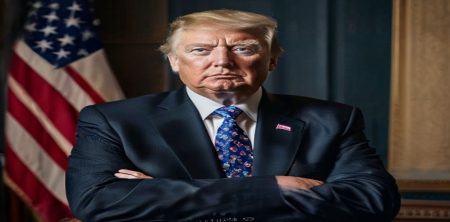
The hallowed halls of the Smithsonian's National Museum of American History, long considered a neutral arbiter of the nation's past, are now at the epicenter of a raging cultural and political firestorm. On July 24, 2026, President Donald Trump issued an executive order that has sent shockwaves through the academic, cultural, and political landscapes: a directive mandating the installation of warning signs outside the museum, declaring that some exhibits might contain "inaccurate information." This isn't just a minor administrative tweak; it's an unprecedented and audacious move that represents a dramatic escalation in the ongoing Trump Smithsonian attack, touching the very core of how America understands and presents its own story.
For decades, the Smithsonian Institution has stood as a beacon of scholarship, a repository of artifacts, and a trusted educator for millions of visitors annually. Its mission is to preserve and present the nation's heritage, fostering a shared understanding of American history in all its complexity. Yet, with a single stroke, President Trump has cast a shadow of doubt over this venerable institution, effectively challenging its academic integrity and positioning the executive branch as the ultimate arbiter of historical truth. The ramifications of such an order are profound, raising urgent questions about political interference in cultural institutions, the nature of historical interpretation, and the delicate balance between civic education and partisan agendas. This isn't merely a debate about a few dusty artifacts; it's a battle for the soul of American memory.
The Genesis of the Trump Smithsonian Attack: A Long-Simmering Resentment
To truly grasp the significance of this latest directive, we need to understand that it didn't emerge from a vacuum. The Trump Smithsonian attack, and indeed the broader conservative critique of what they perceive as "woke" cultural institutions, has been building for years. From the perspective of many on the right, institutions like the Smithsonian have drifted leftward, prioritizing narratives that emphasize perceived injustices, systemic racism, and the less flattering aspects of American history, often at the expense of what they consider to be traditional patriotic narratives celebrating American exceptionalism and progress.
This ideological chasm has manifested in numerous skirmishes over museum exhibits, curriculum choices, and even public statuary. Conservatives have long argued that these institutions, often funded by taxpayer dollars, have become platforms for progressive ideologies, presenting a version of history that is, in their view, overly critical, divisive, and ultimately, inaccurate. President Trump, ever attuned to the grievances of his base and a master of channeling populist discontent, has seized upon this sentiment. His administration has consistently signaled its intent to challenge and reshape what it deems to be liberal biases within cultural and educational spheres. This latest order against the Smithsonian is not an isolated incident; it’s a direct consequence of this long-simmering resentment, now brought to a boil.
A Direct Challenge to Academic Freedom and Institutional Autonomy
The core of the outrage stemming from the President's order lies in its direct challenge to the principles of academic freedom and institutional autonomy. Museums, like universities, operate under the premise that their curators, historians, and scholars are best equipped to interpret and present their subject matter based on rigorous research, peer review, and established methodologies. The idea that a political leader can, by executive fiat, declare certain exhibits "inaccurate" without providing specific scholarly counter-evidence, or even engaging in open debate, is seen by many as an authoritarian overreach.
Imagine the precedent this sets. If the President can dictate what constitutes "accurate information" at the National Museum of American History, what stops future administrations from imposing similar ideological litmus tests on other national museums, libraries, or even scientific institutions? Critics argue that this move fundamentally undermines the intellectual independence of the Smithsonian, transforming it from a center of scholarly inquiry into a potential propaganda tool for whichever political party holds power. It forces the institution into an impossible position: either comply with a politically motivated directive or face potential funding cuts, public condemnation from the highest office, or even the removal of leadership. This isn't just about history; it's about the very integrity of knowledge itself.
The “Inaccurate Information” Label: A Vague and Dangerous Precedent
One of the most troubling aspects of the President's order is the vague and undefined nature of the term "inaccurate information." What exactly constitutes inaccuracy in the context of historical interpretation? Is it factual error, a misrepresentation of evidence, or simply an interpretation that diverges from the administration's preferred narrative? Without clear, objective criteria, this label becomes a powerful, yet nebulous, weapon. It allows for subjective political judgment to masquerade as objective truth, effectively enabling the government to censor or delegitimize historical accounts it dislikes.
Historical understanding is rarely monolithic. It's often a dynamic process of re-evaluation, new discoveries, and shifting perspectives. What was considered canonical history a century ago might be viewed differently today, thanks to new archaeological finds, previously marginalized voices, or evolving societal values. To impose a singular, politically sanctioned version of history, and to brand anything else as "inaccurate," stifles intellectual inquiry and risks creating a sanitized, incomplete, and ultimately misleading national story. This isn't about correcting errors; it's about controlling perception, and that's a dangerous path for any democracy to tread. (See: Smithsonian Institution official site.)
Public Reaction and the Social Media Echo Chamber
Unsurprisingly, the President's order has ignited a firestorm of public reaction, amplified exponentially across social media platforms. On one side, you have fierce condemnations from historians, educators, museum professionals, and concerned citizens who see this as an attack on truth, academic freedom, and the very fabric of democratic discourse. Hashtags like #HandsOffSmithsonian and #ProtectHistory quickly began trending, filled with impassioned pleas to defend the museum's integrity and condemn what many view as an attempt at historical revisionism for political gain.
Conversely, supporters of the President's move have enthusiastically embraced it, viewing it as a necessary corrective to what they perceive as years of liberal indoctrination within cultural institutions. They argue that the Smithsonian, like many other museums, has become overly focused on "woke" narratives, downplaying American achievements and promoting a self-loathing view of the nation's past. For them, the "inaccurate information" warning is a welcome intervention, a way to ensure that visitors receive a more "balanced" or "patriotic" account of history. Social media, in this scenario, acts as both a megaphone and an echo chamber, amplifying these deeply polarized viewpoints and making any nuanced discussion incredibly difficult. The sheer emotional charge of the debate underscores how deeply intertwined history, identity, and politics have become in contemporary America.
The Broader Battle for Cultural Institutions
This Trump Smithsonian attack is not an isolated incident; it's a front in a much larger, ongoing battle for the control and direction of America's cultural institutions. From public libraries facing challenges over book selections to universities grappling with debates over curriculum and free speech, the culture wars have increasingly spilled into spaces traditionally considered non-partisan or apolitical. Conservatives argue that these institutions have been captured by progressive ideologies, systematically excluding conservative voices and perspectives. Progressives, in turn, contend that these institutions are simply evolving to reflect a more inclusive and accurate understanding of history and society.
This struggle reflects a fundamental disagreement over what constitutes a "national" culture and who gets to define it. Is it a culture rooted in a specific set of traditional values and historical interpretations, or one that is constantly evolving, incorporating new voices and perspectives? The stakes are incredibly high, as these institutions play a crucial role in shaping public understanding, fostering national identity, and educating future generations. Whoever controls the narrative in these spaces ultimately holds significant sway over the collective consciousness of the nation.
A Glimpse into the Future: What Happens Next?
The immediate future for the Smithsonian's National Museum of American History is uncertain and fraught with tension. Will the museum comply with the order, potentially compromising its academic integrity and alienating its scholarly community? Or will it resist, perhaps through legal challenges, public appeals, or even symbolic acts of defiance, risking direct confrontation with the executive branch? The institution finds itself in an unenviable position, caught between its mission to present history truthfully and the formidable power of the presidency.
Beyond the museum itself, this incident is likely to intensify the national debate over historical interpretation. We can expect more scrutiny of museum exhibits, more calls for "balance" from conservative groups, and more passionate defenses of academic freedom from scholars and liberals. The incident will undoubtedly become a focal point in the upcoming political cycles, with both sides using it to energize their bases and frame their arguments about the direction of the country. This isn't just a skirmish; it's a major engagement in the ongoing culture wars, with the very definition of American history hanging in the balance.
The Dangers of Politicizing History
When history becomes a political football, everyone loses. The inherent danger in politicizing historical narratives is that it undermines the very purpose of studying the past: to learn from it, to understand ourselves, and to build a more informed future. When governments attempt to dictate historical truth, they often do so to serve present-day political agendas, rather than to foster genuine understanding. This can lead to a selective memory, where uncomfortable truths are suppressed and convenient fictions are promoted, creating a distorted view of reality.
Authoritarian regimes throughout history have consistently sought to control historical narratives, rewriting textbooks, destroying artifacts, and silencing historians who dared to present inconvenient truths. While the President's order doesn't equate to such extreme measures, the principle is the same: the attempt by a political power to impose its preferred version of the past onto a public institution. This erosion of trust in independent historical scholarship can have long-lasting consequences, fostering cynicism, division, and an inability for a society to engage critically with its own past, leaving it vulnerable to repeating its mistakes. This builds on reasons to reconsider history.
Preserving Our Collective Memory: A Call to Action
In the face of such a direct challenge, the role of citizens, educators, and cultural institutions becomes even more vital. This is a moment for robust public discourse, for upholding the principles of academic freedom, and for reaffirming the importance of critical thinking in understanding history. It's a call to support institutions like the Smithsonian, not as static repositories of unchallenged truths, but as dynamic spaces where history is continually explored, debated, and understood through rigorous scholarship and diverse perspectives.
We, as a society, must resist the urge to simplify or sanitize our past. American history is rich, complex, often contradictory, and sometimes deeply uncomfortable. It includes triumphs and tragedies, heroes and villains, moments of profound progress and periods of profound injustice. To truly understand who we are, we must embrace all of it, not just the parts that make us feel good or serve a particular political narrative. The Trump Smithsonian attack serves as a stark reminder that the battle for historical truth is never truly over, and that vigilance is required to protect the integrity of our collective memory. (See: Associated Press news coverage.)
Historical Precedents: When Politics Met the Past
While the current Trump Smithsonian attack feels uniquely modern due to its immediate digital amplification, the tension between political power and historical interpretation is actually quite old. Throughout history, leaders have tried to shape how the past is remembered to legitimize their rule or advance their agendas. Think of the Roman emperors who commissioned histories glorifying their conquests, or the Soviet Union's systematic removal of purged officials from photographs and historical records. These aren't just isolated acts; they're patterns of behavior where those in power attempt to control the narrative. In the United States, we've seen similar, though generally less extreme, pressures. Debates over school curricula, the removal or erection of statues, and the funding of historical projects often become political battlegrounds. The "Lost Cause" narrative of the Confederacy, for instance, gained significant traction in the post-Civil War era, actively downplaying slavery as a cause of the war and promoting a romanticized view of the Old South. This was a politically motivated historical interpretation that shaped public memory for generations. What makes the current situation with the Smithsonian particularly alarming is the direct, executive-level intervention into a national museum's curatorial authority, rather than through more traditional, if still contentious, channels like public debate or legislative oversight.
The Role of Museum Boards and Curatorial Independence
Understanding the structure of institutions like the Smithsonian is key to understanding the gravity of this executive order. The Smithsonian Institution isn't just one museum; it's a complex of 21 museums, 9 research centers, and the National Zoo. Each museum typically has its own director and curatorial staff who are experts in their specific fields. These professionals operate under established ethical guidelines for research, acquisition, preservation, and exhibition. They undergo years of specialized education and training. The Board of Regents, which governs the Smithsonian, is comprised of the Vice President of the United States, the Chief Justice of the United States, three members of the Senate, three members of the House of Representatives, and nine citizen members. While there's always a political component to the Board's composition, the day-to-day curatorial decisions are typically left to the scholarly staff. The President's order bypasses this established structure, directly challenging the expertise and independence of these curators and historians. It effectively tells them that their professional judgment is secondary to a political dictate. This kind of top-down interference can have a chilling effect, making curators hesitant to tackle sensitive or controversial topics for fear of political reprisal, ultimately diminishing the quality and breadth of historical scholarship presented to the public.
Economic and International Implications
Beyond the domestic political fallout, the Trump Smithsonian attack could have significant economic and international repercussions. The Smithsonian museums are massive tourist attractions, drawing millions of visitors to Washington D.C. annually. Any perceived politicization or degradation of their academic integrity could deter tourists, both domestic and international, who value the institution's reputation for impartial scholarship. A decline in visitor numbers would, of course, impact local businesses that rely on tourism. Internationally, the Smithsonian holds a unique position as a symbol of American cultural and intellectual freedom. Other nations often look to the U.S. as a leader in museum best practices and academic independence. If the Smithsonian's autonomy is seen as compromised by political pressure, it could damage America's standing in the global cultural sphere. It might lead to questions about the credibility of American research institutions, potentially impacting collaborations, artifact loans, and international partnerships that are vital for global cultural exchange and understanding. This isn't just about a few signs; it's about the perception of American intellectual integrity on a global stage.
The Future of Funding and Patronage
Another area of concern is how this executive order might impact future funding and private patronage for the Smithsonian. While a significant portion of the Smithsonian's budget comes from federal appropriations, a substantial amount also comes from private donations, grants, and endowments. Many individual donors, foundations, and corporate sponsors choose to support the Smithsonian precisely because of its reputation as a non-partisan, academically rigorous institution. If that reputation is undermined by political interference, these patrons might reconsider their support. Donors often have specific interests in supporting particular exhibits or research initiatives, and if they feel their contributions are going to an institution whose historical narratives are dictated by political whims, they might take their money elsewhere. This could create a precarious financial situation for the Smithsonian, forcing it to make difficult choices about staffing, research, and even the upkeep of its vast collections. The long-term health of the institution depends on maintaining public trust and the confidence of its benefactors, both of which are jeopardized by direct political meddling.
The Slippery Slope of "Inaccuracy"
Let's revisit the vague term "inaccurate information" because its implications are truly a slippery slope. If an exhibit on the Civil Rights Movement emphasizes systemic racism and police brutality, could that be deemed "inaccurate" by an administration preferring a narrative of individual heroism and swift progress? If an exhibit on indigenous peoples details historical treaties broken by the U.S. government, could that be labeled "inaccurate" for not sufficiently highlighting the "benefits" of westward expansion? The danger isn't just in correcting outright factual errors – which museums already have mechanisms for – but in the potential for political disagreement to be reclassified as historical inaccuracy. This opens the door to demanding that history conform to a preferred patriotic or ideological framework, rather than a factual one. It can lead to self-censorship within institutions, where curators avoid potentially contentious topics or soften their interpretations to avoid attracting political ire. This isn't about fostering better historical understanding; it's about imposing a singular, politically palatable version of the past, which ultimately robs the public of a complete and nuanced understanding of their own history.
FAQ: Understanding the Trump Smithsonian Attack
Q1: What exactly is the Trump Smithsonian attack?
A1: The "Trump Smithsonian attack" refers to an executive order issued by President Donald Trump on July 24, 2026. This order mandates that the Smithsonian's National Museum of American History install warning signs outside certain exhibits, claiming they might contain "inaccurate information." It's seen as a direct challenge to the museum's academic independence and curatorial authority.
Q2: Why did President Trump issue this executive order?
A2: The order stems from a long-standing conservative critique that institutions like the Smithsonian have become too "woke" or left-leaning. Supporters of the order believe the museum's narratives overly emphasize negative aspects of American history, like systemic racism, at the expense of celebrating American achievements. President Trump's order aligns with his administration's broader efforts to challenge perceived liberal biases in cultural and educational institutions. (See: New York Times reporting on cultural politics.)
Q3: What are the main concerns raised by this order?
A3: Critics primarily worry about several key issues:
- Academic Freedom: It challenges the ability of historians and curators to interpret history based on scholarly research without political interference.
- Institutional Autonomy: It undermines the independence of the Smithsonian as a trusted educational and research institution.
- Vague Definitions: The term "inaccurate information" is undefined, allowing for subjective political judgments to override objective historical scholarship.
- Censorship: It could lead to the suppression of historical narratives that don't align with the administration's preferred viewpoint.
- Precedent: It sets a dangerous precedent for future political leaders to dictate historical truth in public institutions.
See also debate on history book revisions.
Q4: How has the public reacted to this executive order?
A4: Public reaction has been highly polarized. Historians, educators, and many citizens have condemned the order as an attack on truth and academic freedom, using hashtags like #HandsOffSmithsonian. Conversely, supporters of the President view it as a necessary step to correct perceived liberal biases and promote a more "patriotic" version of American history. Social media has amplified both sides of this debate.
Q5: What is the Smithsonian Institution's typical process for ensuring historical accuracy?
A5: The Smithsonian, like other reputable museums, relies on rigorous academic standards. Its curators and historians conduct extensive research, consult primary sources, engage in peer review, and adhere to established methodologies. They are experts in their fields, and curatorial decisions are typically based on scholarly consensus and evidence, not political directives.
Q6: Does this order only affect the National Museum of American History?
A6: While the executive order specifically targets the National Museum of American History, critics fear it could set a precedent for similar political interventions in other Smithsonian museums, national libraries, scientific institutions, and cultural organizations across the country.
Q7: What are the potential long-term consequences of politicizing history in this way?
A7: Politicizing history can have severe long-term consequences, including:
- Eroding public trust in educational and cultural institutions.
- Creating a distorted or incomplete understanding of the past.
- Stifling critical thinking and intellectual inquiry.
- Making a society vulnerable to repeating past mistakes by suppressing uncomfortable truths.
- Damaging a nation's international reputation for intellectual freedom and academic integrity.
Q8: What options does the Smithsonian have in response to this order?
A8: The Smithsonian faces a difficult choice. It could comply with the order, potentially compromising its academic integrity. Alternatively, it could resist through legal challenges, public appeals, or symbolic acts of defiance, which might lead to direct confrontation with the executive branch, including potential funding cuts or leadership changes.
Trending Now
Frequently Asked Questions
What is Trump's executive order regarding the Smithsonian?
On July 24, 2026, President Trump issued an executive order mandating the installation of warning signs outside the Smithsonian's National Museum of American History, indicating that some exhibits might contain 'inaccurate information.' This order has sparked significant controversy over historical interpretation and the role of political influence in cultural institutions.
Why is there anger over Trump's Smithsonian order?
The anger stems from concerns that Trump's directive undermines the Smithsonian's academic integrity and challenges the institution's role as a neutral arbiter of history. Critics argue that this move represents political interference in cultural institutions and threatens the objective presentation of American history.
How has the Smithsonian responded to Trump's order?
While the article does not detail the Smithsonian's specific response, it highlights that the executive order has created a cultural and political firestorm, raising urgent questions about the institution's independence and the implications for how history is taught and understood in America.
What does the order mean for American history education?
Trump's order raises serious concerns about how American history is presented in educational settings. By labeling some exhibits as potentially containing 'inaccurate information,' it suggests a shift toward partisan agendas, potentially altering the public's understanding and engagement with historical narratives.
What are the implications of political interference in cultural institutions?
The implications are profound, as political interference can distort historical narratives and diminish public trust in educational institutions. This situation highlights the ongoing battle over the interpretation of history and the importance of maintaining scholarly independence in cultural institutions.
What did we miss? Let us know in the comments and join the conversation.

