```html
In recent years, the educational landscape has evolved significantly, with more and more institutions questioning traditional grading methods. One such method that has gained traction is competency-based education (CBE). This innovative approach focuses on students demonstrating mastery of specific skills and knowledge rather than simply accumulating credit hours or grades. But what exactly does this mean, and how does it differ from the traditional grading system? In this article, we’ll explore the intricacies of competency-based education, its advantages, challenges, and its relevance in today's educational environment.
Understanding Competency-Based Education
At its core, competency-based education is an approach that prioritizes what students can do over how long they spend in class. It’s a system built around the principle that students should advance based on their ability to demonstrate competence in a given subject rather than having to meet time-based requirements. CBE programs often utilize flexible learning paths that allow students to progress at their own pace, providing a more personalized educational experience.
In a CBE framework, competencies are clearly defined, measurable, and aligned with real-world applications. This means that instead of merely learning facts or theories, students acquire practical skills that can be applied in their careers or further education. The focus is on outcomes, ensuring that students can effectively utilize their knowledge in relevant contexts.
The Shift from Traditional Grading Systems
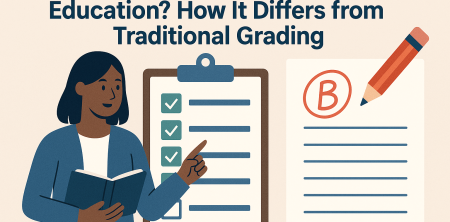
Traditional grading systems often rely heavily on letter grades and numerical scores to assess student performance. These grades can reflect a variety of factors, from attendance to participation, and are generally uniform across all students in a given course. While this system has been in place for decades, it has faced increasing scrutiny for its limitations.
One critical drawback of traditional grading is that it can foster a “one-size-fits-all” mentality. Students might be promoted to the next grade level without having truly mastered the material. This leads to gaps in knowledge, which can be detrimental, especially in subjects that build upon previous learning, such as math and science. In contrast, CBE provides a more nuanced approach, allowing students to take the time they need to master a concept before moving on.
Key Principles of Competency-Based Education
There are several fundamental principles that define competency-based education:
- Mastery Learning: Students must demonstrate a thorough understanding of a topic before advancing. This ensures that no knowledge gaps persist as they progress through their education.
- Flexible Pacing: Students can learn at their own pace, allowing them to spend more time on challenging topics and move quickly through areas where they are more proficient.
- Clear Competencies: Learning objectives are clearly defined, focusing on specific skills and knowledge that students need to master.
- Real-World Relevance: Competencies are often aligned with industry standards and requirements, ensuring students are prepared for the workforce.
- Assessment for Learning: Continuous assessment is used to gauge understanding, allowing for timely feedback and adjustments in learning strategies.
Advantages of Competency-Based Education
Competency-based education brings several advantages that make it appealing to both educators and students:
1. Personalized Learning
One of the most significant advantages of CBE is its emphasis on personalized learning. Each student has unique strengths and weaknesses, and CBE allows for tailored educational experiences that meet individual needs. This personalization can lead to higher levels of engagement and motivation, as students take ownership of their learning.
2. Increased Accountability
In a competency-based system, students are held accountable for their learning outcomes. They must prove mastery of competencies before advancing, which encourages a deeper understanding of the material. This accountability can be empowering, fostering a sense of responsibility for their education.
3. Preparation for the Workforce
CBE aligns learning with the skills and competencies needed in the workforce. By focusing on real-world applications, students graduate with practical skills that employers are looking for. This relevance can improve job readiness and increase employability.
4. Reduced Learning Gaps
Since students in a CBE program can spend as long as they need to master a subject, the chances of learning gaps decrease significantly. This is particularly beneficial in subjects that build on one another, such as mathematics or science, where understanding foundational concepts is crucial for success in more advanced topics. (See: Competency-Based Education Overview.)
Challenges and Criticisms of Competency-Based Education
While the benefits of competency-based education are significant, it is not without its challenges:
1. Implementation Costs
Transitioning from a traditional grading system to a competency-based model requires considerable investment. This includes curriculum development, training for educators, and technology infrastructure to support personalized learning paths. For some institutions, particularly those with limited resources, this can be a daunting task.
2. Assessment Challenges
Assessing competencies can be complex. Traditional assessments like multiple-choice tests may not effectively measure a student’s ability to apply knowledge in real-world scenarios. Developing valid and reliable assessments that reflect competencies can be a significant challenge for educators.
3. Resistance to Change
Changing deeply ingrained educational practices can meet resistance from both educators and students accustomed to traditional systems. Some may view CBE as too radical or may be hesitant to embrace new methods of learning and assessment.
Real-World Applications of Competency-Based Education
Competency-based education isn't just theoretical—many institutions have successfully implemented CBE programs:
1. Western Governors University (WGU)
WGU is a pioneer in the CBE movement, offering fully online programs where students progress through their courses by demonstrating knowledge and skills instead of fulfilling time-based requirements. This model has attracted a diverse student body, including working adults who appreciate the flexibility.
2. University of Wisconsin-Milwaukee
This university has developed a CBE initiative that allows students to earn micro-credentials in specific skill areas. This approach has proven beneficial for adult learners looking to enhance their skill sets without committing to full degree programs.
3. Competency-Based Learning at Community Colleges
Many community colleges have begun to implement CBE programs to better serve their students. By focusing on specific competencies, these institutions are able to better match training with local workforce needs, improving job prospects for graduates.
The Future of Competency-Based Education
As the demand for skilled workers continues to rise, competency-based education is likely to grow in relevance. Employers are increasingly looking for candidates who can demonstrate specific competencies rather than simply having a degree. In response, educational institutions must adapt their approaches to align with these needs.
Moreover, advances in technology and online learning platforms are making it easier to implement CBE programs. These tools can facilitate personalized learning paths, efficient assessments, and greater collaboration between educators and students.
Expanding the Concept of Competency
When discussing competency-based education, it’s essential to understand that "competency" encompasses more than just technical skills. It also includes soft skills, critical thinking, and problem-solving abilities. These competencies are becoming increasingly vital in today’s job market.
For instance, in a recent survey by the World Economic Forum, 94% of business leaders reported that they expect employees to pick up new skills on the job. This trend underscores the importance of a CBE model that includes both hard and soft skills. Programs that incorporate emotional intelligence, communication, and teamwork alongside technical knowledge prepare students not only for specific roles but for lifelong learning.
Statistics on Competency-Based Education
The impact of competency-based education can be quantified through various statistics: (See: Harvard Business School on CBE.)
- A report from the U.S. Department of Education indicated that students in CBE programs have higher completion rates compared to traditional programs, with some institutions reporting completion rates up to 80%.
- According to a study by the Bill & Melinda Gates Foundation, 88% of students in CBE programs felt that they had gained skills that were relevant to their current or future job roles.
- Research conducted by RAND Corporation highlighted that CBE programs often lead to faster degree completion, with students finishing their degrees in an average of 20% less time than their peers in traditional programs.
Expert Perspectives on Competency-Based Education
Educational experts and thought leaders are increasingly vocal about the benefits of competency-based education:
Dr. Linda Darling-Hammond, an education researcher, emphasizes that CBE can help bridge the gap between education and employment. She states, "Competency-based education equips students with the skills they need to succeed in the workforce, making them more appealing to employers." This perspective highlights the essential link between education and economic opportunity.
Meanwhile, Dr. Robert P. Moses, founder of the Algebra Project, advocates for CBE in K-12 education, arguing that "mastery learning can dramatically improve student outcomes, especially in underserved communities." His insights shed light on the potential of CBE to promote equity in education.
Frequently Asked Questions about Competency-Based Education
What are the main differences between CBE and traditional education?
The primary differences lie in the assessment process, pacing, and focus. CBE assesses students based on demonstrated mastery of skills rather than time spent in class. In contrast, traditional education often rewards attendance and participation over actual understanding.
How does CBE affect student motivation?
Many students find CBE more motivating since they can progress at their own pace and focus on mastering skills that interest them. This autonomy can lead to increased engagement and satisfaction with their educational experience.
Is competency-based education suitable for all students?
While CBE has been beneficial for many, it's essential to consider individual learning styles. Some students thrive in a self-paced environment, while others may need more structure and guidance. Institutions should be prepared to offer a mix of educational models to meet diverse needs.
What role does technology play in CBE?
Technology is crucial in facilitating competency-based education. Learning management systems help track student progress, provide resources, and offer assessments tailored to individual needs. Additionally, online platforms can create flexible learning opportunities that traditional classrooms may not provide.
What are some successful CBE programs outside of traditional colleges?
Many organizations and boot camps, such as General Assembly and Codecademy, employ CBE principles by offering skills-based training without traditional degree frameworks. These programs often focus directly on industry-relevant skills, providing an alternative pathway to employment.
The Role of Employers in Competency-Based Education
Employers play a pivotal role in shaping the landscape of competency-based education. As they increasingly seek candidates who possess specific competencies rather than merely degrees, they contribute to the development of CBE programs that align closely with labor market needs. Collaborations between educational institutions and employers can lead to the creation of curriculum frameworks that focus on relevant skills and competencies that are directly applicable in the workplace.
For instance, many tech companies partner with educational institutions to create coding boot camps that focus on specific programming languages and technologies. These partnerships ensure that the learning outcomes meet industry standards and prepare students for immediate employment.
How Competency-Based Education Supports Lifelong Learning
In today’s rapidly changing job market, the concept of lifelong learning is becoming increasingly important. Competency-based education supports this by allowing individuals to continually develop and refine their skills throughout their careers. With a CBE approach, learners can engage in ongoing professional development that is tailored to their needs and career aspirations. (See: Learning and Education Resources from NIH.)
For example, many professionals opt for micro-credential programs that offer specific competencies relevant to their fields. These programs enable working adults to enhance their skill sets without committing to lengthy degree programs, thus fostering a culture of lifelong learning that keeps pace with technological advancements and market demands.
Impacts of CBE on Adult Education
Competency-based education is particularly beneficial for adult learners, many of whom balance work and family responsibilities alongside their studies. CBE models allow these learners to engage in education that fits their schedules and learning styles. For instance, adult students can revisit foundational concepts and complete modules as they demonstrate competence, making education more accessible and manageable.
This flexibility is crucial in adult education, where learners often bring a wealth of experience and knowledge to their studies. CBE recognizes the value of prior learning and embraces a model that allows adults to leverage their experiences for academic credit or advanced placement.
Potential Future Developments in CBE
The future of competency-based education is promising, with several potential developments on the horizon. One significant trend is the integration of artificial intelligence (AI) and machine learning into CBE programs. These technologies can provide personalized learning experiences by analyzing student performance data and adapting content delivery accordingly. This means students could receive tailored recommendations for study materials, practice assessments, and additional resources based on their individual learning paths.
Additionally, as more educational institutions embrace CBE, there may be a push for standardized competency frameworks across various fields. This could help streamline the process of recognizing competencies gained through different educational experiences, making it easier for employers to understand the skill sets of potential hires.
Integrating CBE into K-12 Education
Competency-based education isn't just for higher education; it’s increasingly being integrated into K-12 systems as well. Schools adopting CBE principles can provide students with a more personalized learning journey, enabling them to progress through grades based on mastery rather than age or seat time. This shift not only addresses the diverse needs of students but also encourages them to take ownership of their learning from a young age.
For example, schools utilizing CBE may implement project-based learning, where students work on real-world problems and demonstrate their understanding through practical application. This hands-on approach not only solidifies knowledge but also develops critical skills such as collaboration and communication.
Conclusion: Embracing Competency-Based Education
In conclusion, competency-based education represents a promising shift in how we approach learning and assessment. By focusing on mastery of skills and knowledge, this model not only prepares students for the workforce but also fosters a more personalized and accountable learning environment. While challenges remain in terms of implementation and assessment, the potential benefits for students, educators, and employers make it a compelling alternative to traditional grading systems. As we move forward, embracing this innovative approach could lead to a more effective and relevant educational experience for all.
```
Trending Now
Frequently Asked Questions
What is competency-based education?
Competency-based education (CBE) is an innovative approach that emphasizes students demonstrating mastery of specific skills and knowledge. Unlike traditional systems that focus on credit hours or grades, CBE allows students to progress at their own pace based on their ability to show competence in a subject.
How does competency-based education differ from traditional grading?
CBE differs from traditional grading by focusing on mastery of skills rather than time spent in class. In CBE, students advance when they demonstrate competence, while traditional systems often assign uniform grades based on attendance and participation, which may not accurately reflect a student's understanding.
What are the benefits of competency-based education?
The benefits of competency-based education include personalized learning experiences, flexible pacing, and a focus on real-world applications of knowledge. This approach ensures that students acquire practical skills that are directly applicable in their careers or further education.
What challenges does competency-based education face?
Competency-based education faces challenges such as the need for clearly defined competencies, potential resistance from traditional educational institutions, and the requirement for robust assessment methods to accurately measure student mastery and progress.
Is competency-based education relevant today?
Yes, competency-based education is highly relevant today as educational institutions seek more effective ways to prepare students for the workforce. Its focus on skill mastery and real-world applications aligns well with the needs of modern employers and the evolving job market.
Have you experienced this yourself? We'd love to hear your story in the comments.

