Introduction
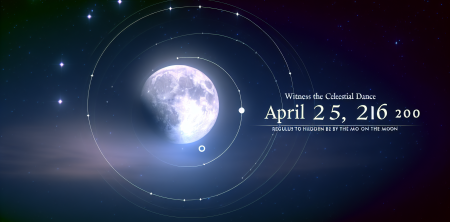
On April 25, 2026, stargazers in the southeastern United States and parts of the Atlantic will have a rare opportunity to witness a spectacular celestial event: the occultation of Regulus, the brightest star in the constellation Leo, by a waxing gibbous moon. This extraordinary occurrence will see Regulus, a 1st-magnitude star, temporarily disappear from view for up to an hour, presenting a unique spectacle for astronomy enthusiasts and casual observers alike.
Understanding Occultations
Before diving into the specifics of this event, it’s essential to understand what an occultation is. In astronomy, an occultation occurs when one celestial body moves in front of another, blocking it from view. This phenomenon can happen with planets, stars, and even distant galaxies. Occultations provide valuable opportunities for astronomers to study the properties of the objects involved.
In this case, the waxing gibbous moon will pass between Earth and Regulus, obscuring the star's light as it travels across the sky. The event is particularly fascinating because it occurs during evening twilight, adding an element of drama to the experience.
Regulus: The Heart of Leo
Regulus, also known as Alpha Leonis, is a prominent star located approximately 77 light-years from Earth. It is the brightest star in the constellation Leo, often associated with the heart of the lion in various cultures and mythologies. Regulus is classified as a blue-white main-sequence star and has a magnitude of 1.35, making it one of the brightest stars visible from Earth.
This star holds a special place in the sky, not only for its brightness but also for its position. As a part of Leo, Regulus plays a significant role in the zodiac, offering rich symbolism in astrology. However, its scientific importance extends beyond its cultural significance; astronomers study Regulus to understand stellar evolution and the dynamics of star systems.
The Moon’s Role in the Occultation
The moon is a constant presence in our night sky, and its phases significantly influence various astronomical events. On April 25, 2026, the moon will be in its waxing gibbous phase, approximately 70% illuminated. This phase is crucial for the occultation because the moon's brightness will enhance the visibility of the event. Observers will have the chance to see Regulus vanish behind the moon as it rises higher in the sky.
During the occultation, the moon will not only block Regulus but will also create a stunning visual contrast. As the moon moves in front of the star, the surrounding sky will darken, allowing observers to appreciate the brilliance of the moon and the star's sudden disappearance.
Viewing the Occultation: Key Details
To ensure that you don't miss this celestial event, it’s essential to be aware of the specific timings for different locations. The occultation will unfold during evening twilight, so clear skies and a good vantage point are crucial for optimal viewing.
- Miami, FL: Disappearance at 8:33 p.m. ET; Reappearance at 9:59 p.m. ET
- Philadelphia, PA: Disappearance at 8:52 p.m. ET; Reappearance at 9:15 p.m. ET
- Niagara Falls, NY: Disappearance at 8:42 p.m. ET; Reappearance at 9:02 p.m. ET
These times are critical for observers to mark on their calendars. In Miami, the event will unfold relatively early, while in Philadelphia and Niagara Falls, twilight will still provide a stunning backdrop. Observers should arrive at their chosen viewing location a bit earlier to set up and enjoy the build-up to the event.
Optimal Viewing Conditions
While the occultation is an exciting event, several factors can impact the viewing experience:
- Weather Conditions: Clear skies are essential for optimal visibility. Check local weather forecasts in advance to ensure a cloud-free night.
- Location: Choose a location free from light pollution, such as parks or rural areas, to maximize your viewing experience.
- Telescope or Binoculars: While the event can be observed with the naked eye, using a telescope or binoculars can enhance the experience and provide a closer look at Regulus.
Planning ahead will significantly increase the chances of witnessing this astronomical event without obstructions.
Significance of the Occultation
Occultations are not just visually stunning; they also offer valuable scientific insights. When a star is occulted by the moon, astronomers can gather data on the moon’s atmosphere and surface. For instance, by analyzing how the light from Regulus diminishes and then reappears, scientists can study the moon's thin atmosphere and detect any irregularities. This type of data collection helps improve our understanding of the moon and its characteristics.
Furthermore, such events allow astronomers to test models of stellar brightness and refine their methods of measuring distances in space. Each occultation provides a unique opportunity to advance our knowledge of celestial mechanics.
Historical Context of Occultations
Occultations have been observed and recorded for centuries, playing a crucial role in the development of astronomy. Ancient civilizations often used these events to track time and navigate the seas. For instance, the Babylonians meticulously recorded celestial events, including occultations, as part of their astronomical studies.
In modern times, occultations continue to be significant in both professional and amateur astronomy. They serve as benchmarks for astronomical observations and provide insights into the nature of celestial bodies. The upcoming occultation of Regulus is an excellent opportunity for both seasoned astronomers and newcomers to engage with the cosmos.
Capturing the Moment: Photography Tips
For those interested in capturing the occultation through photography, planning is essential. Here are some tips to help you photograph this celestial event:
- Equipment: A DSLR or mirrorless camera with a good zoom lens will be beneficial. Ensure you have a sturdy tripod to avoid camera shake.
- Settings: Use a low ISO setting to reduce noise, and experiment with different shutter speeds to capture the varying light levels. A faster shutter speed will help freeze the action as the moon moves in front of Regulus.
- Timing: Be prepared to take multiple shots as the occultation occurs. The moments right before and after Regulus disappears and reappears will be particularly photogenic.
Documenting the event can create lasting memories and contribute to your astronomical portfolio.
Engaging with the Astronomy Community
Events like the occultation of Regulus present fantastic opportunities to connect with fellow astronomy enthusiasts. Many local astronomy clubs and observatories will likely host events around this date, offering viewers a chance to share the experience and learn more about the cosmos.
Online forums and social media platforms also provide spaces for enthusiasts to discuss their observations, share photographs, and exchange tips. Engaging with the community can enrich your understanding of the event and foster a sense of camaraderie among stargazers.
Conclusion
The occultation of Regulus by the moon on April 25, 2026, promises to be a captivating event for stargazers across the southeastern United States and the Atlantic region. As the moon obscures this brilliant star, observers will witness a rare celestial dance that highlights the beauty and complexity of our universe.
As you prepare for this unique opportunity, remember to check local weather forecasts, choose an optimal viewing location, and consider sharing the experience with friends or fellow astronomers. Whether you’re an experienced observer or a newcomer to stargazing, this event is sure to leave a lasting impression.

