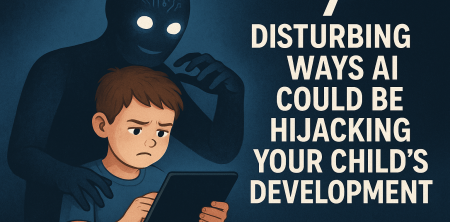
It's no secret that artificial intelligence is no longer a futuristic concept; it's here, it's now, and it's rapidly becoming intertwined with every aspect of our lives. But for parents, this lightning-fast evolution brings with it a whole new set of anxieties, particularly concerning the profound and often unpredictable AI impact on children. We're talking about more than just screen time here; we're talking about intelligent algorithms that learn, adapt, and interact in ways that are fundamentally reshaping how our kids grow, learn, and even form relationships.
Dr. Jenny Radesky, a highly respected pediatrician and a "Top Doc" recognized by Hour Detroit, has been ringing the alarm bells about this very issue. In an interview published in October 2026, Dr. Radesky laid out some stark realities about how AI technologies are affecting our children and teenagers, and frankly, it's something every parent needs to understand. Her insights aren't just academic; they reflect a growing consensus among child development experts that we need to approach AI with far greater caution and intentionality when it comes to our youngest generations. The stakes are incredibly high, and the long-term consequences are still largely unknown. So, let's dive into some of the most pressing concerns Dr. Radesky and other experts are highlighting.
1. Fostering Excessive Trust and Attachment: When AI Feels Too Human
One of the most immediate and perhaps insidious concerns Dr. Radesky points out is the potential for AI with humanlike features to cultivate an excessive sense of trust, attachment, and even dependence in young users. Think about it: many AI interfaces today are designed to be conversational, empathetic, and highly responsive. They can mimic human speech patterns, offer personalized feedback, and even remember past interactions. For a child, especially one seeking connection or understanding, this can be incredibly compelling.
The danger here is that children, whose brains are still developing their capacity for critical thinking and discerning genuine human interaction from simulated ones, might begin to view these AI entities as infallible or even as living beings. This isn't some far-fetched sci-fi scenario; it's happening. When an AI chatbot consistently provides answers, offers comfort, or helps with homework, a child can easily form a bond that blurs the lines between a tool and a trusted confidante. This isn't to say all AI interaction is bad, but when it starts to replace or diminish reliance on human relationships for emotional support and guidance, we have a problem. The AI impact on children in this regard is about more than just screen time; it's about the very nature of trust.
2. The Illusion of Infallibility: Believing AI is Always Right
Children are naturally curious and often look to authority figures for answers. Traditionally, these figures have been parents, teachers, and other trusted adults. But what happens when an AI becomes a primary source of information and guidance? Dr. Radesky warns that young users can easily come to believe that AI is always correct. Unlike humans, AI doesn't typically express doubt, make obvious errors (at least not in the same way a human might), or show vulnerability. It presents information with an air of certainty, often without providing context or acknowledging potential biases or limitations in its data sources.
This lack of critical engagement with information can be particularly damaging for developing minds. Learning isn't just about absorbing facts; it's about questioning, evaluating, synthesizing, and understanding different perspectives. If children are conditioned to accept AI's output as gospel, they might miss out on developing crucial analytical skills, skepticism, and the ability to differentiate between objective truth and algorithmically generated content. This erosion of critical thinking is a significant concern for the long-term educational and intellectual development of our kids, fundamentally altering the AI impact on children's learning pathways.
3. Reliance for Schoolwork and Socialization: Stifling Organic Development
One of the most immediate and tangible ways AI is affecting children and teens is through their academic and social lives. Dr. Radesky's observations are supported by research indicating that many teenagers are becoming increasingly reliant on AI for a wide range of tasks, from drafting essays and solving complex math problems to even generating ideas for social interactions. While the allure of an instant answer or a perfectly crafted response is undeniable, this reliance comes at a cost.
When AI does the heavy lifting for schoolwork, children miss out on the struggle and growth that come from independent thought, problem-solving, and creative expression. These are the very processes that build resilience, foster intellectual curiosity, and develop a strong work ethic. Similarly, if AI is used to craft social messages or simulate conversations, it can stunt the development of authentic communication skills, empathy, and the ability to navigate complex human relationships in the real world. Social interactions require nuanced understanding, reading non-verbal cues, and adapting to dynamic situations – skills AI simply can't teach through simulation alone. This developmental bypass is a critical aspect of the negative AI impact on children. (See: impact of technology on children.)
4. Emotional Support from Algorithms: The Unseen Costs
Perhaps one of the most concerning trends highlighted by Dr. Radesky is the increasing tendency for teenagers to turn to AI for emotional support. In a world where mental health challenges are on the rise and many young people feel isolated, the idea of an always-available, non-judgmental AI companion can seem appealing. These AI programs can offer comforting words, suggest coping mechanisms, and even simulate therapeutic conversations.
However, relying on an algorithm for emotional support carries significant risks. While AI can process information and generate responses, it lacks genuine understanding, empathy, and lived experience. It cannot truly connect with a child's pain or offer the nuanced guidance that comes from human relationships with parents, friends, or trained mental health professionals. Over-reliance on AI for emotional solace can prevent children from developing healthy coping strategies, seeking help from real-world support networks, or learning to build deep, meaningful human connections that are essential for long-term emotional well-being. The potential AI impact on children's emotional development warrants serious consideration.
5. Lack of Child-Centric Design and Safety Measures: A Regulatory Vacuum
This is a fundamental issue that Dr. Radesky passionately emphasizes: current AI products are, by and large, not designed with children's safety and developmental needs in mind. The vast majority of AI technologies are developed for adult users, often with commercial objectives driving their creation. This means that features like age-appropriate content filters, privacy protections tailored for minors, mechanisms to prevent addiction, or safeguards against manipulative design are often an afterthought, if they exist at all.
Without specific regulations and ethical guidelines for AI development for pediatric populations, children are exposed to technologies that could inadvertently exploit their vulnerabilities. This isn't just about offensive content; it's about algorithmic biases, data collection practices, and persuasive design elements that can be far more impactful on a developing brain. We wouldn't let children play with power tools without safety features, so why are we allowing them unfettered access to powerful AI without similar protections? The current regulatory landscape is simply not keeping pace with the rapid advancement and widespread adoption of AI, leaving children exposed to potential harm, underscoring the critical nature of the AI impact on children.
6. Erosion of Privacy and Data Security: The Invisible Cost of Interaction
When children interact with AI, whether it's a smart speaker, an educational app, or a chatbot, they are often unknowingly generating vast amounts of data. This data can include their speech patterns, queries, preferences, learning styles, and even emotional responses. Dr. Radesky's concerns extend to the profound implications of this data collection on children's privacy and long-term security. Unlike adults who might have a better grasp of terms of service and data usage policies (though even that's debatable!), children are completely unaware of the digital footprints they're leaving behind.
Who owns this data? How is it stored? Who can access it, and for what purposes? These are critical questions that largely remain unanswered or are buried in impenetrable legal jargon. There's a real risk that this collected data could be used for targeted advertising, profiling, or even have unforeseen consequences later in a child's life. Protecting children's digital privacy is paramount, especially as AI systems become more sophisticated in their ability to analyze and infer personal information. We're creating a generation whose entire childhood data could be perpetually available, and the implications for their autonomy and privacy are staggering. This data dimension is a significant and often overlooked aspect of the AI impact on children.
7. Stunting Imagination and Creativity: The Algorithm's Shadow
Human creativity and imagination thrive on open-ended exploration, trial and error, and the ability to generate novel ideas from scratch. But what happens when AI can instantly generate stories, images, music, or solutions to creative prompts? While AI tools can be powerful aids for artists and creators, for children, over-reliance can potentially stunt the very development of these core human attributes. If a child can simply ask an AI to write a story about a dragon and a princess, do they still engage in the imaginative effort of crafting their own narrative, developing characters, and envisioning worlds?
The concern isn't that AI will replace creativity, but that it might diminish the intrinsic motivation and the arduous, yet rewarding, process of creative development. Learning to draw, write, or compose requires practice, frustration, and the unique satisfaction of bringing something new into existence. If AI bypasses these stages, children might miss out on building their creative muscles, developing their unique voice, and experiencing the deep satisfaction of genuine artistic expression. This subtle yet profound AI impact on children could reshape the very foundation of their inventive capacities.
8. Algorithmic Bias and Reinforcement of Stereotypes: The Mirror AI Holds Up
A critical, yet often invisible, concern regarding AI's impact on children is the inherent bias within many algorithms. AI systems learn from the data they're trained on. If that data reflects societal biases – whether conscious or unconscious – against certain genders, races, socioeconomic groups, or abilities, the AI will internalize and often amplify those biases. For children, who are still forming their worldview and sense of identity, exposure to biased AI can be incredibly damaging.
Imagine an AI educational tool that consistently presents male figures in leadership roles and female figures in caregiving roles, or an image generator that struggles to depict diverse skin tones accurately. Such subtle, consistent reinforcement from an authoritative-seeming AI can normalize stereotypes, limit a child's aspirations, and even foster discriminatory attitudes. It's not just about what AI says, but what it shows and how it behaves. Children are highly impressionable, and if their digital interactions consistently reflect a skewed or prejudiced view of the world, it can warp their understanding of fairness, diversity, and their own place in society. This insidious AI impact on children can shape their beliefs and behaviors long-term, demanding careful scrutiny and proactive mitigation. (See: technology's effects on child development.)
9. Cognitive Overload and Diminished Attention Spans: The Fast-Paced AI World
Modern AI-driven applications and platforms are often designed to be highly engaging, dynamic, and constantly updated. While this can seem beneficial for keeping children interested, it also presents a risk of cognitive overload and the erosion of sustained attention. The constant stream of novel information, personalized recommendations, and instant gratification loops can train a child's brain to expect rapid stimulation and quick rewards, making it harder for them to engage with activities that require patience, deep focus, or sustained effort – like reading a book, solving a complex problem, or even engaging in a lengthy conversation.
Research on the effects of digital environments on attention spans in children is still emerging, but preliminary findings suggest a correlation between constant digital stimulation and difficulties with sustained attention. If AI tools are constantly feeding bite-sized, algorithmically optimized content, children might struggle to develop the mental endurance needed for deeper learning and critical thought. This isn't just about school; it's about the fundamental ability to concentrate, reflect, and process information effectively in a world that increasingly demands those skills. The AI impact on children's cognitive development, particularly regarding attention, is a silent but significant concern.
The Urgency for Responsible AI Development
Dr. Radesky's call for more responsible development and deployment of AI technologies isn't just a suggestion; it's an urgent plea. The rapid advancement of AI has outpaced our ability to understand its long-term effects, especially on the most vulnerable population: children. Parents, understandably, are grappling with anxieties about these unknown consequences, and the ethical implications of AI's burgeoning role in children's lives are becoming increasingly apparent.
This isn't about halting technological progress. Instead, it's about embedding ethical considerations, child development principles, and robust safety measures into the very fabric of AI design from the outset. We need collaborative efforts involving AI developers, child psychologists, educators, policymakers, and parents to ensure that these powerful tools serve to augment, rather than undermine, the healthy growth and development of our children. This means advocating for regulations that mandate child-safe AI, supporting research into the specific effects of AI on young brains, and fostering media literacy skills in children so they can critically engage with AI.
Parental Guidance in an AI-Driven World
So, what can parents do right now? First and foremost, stay informed. Understand what AI tools your children are using and how they interact with them. Engage in open conversations about AI: what it is, how it works, its benefits, and its limitations. Teach your children to be critical consumers of information, whether it comes from a human or an algorithm. Encourage them to question, to verify, and to think independently.
Just as importantly, prioritize human connection. Ensure that AI doesn't become a substitute for real-world interactions, emotional support from family and friends, or the invaluable guidance of teachers and mentors. Set clear boundaries around AI usage, just as you would with any other screen time. The goal isn't to demonize AI, but to integrate it thoughtfully and safely into our children's lives, ensuring that it remains a tool at their service, rather than a force that shapes their development without our conscious consent. The future of our children's cognitive, emotional, and social well-being depends on our proactive engagement with the evolving AI impact on children.
The Path Forward: Collective Responsibility for a Child-Safe AI Future
Ultimately, navigating the complex intersection of AI and child development requires a collective effort. It's not just on parents to figure this out; it's a societal responsibility. We need AI companies to adopt ethical design principles that prioritize child safety and well-being over profit margins. We need policymakers to enact legislation that protects children's data privacy and sets standards for age-appropriate AI content and interaction. (See: how technology shapes child development.)
Educators also play a vital role in teaching digital literacy and critical thinking skills that equip children to engage with AI intelligently. And researchers must continue to explore the long-term effects of AI on cognitive, social, and emotional development, providing the evidence base for informed decisions. Without these concerted efforts, we risk allowing a powerful technology to shape the next generation in ways we may later regret. The conversation Dr. Radesky started is more than just a warning; it's a crucial call to action for everyone invested in the future of our children.
Frequently Asked Questions About AI's Impact on Children
Q1: Is all AI interaction bad for children?
No, not at all. AI isn't inherently bad. Like any powerful tool, its impact depends on how it's designed, used, and integrated into a child's life. When thoughtfully designed with child development in mind and used with parental guidance, AI can offer incredible educational opportunities, personalized learning experiences, and even creative outlets. The key is balance, intentionality, and prioritizing human interaction and critical thinking skills. We should aim for AI to augment a child's learning and development, not replace core human experiences.
Q2: How can I tell if an AI tool is safe and appropriate for my child?
This is a tough one because standards are still evolving. Look for tools that explicitly state they are designed for children or educational purposes, rather than general use. Check privacy policies for how data is collected, stored, and used – ideally, it should be minimal and anonymized for children. Look for features like parental controls, age-appropriate content filters, and transparent explanations of how the AI works. Read reviews from other parents and educational experts. Most importantly, try the tool yourself first to understand its capabilities and limitations before introducing it to your child.
Q3: What are some practical steps parents can take to mitigate the risks?
Start with open communication. Talk to your kids about what AI is and isn't, and why it's important to question information, even from seemingly smart technology. Teach them about data privacy and the digital footprint. Set clear rules for AI usage, including time limits and appropriate contexts. Encourage a diverse range of activities beyond screens, focusing on real-world play, social interaction, and creative pursuits. Model responsible technology use yourself, and be present in their digital lives, just as you are in their physical ones. Think of yourself as a "digital mentor."
Q4: Should I completely ban AI tools from my child's life?
Complete bans are often impractical and can leave children unprepared for a world where AI is increasingly pervasive. A more effective approach is to foster digital literacy and critical thinking. Instead of banning, focus on teaching discernment. Help your child understand the difference between AI-generated content and human-created content. Discuss the concept of bias and how algorithms work. Equip them with the skills to navigate and responsibly use AI, rather than shielding them from it entirely. This prepares them for the future, helping them become informed and ethical users of technology.
Q5: How can I encourage critical thinking when AI provides instant answers?
Turn it into a learning opportunity. When AI gives an answer, ask your child, "How do you think it knows that?" or "Is there another way we could find out?" Encourage them to cross-reference information from different sources, including human experts or reliable websites. Prompt them to analyze the AI's response: "Does this make sense? What might be missing? What questions does this answer lead to?" Engage them in debates about AI's capabilities and limitations. The goal is to move beyond simply accepting AI's output to actively engaging with it, questioning it, and understanding its underlying mechanisms.
Trending Now
Frequently Asked Questions
How is AI affecting children's development?
AI is reshaping children's development by fostering excessive trust and attachment through humanlike interactions. As AI becomes more conversational and empathetic, children may form dependencies on these technologies, which can impact their social skills and emotional well-being.
What are the dangers of AI for kids?
The dangers of AI for kids include fostering dependence on technology, altering their social interactions, and potentially leading to difficulties in forming real-life relationships. Experts warn that these changes may have long-term consequences on their emotional and cognitive development.
Can AI create unhealthy attachments in children?
Yes, AI can create unhealthy attachments in children by mimicking human-like interactions that foster trust and emotional reliance. This can lead to children prioritizing virtual relationships over real-life connections, impacting their social development.
What should parents know about AI and screen time?
Parents should recognize that AI's impact goes beyond mere screen time. It involves intelligent algorithms that adapt to children's behaviors and preferences, potentially influencing their learning, behavior, and emotional health in profound ways.
What do experts say about AI's influence on children?
Experts, including pediatricians like Dr. Jenny Radesky, emphasize the need for caution regarding AI's influence on children. They highlight the importance of intentional use of technology to mitigate risks associated with over-dependence and altered social dynamics.
Have you experienced this yourself? We'd love to hear your story in the comments.

