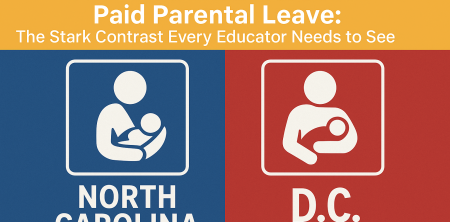
It's fascinating, isn't it, how two regions can move in such dramatically opposite directions on an issue as fundamental as parental leave? As an educator who's seen firsthand the struggles families face, I can tell you that paid parental leave isn't just a perk; it's a lifeline. It affects everything from teacher retention to a child's early development. So, when we look at the recent changes in North Carolina and Washington D.C., we're not just talking about policy tweaks; we're discussing seismic shifts that will impact countless lives, especially for educators. Understanding the nuances of North Carolina vs D.C. paid parental leave policies is absolutely essential for anyone in the teaching profession, or really, any working parent.
North Carolina, through its 'Public Workforce Modernization Act,' is making a significant stride forward, particularly for its public school employees. Starting October 1, 2026, teachers across the state will be eligible for a full 12 weeks of paid parental leave. This isn't just a minor adjustment; it's a complete overhaul of a system that often left non-birthing parents and adoptive parents feeling overlooked. On the flip side, D.C. has decided to tighten its belt, reducing its paid family leave benefits from 12 weeks down to a mere 6, and cutting weekly benefits by $90, effective on the very same day. This isn't just a difference; it's a chasm. Let's dig into what these contrasting developments truly mean for the educators caught in the middle.
1. North Carolina's Leap Forward: 12 Weeks for All Teachers
Effective October 1, 2026, North Carolina public school employees are stepping into a new era of family support. The 'Public Workforce Modernization Act' is a pretty big deal because it grants all eligible public school employees, including teachers, a generous 12 weeks of paid parental leave. Now, if you've been working in education for a while, you know how varied and often inequitable parental leave policies can be, especially at the state level. This move by North Carolina isn't just about adding more weeks; it's about leveling the playing field.
Previously, many policies were heavily skewed towards the birthing parent, often leaving fathers, adoptive parents, or non-birthing partners with far fewer options, if any, for paid time off. This new legislation eliminates that distinction, ensuring that all parents, regardless of their role in the birthing process or whether they're adopting, receive the same substantial benefit. It's a progressive step that acknowledges the diverse forms families take today and the universal need for bonding time with a new child. This comprehensive approach is a clear signal from North Carolina that they value their educators' family lives.
2. D.C.'s Retreat: A Drastic Cut to 6 Weeks
In stark contrast to North Carolina's expansion, Washington D.C. is pulling back on its paid family leave benefits, and quite significantly. Also effective October 1, 2026, the maximum duration of paid family leave in D.C. will be slashed from 12 weeks down to just 6 weeks. And if that wasn't enough, weekly benefits are set to decrease by $90. For a city that prides itself on being progressive, this move feels like a step backward, especially when considering the financial pressures many families in D.C. already face.
Think about it: cutting the leave duration in half means parents have far less time to bond with a newborn, recover from childbirth, or adjust to an adoption. The $90 reduction in weekly benefits might seem small to some, but for many working families, particularly educators who often don't earn top-tier salaries, that's a significant chunk of change. It forces tougher choices and adds financial strain during an already demanding period. This policy shift in D.C. is going to have real, tangible impacts on families, potentially pushing some into difficult financial situations or forcing them back to work before they're truly ready.
3. The Rationale Behind North Carolina's Expansion for Paid Parental Leave
So, why is North Carolina making such a bold move? The primary driver behind the 'Public Workforce Modernization Act' and its generous paid parental leave component is quite clear: teacher retention. As someone who has spent years in education, I can tell you that keeping good teachers in the classroom is one of the biggest challenges schools face. High turnover rates disrupt learning, strain resources, and ultimately hurt students. Offering 12 weeks of paid leave is a powerful incentive.
It tells educators, 'We value you, we value your family, and we want you to stay.' In a competitive job market, especially for skilled professionals like teachers, benefits packages play a crucial role. This policy positions North Carolina as a more attractive employer for teachers considering starting or expanding their families. It's a strategic investment in its workforce, recognizing that supporting teachers' well-being outside of the classroom directly translates to better educational outcomes inside it. It's a smart play, really, in the ongoing struggle for talent.
4. Understanding D.C.'s Cuts and Their Implications for North Carolina vs D.C. Paid Parental Leave Policies
On the other side of the coin, D.C.'s decision to cut benefits is a bit more perplexing, especially given the city's reputation for progressive social policies. While the exact reasoning often involves complex budgetary considerations and economic forecasts, the impact on families is undeniable. Reducing paid leave from 12 weeks to 6 weeks forces parents to make incredibly difficult choices. Do they use up all their personal leave? Do they return to work prematurely? Do they rely on unpaid leave, risking financial instability? (See: CDC on parental leave benefits.)
For educators in D.C., these cuts could be particularly disheartening. Teaching is an emotionally and physically demanding job. The promise of adequate paid time off to welcome a new family member provides much-needed relief and security. Stripping that away could lead to increased stress, burnout, and potentially, a higher rate of teacher attrition. When comparing North Carolina vs D.C. paid parental leave policies, D.C.'s approach might save some money in the short term, but it could very well cost them in terms of human capital and employee morale in the long run. It's a gamble, and one that feels particularly risky when it comes to the dedicated professionals shaping our children's futures. For more context, see Navigating Parental Rights in Education.
5. Impact on Teacher Retention and Recruitment in North Carolina
Let's talk more about North Carolina's forward-thinking approach. The expansion of paid parental leave to 12 weeks for all public school employees isn't just a nice gesture; it's a strategic tool for teacher retention and recruitment. When you're trying to attract top talent to a state's public education system, you need to offer competitive benefits. And let's be honest, 12 weeks of fully paid leave for both birthing and non-birthing parents is incredibly competitive.
Imagine a scenario: a talented young educator is weighing job offers from multiple states. One offers minimal, unpaid leave options, while North Carolina offers a full three months of paid time off to start a family. Which one do you think they're going to choose? This policy creates a powerful draw, particularly for younger teachers or those planning to start families. It signals a supportive work environment, reducing the financial stress and career interruptions often associated with having children. This isn't just about attracting new teachers; it's about keeping experienced ones who might otherwise consider leaving the profession due to family demands. It's a genuine investment in the future of their education system.
6. The Ripple Effect on Family Welfare and Equity in D.C.
Now, let's consider the D.C. situation and its ripple effects. When paid parental leave is cut in half, it disproportionately impacts certain groups. Lower-income families, who often have fewer savings to fall back on, are hit the hardest by reduced benefits and shorter leave durations. This can exacerbate existing inequities, forcing parents back to work sooner, potentially compromising infant bonding and maternal recovery.
For D.C. educators, this means more stress. It means less time with a newborn, which research consistently shows is crucial for early child development. It could also force difficult decisions about childcare, as finding reliable and affordable options for a 6-week-old infant is incredibly challenging. These cuts don't just affect the parents; they affect the entire family unit and, ultimately, the well-being of the next generation. It makes the discussion around North Carolina vs D.C. paid parental leave policies particularly poignant, as one state is expanding access while the other is restricting it, leading to vastly different outcomes for families.
7. The Broader National Debate on Paid Parental Leave
These contrasting developments in North Carolina and D.C. aren't isolated incidents; they're symptomatic of a much larger, ongoing national debate about paid parental leave. The United States remains one of the few developed nations without a federal mandate for paid parental leave, leaving it up to individual states and employers to decide. This patchwork approach creates significant disparities across the country, as we're seeing so clearly here.
On one side, advocates argue that paid leave is essential for public health, gender equality, and economic stability. They point to evidence showing improved infant health outcomes, higher rates of maternal employment, and reduced poverty. On the other side, concerns about the financial burden on businesses and taxpayers often dominate the conversation. The North Carolina vs D.C. paid parental leave policies highlight this ideological divide perfectly: one state embracing the benefits, the other grappling with the costs, both real and perceived. This debate isn't going away anytime soon, and these two regions offer a live case study of its consequences.
8. Implications for Education Policy and Future Trends
What do these divergent paths mean for education policy moving forward? North Carolina's move could set a precedent for other states looking to bolster their public education workforce. If North Carolina sees a measurable improvement in teacher retention and morale due to this policy, it could inspire other states to follow suit. It's a powerful argument for investing in human capital within the education sector.
Conversely, D.C.'s cuts might serve as a cautionary tale. If these reductions lead to increased teacher turnover or a decline in overall job satisfaction, it could demonstrate the hidden costs of scaling back family benefits. The outcomes of these two policies will be closely watched by policymakers, educators, and unions nationwide. They'll offer valuable insights into the tangible effects of different approaches to parental leave on the education workforce. The North Carolina vs D.C. paid parental leave policies are, in essence, a grand experiment playing out in real-time. (See: New York Times on family leave policies.)
9. The Human Element: Real Families, Real Choices
Beyond the statistics and policy debates, it's crucial to remember the human element. For an educator in North Carolina, the new policy means peace of mind. It means three full months to bond with their child without the crushing worry of lost income. It means a smoother transition back to the classroom, knowing their family was supported during a critical time. This support can make all the difference in their ability to return to teaching refreshed and focused, rather than exhausted and stressed.
For an educator in D.C., however, the scenario is much different. Six weeks might feel like a blink of an eye, especially after a C-section or if the baby has health issues. The $90 weekly reduction might mean skipping important purchases or cutting back on other necessities. These aren't abstract policy discussions; these are real choices that impact real families, their financial stability, and their emotional well-being. The stark contrast in North Carolina vs D.C. paid parental leave policies will undoubtedly lead to very different experiences for families welcoming a new child. For more context, see Nikole Hannah-Jones's School Choice Stance.
10. Looking Ahead: What Educators Should Consider
So, if you're an educator, or considering becoming one, these developments should certainly be on your radar. If you're in North Carolina, or thinking of moving there, understand that the state is making a significant commitment to supporting its public school employees' family lives. This is a huge benefit that could influence your career trajectory and family planning.
If you're in D.C., or considering the move, you'll need to factor in the reduced parental leave benefits. This might mean adjusting your financial planning, exploring additional personal leave options, or understanding that your time with a new child might be more constrained than in other areas. The bottom line is that these policies aren't just bureaucratic details; they're fundamental aspects of your compensation and quality of life. As an educator, you deserve to know how these critical North Carolina vs D.C. paid parental leave policies will shape your professional and personal future.
11. The Economic Arguments: Investment vs. Constraint
Let's dive a little deeper into the economic philosophies underpinning these decisions. North Carolina's approach aligns with the view that paid parental leave is an investment. They're betting that the long-term benefits of a stable, motivated teaching workforce, including reduced turnover costs, improved morale, and better educational outcomes for students, outweigh the upfront expense. Think about it: the cost of recruiting and training a new teacher can be substantial, often ranging from $10,000 to $20,000 per teacher. If paid leave helps retain even a fraction of those who might otherwise leave, the policy effectively pays for itself over time. It's an economic argument that prioritizes human capital and acknowledges the societal value of early child development. This isn't just about being "nice"; it's about smart economics that understand the interconnectedness of a thriving workforce and healthy families.
D.C.'s decision, on the other hand, seems to lean towards a more constrained fiscal outlook. While specific justifications often highlight budget pressures or the need to balance various social programs, the reduction implies a belief that the costs associated with extended, higher-benefit leave are unsustainable or could be better allocated elsewhere. This perspective often focuses on direct budget line items, sometimes overlooking the indirect costs of reduced benefits, like increased reliance on public assistance, potential declines in workforce participation for parents, or the long-term health implications for mothers and infants. The contrast in North Carolina vs D.C. paid parental leave policies really showcases these differing economic philosophies and how they play out in real-world policy.
12. Impact on Gender Equality in the Workforce
Paid parental leave policies also have significant implications for gender equality in the workplace, especially in professions like education, which are predominantly female. When leave policies are generous and equitable, as North Carolina's new policy aims to be, they help close the gender pay gap by enabling women to return to work without significant career interruptions. Historically, a lack of paid leave has often forced mothers, more often than fathers, to take extended unpaid leave or leave the workforce entirely, which then impacts their earning potential and career progression.
North Carolina's decision to offer 12 weeks to all parents, irrespective of their birthing role, actively encourages fathers to take leave, which can help normalize parental leave for everyone and reduce the stigma often associated with mothers taking time off. This can lead to a more equitable distribution of childcare responsibilities and greater participation of women in the workforce. In D.C., however, the reduction to 6 weeks might disproportionately affect mothers, who typically require more physical recovery time after childbirth, potentially exacerbating existing gender disparities. When you compare North Carolina vs D.C. paid parental leave policies through this lens, you see how policy choices can either advance or hinder gender equity goals. (See: NIH on the impact of parental leave.)
13. The Role of Advocacy and Public Opinion
It's important to recognize that these policy changes don't happen in a vacuum; they're often the result of ongoing advocacy and shifts in public opinion. In North Carolina, the 'Public Workforce Modernization Act' likely reflects a growing understanding among legislators and the public of the benefits of supporting public sector employees, including teachers. Advocacy groups, unions, and even individual educators probably played a crucial role in pushing for these expanded benefits, highlighting the link between teacher well-being and student success. When public sentiment leans towards valuing and supporting educators, policies like expanded paid leave become more politically viable.
In D.C., the cuts might indicate a different political climate or a shift in priorities. While D.C. has historically been a leader in progressive policies, even progressive jurisdictions face budgetary constraints and competing demands. It's possible that the advocacy for maintaining the higher benefits wasn't strong enough to counter the arguments for fiscal tightening, or perhaps there were other pressing issues that took precedence. These dynamics remind us that policies are not static; they evolve based on political will, economic conditions, and the persistent efforts of those advocating for change. The differing outcomes in North Carolina vs D.C. paid parental leave policies serve as a powerful testament to the influence of advocacy and public discourse.
14. Expert Perspectives: What Researchers Say
When we talk about paid parental leave, it's not just about opinions; there's a robust body of research behind its benefits. Economists and child development experts consistently point to several advantages. For instance, studies by organizations like the National Bureau of Economic Research have shown that paid leave significantly reduces infant mortality rates, improves maternal mental health, and increases breastfeeding rates. From an economic standpoint, research by the Council of Economic Advisers has suggested that paid family leave can boost women's labor force participation and strengthen the economy. These aren't minor benefits; they're foundational to a healthy society.
For educators specifically, the research is clear: better benefits lead to better outcomes. A report by the Learning Policy Institute, for example, highlights how comprehensive benefits packages, including paid leave, are critical for retaining experienced teachers and attracting new talent. When teachers feel supported, they're more likely to stay in the profession, reducing the disruptive effects of high turnover on students and school communities. The North Carolina vs D.C. paid parental leave policies are essentially playing out two different research hypotheses: one embracing the evidence for broad benefits, the other potentially underestimating the long-term costs of scaling back.
15. Regional Comparisons and the "Race to the Top" for Talent
These policy divergences also highlight a broader trend in regional competition for skilled workers, particularly in education. States and cities are increasingly realizing that attractive benefits packages are crucial in the "race to the top" for talent. North Carolina's move could spark a competitive response from neighboring states or even other major urban centers that want to attract and retain high-quality educators. If teachers start migrating to areas with better family support, other regions might feel pressure to improve their own policies to avoid a brain drain.
Conversely, D.C.'s decision, while perhaps fiscally motivated, risks putting them at a disadvantage in this competition. When comparing North Carolina vs D.C. paid parental leave policies, a teacher looking to start a family might easily choose North Carolina over D.C. solely based on this critical benefit. This dynamic can create a positive feedback loop for states investing in their workforce, as more talent attracts more talent. It also serves as a warning for those who might be cutting corners, as the long-term impact on their talent pool could be significant.
Frequently Asked Questions about North Carolina vs D.C. Paid Parental Leave Policies
- Q1: When do North Carolina's new paid parental leave benefits for teachers take effect?
- A1: North Carolina's expanded paid parental leave, offering 12 weeks for all eligible public school employees, including teachers, will take effect on October 1, 2026.
- Q2: Who is eligible for North Carolina's paid parental leave under the 'Public Workforce Modernization Act'?
- A2: All eligible public school employees in North Carolina, including teachers, regardless of whether they are the birthing parent, non-birthing parent, or adoptive parent, will be eligible for the 12 weeks of paid leave.
- Q3: What are the key changes to D.C.'s paid family leave benefits?
- A3: Effective October 1, 2026, Washington D.C. will reduce its maximum paid family leave duration from 12 weeks to 6 weeks. Additionally, weekly benefits will decrease by $90.
- Q4: Why is North Carolina expanding its paid parental leave?
- A4: The primary reason for North Carolina's expansion is to improve teacher retention and recruitment. The state views generous paid leave as a strategic investment to attract and keep skilled educators in its public school system.
- Q5: What are the potential impacts of D.C.'s cuts on educators?
- A5: D.C.'s cuts could lead to increased stress, burnout, and potentially higher teacher attrition rates. Educators will have less time to bond with newborns or recover from childbirth, and the reduced weekly benefits could cause financial strain.
- Q6: How do these changes impact gender equality in the education workforce?
- A6: North Carolina's equitable 12-week leave for all parents can help advance gender equality by encouraging fathers to take leave and reducing career interruptions for mothers. D.C.'s reduction, however, might disproportionately affect mothers and potentially exacerbate existing gender disparities.
- Q7: What is the broader national context of these policies?
- A7: The contrasting policies in North Carolina and D.C. highlight the ongoing national debate in the U.S. about paid parental leave, as there is no federal mandate. States and individual employers currently set their own policies, leading to significant disparities across the country.
- Q8: Should educators consider these policies when deciding where to work?
- A8: Absolutely. Paid parental leave policies are a fundamental aspect of compensation and quality of life. Educators planning to start or expand a family should definitely factor these benefits into their career decisions, as they can significantly impact financial stability and family well-being.
- Q9: Are there any long-term economic arguments for paid parental leave?
- A9: Yes, research suggests that paid parental leave is an economic investment. It can reduce teacher turnover costs, improve employee morale, increase women's labor force participation, and lead to better public health and child development outcomes, ultimately strengthening the economy.
- Q10: What are the primary concerns driving D.C.'s decision to cut benefits?
- A10: While specific reasoning often involves complex budgetary considerations and economic forecasts, D.C.'s decision likely stems from fiscal constraints and a need to balance various social programs. The cuts suggest a prioritization of immediate budget savings over the broader, long-term benefits of extended parental leave.
Trending Now
- our breakdown of chilling: parents could lose their kids over gender transition — a critical look at your rights
- the complete explanation
- this guide on 7-year-old’s el capitan climb sparks furious parenting debate: was it bravery or reckless endangerment?
- our breakdown of terrifying: this viral baby climbing video reveals 7 overlooked safety dangers
Frequently Asked Questions
What are the parental leave policies in North Carolina?
Starting October 1, 2026, North Carolina's 'Public Workforce Modernization Act' will allow public school employees, including teachers, to access 12 weeks of paid parental leave. This significant change aims to provide equitable support for all parents, including non-birthing and adoptive parents, addressing previous gaps in parental leave coverage.
How does D.C.'s paid parental leave compare to North Carolina's?
D.C. is reducing its paid family leave from 12 weeks to just 6 weeks, alongside cutting weekly benefits by $90, effective October 1, 2026. This stark contrast highlights a significant regression in support for working families compared to North Carolina's progressive approach.
Why is paid parental leave important for educators?
Paid parental leave is crucial for educators as it not only supports their family needs but also enhances teacher retention and child development. It provides a lifeline during critical early parenting stages, allowing educators to balance their professional responsibilities with family commitments.
What impact does paid parental leave have on teacher retention?
Paid parental leave can significantly improve teacher retention by providing essential support during family transitions. When educators feel valued and supported through generous leave policies, they are more likely to remain in their positions, ultimately benefiting their students and the school community.
What changes are being made to parental leave in North Carolina and D.C.?
North Carolina is enhancing its parental leave policy to offer 12 weeks of paid leave for public school employees, effective October 1, 2026. Conversely, D.C. is reducing its benefits from 12 weeks to 6 weeks, marking a significant cut that affects working families in the region.
Agree or disagree? Drop a comment and tell us what you think.


0 Responses