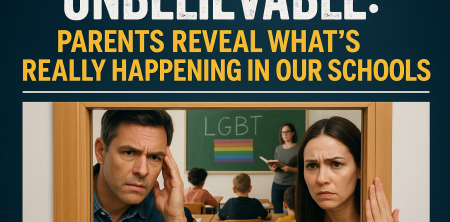
You might think of school as a place for ABCs and 123s, a relatively neutral ground where kids learn the fundamentals. But if you’ve been paying any attention at all lately, you know that’s just not the reality anymore. Across the country, our public schools have become the latest, most intense front in an escalating social conflict — what many are calling the school culture war. It’s a battle playing out in school board meetings, state legislatures, and increasingly, in our homes, as parents grapple with what their children are being taught, or exposed to, in the classroom.
Take Santa Fe, for instance. Just recently, a local school board meeting became a microcosm of this national struggle. Roughly a dozen parents, grandparents, and other community members stood up, one after another, to voice their concerns. Their focus? A set of school policies that touched on student gender and sexual education. For these individuals, it wasn't just about curriculum; it was about values, about parental rights, and about the very definition of what a public school should be. This isn't an isolated incident; it's a scene playing out in communities from coast to coast, highlighting a profound divergence in how we view the purpose and scope of education in modern America.
The Shifting Sands of Curriculum: When Education Meets Ideology
For decades, the standard curriculum in most public schools focused squarely on core academics: math, reading, science, and history. While social studies always had a component of civics and understanding society, the depth and breadth of discussions around personal identity, gender, and sexuality were largely left to families. That's changing, and it's a major flashpoint in the current school culture war.
Today, many schools are integrating comprehensive sexual education and gender identity topics into their frameworks, sometimes starting at surprisingly young ages. This isn't just about biology anymore; it often includes discussions about different sexual orientations, gender identities, and the concept of gender fluidity. Proponents argue this is essential for fostering inclusive environments, reflecting the diversity of society, and providing necessary support for LGBTQ+ students. They believe that understanding and affirming diverse identities can reduce bullying and improve mental health outcomes for vulnerable students. They might point to statistics showing higher rates of depression or suicide ideation among LGBTQ+ youth, arguing that school-based support is a vital preventative measure.
However, a significant number of parents and community members view these shifts with deep skepticism, if not outright alarm. They argue that topics of gender identity and sexual orientation are deeply personal and moral, belonging primarily within the family unit. For many, these discussions stray too far from the traditional academic mission of schools and venture into areas that challenge deeply held religious or ethical beliefs. When a school introduces concepts like gender fluidity without parental consent or even knowledge, it can feel like an overreach, a usurpation of parental authority, and an attempt to indoctrinate children with specific ideological viewpoints. The concern isn't always about outright opposition to LGBTQ+ individuals, but rather about who holds the primary authority in guiding a child's understanding of these complex issues.
Parental Rights: The Core of the School Culture War Debate
If there's one phrase that encapsulates a significant part of the current school culture war, it's 'parental rights.' This isn't a new concept, but its application in the context of gender and sexual education policies has taken on renewed urgency. Parents are increasingly asserting their right to be the primary educators and moral guides for their children, particularly on sensitive topics that touch upon personal identity and values.
What does this look like in practice? It often means parents demanding transparency from school districts about curriculum materials, library book selections, and any policies that might affect their child's understanding of gender or sexuality. For example, some parents object to policies that allow students to change their names or pronouns at school without parental notification, viewing it as a school-sanctioned secrecy that undermines the parent-child relationship. They argue that such policies create a wedge between children and their families, potentially encouraging children to keep significant aspects of their lives hidden from those who care for them most. This isn't just about what's taught; it's about who gets to decide what information is shared, and under what circumstances.
On the other side, advocates for LGBTQ+ students and inclusive policies often counter that sometimes, a student's home environment isn't safe or affirming. They argue that requiring parental notification for a student's gender transition or pronoun use could put that student at risk of abuse, rejection, or even homelessness. For these advocates, schools have a moral and sometimes legal obligation to protect vulnerable students, even if it means acting without parental consent in certain situations. This tension between parental authority and student safety/well-being is at the heart of many policy debates, creating a truly difficult ethical tightrope for school administrators to walk. (See: U.S. Department of Education.)
Legislative Blitz: States Weigh In on Classroom Content
This isn't just a grassroots movement bubbling up from local school boards; state legislatures are getting heavily involved, turning abstract debates into concrete laws. We're seeing a significant surge in legislative efforts across dozens of states aimed at restricting classroom discussions or displays related to gender identity and sexuality. These laws often come under the umbrella of 'parental rights' or 'curriculum transparency,' but their impact is far-reaching.
For instance, Florida's Parental Rights in Education Act, famously dubbed the 'Don't Say Gay' law by critics, prohibits classroom instruction on sexual orientation or gender identity in kindergarten through third grade, and restricts it further for older grades unless it's 'age-appropriate or developmentally appropriate.' Similar legislation has been introduced or passed in states like Alabama, Arkansas, Iowa, and Texas, among others. These laws often mandate that schools notify parents about health services, mental health counseling, or changes in a student's 'gender identity' or 'gender expression.' Some even empower parents to sue school districts for alleged violations.
The intent, from the perspective of their proponents, is to ensure that parents retain control over sensitive topics and that schools focus on core academic subjects. They argue that these laws create clarity and prevent activist teachers from introducing controversial topics without parental knowledge or consent. However, opponents argue these laws create a chilling effect on teachers, making them afraid to discuss anything that might be perceived as controversial, thereby stifling open dialogue and creating unwelcoming environments for LGBTQ+ students and their families. They also contend that these laws can effectively erase LGBTQ+ identities from the curriculum and school environment, sending a message of non-acceptance to a vulnerable population.
The Impact on LGBTQ+ Students and Teachers
When schools become battlegrounds in a school culture war, the most immediate and often most vulnerable group affected are the students themselves, particularly those from marginalized communities. For LGBTQ+ students, the current climate can feel incredibly hostile and isolating.
Imagine being a teenager struggling with your identity, perhaps questioning your gender or sexual orientation, and then seeing public debates, legislative actions, and even protests at your school specifically targeting discussions about people like you. This creates an environment of fear and invalidation. Many LGBTQ+ students rely on school as one of the few places they can feel safe, accepted, and affirmed. When policies are enacted that restrict discussions about their identities, or when teachers are made to feel uncomfortable acknowledging their existence, it can have devastating psychological effects. Studies have consistently shown that supportive school environments are crucial for the mental health and well-being of LGBTQ+ youth, reducing rates of depression, anxiety, and suicide attempts.
Teachers are caught in the crossfire as well. Many educators feel a professional and moral obligation to create inclusive classrooms where all students feel seen and valued. Yet, with new laws and heightened scrutiny, they face the daunting task of navigating complex policies that can be vague, contradictory, and politically charged. A teacher who simply displays a rainbow flag or mentions a same-sex couple in a history lesson might suddenly find themselves facing parental complaints, administrative reprimands, or even legal challenges. This leads to self-censorship, a reluctance to engage with potentially sensitive topics, and a general atmosphere of anxiety, all of which ultimately diminish the educational experience for everyone. It's a lose-lose situation that nobody seems to be truly winning.
The Role of School Boards: Caught in the Middle
School boards, once relatively obscure bodies primarily focused on budgets, facilities, and academic performance, have found themselves thrust into the white-hot center of the school culture war. They are the frontline responders, the first point of contact for an increasingly engaged and often polarized public.
Members of school boards, who are often unpaid volunteers, are now facing unprecedented pressure from all sides. On one hand, they have parents and community groups demanding adherence to traditional values, parental rights, and a focus on core academics. These groups often come armed with petitions, organized protests, and a significant presence at board meetings, making their voices heard loudly and clearly. They expect board members to represent their values and to protect their children from what they perceive as inappropriate content or ideology. On the other hand, school boards are also hearing from teachers, LGBTQ+ advocates, civil liberties groups, and other parents who demand inclusive policies, support for diverse student populations, and protection for academic freedom. These groups emphasize the importance of creating safe and affirming spaces for all students, arguing that schools have a responsibility to prepare students for a diverse world. (See: New York Times Education Section.)
Navigating this complex landscape is incredibly challenging. Board members must balance legal mandates, community expectations, pedagogical best practices, and the emotional well-being of students and staff. The Santa Fe school board meeting, where a dozen community members expressed concerns over gender and sexual education policies, is a perfect illustration of this dynamic. These meetings, once routine, have become highly charged, emotionally draining events where fundamental disagreements about society itself are laid bare. The decisions made by these local boards have profound implications, setting precedents for how these sensitive issues are handled in individual districts, and often reflecting broader national trends.
The Online Echo Chamber: Fueling the Fire
You can't talk about the current school culture war without acknowledging the immense role of online platforms and social media. The internet has become an accelerator, an amplifier, and often a distorting lens through which these debates are waged. It's where information (and misinformation) spreads rapidly, where outrage is easily manufactured, and where local issues can quickly become nationalized.
Facebook groups, Twitter threads, TikTok videos, and various forums serve as powerful organizing tools for both sides. Parents concerned about school policies can quickly connect with like-minded individuals, share examples of curriculum materials they find objectionable, and mobilize for school board meetings. Activist groups on both the left and the right use these platforms to disseminate their messages, highlight perceived injustices, and rally support for their causes. The algorithms of these platforms often exacerbate the situation, feeding users more of what they already agree with, creating echo chambers where dissenting opinions are rarely encountered. This can lead to an 'us vs. them' mentality, making compromise and nuanced discussion incredibly difficult.
Moreover, the internet allows for the rapid nationalization of local disputes. A controversy over a library book in one small town can quickly become a national headline, drawing in commentators and activists from far beyond the local community. This intensifies the pressure on local school officials and board members, who suddenly find themselves under scrutiny from a much wider audience. While online engagement can be a powerful tool for civic participation, in the context of the school culture war, it often contributes to a more polarized, less constructive debate, where emotional appeals frequently outweigh reasoned arguments.
Beyond Gender: Other Fronts in the Culture War
While gender identity and sexual education are undoubtedly central to the current school culture war, it's important to recognize that these aren't the only fronts. The broader conflict encompasses a range of issues that reflect deep societal divisions, all playing out within the educational sphere.
Critical Race Theory (CRT), for example, became a major point of contention in recent years. Although CRT is an academic framework typically taught at the university level, its principles — particularly those related to systemic racism and historical inequalities — were perceived by some as being taught in K-12 schools, often under different names or as part of diversity, equity, and inclusion (DEI) initiatives. Opponents argued that such teaching was divisive, promoted guilt based on race, and was un-American. Proponents countered that it was essential for understanding the nation's history accurately and for preparing students to address ongoing social injustices. This debate led to legislative bans on teaching 'divisive concepts' in several states.
Library book challenges are another significant battleground. Books featuring LGBTQ+ characters, themes of racial injustice, or even sexually explicit content (as defined by challengers) are being targeted for removal from school libraries at unprecedented rates. The argument from challengers often centers on protecting children from inappropriate material and upholding community standards. Librarians and free speech advocates, however, argue that these challenges amount to censorship, limit intellectual freedom, and deny students access to diverse perspectives and stories, particularly those that reflect their own lived experiences or those of their peers. These battles over books are highly symbolic, representing deeper disagreements about values, morality, and who gets to decide what is acceptable for children to read.
Finding Common Ground: Is Compromise Possible?
Given the intensity and emotional charge of the current school culture war, it's fair to ask: is there any way out? Can common ground be found, or are we destined for perpetual conflict? The answer, if it exists, likely lies in a renewed commitment to respectful dialogue, local control, and a shared understanding of education's fundamental purpose. (See: BBC News Education.)
One potential path forward involves a clearer articulation of what schools *are* and *are not* responsible for. Perhaps a consensus can be built around the idea that schools are primarily institutions for academic instruction and the development of critical thinking skills, while deeply personal moral and ethical formation remains largely the purview of families. This isn't to say schools should ignore the social-emotional needs of students, but rather to define boundaries more clearly for sensitive topics. This might involve robust opt-out provisions for parents on certain curriculum elements, ensuring that families retain ultimate authority over what their children are exposed to in these sensitive areas.
Additionally, empowering local communities to make decisions that reflect their unique values, rather than having top-down mandates from state or federal governments, could help. What works in a highly diverse urban district might not be appropriate or desired in a more homogenous rural community, and vice versa. Local school boards, despite their current challenges, are theoretically the most responsive to community input. If the political temperature can be lowered, and if genuine dialogue can replace shouting matches, there's a chance that communities can craft solutions that balance inclusion with parental rights, and academic rigor with student well-being. It's a tall order, but the alternative is a continued fracturing of our public education system, which serves no one in the long run.
The Future of Public Education in a Divided Nation
The school culture war isn't just a temporary skirmish; it's a reflection of deeper societal fissures that are unlikely to disappear anytime soon. The debates over gender, sexuality, race, and history in schools are, at their heart, debates about national identity, values, and the kind of society we want to raise our children in. Public education, by its very nature, is meant to serve *all* children within a community, a task that becomes incredibly difficult when that community is deeply divided on fundamental issues.
What we're seeing now is a re-evaluation of the social contract that underpins public education. For generations, there was a general, if unspoken, agreement on the core mission of schools. That agreement has eroded, replaced by competing visions that often clash directly. Some see schools as agents of social change, tasked with promoting equity and challenging traditional norms. Others view them as guardians of tradition, responsible for transmitting established knowledge and reinforcing community values. These two visions are often at loggerheads, creating the kind of tension we saw at the Santa Fe school board meeting and in countless others across the nation.
Moving forward, the challenge for public education will be immense. It will require leadership that can foster genuine understanding, even amidst profound disagreement. It will demand that all stakeholders – parents, educators, students, and community members – engage with a willingness to listen and to seek practical solutions, rather than simply scoring political points. If we fail to do so, the public school system, a cornerstone of American democracy, risks becoming so fractured and politicized that its ability to educate and unite future generations is severely compromised. That's a future none of us should want, regardless of where we stand on specific issues.
Trending Now
Frequently Asked Questions
What is the school culture war?
The school culture war refers to the ongoing conflict over educational policies and curriculum content in public schools, particularly regarding issues of gender identity, sexual education, and parental rights. This battle often plays out in school board meetings and community discussions, reflecting deep societal divides on the purpose and scope of education.
How are schools changing their curriculum regarding gender and sexuality?
Many public schools are now integrating comprehensive sexual education and discussions around gender identity into their curricula, starting at younger ages. This shift marks a departure from traditional academics, as schools address topics that families previously managed, sparking debates over educational values and parental rights.
Why are parents concerned about school policies on gender education?
Parents are concerned about school policies on gender education because they feel these changes impact their children's values and personal identity. Many believe that discussions about gender and sexuality should be guided by families rather than schools, leading to heightened tensions in community discussions and school board meetings.
What are the implications of comprehensive sexual education in schools?
Comprehensive sexual education in schools aims to equip students with knowledge about their bodies, relationships, and consent. However, it also raises questions about parental involvement and the appropriateness of certain topics for young students, making it a contentious issue in the broader culture war surrounding education.
How are school board meetings reflecting the culture war?
School board meetings have become battlegrounds for the culture war as parents and community members voice their concerns over curriculum changes. These meetings highlight the differing views on education's role in addressing social issues, particularly regarding gender and sexual identity, and often lead to heated debates over educational policies.
What's your take on this? Share your thoughts in the comments below — we read every one.


0 Responses