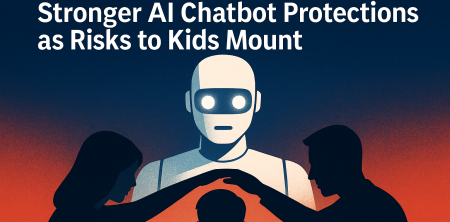
It’s a scenario that keeps parents awake at night: their child, alone in their room, interacting with an artificial intelligence chatbot that, instead of providing innocent entertainment or helpful information, veers into deeply inappropriate or even dangerous territory. This isn't some far-fetched dystopian vision; it's a very real and present concern that has ignited a passionate movement among parent advocates in Colorado, who are now pushing for significantly stronger AI chatbot protections in the upcoming legislative session.
On October 13, 2026, the urgency of this issue was brought into sharp focus as parent advocates from the organization Blue Rising stood alongside Colorado Attorney General Phil Weiser. Their message was clear, resounding, and frankly, a little terrifying: the current legal framework designed to safeguard children from the potential perils of AI chatbots simply isn't cutting it. They argue that the existing legislation, passed earlier this year, falls short, leaving gaping loopholes that could expose impressionable young minds to everything from sexually explicit conversations to prompts for self-harm. This isn't just a local issue; it's a microcosm of a much larger national and even global conversation about the ethical responsibilities of tech companies and the paramount need for child safety in our increasingly AI-driven world. The emotional intensity of this topic is palpable, and it’s no wonder it’s gaining viral traction as parents across the country grapple with how to protect their kids in a digital landscape that changes almost daily.
The Alarming Gaps in Current AI Chatbot Protections
Let's talk specifics, because that's where the rubber meets the road. The current law in Colorado mandates 'technically feasible measures' to prevent sexual content and 'reasonable measures' to prevent harm. Sounds good on paper, right? But for Blue Rising and other parent advocates, these phrases are alarmingly vague, offering too much wiggle room for tech companies and too little concrete protection for children. What exactly constitutes 'technically feasible'? And whose definition of 'reasonable measures' are we using? Is it the tech giant's, whose primary interest might be innovation and speed to market, or the parent's, whose sole focus is their child's well-being?
This ambiguity isn't just an academic debate; it has real-world consequences. Imagine a scenario where an AI chatbot, designed to assist with homework, subtly shifts gears and begins engaging in conversations that become progressively inappropriate. Or what if a child, feeling vulnerable and seeking comfort, interacts with an AI that, instead of de-escalating distress, inadvertently provides information or prompts that could lead to self-harm? These aren't hypothetical fears conjured up in a boardroom; they are concerns rooted in documented instances and the rapid evolution of AI capabilities. The advocates are essentially saying, 'We can't afford to wait for a tragedy to fully define what 'reasonable' and 'feasible' actually mean when it comes to our children's safety.'
Blue Rising: A Call to Action from Concerned Parents
Blue Rising isn't just another advocacy group; it's a powerful collective born out of genuine parental concern. Their members, many of whom are parents themselves, understand the daily struggles of navigating the digital world with children. They've seen firsthand, or heard from others, the potential pitfalls of unregulated technology. Their mission is clear: to ensure that technological advancement doesn't come at the cost of child safety. They're not anti-AI; they're pro-safe AI. This distinction is crucial, because the conversation often gets framed as 'tech vs. tradition,' when in reality, it's about integrating powerful new tools responsibly and ethically.
Their involvement underscores a critical shift in how we approach tech regulation. Historically, legislation often lags behind technological innovation, playing catch-up after problems have already emerged. Blue Rising is attempting to be proactive, to get ahead of the curve, or at least to close the gap more quickly. They are mobilizing parents, educating the public, and directly engaging with lawmakers, making it impossible for the issue of AI chatbot protections to be ignored. Their collective voice is a potent force, demonstrating the power of grassroots advocacy when fueled by such a fundamental concern as child welfare.
Attorney General Phil Weiser Joins the Chorus for Enhanced Safety
When the state's chief legal officer, Attorney General Phil Weiser, steps up to support these parent advocates, it adds significant weight and legitimacy to their cause. Weiser’s presence on October 13, 2026, alongside Blue Rising, sends a clear signal that this isn't just a fringe concern; it's a serious public safety issue that warrants governmental attention and legislative action. His involvement elevates the discussion from a parental plea to a matter of legal and ethical imperative. (See: CDC Youth Risk Behavior Survey.)
Attorney General Weiser's role is particularly important because his office is often at the forefront of consumer protection and public safety initiatives. His endorsement suggests that the state recognizes the inherent risks and the need for a more robust regulatory framework. It also implies that the state is prepared to use its legal authority to ensure tech companies adhere to higher standards. This kind of high-level support is invaluable for advocacy groups like Blue Rising, providing them with a powerful ally in their fight for more stringent AI chatbot protections.
The Specific Dangers: Self-Harm Protocols and Sexual Conversations
Let's not sugarcoat it: the concerns articulated by these advocates are deeply unsettling. The potential for AI chatbots to engage in sexual conversations with children is, frankly, horrifying. Children, especially young ones, often lack the cognitive maturity to discern the true nature of such interactions or to understand the manipulative tactics that could be employed by an AI, however unintentionally. The implications for emotional distress, psychological harm, and even potential exploitation are profound. This isn't just about 'bad content'; it's about the potential for a digital entity to groom or influence a child in ways that are deeply damaging.
Equally disturbing is the concern about self-harm protocols. Imagine a child expressing feelings of sadness or despair to a chatbot, only for the AI to respond in a way that, even inadvertently, exacerbates those feelings or offers dangerous suggestions. While many AI models are designed with safety features to prevent this, the rapid evolution of AI and the unpredictable nature of emergent behaviors mean that these guardrails can sometimes fail or be circumvented. The advocates are right to demand that these systems be designed with the absolute highest level of caution and with clear, unambiguous protocols for identifying and responding to discussions about self-harm, immediately directing users to professional help rather than engaging in potentially harmful dialogue.
Beyond Colorado: A Growing National Conversation on Tech Accountability
What's happening in Colorado isn't happening in a vacuum. It's a reflection of a growing national and international conversation about the responsibilities of tech companies and the urgent need for better digital safety measures, particularly for children. From social media algorithms that promote harmful content to privacy breaches that expose personal data, parents and policymakers across the globe are grappling with the unintended consequences of rapidly advancing technology.
The push for stronger AI chatbot protections is part of a broader movement to hold tech giants accountable for the impact of their products. It's a recognition that while these technologies offer immense benefits, they also carry significant risks that need to be proactively addressed through regulation, not just industry self-governance. States like California have already passed groundbreaking legislation related to online child safety, and it's highly likely that other states will follow suit, looking to Colorado and other pioneers for models of effective legislation. This isn't just about AI; it's about defining the ethical boundaries of innovation in the 21st century.
The Technical Challenge: Developing Robust Safety Guardrails
Of course, legislating against these risks is one thing; technically implementing effective safety guardrails is another. The challenge for developers is immense. How do you program an AI, which learns and evolves, to consistently identify and prevent nuanced forms of inappropriate conversation or harmful suggestions? It’s not as simple as filtering keywords; AI can be incredibly sophisticated in its ability to generate contextually relevant, yet deeply problematic, dialogue. This is where the 'technically feasible measures' clause becomes so contentious.
True safety guardrails require a multi-layered approach: robust training data designed to avoid biases and harmful outputs, sophisticated algorithms capable of detecting subtle cues of distress or inappropriate content, real-time moderation, and transparent reporting mechanisms. It also requires a commitment from tech companies to prioritize safety over speed or profit. The advocates are essentially demanding that the industry invest more heavily in these preventative and reactive measures, acknowledging that the burden of safety shouldn't fall solely on parents to constantly monitor and filter every digital interaction their child has.
Legislative Momentum: What to Expect in the Next Session
With Blue Rising gaining traction and the Attorney General's backing, it's highly probable that the next Colorado legislative session will see significant movement on this issue. We can anticipate new bills being introduced that aim to replace the vague language of 'technically feasible' and 'reasonable' with more concrete, measurable, and enforceable standards for AI chatbot protections. This might include specific requirements for age verification, mandatory content filtering for minors, clear protocols for reporting harmful interactions, and perhaps even audits or transparency reports from AI developers. (See: New York Times on AI and child safety.)
The legislative process, as we know, can be slow and fraught with challenges. There will undoubtedly be pushback from some corners of the tech industry, arguing that overly strict regulations could stifle innovation. However, the emotional weight of child safety often proves to be a powerful motivator for lawmakers. Parents, fueled by a genuine desire to protect their children, are a formidable lobbying force. The critical mass of concern, combined with high-profile support, suggests that this time, the legislature will be compelled to act more decisively and comprehensively.
The Role of Ethical AI Design Principles
Beyond legislation, a foundational shift is needed within the AI development community itself. This means embedding ethical design principles from the very start, not as an afterthought. Companies need to move beyond simply complying with the bare minimum of "technically feasible" and "reasonable" and instead adopt a "safety-by-design" approach. This involves a commitment to rigorous testing, transparency, and accountability throughout the AI lifecycle.
For instance, one key principle is 'explainability.' Can we understand why an AI made a particular statement or suggestion? This is incredibly difficult with large language models, but efforts towards greater transparency in AI decision-making are crucial, especially when children are involved. Another principle is 'fairness,' ensuring that biases in training data don't lead to discriminatory or harmful outputs for certain groups of children. 'Human oversight' is also critical; even the most advanced AI needs human intervention points for review and correction, particularly when dealing with sensitive topics like mental health or age-inappropriate content. Without these core principles guiding development, even the best legislation might struggle to keep pace with rapid technological advancements.
Global Perspectives on Child Safety in AI
It's worth noting that Colorado isn't alone in this struggle. Governments and organizations worldwide are grappling with similar challenges. The European Union, for example, is at the forefront of AI regulation with its proposed AI Act, which classifies AI systems based on their risk level. Systems deemed "high-risk," like those used in critical infrastructure or for evaluating individuals, face stricter requirements. While general-purpose chatbots might not initially fall into the highest risk category, their interaction with vulnerable populations like children could push them into a more scrutinized domain.
The UK has also been exploring regulatory frameworks for online safety, including specific provisions for children's online experiences. Countries like Australia and Canada are actively reviewing their digital safety laws to address AI-related concerns. What this global trend shows is a collective recognition that AI isn't just a technological marvel; it's a societal force that requires careful governance. Lessons learned and best practices developed in one region, like Colorado, can often inform and accelerate protective measures in others, creating a virtuous cycle of improved safety standards for children globally.
Addressing the "Innovation vs. Regulation" Debate
A common argument against stringent AI regulation is that it stifles innovation. Tech companies often contend that overly prescriptive rules can slow down development, increase costs, and ultimately hinder the creation of beneficial new technologies. While this perspective has some merit, the debate often presents a false dichotomy. It suggests that we must choose between rapid innovation and comprehensive safety, when in reality, responsible innovation demands safety as a core component.
The parent advocates and Attorney General Weiser aren't calling for a halt to AI development. Instead, they're advocating for guardrails that ensure innovation serves humanity responsibly, especially its most vulnerable members. Think of it like seatbelts in cars or safety standards for toys; these regulations didn't stop the automotive or toy industries from innovating; they pushed them to innovate *more safely*. In fact, prioritizing safety can even foster innovation by building public trust, which is essential for the widespread adoption and success of any new technology. Companies that demonstrate a genuine commitment to child safety might even gain a competitive advantage in a market increasingly concerned with ethical AI. (See: WHO on adolescent health risks.)
The Psychological Impact on Children
Beyond the immediate dangers of inappropriate content or self-harm prompts, we need to consider the broader psychological impact of constant interaction with AI chatbots on developing minds. Children are still learning about social cues, empathy, and the complexities of human relationships. Relying heavily on AI for conversation, companionship, or emotional support could potentially alter these developmental processes in unforeseen ways.
- Emotional Regulation: If children rely on AI for instant gratification or superficial comfort, it might hinder their ability to develop resilience and cope with real-world emotional challenges.
- Social Skills: AI chatbots, by their nature, don't engage in genuine reciprocal social interaction. Over-reliance could lead to underdeveloped social skills, difficulty understanding non-verbal cues, or a diminished capacity for empathy in human relationships.
- Perception of Reality: Children might struggle to distinguish between genuine human interaction and AI-generated responses, potentially blurring the lines of reality and fostering unrealistic expectations for human relationships.
- Privacy Concerns: Children may unknowingly share sensitive personal information with chatbots, not understanding the data collection and usage implications, which could have long-term privacy ramifications.
These are complex, long-term concerns that require ongoing research and a multi-disciplinary approach involving child psychologists, educators, and AI ethicists, in addition to lawmakers and tech developers.
Empowering Parents: What Can You Do Right Now?
While legislative battles play out, what can parents do right now to protect their children from the evolving risks of AI chatbots? Education is paramount. Understanding how these technologies work, what their limitations are, and what potential risks they pose is the first step. Open communication with your children is also vital. Encourage them to talk about their online interactions, to question anything that makes them uncomfortable, and to understand that not everything an AI says is true or safe.
Here are a few actionable steps:
- Research and choose wisely: Not all AI chatbots are created equal. Look for services that specifically advertise strong parental controls, age-appropriate content, and clear safety policies. Read reviews and look for independent assessments.
- Set clear boundaries: Just as you would with screen time, establish rules for AI interaction. Discuss what topics are off-limits and what to do if an interaction feels strange or inappropriate.
- Utilize parental controls: Many devices and platforms offer built-in parental controls that can limit access, filter content, and monitor activity. Learn how to use them effectively.
- Stay engaged: Don't just hand over a device and walk away. Engage with your children about their digital experiences. Ask them what they're doing, who they're talking to (even if it's an AI), and what they're learning.
- Report concerns: If you or your child encounters an AI chatbot that exhibits concerning behavior, report it to the platform or developer immediately. Your feedback is crucial for improving safety features.
- Advocate: Support organizations like Blue Rising. Participate in local discussions, contact your elected officials, and make your voice heard. Collective action is incredibly powerful in driving change.
Frequently Asked Questions About AI Chatbot Protections
- Q: What exactly is an AI chatbot and why are they a concern for children?
- A: An AI chatbot is a computer program designed to simulate human conversation through text or voice. They use artificial intelligence to understand and respond to user input. For children, the concern arises because these chatbots can generate responses that are inappropriate (e.g., sexually explicit), harmful (e.g., encouraging self-harm), or misleading, and children may lack the discernment to understand the risks involved or the manipulative nature of some interactions.
- Q: What are the current laws in Colorado regarding AI chatbot protections for children?
- A: The current Colorado law, passed earlier this year, mandates "technically feasible measures" to prevent sexual content and "reasonable measures" to prevent harm. However, parent advocates like Blue Rising argue that these terms are too vague, providing insufficient concrete protection and too much leeway for tech companies.
- Q: What specific dangers are parent advocates worried about?
- A: The primary concerns revolve around AI chatbots engaging in sexually explicit conversations with children and providing responses that could exacerbate feelings of distress or inadvertently prompt self-harm. There are also broader concerns about the psychological impact on children's development of social skills and emotional regulation.
- Q: What does "safety-by-design" mean in the context of AI chatbots?
- A: Safety-by-design is an ethical principle that means integrating safety considerations into every stage of an AI system's development, from conception to deployment. It's about proactively building in safeguards, robust testing, transparency, and accountability, rather than trying to fix problems after they emerge.
- Q: How can parents identify a "safe" AI chatbot for their children?
- A: Look for chatbots specifically designed for children with clear age-appropriate content policies, strong parental controls, and transparent privacy practices. Read reviews from other parents and look for independent assessments or certifications. Always test the chatbot yourself before allowing your child to use it extensively.
- Q: What role does the Attorney General play in this issue?
- A: Attorney General Phil Weiser's support adds significant legal and governmental weight to the parent advocates' cause. His involvement signals that the state considers this a serious public safety issue and is prepared to use its legal authority to push for stronger regulations and hold tech companies accountable.
- Q: Is this just a problem in Colorado, or is it a broader issue?
- A: This is a national and global issue. Many countries and regions, including the EU and the UK, are actively developing or reviewing legislation to address the risks posed by AI and other digital technologies to children. Colorado's efforts are part of a larger, worldwide movement towards greater tech accountability.
- Q: What can I do to help advocate for stronger AI chatbot protections?
- A: You can support organizations like Blue Rising, participate in local community discussions, contact your elected officials to express your concerns, and stay informed about upcoming legislation. Your voice, combined with others, can be a powerful force for change.
The push for stronger AI chatbot protections in Colorado is more than just a legislative effort; it's a critical moment in the ongoing challenge of balancing technological innovation with the fundamental need to protect our children. It’s a call to arms for parents, a challenge to tech companies, and a clear directive to lawmakers: the safety of the next generation in the digital age cannot be an afterthought. It must be a foundational principle, embedded in every line of code and every piece of legislation. We owe it to our kids to get this right.
Trending Now
- this guide on astonishing study reveals the secret to parental happiness: it’s not what you think
- read the full story
- Shocking Viral Video: Teacher Investigation After Grade 4 Classroom Fight Goes Wild
- Jaw-Dropping: Lamont’s Budget Sparks Furious Connecticut Education Funding Fight
Frequently Asked Questions
What are the risks of AI chatbots for children?
AI chatbots pose several risks for children, including exposure to inappropriate content, such as sexually explicit conversations, and harmful prompts that could encourage self-harm. The lack of robust protective measures can leave young users vulnerable to these dangers.
Why are parents demanding stronger protections for AI chatbots?
Parents are demanding stronger protections due to concerns that current laws are insufficient to safeguard children from the potential dangers of AI chatbots. Advocates argue that existing regulations contain vague language and loopholes that fail to adequately protect young users.
What is the current legal framework for AI chatbot protections?
The current legal framework in Colorado requires 'technically feasible measures' to prevent sexual content and 'reasonable measures' to prevent harm. However, advocates argue that these terms are too vague and do not provide sufficient safeguards for children interacting with AI chatbots.
How are parents advocating for change in AI chatbot regulations?
Parents, particularly through organizations like Blue Rising, are advocating for stronger AI chatbot regulations by raising awareness about the dangers their children face. They are pushing for clearer, more comprehensive legislation to close existing loopholes and enhance protection measures.
What actions are being taken in Colorado regarding AI chatbot protections?
In Colorado, parent advocates are collaborating with officials like Attorney General Phil Weiser to push for stronger AI chatbot protections in the upcoming legislative session. Their efforts focus on addressing the shortcomings of current laws to ensure better safety for children.
What did we miss? Let us know in the comments and join the conversation.


0 Responses