```html
This Unprecedented Case Could Redefine Parents' Religious Rights Forever
When you become a parent, you inherently accept a profound responsibility: to guide, protect, and raise your children according to your deepest convictions. For many, those convictions are intrinsically linked to their faith. But what happens when the state steps in, demanding compliance with rules that directly conflict with those deeply held religious beliefs? That's precisely the thorny question now before the U.S. Supreme Court, in a case that could fundamentally reshape parents' religious rights across the nation.
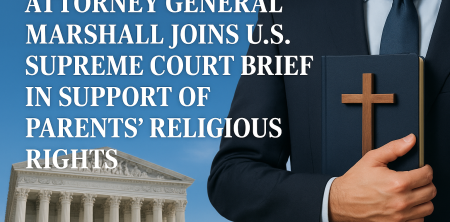
It's a situation that has ignited passionate debate, pulling together strands of parental autonomy, religious freedom, public health, and the very nature of public education. On October 19, 2026, Alabama's Attorney General, Steve Marshall, announced that his state had joined a crucial U.S. Supreme Court brief, throwing its weight behind parents' religious rights in an ongoing West Virginia legal battle. This isn't just a local dispute; it's a proxy war for principles that resonate far beyond state lines, affecting every family navigating the complex interplay between faith, government, and raising their kids.
The West Virginia Family at the Heart of the Storm
The case revolves around a West Virginia family whose deeply held Christian faith led them to refuse vaccinations for their daughter. This wasn't a casual decision; it was a conscientious objection rooted in their religious convictions. When their daughter was subsequently disenrolled from her online public school because of this refusal, they felt they were being forced into an impossible choice: compromise their faith or sacrifice their child's education. It's a dilemma that no parent should face, according to many, including Attorney General Marshall.
The family's legal challenge argued that their constitutional rights were being violated. They believed the state was infringing upon their fundamental liberty interest in directing their children's upbringing, especially concerning matters of faith and health. However, lower courts disagreed, rejecting their claim. This rejection set the stage for the current appeal to the nation's highest court, prompting a coalition of sixteen attorneys general to step in and urge the Supreme Court to review the case. Their unified message? This isn't just about one family; it's about a foundational principle of American liberty.
Understanding the Core Conflict: Faith vs. State Mandate
At its core, this case highlights a perennial tension in a pluralistic society: where does individual religious freedom end and the state's legitimate interest in public health and education begin? On one side, you have the compelling argument that parents possess an inherent, constitutionally protected right to raise their children according to their religious and moral convictions. This right isn't explicitly spelled out in the Constitution word for word, but it's been consistently affirmed through various Supreme Court rulings over the decades, often linked to the Fourteenth Amendment's due process clause and the First Amendment's free exercise clause.
On the other side, states have a well-established authority, often referred to as 'police power,' to enact laws that protect the health, safety, and welfare of their citizens. This power is frequently invoked to justify mandatory vaccination policies, particularly in public school settings, to prevent the spread of contagious diseases. The argument here is that individual exemptions, while seemingly minor, could undermine herd immunity and put vulnerable populations at risk. So, the Court is being asked to weigh these two very powerful, very legitimate interests against each other, in a context that has become increasingly polarized.
The Broader Implications for Parents' Religious Rights
Attorney General Marshall's statement underscores the gravity of this situation. He stressed that parents have a "fundamental liberty interest in raising their children according to their deeply held religious beliefs." This isn't just legal jargon; it's a recognition of the profound bond between parents and children, and the idea that the state shouldn't be the ultimate arbiter of a child's upbringing. If the Supreme Court takes up this case and rules in favor of the West Virginia family, it could set a powerful precedent, strengthening parents' religious rights nationwide.
Imagine the ripple effects: it could influence how states handle other religious exemptions, from curriculum choices in public schools to medical treatments. It could clarify the limits of state power when it intersects with parental autonomy and religious conviction. Conversely, if the Court declines to hear the case, or rules against the family, it could be seen as a significant setback for those advocating for broader religious freedom protections, potentially empowering states to enforce mandates with fewer religious exceptions. Either way, the decision (or non-decision) will have far-reaching consequences for families across the U.S.
The Legal Framework: First and Fourteenth Amendments
To really grasp the legal nuances here, we need to look at the First and Fourteenth Amendments. The First Amendment, of course, contains the Free Exercise Clause, stating that Congress shall make no law "prohibiting the free exercise" of religion. This is the cornerstone of religious freedom in America. But it's not absolute; the Supreme Court has long grappled with how to balance religious practice with compelling government interests.
Then there's the Fourteenth Amendment, specifically its Due Process Clause, which has been interpreted to protect fundamental parental rights. Cases like Pierce v. Society of Sisters (1925) and Meyer v. Nebraska (1923) established that parents have a fundamental right to direct the education and upbringing of their children. The argument from the coalition of attorneys general, including Alabama's, is that these rights, particularly when intertwined with religious belief, are being unduly burdened by the state's vaccination mandate in an online learning context. They are essentially asking the Court to apply a higher standard of scrutiny to such state actions when religious freedom is at stake. (See: CDC on mental health and parental rights.)
Why This Case is Generating Such Intense Debate
This isn't just another legal case; it's a flashpoint for some of the most emotionally charged issues of our time. You've got public health, which became a fiercely contested topic during the recent pandemic, clashing with individual liberty and religious freedom. For many, vaccine mandates represent an overreach of government power, a slippery slope towards greater state control over personal choices. For others, they are a necessary and scientifically proven measure to protect the community, especially the most vulnerable among us.
The fact that this particular case involves an online public school adds another layer of complexity. Is the state's interest in preventing disease spread as strong in an online environment, where physical proximity is removed, as it is in a traditional brick-and-mortar classroom? This question is central to the family's argument and could be a key differentiator from previous vaccination mandate cases. It forces us to reconsider what 'public health' truly means in a digitally connected world, and how far its reach extends into the virtual classroom.
The Role of Attorney General Marshall and the Coalition
Attorney General Steve Marshall's decision to join this amicus curiae brief isn't just a political statement; it's a strategic legal move. An amicus brief, or 'friend of the court' brief, allows parties not directly involved in the case to offer information, expertise, or insight that bears on the issues. When a coalition of sixteen state attorneys general signs on, it sends a powerful message to the Supreme Court: this isn't an isolated incident; it's a matter of national importance, affecting how states will navigate similar challenges.
These attorneys general represent diverse states, but they share a common concern about the erosion of parents' religious rights. By articulating this concern collectively, they highlight the potential for inconsistent application of constitutional protections across state lines, and the need for clear guidance from the Supreme Court. Their involvement suggests a coordinated effort to strengthen parental autonomy and religious liberty in the face of state mandates, reflecting a broader conservative legal movement focused on these issues.
Historical Precedents and the Shifting Landscape of Religious Freedom
The Supreme Court's jurisprudence on religious freedom has evolved significantly over time. While cases like Wisconsin v. Yoder (1972) affirmed the right of Amish parents to withdraw their children from public schooling after eighth grade due to religious beliefs, subsequent cases, particularly Employment Division v. Smith (1990), narrowed the scope of free exercise protections. Smith held that generally applicable laws that incidentally burden religious practice do not require religious exemptions.
However, more recent Supreme Court decisions have shown a renewed willingness to protect religious freedom, sometimes applying a stricter standard when government action substantially burdens religious exercise. This shifting legal landscape is precisely why this West Virginia case is so critical. The Court could use it to clarify its current stance on religious exemptions to generally applicable laws, especially in the sensitive area of parental rights and children's education. Are vaccination mandates, even in an online setting, truly 'generally applicable' in a way that doesn't trigger heightened scrutiny when religious objections are raised?
What Happens Next: The Path to the Supreme Court
The Supreme Court doesn't hear every case that's appealed to it. In fact, it grants certiorari, meaning it agrees to review, only a small fraction of the petitions it receives each year. The coalition of attorneys general, by filing their amicus brief, is essentially making a strong plea for the Court to take this case. They are arguing that the legal questions presented are significant, that lower courts are divided or have misapplied existing law, and that the issue has broad national importance.
If the Court grants certiorari, the case will then proceed to full briefing and oral arguments, likely in the next term. A decision could then come months later, potentially in the summer of the following year. If the Court declines to hear the case, the lower court's ruling will stand, effectively leaving the West Virginia family without recourse and maintaining the status quo regarding vaccination mandates in that state. But even a denial of certiorari sends a message about the Court's priorities and its current interpretation of parents' religious rights.
Navigating the Future of Parental Autonomy and Faith
Regardless of the Supreme Court's ultimate decision on whether to hear the case, or how it rules if it does, this legal challenge underscores the ongoing tension between individual liberties and collective well-being. For parents of faith, the right to raise their children according to their religious convictions is not a trivial matter; it is central to their identity and their understanding of their responsibilities. The idea that this right could be compromised by state mandates, particularly in educational settings, is deeply concerning to many.
This case forces us all to consider how we define and protect fundamental rights in an increasingly complex society. How do we balance public health imperatives with cherished freedoms? What are the boundaries of governmental authority when it comes to family decisions? And ultimately, how will the Supreme Court interpret and apply parents' religious rights in the 21st century? The answers to these questions will profoundly shape the lives of families for generations to come, and this West Virginia case could be the catalyst for some truly foundational changes.
The Spectrum of Parental Religious Rights: Beyond Vaccinations
While this West Virginia case centers on vaccine mandates, it's crucial to understand that parents' religious rights extend far beyond this single issue. The principles at stake touch on a much broader spectrum of decisions parents make for their children. Think about education: some parents choose religious schools or homeschooling specifically to align their child's learning environment with their faith. State regulations on curriculum, teacher qualifications, or even school hours can, in some instances, clash with these deeply held beliefs. The question then becomes, how much deference must the state give to these choices? (See: New York Times on religious freedom.)
Medical treatment is another battleground. Cases involving parents refusing certain medical interventions for their children based on religious objections, even life-saving ones, have surfaced in courts across the country. These are incredibly difficult situations, pitting the state's interest in protecting a child's welfare against parental religious freedom. While most courts prioritize the child's life in such extreme circumstances, the line isn't always clear, especially with less immediately life-threatening conditions or preventative care. The West Virginia case could offer guidance on how to weigh these competing interests, potentially influencing future rulings in these delicate medical scenarios. It really boils down to where the state draws the line on what it considers 'harm' versus 'parental choice.'
Even in areas like extracurricular activities or psychological counseling offered through public schools, parents sometimes raise religious objections. If a school program or a counseling approach conflicts with a family's faith, parents might argue for the right to opt their child out. The ability for parents to navigate these decisions, guided by their conscience, is a core component of parents' religious rights. This case, though specific to vaccinations and online schooling, could provide a framework for evaluating governmental intrusion into these other aspects of parental decision-making, setting a precedent for how broadly parents can assert their religious beliefs in their children's upbringing.
International Perspectives on Religious Freedom and Children's Rights
It's interesting to consider how other countries handle similar tensions between state interests and parents' religious rights. While the U.S. framework is unique, many Western democracies grapple with these same issues. For example, in parts of Europe, some countries have much stricter vaccination mandates with fewer religious exemptions, prioritizing public health over individual religious objections to a greater degree than traditionally seen in the U.S. Conversely, some nations have more robust protections for parental choice in education, even allowing for significant religious instruction within public systems or offering substantial support for religious private schools.
The United Nations Convention on the Rights of the Child (UNCRC), which the U.S. has signed but not ratified, emphasizes the child's right to freedom of thought, conscience, and religion, while also recognizing the rights and duties of parents to provide direction in line with the child's evolving capacities. This international instrument tries to balance the child's autonomy with parental guidance, a balance that is often at the heart of domestic legal battles. Comparing these approaches helps illustrate the particular legal and cultural values that shape the debate around parents' religious rights in America. We're not operating in a vacuum here; similar discussions happen globally, just with different legal interpretations and outcomes.
The Role of Public Opinion and Social Context
Beyond the legal arguments, public opinion and the prevailing social context play a significant, if informal, role in how these cases are perceived and ultimately decided. The COVID-19 pandemic, for instance, dramatically shifted public discourse around vaccines and mandates. What might have been seen as a niche issue pre-2020 became a mainstream, highly charged debate. This heightened awareness of public health, alongside a growing skepticism about government overreach in certain segments of the population, creates a particularly volatile environment for cases like the West Virginia one.
Polling data often shows a divided public on issues of vaccine mandates, with religious exemptions adding another layer of complexity. For instance, a Pew Research Center study might show a significant percentage of Americans believe religious freedom should allow exemptions from vaccine mandates, even as another segment strongly supports mandates for public health. This societal polarization influences everything from media coverage to the arguments presented by amici curiae. Judges, though ideally impartial, are not immune to the broader social climate, making the timing of this case particularly impactful. It's not just about what the law says, but also about how the public feels and what society prioritizes at a given moment.
Expert Perspectives: Constitutional Scholars and Public Health Advocates
Constitutional scholars often debate the appropriate level of scrutiny for laws that burden religious exercise. Some argue for a "strict scrutiny" standard, where the government must prove a compelling interest and that the law is narrowly tailored to achieve that interest, with no less restrictive means available. This is the standard typically favored by advocates for robust religious freedom protections. Others contend that for generally applicable laws, a lower "rational basis" review is sufficient, meaning the law just needs a legitimate government purpose and a reasonable connection to that purpose. The Supreme Court's shifting stance on Employment Division v. Smith (1990) often comes up here, as that case largely favored the lower standard.
Public health advocates, on the other hand, often emphasize the scientific consensus behind vaccinations and the collective benefit of herd immunity. They point to historical triumphs over diseases like polio and smallpox as evidence of effective public health strategies. From their perspective, widespread exemptions, regardless of their basis, pose a direct threat to community health, potentially leading to outbreaks and endangering vulnerable populations who cannot be vaccinated (like infants or immunocompromised individuals). The debate often crystallizes into whether individual religious freedom can legitimately outweigh the demonstrable scientific need for public health measures. It's a clash of fundamental values, each with its own compelling logic and expert backing.
The Economic and Social Impact of Disenrollment
Beyond the constitutional arguments, it's worth considering the practical ramifications of disenrollment, like what the West Virginia family faced. When a child is removed from public education, whether online or in person, it creates immediate economic and social burdens for the family. Parents might have to quit jobs or reduce hours to homeschool, seek out expensive private schooling options, or navigate complex alternative educational paths. This disproportionately affects lower-income families who may not have the resources to absorb such costs or manage alternative schooling.
There's also the social impact on the child. Losing access to a public school environment, even an online one, can mean missing out on certain social interactions, extracurricular activities, and diverse learning experiences. While homeschooling and private schooling offer their own benefits, the state's action in this case effectively forced the family into a situation where they had to choose between their faith and a publicly funded education, creating a significant barrier to access. These tangible impacts, though not always central to the legal arguments, underscore the real-world consequences of these types of mandates and the importance of finding equitable solutions that respect both public health and individual liberties. (See: Harvard University on religious rights.)
FAQ: Parents' Religious Rights and the Law
Q: What exactly are "parents' religious rights"?
A: Parents' religious rights refer to the constitutional protections that allow parents to raise their children according to their religious beliefs and moral convictions. These rights are primarily derived from the First Amendment's Free Exercise Clause (protecting religious practice) and the Fourteenth Amendment's Due Process Clause (protecting fundamental parental liberty interests in directing their children's upbringing and education). Essentially, it's the right to make decisions for your child, including educational, medical, and moral choices, based on your faith, without undue government interference.
Q: Have parents always had these rights in the U.S.?
A: The concept of parental rights, particularly religious ones, has evolved through Supreme Court jurisprudence over the last century. Early 20th-century cases like Meyer v. Nebraska (1923) and Pierce v. Society of Sisters (1925) affirmed parents' right to direct their children's education. Wisconsin v. Yoder (1972) specifically upheld religious exemptions for Amish parents from compulsory schooling laws. While the core idea has been present, the extent and application of these rights have been refined and debated over time, especially when they clash with state interests like public health or universal education.
Q: How do parents' religious rights conflict with state laws?
A: Conflicts typically arise when state laws or mandates (like compulsory education, vaccination requirements, or specific curriculum standards in public schools) directly contradict a parent's sincerely held religious belief about their child's upbringing. For instance, if a religious belief prohibits certain medical treatments or immunizations, or dictates a specific form of education that differs from state-mandated public schooling, a conflict emerges. The legal system then has to weigh the individual's religious freedom against the state's legitimate interests, often using complex legal tests.
Q: What is "strict scrutiny" and why is it important for parents' religious rights?
A: "Strict scrutiny" is the highest level of judicial review applied to laws that infringe on fundamental constitutional rights, including certain aspects of religious freedom. If a law is subject to strict scrutiny, the government must prove that the law serves a "compelling governmental interest" (a very strong reason) and is "narrowly tailored" to achieve that interest (meaning it's the least restrictive way to accomplish the goal). If a court applies strict scrutiny to a state mandate affecting parents' religious rights, it makes it much harder for the state to justify its action, thereby offering greater protection to those rights.
Q: What's the difference between religious exemptions in public vs. private/online schools?
A: The distinction can be crucial. In traditional public schools, states generally have a stronger argument for enforcing mandates (like vaccinations) due to the close physical proximity of students and the potential for widespread disease transmission. However, in an online public school setting, as in the West Virginia case, the argument for public health necessity might be weaker since students aren't physically interacting. Private and religious schools often have more leeway to set their own policies, sometimes including broader religious exemptions, because they are not state-run institutions, though they may still be subject to certain health and safety regulations.
Q: Could a Supreme Court ruling in this case affect homeschooling?
A: Potentially, yes. While homeschooling is largely regulated at the state level, a Supreme Court decision clarifying the scope of parents' religious rights could influence how states structure their homeschooling laws, especially regarding curriculum requirements or oversight. If the Court strengthens parental religious autonomy, it could empower homeschooling families to assert more control over their educational choices free from state interference. Conversely, a ruling that favors state authority could, in theory, allow for greater state oversight of homeschooling, though this particular case focuses on public online education.
Q: What should parents do if they feel their religious rights are being violated?
A: If parents believe their religious rights are being violated by a state or local mandate, their first step should be to seek legal counsel from an attorney specializing in constitutional law or religious freedom cases. They should document all relevant communications and decisions. Depending on the specifics of the situation and state laws, they might pursue administrative appeals, seek religious exemptions, or, as a last resort, initiate a lawsuit. Organizations dedicated to religious liberty often offer resources and legal assistance to families facing these challenges.
```
Trending Now
Frequently Asked Questions
What is the significance of the Supreme Court case regarding parents' religious rights?
The Supreme Court case could redefine parents' religious rights by addressing the conflict between state mandates and deeply held religious beliefs, particularly in situations like vaccination refusals. It raises critical questions about parental autonomy, religious freedom, and the role of government in education.
Why did Attorney General Marshall join the Supreme Court brief?
Attorney General Steve Marshall joined the Supreme Court brief to support parents' religious rights in a legal battle affecting a West Virginia family. His involvement underscores the importance of protecting parental autonomy and religious convictions against state regulations.
What are the implications of this case for parental rights?
The implications of this case for parental rights are significant, as it could establish legal precedents that either reinforce or limit parents' abilities to make decisions for their children based on religious beliefs, particularly in educational settings.
What dilemma did the West Virginia family face in this case?
The West Virginia family faced a dilemma when their refusal to vaccinate their daughter, based on their Christian faith, led to her disenrollment from an online public school. This forced them to choose between their religious convictions and their child's education.
How does this case relate to public education and health policies?
This case highlights the tension between public health policies, such as vaccination requirements, and religious freedoms in the context of public education. It raises questions about how far the state can go in mandating compliance with health regulations that conflict with parental beliefs.
What did we miss? Let us know in the comments and join the conversation.


0 Responses