```html
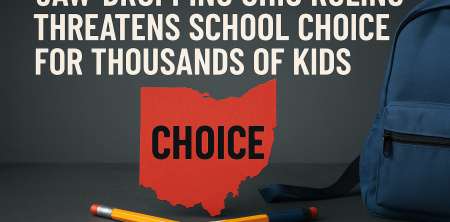
Well, if you've been following the ongoing saga of school funding and educational choice in Ohio, you might want to brace yourself. Because on October 16, 2026, a bombshell dropped that sent shockwaves through the state's education landscape. An Ohio court declared the state's nearly three-decade-old school voucher program, famously known as EdChoice, to be unconstitutional. That's right, a program that has been a bedrock for countless families seeking alternatives to their local public schools is now, at least for the moment, facing an existential threat. This isn't just a legal nicety; it’s a seismic shift that could redefine education for thousands of Ohio students and their parents. And it throws the contentious debate surrounding the Ohio school choice voucher program right back into the spotlight.
This ruling didn't come out of nowhere, of course. It’s the culmination of a lawsuit filed way back in 2022 by a formidable coalition: hundreds of public school districts, a host of parents and students, and the Ohio Coalition for Equity & Adequacy of School Funding. Their core argument? That the EdChoice program wasn't just a simple matter of parental preference; it was actively creating an unconstitutional system of separately funded schools, diverting crucial taxpayer dollars away from public institutions and into private ones. This isn't just about vouchers; it's about the very structure of how we fund education, and who ultimately benefits from those funds. It’s about fairness, equity, and the fundamental promise of quality education for every child in Ohio, regardless of their zip code or their family's income.
The EdChoice Program: A Brief History and Its Original Intent
To truly grasp the magnitude of this court decision, it helps to understand the journey of the EdChoice program. Conceived almost 30 years ago, the Ohio school choice voucher program was designed with a seemingly straightforward goal: to empower parents with more educational options, especially those in struggling public school districts. The idea was that if a child was stuck in a low-performing school, their parents shouldn't be trapped there too. A voucher, essentially a state-funded scholarship, would allow them to take a portion of the public money that would have been spent on their child in a public school and use it to offset tuition at a private or parochial school.
For many families, EdChoice wasn't just an option; it was a lifeline. It allowed children to attend schools that offered smaller class sizes, different pedagogical approaches, or a faith-based education that aligned with their family's values. Supporters have always championed it as a matter of parental liberty and a mechanism for educational equity, arguing that it levels the playing field for lower-income families who couldn't otherwise afford private tuition. It presented a compelling narrative: giving every child a fair shot at a quality education, even if their local public school wasn't meeting their needs. Over the decades, the program expanded, reaching more students and encompassing more schools, becoming an integral part of Ohio's educational fabric.
The Core Argument Against EdChoice: A 'Separate and Unequal' System?
However, what one side saw as a pathway to choice, the other viewed as a drain on public resources and a fundamental injustice. The lawsuit filed in 2022 by the Ohio Coalition for Equity & Adequacy of School Funding, alongside numerous public school districts, parents, and students, didn't just quibble with the details of the Ohio school choice voucher program; it challenged its very legality. Their central contention was that EdChoice violated the Ohio Constitution by creating what they termed a 'separate and unequal' system of schools. They argued that by diverting taxpayer money to private institutions, the state was effectively undermining its constitutional obligation to provide a thorough and efficient system of public education.
Imagine this: a finite pot of money meant for educating all children. When a portion of that pot is siphoned off for private schools, the argument goes, it leaves less for the public schools that are legally mandated to serve every child, regardless of ability, background, or parental income. Critics pointed to specific examples of public schools struggling with budget cuts, decaying infrastructure, and teacher shortages, while simultaneously seeing state funds flow to private schools that often have more resources and can be selective about their student body. This wasn't just about philosophical differences; it was about tangible impacts on classrooms, teachers, and ultimately, the millions of students who rely on public education.
The Plaintiffs: Who Fought Against the Ohio School Choice Voucher Program?
This wasn't a solitary complaint from a single disgruntled entity. The lawsuit against the Ohio school choice voucher program was a broad, multi-faceted effort, reflecting widespread concern. Spearheading the charge was the Ohio Coalition for Equity & Adequacy of School Funding. This organization has a long history of advocating for robust and equitable public school funding in the state, having previously been involved in landmark cases that shaped Ohio's educational finance system.
But they weren't alone. Crucially, hundreds of public school districts joined the legal challenge. Think about that for a moment: school districts, the very institutions tasked with educating the vast majority of Ohio's children, felt compelled to take their own state government to court. This wasn't a decision made lightly; it came from a place of perceived necessity, a belief that the voucher program was directly harming their ability to fulfill their mission. Beyond the institutional plaintiffs, individual parents and students also lent their voices and experiences to the lawsuit, highlighting the real-world implications they believed the EdChoice program had on public education and access to resources within their communities. Their collective legal muscle and compelling narratives created a powerful case that ultimately swayed the court.
The Court's Rationale: Why Was EdChoice Deemed Unconstitutional?
While the full legal specifics of the court's decision will undoubtedly be dissected and debated for months, the core of the ruling hinges on the interpretation of the Ohio Constitution's mandate for public education. The court, in essence, sided with the plaintiffs' argument that the EdChoice program, as structured, violated this mandate. It wasn't just a matter of whether choice is good or bad; it was about whether the state's mechanism for providing that choice fundamentally undermined its primary obligation to its public school system. (See: Education funding in the U.S..)
The ruling likely focused on how the diversion of public funds to private entities impacts the 'thorough and efficient' clause of the constitution. If public schools are being starved of resources while private schools benefit from state dollars, can the state truly claim to be upholding its constitutional duty to its public system? This isn't just about financial mechanics; it delves into the philosophical role of government in education. Is the state's primary role to support a universal public system, or to facilitate a marketplace of educational options, even if it comes at the expense of the public system? The court's decision signals a strong leaning towards the former, at least in its interpretation of Ohio's foundational document.
Immediate Fallout and Who Is Affected Most
The immediate aftermath of this ruling is, predictably, a whirlwind of uncertainty and anxiety. For the thousands of students currently attending private schools using EdChoice vouchers, their educational future suddenly hangs in the balance. Imagine being a parent who meticulously planned your child's schooling around this program, perhaps enrolling them in a school specifically because of its curriculum, religious affiliation, or specialized support, only to have that foundation shaken. The emotional toll and practical challenges of potentially finding a new school, or figuring out how to pay full tuition, are immense.
Private schools, many of which have come to rely on EdChoice funding to support their operations and student body, are also facing significant financial instability. These funds often cover salaries, resources, and even building maintenance. A sudden cessation could force difficult decisions, including potential closures or significant tuition hikes, further limiting access for families who were already stretching their budgets. On the other side, public school districts, while victorious in the legal sense, now face the complex task of potentially reabsorbing students who might no longer be able to afford private education, a challenge that could strain their own resources and capacities.
The Broader National Debate: Public vs. Private Funding
This Ohio decision isn't happening in a vacuum; it’s a potent accelerant in the fiery national debate over public versus private school support. Across the United States, states are grappling with similar questions about school choice, voucher programs, and charter schools. Advocates for school choice often frame it as a civil rights issue, arguing that all parents, regardless of income, should have the freedom to choose the best educational environment for their children. They point to the positive outcomes for students who benefit from these programs and the competition they believe vouchers create, theoretically pushing all schools to improve.
Conversely, opponents argue that such programs drain vital resources from public schools, which are legally obligated to educate all students, including those with special needs or from disadvantaged backgrounds. They contend that diverting public funds to private institutions, which are often not held to the same accountability standards as public schools, undermines the very foundation of democratic education. The Ohio ruling provides significant legal ammunition for those who believe that public funds should primarily, if not exclusively, support public education. It sets a precedent, or at least offers a strong judicial opinion, that could influence similar legal challenges in other states grappling with their own school choice initiatives.
What Happens Next? Appeals and Political Maneuvering
Don't expect this decision to be the final word. This is Ohio, and education policy is rarely settled with a single court ruling. An appeal is virtually guaranteed. The state, along with potentially intervenors who support the EdChoice program (think parent advocacy groups and private school associations), will almost certainly take this case to a higher court, likely the Ohio Supreme Court. This means the legal battle is far from over, and the uncertainty for families and schools will unfortunately persist.
Beyond the courts, expect a flurry of political activity. Lawmakers in the Ohio General Assembly, many of whom have historically supported the Ohio school choice voucher program, will undoubtedly explore legislative avenues to mitigate the impact of the ruling or even try to craft new, constitutionally compliant versions of school choice. This could involve new funding mechanisms, different eligibility criteria, or even attempts to amend the state constitution itself, though that's a much longer and more arduous process. The political stakes are incredibly high, as the issue directly impacts a significant number of voters and reflects deep ideological divides within the state.
Parental Choice and Educational Equity: A Zero-Sum Game?
At the heart of this entire controversy lies a tension between two deeply held values: parental choice and educational equity. Many parents genuinely believe that they should have the freedom to choose the best educational path for their child, and if their local public school isn't the right fit, a voucher program provides that crucial alternative. For these families, this ruling feels like a blow to their autonomy and their child's future.
However, the question of equity asks whether one family's choice comes at the expense of others. If the Ohio school choice voucher program weakens the public school system, which serves the vast majority of students, especially those in high-needs communities, is that truly equitable? This isn't a simple question with an easy answer. It forces us to confront difficult trade-offs and to consider how we balance individual liberty with collective responsibility. The court's decision suggests that, in Ohio at least, the scales might be tipping towards the collective responsibility to fund and maintain a robust public education system, even if it means re-evaluating long-standing programs designed to facilitate individual choice.
Expert Perspectives: Economists and Educators Weigh In
When you talk about school choice and funding, you quickly find that economists and educators often approach the problem from different angles, and their insights shed light on the complexity of the Ohio situation. Economists who support school choice often highlight concepts like market efficiency and competition. They argue that by introducing competition, private schools receiving voucher students can innovate and offer specialized programs, theoretically pushing public schools to improve their offerings to retain students. Data from some studies, like those reviewed by the National Bureau of Economic Research, suggest that in certain contexts, students using vouchers experience modest academic gains, particularly in urban areas and for minority students. They might also point to the fact that the cost of educating a child in a private school via a voucher is often less than the per-pupil spending in many public schools, suggesting a fiscal efficiency. (See: New York Times coverage of Ohio ruling.)
On the flip side, many educators, particularly those in public school systems, raise concerns about the unquantifiable costs. They'll tell you about the challenges of managing declining enrollment and the unpredictable budget fluctuations that come with students leaving for voucher schools. It's not just about the money; it's about the erosion of community support and the difficulty of providing comprehensive services when the student population becomes more concentrated with students who have greater needs, as those who can leave often do. Public school advocates also emphasize that public schools are mandated to serve every child, regardless of ability or need, while private schools can often choose their students, potentially leaving public schools with a disproportionate share of high-cost students without the corresponding funding.
The Ohio Supreme Court and Precedent: What History Tells Us
The upcoming appeal to the Ohio Supreme Court will be critical. This isn't the first time the state's highest court has wrestled with school funding. In fact, Ohio has a long and somewhat tumultuous history regarding school finance, most notably with the DeRolph v. State case in the late 1990s and early 2000s. In that landmark series of rulings, the Ohio Supreme Court repeatedly found the state's school funding system unconstitutional, stating it was neither "thorough" nor "efficient." While DeRolph focused on the inadequacy of funding for public schools, the current EdChoice case touches on the distribution of those funds and whether diverting them to private entities violates the same constitutional mandate.
The current court will have to consider its own precedents and how the landscape has changed. The legal arguments will likely revisit what "thorough and efficient" truly means in the 21st century, especially when considering the role of private education supported by public funds. Will the court see EdChoice as an acceptable extension of parental choice that still upholds the public system, or as a direct contradiction to the spirit and letter of the DeRolph rulings? The composition of the court, the specific legal arguments presented, and how they interpret the constitutional language will all play a significant role in the ultimate outcome, which could set a new benchmark for school choice programs nationwide.
Case Studies: Voucher Programs in Other States
Ohio isn't unique in its use of school voucher programs, and looking at how these programs have fared in other states can offer some perspective. Florida, for example, has one of the largest and longest-standing voucher programs, often touted by proponents as a model for expanding educational access. Their programs, like the Florida Tax Credit Scholarship, serve hundreds of thousands of students and have generally withstood legal challenges, often due to specific constitutional language or judicial interpretations that differ from Ohio's.
However, other states have faced similar legal hurdles to Ohio. In Arizona, for instance, the state's Empowerment Scholarship Accounts (ESAs), which are a form of universal voucher, have faced ongoing legal scrutiny, though they've largely been upheld. Conversely, in states like Washington, efforts to introduce voucher programs have been consistently struck down by courts or rejected by voters, often on the grounds of violating constitutional provisions separating church and state or mandating public funding for public schools. These varying outcomes highlight that the legality and public acceptance of school choice programs are highly dependent on specific state constitutions, political climates, and judicial interpretations. Ohio's situation, therefore, is part of a larger, evolving national tapestry of education policy and legal challenges.
FAQ: Understanding the Ohio School Choice Voucher Program Ruling
Q1: What exactly did the Ohio court rule about the EdChoice program?
A1: The Ohio court declared the state's EdChoice school voucher program unconstitutional. The ruling found that by diverting taxpayer money to private schools, the program violated the Ohio Constitution's mandate to provide a "thorough and efficient" system of public education. Essentially, the court sided with the argument that the program created a separate and unequal system, undermining public schools.
Q2: How long has the EdChoice program been in place in Ohio?
A2: The EdChoice program has been part of Ohio's educational landscape for nearly three decades. It was first conceived almost 30 years ago with the goal of providing more educational options for parents, particularly those in struggling public school districts.
Q3: Who filed the lawsuit against the Ohio school choice voucher program?
A3: The lawsuit was filed in 2022 by a broad coalition. This included hundreds of public school districts across Ohio, numerous parents and students, and the Ohio Coalition for Equity & Adequacy of School Funding, an organization with a history of advocating for public school funding. (See: CDC on education and health.)
Q4: What are the immediate impacts of this ruling on students and schools?
A4: For thousands of students currently using EdChoice vouchers to attend private schools, their educational future is uncertain. Parents may need to find new schools or figure out how to cover full tuition costs. Private schools that rely on EdChoice funding face significant financial instability. Public school districts, while winning the case, could face the challenge of reabsorbing students, potentially straining their resources.
Q5: Is this decision final, or will there be an appeal?
A5: No, this decision is almost certainly not final. An appeal is virtually guaranteed, likely heading to the Ohio Supreme Court. This means the legal battle will continue, and the uncertainty for families and schools will unfortunately persist for some time.
Q6: How might Ohio lawmakers respond to this ruling?
A6: Ohio lawmakers, many of whom have supported the EdChoice program historically, are expected to explore legislative options. This could involve crafting new, constitutionally compliant versions of school choice, proposing different funding mechanisms or eligibility criteria, or even attempting to amend the state constitution, though that's a much longer process.
Q7: What is the broader national significance of this Ohio ruling?
A7: This ruling significantly impacts the national debate over public versus private school funding. It provides strong legal backing for those who argue that public funds should primarily support public education. It could influence similar legal challenges and policy discussions in other states grappling with their own school choice initiatives, setting a potential precedent or at least offering a compelling judicial opinion.
Q8: What is the "thorough and efficient" clause in the Ohio Constitution that the ruling references?
A8: The "thorough and efficient" clause in the Ohio Constitution mandates that the state provide a robust and effective system of public education. The court's ruling suggests that by diverting public funds to private entities through EdChoice, the state was undermining its ability to uphold this constitutional duty to its public school system, thus violating the clause.
This Ohio court ruling on the EdChoice program is far more than just a legal technicality; it's a pivotal moment in the ongoing national conversation about how we fund our schools, empower our parents, and ensure every child has access to a quality education. The ramifications for thousands of Ohio families, hundreds of schools, and the future of educational policy in the state are profound. While the legal battle continues, one thing is clear: the debate over the Ohio school choice voucher program is set to intensify, challenging us all to reconsider what we truly value in our educational system.
```
Trending Now
Frequently Asked Questions
What is the EdChoice program in Ohio?
The EdChoice program, established nearly 30 years ago, is Ohio's school choice voucher initiative designed to provide parents with alternatives to local public schools by funding private education. It aimed to empower families, especially in underperforming districts, by offering financial assistance to cover tuition costs at private schools.
Why was the EdChoice program declared unconstitutional?
An Ohio court ruled the EdChoice program unconstitutional due to claims that it created a separate and unequal funding system, diverting taxpayer dollars from public schools to private institutions. This decision was influenced by a lawsuit from public school districts and advocacy groups arguing for equitable education funding.
How does the Ohio court ruling affect school choice?
The court ruling poses a significant threat to school choice for thousands of students in Ohio by potentially dismantling the EdChoice program. This could limit educational options for families who rely on vouchers to access private schooling, igniting further debate on educational equity and funding.
What are the implications of the Ohio school choice ruling?
The implications of the ruling extend beyond the immediate cessation of the EdChoice program; it raises critical questions about the future of school funding, educational equity, and access to quality education for all Ohio students, regardless of their socioeconomic status.
Who filed the lawsuit against the EdChoice program?
The lawsuit challenging the EdChoice program was filed by a coalition including hundreds of public school districts, parents, students, and the Ohio Coalition for Equity & Adequacy of School Funding, arguing that the program undermined public education by creating an unconstitutional funding disparity.
What's your take on this? Share your thoughts in the comments below — we read every one.

