```html
Introduction: The Rebirth of the Vomit Comet
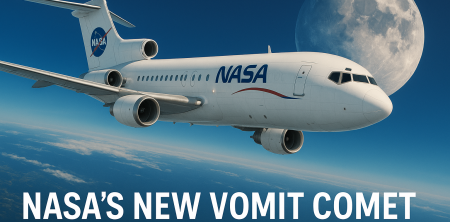
NASA is gearing up for an exciting new chapter in astronaut training with the unveiling of a modified Boeing 737-700 aircraft, aptly dubbed the "NASA vomit comet." This aircraft will play a crucial role in simulating lunar gravity through parabolic flights designed to make astronauts feel as though they are bouncing across the Moon's surface. The phrase "vomit comet" might elicit chuckles, but it also encapsulates the intense physical experiences that astronauts endure to prepare for their missions — a blend of exhilaration and nausea that echoes the challenges of space travel.
What Is a Vomit Comet?
The term "vomit comet" is often used informally to describe aircraft that conduct parabolic flights to create short bursts of microgravity. NASA has a storied history with these flights, famously utilizing the KC-135 Stratotanker for astronaut training. During these flights, the plane follows a series of steep climbs and descents, allowing occupants to experience a few moments of weightlessness at the peak of each parabola. While the experience is thrilling for many, it can also lead to motion sickness, which is why the nickname has stuck.
For NASA's new program, the Boeing 737-700 has been modified to replicate lunar gravity, which is about one-sixth of Earth’s gravity. This means that astronauts will practice maneuvers and activities they will encounter on the Moon, gaining invaluable experience while preparing for upcoming missions.
Why Lunar Gravity Matters
The Moon is a focal point for NASA's future endeavors, particularly with the Artemis program aiming to return humans to lunar soil by the mid-2020s. Understanding how to function in lunar gravity is critical for astronauts who will engage in activities like walking, collecting samples, and operating equipment. The different gravitational conditions affect everything from the weight and handling of tools to the movement and performance of astronauts themselves.
Testing in a simulated environment helps prepare astronauts not just physically, but psychologically too. The sensation of low gravity can be disorienting; thus, training effectively in a controlled environment will better equip astronauts for the challenges they'll face on the Moon.
The Design of the New NASA Vomit Comet
NASA's modification of the Boeing 737-700 is a significant investment in astronaut training technology. This aircraft has been re-engineered specifically to deliver the unique flight profiles needed to create lunar gravity. With advanced technology and design modifications, NASA aims to optimize the parabolic flight experience for the astronauts.
The aircraft is designed to perform a series of steep climbs followed by rapid descents, creating the brief moments of reduced gravity that astronauts will experience on the Moon. Each parabolic maneuver will last about 20-25 seconds, with multiple flights scheduled throughout each training session to maximize exposure to the simulated environment.
Engaging the Public: Space Exploration and Training
NASA's announcement about the new vomit comet comes at a time when public interest in space exploration is at an all-time high. With the recent successes of missions to Mars, ongoing advancements in satellite technology, and the long-awaited return to the Moon, there’s a palpable excitement surrounding human spaceflight. By sharing developments about astronaut training — particularly involving something as entertainingly named as the "vomit comet" — NASA invites the public into the behind-the-scenes world of space missions.
Additionally, the name itself creates a buzz. It’s catchy, evocative, and lends itself naturally to social media sharing. This emotional connection is essential as NASA seeks to re-engage with the public and inspire the next generation of scientists, engineers, and astronauts.
The Science Behind Parabolic Flights
Parabolic flights are more than just thrill rides; they are scientific endeavors. By simulating various gravitational conditions, researchers can study how the human body adjusts to and functions under different forces. For instance, experiments can be conducted on how muscle mass and bone density are affected by reduced gravity. Similarly, cognitive performance can be assessed to understand how astronauts interact with their environment and tools in these conditions. (See: NASA's lunar exploration missions.)
One fascinating aspect of parabolic flights is the variety of research that can be conducted simultaneously. Various experiments — from biological studies to materials science — can be tested in microgravity conditions, providing valuable data that informs future missions. The unique nature of the vomit comet program allows for a diverse range of scientific exploration.
Previous Vomit Comet Programs
NASA's history with the vomit comet dates back decades. The KC-135 Stratotanker, affectionately dubbed the original vomit comet, has been in service since the 1970s. It has played a pivotal role in training astronauts and conducting research in microgravity. Over the years, many astronauts, including notable names like Sally Ride and John Young, have experienced the unique training environment created by these flights.
Even as technology has evolved, the principles behind parabolic flight remain largely unchanged. The thrill, however, has not diminished, and the stories that astronauts tell about their experiences onboard the vomit comet continue to captivate the public. The new Boeing 737-700 program seeks to modernize and expand upon this legacy while introducing a fresh way of training for the next generation of lunar explorers.
Public Engagement and the Future of NASA Missions
Public interest in NASA's missions has shifted dramatically over the past few years. With the increasing presence of private space companies and international collaborations, there’s a heightened level of excitement surrounding space exploration. NASA's new vomit comet program is an opportunity to reconnect with the public and share the human side of space missions — the training, the challenges, and the exhilarating experiences that astronauts undergo.
By engaging the public through stories about astronaut training and the preparations for lunar missions, NASA can foster a deeper connection with its audience. This is particularly important as the agency gears up for its Artemis missions, which promise to return humans to the Moon and eventually lead to missions to Mars.
Challenges and Considerations
Despite the excitement surrounding the vomit comet program, there are challenges that need to be addressed. For instance, managing motion sickness among trainees is a significant consideration. While some astronauts may thrive in the parabolic environment, others may struggle with the nausea that comes with the rapid changes in motion. It's crucial for NASA to develop effective training protocols to help mitigate these challenges.
Moreover, the logistics of running a program that involves multiple flights and training sessions require careful planning and coordination. Safety protocols must be followed rigorously, and the training must align with the broader goals of NASA’s lunar missions. Navigating these complexities is a test of both engineering and organizational prowess.
The Future of Lunar Exploration
As we look ahead, the new NASA vomit comet program is just one piece of a larger puzzle in lunar exploration. The Artemis program, which aims to land humans on the Moon by 2025, relies heavily on testing and preparation. The insights gained from training in simulated lunar conditions will have direct implications for the success of these missions.
With the ever-evolving landscape of space exploration, the role of astronaut training becomes increasingly critical. By continually refining techniques and technologies, NASA is ensuring that its astronauts are not only prepared for the challenges of lunar missions but are also equipped to contribute to the scientific discoveries that await humanity on the Moon and beyond.
Deeper Analysis: The Impact of Parabolic Flight Training
Parabolic flight training serves as a cornerstone for astronaut preparedness, allowing crews to simulate the precise conditions they will face in space. These flights help astronauts develop essential skills and coping mechanisms necessary for their upcoming missions. For example, astronauts learn how to manage their movements in reduced gravity, which is crucial for their performance when conducting experiments or performing repairs on the lunar surface.
In a controlled environment, astronauts can practice handling tools that may function differently in low gravity. For example, the way a hammer strikes a nail or how a wrench turns a bolt can vary significantly on the Moon. Training in parabolic flights allows astronauts to adjust their techniques, ensuring that they can operate efficiently and safely once on the lunar surface.
Additionally, the psychological component of training in microgravity cannot be overstated. The disorientation and altered perception that come with reduced gravity can be challenging, and astronauts must learn to cope with these sensations. Training on the vomit comet helps astronauts develop the mental resilience needed to operate effectively under pressure and in unfamiliar conditions. (See: Johnson Space Center astronaut training.)
Real-World Applications of Parabolic Flight Research
The research conducted during parabolic flight training has implications that extend beyond the realm of astronaut preparation. Insights gained from studying the effects of microgravity on the human body can be applied to various fields on Earth. For instance, understanding how muscles atrophy in low gravity can inform rehabilitation techniques for patients recovering from injuries or surgeries.
Similarly, studies on fluid dynamics in microgravity can lead to advancements in how we manage fluids in healthcare settings. By understanding how fluids behave differently in space, researchers can develop new methods for drug delivery or improved surgical techniques that could benefit patients on Earth.
Moreover, the lessons learned from parabolic flight training can inspire innovations in technology and engineering. The challenges faced by astronauts can lead to breakthroughs that improve materials science, robotics, and even artificial intelligence algorithms used in autonomous systems.
Fascinating FAQs About the NASA Vomit Comet
What is the primary purpose of the NASA vomit comet?
The primary purpose of the NASA vomit comet is to simulate lunar gravity for astronaut training. This is vital for preparing astronauts for the unique challenges they will face during lunar missions.
How does the vomit comet create microgravity?
The vomit comet creates microgravity by flying in parabolic arcs. As the aircraft ascends and descends, it creates brief moments of weightlessness at the top of each parabola, simulating microgravity conditions.
Is it safe to fly on the vomit comet?
Yes, flying on the vomit comet is considered safe. NASA follows strict safety protocols, and all flights are carefully planned and executed to ensure the well-being of the astronauts and crew on board.
Can anyone fly on the vomit comet?
No, currently, access to the vomit comet is limited to astronauts and researchers involved in specific training or experiments. However, NASA often shares the experiences of astronauts to engage the public and inspire future generations.
How does training on the vomit comet differ from other training methods?
Training on the vomit comet offers unique hands-on experience in simulated microgravity, which is not available through traditional training methods. While other training methods may include virtual reality or ground simulations, the real-life sensation of weightlessness provides invaluable insights into how astronauts will perform during actual missions.
What role do parabolic flights play in future space exploration?
Parabolic flights are essential for ensuring that astronauts are well-prepared for the diverse conditions they will encounter in space. As missions become more ambitious, such as those to Mars and beyond, the need for effective training in simulated environments will only grow.
Beyond Training: The Broader Impact of Parabolic Flights
The implications of parabolic flight training extend beyond the immediate needs of astronauts. These flights offer a platform for various industries and educational institutions to conduct groundbreaking research. For instance, universities often partner with NASA to study reactions in microgravity that can lead to innovative solutions in diverse fields, such as physics, engineering, and even art. (See: Understanding microgravity effects.)
One notable example comes from studies focusing on fluid behavior in microgravity. Researchers have been able to observe how liquids form and interact in ways that are impossible to replicate on Earth. This research has potential applications in various industries, from pharmaceuticals to micro-manufacturing. Understanding how fluids behave in reduced gravity can lead to new techniques for liquid dispensing, which could enhance precision in drug delivery systems.
Moreover, the unique environment created by parabolic flights offers fertile ground for educational experiments. Schools and universities can design student-led experiments that fly on the vomit comet, allowing students to engage directly with real science in action. The excitement of seeing their experiments take flight can motivate young people to pursue careers in STEM fields.
Preparing for the Unexpected: The Importance of Adaptability
One key aspect of astronaut training on the vomit comet is preparing for the unexpected. During their missions, astronauts will face unpredictable challenges, from equipment malfunctions to sudden changes in environmental conditions. Training in microgravity environments helps develop their adaptability and quick-thinking skills.
For example, astronauts learn to troubleshoot equipment effectively while floating in reduced gravity. This ability to remain calm and resourceful is crucial, as they may have to address issues that arise without immediate assistance from ground control. The vomit comet's parabolic flights simulate these high-pressure situations, enabling astronauts to practice their responses in a safe but challenging setting.
The Collaboration Between Agencies: NASA and International Partners
NASA's efforts with the vomit comet are not in isolation; they are part of a broader collaborative framework involving international space agencies. The Artemis program, which aims to return humans to the Moon, includes partnerships with agencies like the European Space Agency (ESA), the Japan Aerospace Exploration Agency (JAXA), and the Canadian Space Agency (CSA). These collaborations are vital in sharing knowledge, resources, and training methodologies.
Collaborative training exercises using the vomit comet could enable astronauts from different countries to train together, fostering better teamwork and communication. This international approach not only enhances the training experience but also prepares astronauts for the cooperative nature of future space missions, where collaboration will be key to success.
Conclusion: A New Era in Astronaut Training
The new NASA vomit comet program marks an exciting advancement in the realm of astronaut training. By utilizing a modified Boeing 737-700 to simulate lunar gravity, NASA is paving the way for astronauts to gain essential experience before they embark on their journeys to the Moon. This innovative approach not only promises to enhance training methodologies but also aims to reignite public interest in space exploration. As we move closer to returning humans to the Moon, the NASA vomit comet will play an integral role in shaping the future of human spaceflight.
```
Trending Now
Frequently Asked Questions
What is NASA's Vomit Comet?
NASA's Vomit Comet refers to a modified Boeing 737-700 aircraft designed for astronaut training. It simulates lunar gravity through parabolic flights, allowing astronauts to experience brief moments of weightlessness, akin to bouncing on the Moon's surface.
How does the Vomit Comet simulate lunar gravity?
The Vomit Comet simulates lunar gravity by performing parabolic flight maneuvers. During these flights, the aircraft climbs steeply and then descends, creating short bursts of microgravity that mimic the one-sixth gravity of the Moon.
Why is lunar gravity important for astronauts?
Lunar gravity is crucial for astronauts as they prepare for missions to the Moon. Understanding how to operate and move in this reduced gravity is vital for tasks such as walking, collecting samples, and using equipment effectively.
What is the history of NASA's Vomit Comet?
NASA has a long history with vomit comets, initially utilizing the KC-135 Stratotanker for parabolic flights. The new Boeing 737-700 continues this tradition, adapting to meet the specific training needs for upcoming lunar missions.
What challenges do astronauts face during Vomit Comet flights?
During Vomit Comet flights, astronauts experience thrilling moments of weightlessness, but they can also encounter motion sickness. This intense physical experience is part of their training to prepare for the challenges of space travel.
Have you experienced this yourself? We'd love to hear your story in the comments.

